
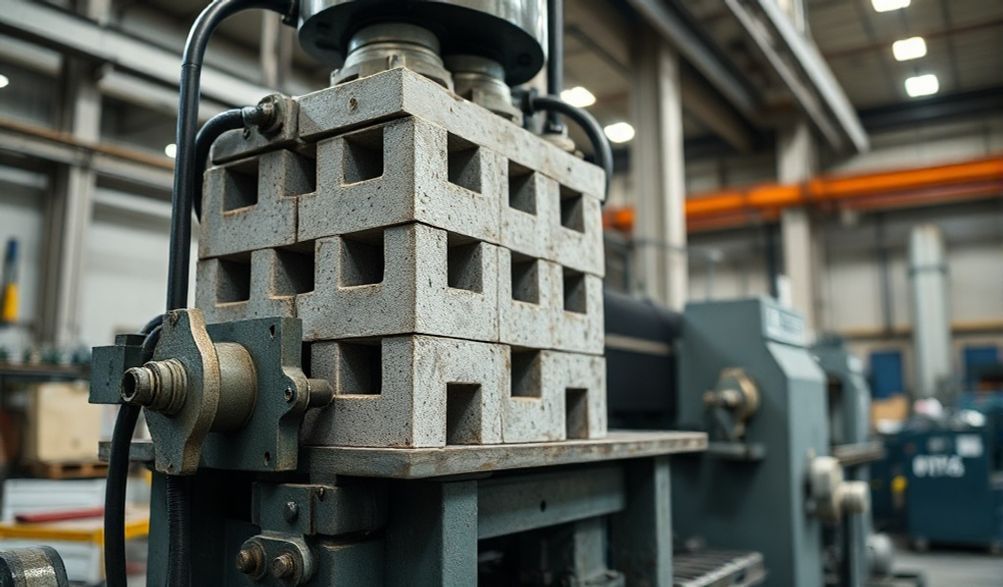
Fahimtar Farashin Injinan Kera Buloci: Cikakken Jagora daga Masana'antar FUDA
Nemo daidai injin yin bulo mai dacewa da farashi mai dacewa kalubale ne mai mahimmanci ga kamfanonin gine-gine da 'yan kasuwa. Zaɓin ku yana tasiri kai tsaye kan riba, lokutan aikin, da nasarar aiki na dogon lokaci. Duk da haka, kewaya kasuwa mai cike da zaɓuɓɓuka, ƙayyadaddun bayanai, da farashin da ke canzawa na iya zama mai ban tsoro. Shin injin mai rahusa ceton wayo ne ko kuskure mai tsada? Menene ke tabbatar da saka hannun jari a cikin samfurin mai tsada?
Wannan jagora ta yanke ta cikin hayaniyar. An gina ta akan bayanan masana'antu, nazarin fasaha, da zurfafa fahimtar hanyoyin masana'antu, muna ba da ingantaccen bayani, abin dogaro don ƙarfafa yanke shawararku. Za mu bayyana mahimman abubuwan da ke ƙayyadeFarashin injin kera bulota amfani da shahararriyarKAMFANIN KERA NA'URAR YIN TUBALI NA FUDAa matsayin ma'auni don inganci da ƙima. Manufarmu ita ce mu sanya muku da tsari bayyananne don kimanta jarin ku, kwatanta nau'ikan injuna yadda ya kamata, kuma a ƙarshe zaɓi kayan aiki waɗanda ke ba da ingantaccen dawowar jari don takamaiman aikin ku.
Abubuwan Da Suke Ƙayyade Farashin Injin Yin Tubali
Alamar farashin na'urar yin bulo ba ta zama ba bisa ka'ida ba. Sakamakon ne kai tsaye na zaɓin injiniya, ƙarfin samarwa, da ingancin sassa. Fahimtar waɗannan sauye-sauye shine matakin farko don yin siyayya cikin masaniya.
Nau'in Injini & Matakin Sarrafa Kansa
Matakin sarrafa kai tsaye shine babban abin da ke haifar da farashi, domin yana ƙayyade buƙatun ma'aikata, saurin fitarwa, da rikitaccen aiki.
- Na'urorin Hannu:Ana sarrafa su gaba ɗaya da hannu, tun daga cusa kayan har zuwa cire tubalan da aka gama. Waɗannan suna wakiltar mafi ƙarancin farashin farko amma mafi girman farashin aiki na dogon lokaci da kuma mafi ƙarancin yawan abin da ake samarwa.
- Matsin Injin Mai Ƙaramin Gudanarwa:Madaidaicin mafita inda ake sarrafa muhimman matakai kamar takura da girgiza ta hanyar inji, amma ayyuka kamar ciyarwa ko cire tubali na iya buƙatar sa hannun mai sarrafa. Wannan yana haɓaka yawan kayan da ake samarwa sosai fiye da injinan da ake sarrafa da hannu, yayin da ake kiyaye jarin jari cikin iyawa.
- Matsarori Masu Sarrafa Kansu Gabaɗaya:Waɗannan cikakkun layukan samarwa ne. Sun haɗa ciyar da kayan aiki, haɗawa, gyare-gyare, warkewa, da tattarawa tare da ƙaramin kulawar ɗan adam. Babban farashin farko an biya shi ta hanyar babban fitarwa, ingancin daidaito, da rage farashin aiki sosai.
Bugu da ƙari, yi la'akari da motsi:
* Injin Tukin Tsayayyen Tubali:An yi su ne don shigar da su a kai a kai a cikin wani masana'anta. Gabaɗaya sun fi ƙarfi kuma suna iya samar da kayayyaki da yawa.
* Na'urorin Tura Tubalin na Wayar Hanka:An haƙe akan tire ko ƙafafu don samarwa a wurin. Ya dace da ayyukan da jigilar tubalan da aka kammala ke da tsada. Farashinsu ya haɗa da fasalin motsi amma galibi suna da ƙarancin fitarwa fiye da na'urorin tsaye.
Ƙarfin Samarwa & Fitarwa
Farashin tana tashi kai tsaye da ƙarfin samarwa. Ana rarraba injuna sau da yawa bisa ga yawan abin da suke fitarwa a kowane zagaye ko kuma a kowane awa.
- A machine’s model number frequently hints at its capacity. For instance, a model like QMJ4-45 might produce 4 blocks per cycle of a specific size, while a QFT10-15 might denote a higher-output, fully automatic line.
- You must align capacity with your business goals. Overbuying leads to idle capital; underbuying creates bottlenecks. Calculate your current and projected block needs to find the sweet spot.
Abubuwan Maɓalli & Ingantaccen Gina
This is where “value” separates from mere “cost.” Two machines may look similar, but their lifespan and performance depend entirely on what’s inside.
- Ƙarfe da Firam: Heavy-duty, high-grade steel ensures the machine withstands constant vibration and pressure without warping.
- Tsarin Hydraulic: The heart of the machine. Quality pumps, valves, and cylinders from reputable brands ensure consistent pressure, precise control, and longevity.
- Motocin Girgiza: These are critical for block density and strength. High-efficiency, durable motors from known manufacturers (like Italian or German brands) are a premium feature that pays off in product quality.
- Ingancin Ƙirƙira: Hardened, precision-engineered steel molds produce blocks with sharp edges and consistent dimensions. Cheap molds wear quickly, leading to defective products and frequent, costly replacements.
Investing in robust components from a reputable factory like FUDDA minimizes breakdowns, reduces maintenance costs, and ensures your machine is a productive asset for years, not a source of constant repair bills.
Keɓancewa & Ƙarin Fasali
The base price often covers a standard configuration. Your specific needs will adjust the final quotation.
- Matsalolin da ake iya musanya: The ability to produce different block types (hollow, solid, paving, interlocking, curbstone) requires additional molds, each adding to the cost.
- Tsarin Ƙari: To create a seamless production line, you may integrate:
- Automatic Pan Mixers or Concrete Mixers.
- Belt Conveyors for material handling.
- Automatic Pallet Feeders and Stackers.
- Brick Stacking and Curing Systems.
Each addition increases automation and price, but also boosts overall line efficiency.
Price Range Breakdown by Machine Category
While exact prices require a formal quote, understanding general brackets helps set realistic budget expectations.
Entry-Level & Manual Machines
- Typical Price Bracket: $3,000 – $15,000
- Mafi Kyau Don: Small-scale projects, individual builders, community initiatives, or startups testing the market. The low barrier to entry is balanced by higher physical labor and lower output (typically 500-2,000 blocks per day).
Matsarori na Yin Tubali na Semi-Automatic
- Typical Price Bracket: $15,000 – $50,000+
- Mafi Kyau Don: Growing block manufacturing businesses and medium-scale construction projects. This category offers the best balance, providing substantial output (e.g., 3,000-10,000 blocks per day) with manageable automation and labor costs. It’s the most popular choice for profitable small-to-medium enterprises.
Fully Automatic Production Lines
- Typical Price Bracket:$50,000 – $300,000+
- Mafi Kyau Don: Large-scale commercial block yards and major construction material suppliers. These are complete factories in themselves, capable of producing 10,000 to over 100,000 blocks per day with a minimal crew. The investment is significant but justified by volume, consistency, and low per-unit production cost.
Evaluating FUDA Block Making Machine Factory: Value Beyond Price
Choosing a supplier is as crucial as choosing the machine. A factory’s reputation defines your long-term ownership experience.
FUDA’s Manufacturing Expertise & Reputation
FUDDA has established itself as a leader through decades of focused engineering and manufacturing. Their authority is built on:
* A dedicated focus on R&D to improve machine efficiency and durability.
* Compliance with international quality and safety standards.
* A global presence, with machines operating successfully in diverse environments from Africa to the Americas, proving their adaptability and reliability.
The True Cost of Ownership: FUDA’s Advantage
The invoice price is just the beginning. The real cost includes operation, maintenance, and downtime.
- Sabis na Bayan Sayarwa: A reputable factory like FUDDA supports your investment with comprehensive service: installation guidance, on-site or virtual operator training, clear maintenance manuals, and a substantive warranty. This support is invaluable for maximizing uptime.
- Samun Kayan Gyara: When a part fails, you need it quickly. Established factories maintain an inventory of genuine spare parts and have efficient logistics to get them to you, minimizing costly production halts.
- Ingantaccen Amfani da Makamashi: Modern designs from experienced manufacturers incorporate energy-saving technologies in hydraulics and vibration systems, reducing your ongoing utility expenses.
Requesting an Accurate Quotation from FUDA
To get a meaningful quote, be prepared to provide detailed information:
1. Your Location: For calculating shipping (FOB/CIF costs).
2. Kayan Aiki Masu Samuwa: Type of cement, aggregate size, and potential additives.
3. Abin da ake so a fitar da shi: Target blocks per hour or per shift.
4. Nau'in Tubalan & Girman: Specific products you plan to manufacture.
5. Site Conditions: Available power supply (voltage, phase) and space.
A professional quote from FUDDA will clearly detail what is included: machine, set of standard molds, electrical control cabinet, and terms for shipping and insurance.
Smart Investment Tips: Maximizing Your Budget
Conducting a Total Cost-Benefit Analysis
Look beyond the sticker price. Create a simple framework:
* Jimlar Zuba Jari: Machine price + shipping + installation + foundation.
* Operational Cost Per Block: (Labor + Electricity + Raw Materials + Maintenance) / Output.
* Projected Revenue: Based on your local market block price and sales volume.
This analysis will reveal your break-even point and ROI, highlighting the true value of a more efficient, reliable machine.
Key Questions to Ask Before Purchasing
- What is included in the warranty, and for how long?
- Is operator training provided, and in what format?
- Can you provide contact details for current customers in a similar region/application?
- What is the lead time for spare parts delivery?
- Do you offer production guarantees for block quality and output under specific conditions?
Avoiding Common Pitfalls in Machine Selection
- Price-Only Focus: The cheapest machine often has the highest lifetime cost due to repairs and low output.
- Ignoring Material Compatibility: Ensure the machine is tested for the type of sand, aggregate, and cement available in your region.
- Overlooking Installation & Foundation: Some machines require a substantial concrete foundation, which is an additional cost and preparation step.
- Neglecting Future Needs: Consider if a slightly more capable machine could accommodate your business growth for the next 3-5 years.
Tambayoyin da ake yawan yi (FAQ)
Q1: What is the starting price for a basic block making machine from a factory like FUDA?
A: For a basic manual or small semi-automatic machine, prices can start in the range of $5,000 to $12,000, depending on configuration and included molds. However, a precise quote tailored to your specific needs is essential for accurate budgeting.
Q2: Does a higher price always mean better quality in block machines?
A: Generally, yes, there is a strong correlation. A higher price typically reflects better materials (steel, hydraulics), more precise engineering, and rigorous testing. However, the ultimate indicator of “better quality” is proven durability, reliable performance, and the after-sales support backing the machine, which a factory like FUDA provides.
Q3: Are FUDA machines suitable for use in regions like Africa or Southeast Asia?
A: Absolutely. FUDA machines are engineered for global operation. They offer configurations for different voltage standards (e.g., 220V, 380V, 415V, 50/60Hz) and are built to handle varied climatic conditions. Their established distribution and service networks in these regions ensure local support.
Q4: What hidden costs should I budget for besides the machine price?
A: Key additional costs include: international shipping and freight insurance, import duties and customs clearance, preparation of a level and strong concrete foundation, initial stockpile of raw materials (cement, aggregate), and the cost of operator training and initial machine run-in.
Q5: How can I verify the credibility of a block machine factory before buying?
A: Take these steps: 1) Request References: Ask for contacts of recent customers, preferably in your country. 2) Seek Proof: Ask for factory audit reports, quality certifications (ISO, CE), and detailed production videos. 3) Visit if Possible: A factory tour reveals their manufacturing scale and quality control firsthand. 4) Analyze Communication: Professional, technical, and transparent responses are a good sign of a reliable partner.
Ƙarshe
Navigating Farashin injin kera bulo requires looking at the complete picture: machine type, production capacity, core component quality, and the long-term value offered by the manufacturer. It’s an investment where prioritizing durability, efficiency, and reliable support from an expert factory like FUDDA pays substantial dividends in reduced downtime, consistent output, and higher profitability.
Use the framework and insights in this guide as a benchmark for your research and negotiations. By focusing on total cost of ownership and partnering with a credible manufacturer, you can invest with confidence, securing a machine that becomes the reliable engine of your construction business for years to come.
Ready to get a precise quote tailored to your project needs? Contact the FUDA factory engineering team today with your specific production requirements for a detailed, transparent proposal.
<