
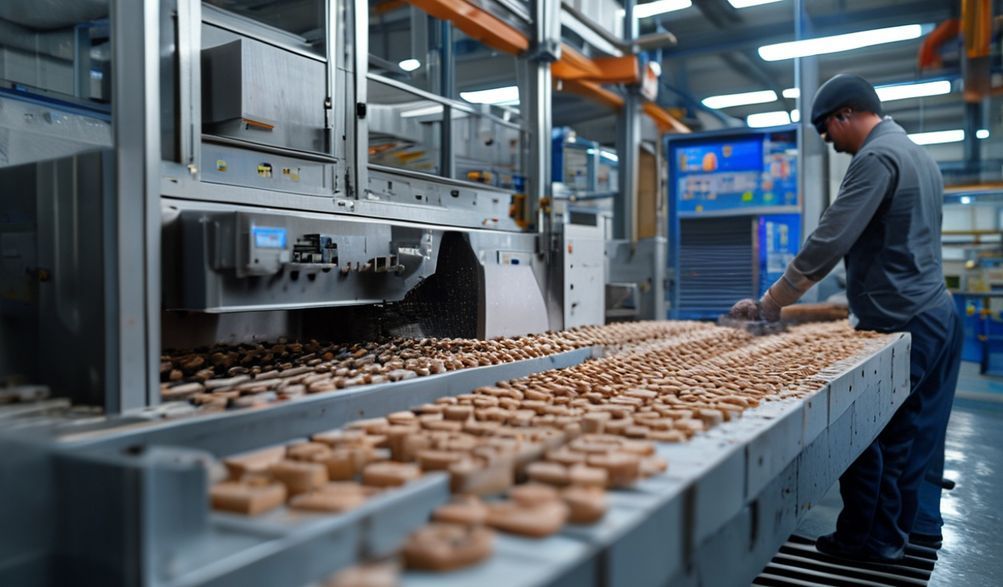
The Ultimate Guide to Block Moulding Machines: Inside the FUDA Block Making Factory
Gabatarwa
The global construction industry is built on a foundation of concrete blocks, with an estimated 14 billion concrete masonry units produced annually in the United States alone. This staggering figure underscores a critical truth: the efficiency, quality, and profitability of any block production venture hinge on one pivotal piece of equipment—the block moulding machine. Choosing the right machine isn’t just a purchase; it’s a strategic business decision that determines your production capacity, product quality, and long-term operational costs.
This comprehensive guide is distilled from years of evaluating block production facilities, analyzing machinery performance data, and engaging directly with manufacturers and plant operators. We will demystify the core technology of block moulding machines and take a specific, in-depth look at the processes and products of the Kamar hakar tubalin FUDA. Whether you are an entrepreneur entering the construction materials sector, a procurement officer for a large construction firm, or a project manager looking to optimize on-site production, this resource is designed to equip you with the knowledge needed to make an informed decision.
You will learn about the different types of block making machines, how they work, and the key features that separate adequate equipment from exceptional investments. We will then step inside the operations of the FUDA factory to understand their manufacturing philosophy. Finally, we’ll provide a practical framework for evaluating costs, calculating ROI, and selecting a manufacturing partner that ensures your project’s success from the first block to the ten-thousandth.
Understanding Block Moulding Machines: Core Technology & Types
Before investing, it’s essential to understand the engineering behind the machine. A block moulding machine is more than a simple press; it’s a system designed to transform raw materials into precise, durable building components through a controlled process.
How Does a Block Moulding Machine Work?
Tsarin, ko da yake sau da yawa yana cikin sarrafa kansa gaba ɗaya, yana bin jerin abubuwa masu daidaito:
- Haɗawa: Cement, aggregates (sand, gravel), and water are blended into a homogeneous, semi-dry concrete mix. The consistency is crucial—too wet, and the block won’t hold its shape; too dry, and it won’t compact properly.
- Ciyarwa: The mixed concrete is fed into the machine’s hopper, which then distributes it into the mould cavity(s). In automatic machines, this is done via a conveyor or feeder system.
- Ƙarfafawa: This is the heart of the process. The machine employs powerful forces to eliminate air pockets and achieve maximum density.
- Girgiza: High-frequency, high-amplitude vibrations settle the mix.
- Matsin Ruwa: A hydraulic ram applies substantial pressure from the top, further compressing the material.
- The most effective machines combine both vibration and pressure for superior block strength.
- Gyare-gyare: While under compaction, the mix takes the exact shape of the steel mould. This mould defines whether the output is a hollow block, solid block, interlocking block, or paving stone.
- Fitowa & Warkewa: The freshly formed (or “green”) block is ejected from the mould onto a pallet. It is then moved to a curing area, where it gains strength over days through controlled moisture and temperature, before being ready for sale or use.
Nau'ikan Maɓalli na Injin Yin Tubali
Machines are categorized by their level of automation and mobility, each suited to different scales of operation.
-
Na'urorin Wucin Gadi/Na'urorin Wucin Gadi na Rago-Rago:
- Mai dacewa ga: Small-scale startups, niche product lines, or markets with low labor costs.
- Aiki: Require significant manual labor for feeding mix and removing blocks. The compaction may be mechanically or hydraulically assisted.
- Abubuwan da suka fi kyau:Mafi ƙarancin farashin babban birnin, sauki.
- Rashin Kyau: Lower output, higher labor dependency, inconsistent quality if not carefully managed.
-
Cikakken Tsirrai na Tasha ta atomatik:
- Mai dacewa ga: Medium to large-scale commercial block yards supplying regional construction markets.
- Aiki: These are integrated systems. From mixing to palletizing, the process is automated via conveyors and programmable logic controllers (PLCs). One operator can monitor the entire line.
- Abubuwan da suka fi kyau: High, consistent output (thousands of blocks per hour), excellent product uniformity, reduced labor costs.
- Rashin Kyau: Higher initial investment, requires more space and stable power supply.
-
Na'urorin Tura Tubalin na Wayar Hanka:
- Mai dacewa ga: On-site production for large projects (dams, remote housing developments).
- Aiki: The machine is mounted on a trailer or wheels. It produces blocks directly at the construction site, eliminating transport costs for finished blocks.
- Abubuwan da suka fi kyau: Drastically reduces logistics costs and block damage from transport.
- Rashin Kyau: Output is generally lower than stationary plants, subject to site conditions.
-
Injinoni na Yin Tubalan Kwai:
- Mai dacewa ga: Operations with ample yard space for block curing.
- Aiki: This unique machine “lays” blocks directly onto the ground or a concrete slab as it moves slowly forward. It combines production and placement in one cycle.
- Abubuwan da suka fi kyau: Eliminates the need for pallets and handling equipment for green blocks.
- Rashin Kyau: Requires a large, level curing area and is sensitive to ground conditions.
Inside the FUDA Block Making Factory: A Model of Modern Manufacturing
To understand what makes a quality machine, it’s instructive to examine a manufacturer with a established global footprint. The Kamar hakar tubalin FUDA serves as a relevant case study in focused industrial manufacturing.
Menene FUDA? Bayani Game da Kamfanin Masana'anta
FUDA has established itself as a specialized manufacturer in the construction machinery sector, with a core focus on concrete block making equipment. With a history spanning years in the industry, they have developed a product line that caters to a global market, exporting machinery to regions including Africa, Southeast Asia, the Middle East, and South America. Their positioning is built on offering a balance of robust engineering, practical automation, and cost-effectiveness for growing businesses.
FUDA’s Manufacturing Philosophy & Quality Control
A visit to a factory like FUDA’s reveals a commitment to a specific manufacturing ethos:
- Engineering-First Design: Machines are designed for the harsh reality of daily industrial use. This means over-engineered frames using thick steel sections to resist the immense forces of compaction without flexing.
- Critical Component Selection: The heart of the machine—the moulds—are typically fabricated from high-grade, hardened alloy steel. This ensures a long lifespan, resistance to abrasion, and the ability to produce blocks with sharp, consistent edges batch after batch.
- Systematic Quality Control: Trustworthiness is built on verifiable processes. While specific certifications may vary, a reputable factory like FUDA will implement rigorous QC protocols:
- Binciken Kayan Shigo Verifying steel grades and hydraulic component specifications.
- Bincike a cikin Tsari: Dimensional accuracy of machined parts, weld integrity, and alignment of moving assemblies.
- Gwajin Aiki na Ƙarshe: Machines are often test-run under load before disassembly for shipping. This includes checking hydraulic system pressure, vibration motor performance, and control system functionality.
A Walkthrough of a Typical FUDA Machine Line-Up
Let’s examine a snapshot of what a manufacturer like FUDA typically offers, illustrating the range available to buyers.
-
Semi-Automatic Model (e.g., for entry-level production):
- Ƙarfin iya aiki: ~1,000 – 2,000 standard blocks per 8-hour shift (highly operator-dependent).
- Ƙarfi: Relies on a standard electrical connection or a diesel generator.
- Key Feature: Simple mechanical/hydraulic system, easy to maintain, and allows for quick mould changes to produce different block types.
-
Fully Automatic Stationary Plant (e.g., for commercial production):
- Ƙarfin iya aiki: ~5,000 – 10,000+ blocks per 8-hour shift, depending on model and block size.
- Ƙarfi: Requires a stable industrial power supply (3-phase).
- Siffofi na Maɗaukaki: PLC control panel for easy operation, automatic pallet circulation system, synchronized vibration and hydraulic compression. May include an automatic mixer and conveyor feeder.
-
Mobile Block Machine (e.g., for on-site projects):
- Ƙarfin iya aiki: ~2,000 – 4,000 blocks per day.
- Ƙarfi: Often equipped with a built-in diesel power pack for complete site independence.
- Siffofi na Maɗaukaki: Integrated wheels or trailer hitch, compact design, ability to produce blocks directly onto the ground or a prepared slab.
Critical Features to Evaluate in a Block Moulding Machine
Beyond brand and type, your evaluation must drill down into specific features that impact daily operation and total cost of ownership.
Production Capacity & Output Consistency
- Matching Output to Goals: Don’t just buy the biggest machine. A machine producing 10,000 blocks/day is useless if your market only absorbs 2,000. Analyze your sales projections and choose a machine that can grow with you, perhaps with 20-30% spare capacity.
- Daidaito Shi Sarki ne: A machine’s true value is its ability to produce every block to the same standard—identical dimensions, weight, and density. Inconsistent blocks lead to waste, rework, and unhappy customers. Look for machines with precise feed systems and stable, powerful compaction.
Durability & Key Components
The longevity of your machine depends on its weakest part. Focus on these components:
- Kwalaye: The most wearing part. Insist on hardened steel moulds with precise machining. Cheap, soft steel will deform, leading to block defects.
- Tsarin Girgiza: Look for durable, industrial-grade vibration motors mounted in a robust housing. The system should provide ample, evenly distributed force.
- Tsarin Hydraulic: Seek reputable brand-name pumps, valves, and cylinders. A reliable hydraulic system ensures consistent pressure, smooth operation, and fewer breakdowns.
- Tsarin Tsari: The frame must be heavyweight and rigid. A flimsy frame will flex during compaction, causing misalignment, wear, and inconsistent block quality.
Automation Level & Ease of Operation
- Labor vs. Capital Trade-off: Higher automation reduces recurring labor costs but increases upfront capital cost. Calculate the payback period.
- Operator Interface: Modern machines feature user-friendly PLC panels with clear diagnostics. This simplifies training and troubleshooting.
- Maintenance Accessibility: Can you easily access grease points, hydraulic lines, and the vibration unit for routine maintenance? Good design prioritizes serviceability.
Versatility: Beyond Standard Blocks
Your market demands may evolve. A versatile machine protects your investment.
- Mould Interchangeability: How quickly and easily can you change moulds? A system that allows you to switch from producing hollow blocks to paving stones in under an hour opens multiple revenue streams.
- Kewayon Kayayyaki: Verify the machine can produce the specific block types popular in your region: standard hollow blocks, solid blocks for heavy loads, interlocking blocks for dry-stack walls, and landscaping products like curbstones.
Making the Investment: Cost, ROI, and Partner Selection
This is where due diligence separates successful ventures from costly mistakes.
Understanding the Total Cost of Ownership (TCO)
The machine’s price tag is just the beginning. A comprehensive TCO analysis includes:
- Machine Price & Shipping: FOB price, sea/land freight, insurance, and port clearance.
- Shigarwa & Kaddamarwa: Foundation work, electrical hookup, and potential costs for a technician from the factory to supervise setup.
- Horarwa: Operator and maintenance training.
- Spare Parts Inventory: An initial kit of common wear parts (mould liners, springs, seals).
- Amfani da Makamashi: The power rating of the machine translates to a daily operational cost.
- Maintenance: Annual budget for lubricants, filters, and replacement parts.
Calculating Potential Return on Investment (ROI)
A simplified framework can guide your thinking:
- Sakamako na Kullum (Machine Capacity) x (Estimated Efficiency %). A 5,000-block/day machine at 80% efficiency yields 4,000 blocks.
- Daily Revenue: (Daily Output) x (Selling Price per Block).
- Daily Operational Cost: (Raw Material Cost per Block x Output) + Labor + Energy + Maintenance.
- Daily Gross Profit: Daily Revenue – Daily Operational Cost.
- ROI Period (in days): (Total Initial Investment) / (Daily Gross Profit).
Factors that drastically improve ROI: High machine uptime (reliability), low rejection/waste rate (good machine consistency), and efficient raw material sourcing.
Choosing a Supplier: Why Factory Direct Matters
While local agents exist, there are compelling advantages to engaging directly with a manufacturer like the Kamar hakar tubalin FUDA:
- Accurate Technical Communication: You get information straight from the engineers who built the machine, minimizing specification errors.
- Kayan Gyara na Gaske: Direct sourcing guarantees you receive original, compatible parts, not generic substitutes that may cause damage.
- Direct Warranty Handling: Streamlines support claims.
- Farashin Gasar: Eliminating middleman markups.
- Due Diligence: Always verify the factory’s existence with a video tour, request a list of past clients in your region for references, and confirm their after-sales support structure in writing.
Frequently Asked Questions (FAQ) About Block Moulding Machines & FUDA
Q1: What is the average production capacity of a mid-range FUDA block making machine?
A: For a fully automatic stationary plant, a mid-range capacity would typically be between 3,000 to 8,000 standard hollow blocks (e.g., 400x200x200mm) per 8-hour shift. Exact output depends on the specific model, block type (solid blocks take longer), and operational efficiency.
Q2: Can FUDA machines produce interlocking blocks for construction without mortar?
A: Yes, absolutely. FUDA, like most serious manufacturers, offers a range of specialized moulds for producing interlocking blocks. These blocks are designed to lock together, enabling faster, mortar-less wall construction, which saves cost and time.
Q3: What kind of after-sales support does FUDA block making factory typically provide?
A: Reputable manufacturers provide a support package that should include detailed operation & maintenance manuals, installation layout drawings, remote technical support via phone/email, and a supply of spare parts. Many also offer optional on-site installation supervision and operator training services for an additional fee. Clarify these terms before purchase.
Q4: How much workshop space is required to install a fully automatic block plant?
A: Space needs are substantial. For a medium-capacity plant, you should plan for a minimum covered area of 1,500 to 2,500 square meters. This must accommodate the machine itself, raw material storage (sand, aggregate), a mixing area, and space for green block storage and curing. Always consult the factory for a detailed layout plan based on your chosen model.
Q5: What raw materials are needed, and can fly ash or other waste products be used?
A: The primary materials are cement, sand/aggregate, and water. A key advantage of modern block machines is their compatibility with mixed designs. Many plants successfully incorporate industrial by-products like Tozar ƙura or slag into their mix. This can reduce the cement content (lowering costs) and sometimes improve the block’s final properties, such as workability or long-term strength. The machine must have adequate compaction force to handle these mixes.
Ƙarshe
Selecting a block moulding machine is a foundational decision that sets the trajectory for your construction materials business or project. It requires a careful balance of understanding core technology, evaluating your specific production needs, and scrutinizing the manufacturer’s capability to support you for the long haul.
We’ve explored the mechanics from manual to fully automatic systems, highlighted the critical features that dictate durability and versatility, and provided a framework for financial analysis. Through the lens of the Kamar hakar tubalin FUDA, we’ve seen how a focused manufacturer approaches engineering, quality control, and product development to meet global demand.
The path forward is clear. Begin by rigorously defining your production goals, budget, and local market requirements. Use this knowledge to engage with technical sales teams from manufacturers directly. Request detailed specifications, client references, and a clear outline of after-sales support. With thorough preparation, you can invest in a block moulding machine that becomes a reliable engine for growth and profitability for years to come.
<