
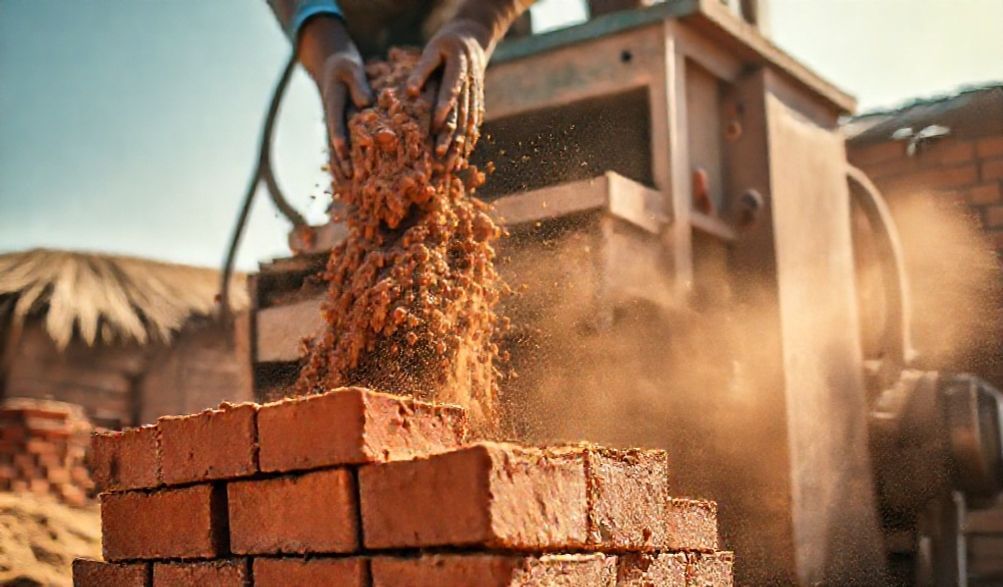
Jagorar Cikakke Kan Injinan Yin Bulo a Sudan: Farashi, Nau'uka & Masu Sayarwa (2024)
Gabatarwa
Siffar gine-ginen Sudan shaida ce ta juriya da ci gaba. Daga cikin titunan Khartoum masu cike da hargitsi zuwa cibiyoyin birane masu tasowa, gini ba masana'anta kawai ba ne; yana cikin tushen sake gina ƙasa da ci gaban tattalin arziki. A tsakiyar wannan sauyi akwai wani muhimmin ginshiƙin gini: bulo mai ƙanƙanta. Ga 'yan kasuwa, kwangila, da hukumomin ci gaba, saka hannun jari a cikin samar da bulo na gida ya wuce yanke shawara na kasuwanci kawai—yana da wani dabarun ci gaba mai dorewa, mai tsada.
Duk da haka, kewaya kasuwar injinan yin bulo a Sudan yana buƙatar fiye da kawai kataloji da lissafin farashi. Yana buƙatar cikakkiyar fahimtar abun da ke cikin ƙasa, rashin tsayayyen gurbin wutar lantarki, da kuma rikitarwar shigo da kayayyaki da tallafi. Daga abin da muka lura a ƙasa da haɗin gwiwar da muka yi da magina a duk faɗin Sudan, mun ga ayyuka suna bunƙasa tare da kayan aikin da suka dace kuma suna raguwa saboda bayanan da aka yi watsi da su.
Wannan jagora an tsara ta don ta zama tushen gogewa a gare ku. Za mu wuce ƙayyadaddun ƙayyadaddun gabaɗaya don samar da cikakken bincike mai aminci wanda ya dace da yanayin Sudan na musamman. Manufarmu ita ce mu sanye ku da ilimin da zai ba ku damar yin siyayya cikin hikima wanda ya dace da girman aikin ku, kasafin ku, da yanayin yankin ku, tare da tabbatar da cewa zubar da jarin ku ya kafa tushe mai ƙarfi ga nasara.
Fahimtar Yanayin Masana'antar Tubalin a Sudan
Bukatar bulo tana da alaƙa ta asali da bugun ci gaban al'umma. Fahimtar wannan yanayin shine matakin farko zuwa ga nasarar zuba jari.
Bukatar Tubali a Ginin Sudan
Sudan’s construction sector is driven by multiple, concurrent needs:
- Buƙatar Gidaje a Birane: Rapid urbanization and population growth in cities like Khartoum, Omdurman, and Port Sudan create a continuous need for affordable housing units. Locally produced bricks offer a cost-effective solution.
- Ayyukan Kasuwanci da Kayayyakin More Rayuwa: New commercial buildings, warehouses, and perimeter walls for factories and institutions rely heavily on brickwork.
- Post-Conflict Rebuilding: In regions recovering from instability, reconstruction efforts for schools, clinics, and community centers prioritize durable, locally-sourced materials to stimulate the local economy and reduce costs.
Economically, local brick production presents a significant advantage over imported building materials. It reduces foreign currency expenditure, creates local jobs, and shortens supply chains, making projects less vulnerable to logistical delays and price fluctuations.
Key Challenges and Considerations for Buyers
Success in Sudan’s brick manufacturing sector means proactively addressing its inherent challenges:
- Soil Suitability: Not all soil is equal for brick making. The clay-rich soils of the Nile banks are often ideal for fired clay bricks, while sandy or silty soils in other regions may require stabilization with cement or lime to produce compressed stabilized earth blocks (CSEBs) or concrete blocks. A simple soil test is a non-negotiable first step.
- Power Supply Reality: Grid electricity can be unreliable. Your business model must account for this. Will you operate a manual machine, invest in a diesel-powered unit, or factor in the capital and running cost of a substantial generator for an electric model? This decision fundamentally affects your operational cost and location flexibility.
- Logistics & After-Sales Support: The journey of a machine from factory floor to your site in Sudan involves shipping, customs clearance at Port Sudan, and potentially complex inland transportation. Perhaps more critical is after-sales support. A breakdown without access to spare parts or technical know-how can halt production for weeks. Evaluating a supplier’s support network in East Africa is as important as evaluating the machine itself.
Types of Brick Making Machines Suitable for Sudan
Choosing the right type of machine is about matching technology to your context. Here’s a breakdown of the most suitable options.
Na'urorin Yin Tubali na Hannu
These are the simplest and most accessible entry point into brick production.
- Ya Dace Da: Small-scale projects, individual home builds, community-led initiatives, and entrepreneurs with very low initial capital.
- Aiki: Relies entirely on human labor to mix, feed, and press.
- Abubuwan da suka fi kyau:
- Very low purchase cost.
- No electricity or fuel required.
- Sauƙi don sarrafawa da kula.
- Rashin Kyau:
- High labor intensity.
- Low output (typically 300-800 bricks per day).
- Inconsistent brick quality if not operated carefully.
Matsarori na Yin Bulo na Semi-Automatic
This category represents the optimal balance for most small and medium-sized enterprises (SMEs) in Sudan.
- Ya Dace Da: Growing businesses, dedicated brick-making yards supplying local contractors, and medium-scale development projects.
- Aiki: Often feature a hydraulic or mechanical press powered by an electric motor or diesel engine, with manual feeding of raw material and removal of finished blocks. Common types include “egg-laying” mobile machines and stationary block makers.
- Abubuwan da suka fi kyau:
- Significantly higher output than manual machines (2,000 to 8,000 blocks per day).
- Good balance between automation cost and productivity.
- Produces consistent, high-quality bricks with proper compression.
- Rashin Kyau:
- Requires a power source (grid/generator/fuel).
- Babban jarin farko fiye da injunan hannu.
- Requires basic technical knowledge for operation and maintenance.
Cikakkun Masana'antu na Kera Bulo ta Atomatik
These are industrial-grade production lines designed for maximum output.
- Ya Dace Da: Large commercial plants supplying major cities or big construction firms with massive, continuous demand.
- Aiki: Fully automated processes from raw material feeding and mixing to pressing, curing, and sometimes even palletizing. They often include sophisticated components like PLC control panels and conveyor systems.
- Critical Considerations:
- Babban Zuba Jari na Babban Jari: Costs can run into hundreds of thousands of dollars.
- Substantial Infrastructure Needed: Requires a large, prepared site, reliable three-phase electricity, and significant raw material storage.
- Skilled Labor Required: Needs trained technicians for operation and maintenance.
Specialized Machines: Interlocking Brick Presses
These machines produce bricks designed to lock together without mortar, a technology gaining global traction for its efficiency.
- Ya Dace Da: Projects focusing on speed of construction, material efficiency, and modern architectural designs.
- Suitability for Sudan: Excellent for use with stabilized local soil (CSEBs). The interlocking design reduces cement mortar use by up to 50% and can create structurally sound walls, ideal for cost-conscious and sustainable building projects across Sudan’s varied regions.
Critical Factors for Choosing a Machine in Sudan
Beyond the machine type, these practical factors will determine your long-term success and profitability.
Kimanta Bukatun Ku na Samarwa da Kasafin Ku
Start with clear calculations:
* Sakamako na Kullum Estimate your current and near-future brick demand. A machine operating 8 hours should comfortably exceed your average daily requirement to account for downtime.
* Total Cost Analysis (TCO): Look beyond the sticker price. Your budget must include:
* Machine Price (FOB or CIF)
* Shipping & Insurance
* Customs Duties & Taxes at Port Sudan
* Inland Transportation to Site
* Installation & Commissioning
* Initial Raw Material Stockpile
Power Source Compatibility
This is a make-or-break decision for operational continuity.
* Motocin Lantarki: Cleaner and quieter, but entirely dependent on stable grid power or a correctly sized generator. Ensure the motor’s voltage and phase (single or three-phase) match your available supply.
* Injin Dizel: Higher fuel cost and maintenance, but offer complete independence from the grid. Essential for sites with no electricity access. Choose engines from reputable brands (e.g., Lister, Deutz) for which parts are more readily available in the region.
* Manual Operation: Zero fuel cost, maximum labor cost. A viable low-risk starting point.
Machine Durability and Local Support
In Sudan’s harsh, dusty environment, build quality is paramount.
* Tsawon rayuwa: Look for machines with:
* Heavy-duty structural frames.
* High-quality hydraulic systems and seals.
* Wear-resistant mold liners and components.
* Supplier Evaluation: A trustworthy supplier is your greatest asset. Ask for:
* References from past clients in East Africa.
* Details of their after-sales service network.
* A list of commonly required spare parts and their availability/lead time.
* Willingness to provide or recommend local technicians for installation.
Sourcing Brick Making Machines: Suppliers & Logistics
Local Sudanese Suppliers and Dealers
Several established machinery dealers operate in Khartoum and other major cities.
* Fadada: Easier communication, ability to see the machine before buying, faster delivery, and theoretically easier access to support.
* Abubuwan da ake la'akari da su: Verify their technical expertise and their direct relationship with manufacturers. Ensure they stock genuine spare parts.
International Suppliers (China, India, Turkey)
Direct importation can offer cost advantages and a wider selection.
* Verifying Credibility: Conduct video calls, request factory audit reports, and insist on seeing production lines. A reputable manufacturer will often offer to conduct a free soil test if you send a sample to recommend the best machine and mix design.
* The Import Process:
1. Agree on clear Incoterms (e.g., CIF Port Sudan).
2. Secure a reliable shipping agent.
3. Prepare all necessary documentation for Sudanese customs (Commercial Invoice, Packing List, Certificate of Origin, Bill of Lading).
4. Hire a reputable clearing agent at Port Sudan to handle customs clearance and inland haulage.
Cost Breakdown and Financing Options
- Price Ranges (Estimated, Ex-Works):
- Manual Presses: $500 – $3,000
- Semi-Automatic Machines: $5,000 – $25,000
- Fully Automatic Plants: $50,000 – $500,000+
- Financing: Options are limited but growing. Explore:
- Supplier credit terms from established international suppliers.
- Equipment leasing companies operating in Africa.
- Grants or soft loans from development agencies or NGOs supporting local enterprise and construction projects.
Operating Your Brick Making Machine for Success
Raw Material Preparation for Sudanese Soil
Proper material preparation is 50% of brick quality.
* Gwajin ƙasa: Simple tests for composition (clay, silt, sand ratio) and moisture content are essential. Based on feedback from operators in Khartoum, many soils require sieving to remove stones and organic matter.
* Mix Ratios: For cement-stabilized blocks, a typical starting ratio is 1 part cement to 6-8 parts soil/sand by volume. The optimal ratio must be determined by testing your specific soil.
Efficient Production and Maintenance Routines
- Daily Checklist: Check hydraulic oil levels, tighten loose bolts, clean the machine of hardened material, and lubricate moving parts.
- Preventative Maintenance: In dusty conditions, change air and oil filters more frequently. Regularly inspect hydraulic hoses for wear. Keep a logbook for all service activities.
Quality Control and Curing
- Strength Testing: Simple field tests include dropping a cured brick from waist height (it should not break) or striking two bricks together (they should produce a clear ringing sound).
- Curing Best Practice: Bricks must be kept moist for at least 7-14 days to gain strength. In Sudan’s hot, dry climate, this means regular watering and covering bricks with plastic sheeting or wet sacks to prevent rapid moisture loss.
FAQ Section
What is the cheapest brick making machine available in Sudan?
The cheapest option is a manual press, available from local dealers or via import for under $1,000. However, consider the total lifetime cost, including high labor requirements and lower output, which may make a semi-automatic machine more cost-effective in the long run.
Can I use desert sand for making bricks with these machines?
Pure desert sand is often too fine and uniform for strong bricks. It typically requires blending with a binder like cement (for concrete blocks) or a clayey soil (for stabilized blocks) to achieve the necessary cohesion and strength.
How many bricks can a semi-automatic machine produce per day in Sudan?
Output varies by model and operation efficiency. A standard single-block semi-automatic machine can produce between 2,000 to 5,000 bricks in an 8-hour shift. Larger multi-block machines can produce 5,000 to 8,000+.
Where can I get training to operate and maintain the machine?
Reputable suppliers should provide basic training during installation. Additionally, local vocational training centers in major cities sometimes offer courses. Online video resources from manufacturers can also be a valuable ongoing reference.
What are the main hidden costs when importing a machine?
The most common hidden costs are: Sudanese customs duties and taxes (which can be significant), port handling and storage fees, fees for your clearing agent, costs for inland transportation (which can be high for heavy cargo), and the initial purchase of a spare parts kit.
Are there any government regulations for brick manufacturing in Sudan?
While there may not be nationwide regulations specifically for small-scale brick machines, you must check with your local municipal authority for zoning and operational permits. The Ministry of Industry may have guidelines for larger industrial operations.
Ƙarshe
Choosing the right brick making machine in Sudan is a strategic decision that hinges on aligning technology with local reality. It requires carefully balancing your project scale with the practical constraints of power, soil, and support. Remember, the most expensive mistake is not the initial purchase price, but the total cost of downtime due to an unreliable machine or an unsupportive supplier.
Investing in local brick production is more than a business venture; it’s a direct contribution to Sudan’s infrastructure and economic resilience. By making an informed choice, you secure not just a piece of machinery, but a partner in building a more sustainable future.
Ready to move forward? For a personalized consultation based on your specific location, soil conditions, and project goals in Sudan, contact our team of experts with direct East African experience. We can help you navigate the selection and importation process to ensure your investment is sound from the ground up.
<