
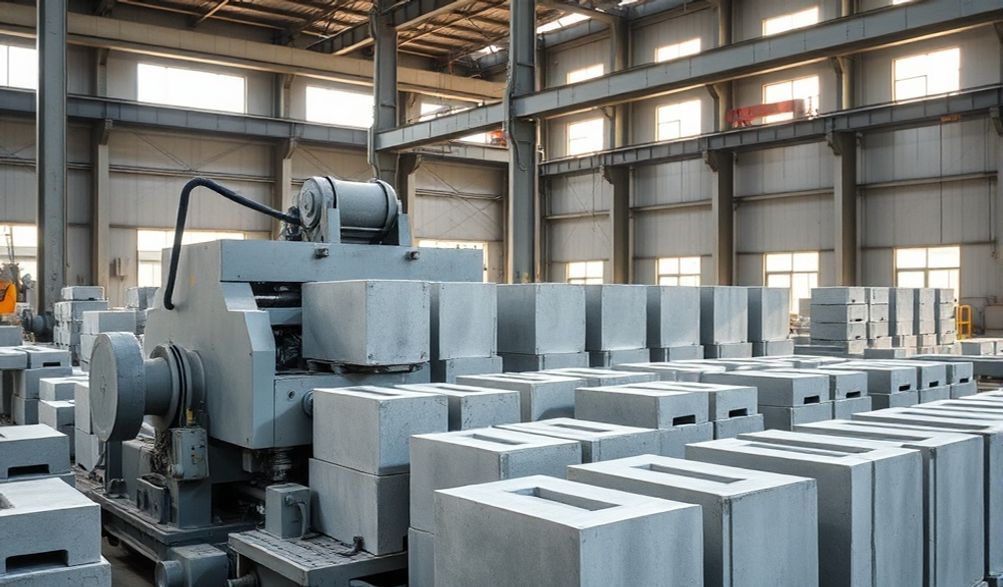
Jagorar Cikakkiya Kan Injin Bulo na Kankare na Kasa da Yin Gasasshen Sin: Fasaha, Fa'idodi & Yadda Ake Zaba
Shekaru da dama, masana'antar tubalin siminti ta kasance cikin wani tsari mai tsada da jinkiri na matsaloli guda uku: kudaden makamashi masu yawa daga murhun wuta masu cin mai, ƙarfafa ka'idojin muhalli kan hayaƙi, da kuma tsawon lokacin da ake jira wanda ke kulle jari da jinkirta ayyuka. Idan kana cikin kasuwancin samar da bulo ko tubali, ka san wannan gwagwarmaya sosai. Amma me zai faru idan akwai hanyar da za a iya kubutar da wannan zagayowar, ta hanyar samar da tubalin gini mai ƙarfi ba tare da gasa ba, ba tare da babban sawun carbon ba, kuma cikin ɗan lokaci kaɗan?
Shiga cikin mafita mai kawo sauyi da ke samun karbuwa a duniya baki daya:fasahar bulo na siminti ba tare da yin gasa baKuma a sahun gaba wajen kera wannan kayan aiki mai kawo sauyi akwai kasar Sin, wata kasa mai karfin gaske a fannin injiniyoyin gine-gine. Wannan jagora ce ta gaba daya, mai zaman kanta, a kanKasar Sin ta yi amfani da injin yin bulo na siminti kyauta.Za mu wuce daga tallan tallace-tallace don bincika fasahar, nazarin fa'idodin gaske, da kuma samar da tsari mai amfani, mataki-mataki don yanke shawara mai hikima da cikakken bayani. Ko kai ƙwararren masana'anta ne ko kuma wanda kake buƙatar sabunta kayanka, fahimtar wannan madadin da ke da amfani ga muhalli mabuɗi ne don tabbatar da ci gaban kasuwancinka a nan gaba.
What is a Baking-Free Concrete Block Machine? Demystifying the Technology
At its core, a baking-free concrete block machine—also called a curing-free or non-fired block machine—eliminates the most energy-intensive step in traditional clay brick or autoclaved aerated concrete (AAC) block production: the high-temperature kiln or steam curing chamber.
Core Principle: Curing Without Heat
The magic lies in substituting thermal energy for mechanical and chemical energy. Here’s the science simplified:
- High-Pressure Compaction & Vibration: A precisely measured mix of raw materials is fed into a sturdy mold. A powerful hydraulic press then subjects the mix to extreme pressure (often measured in tons), while simultaneous high-frequency vibration removes air pockets.
- Chemical Hydration: The compacted block gains its initial “green strength” from this densification. Final strength is achieved through the natural chemical reaction (hydration) between cement and water in the mix, which occurs at ambient temperature.
- Sakamakon: Within 24 to 48 hours, the blocks gain sufficient strength to be stacked, palletized, and shipped. They continue to cure and gain strength over the following weeks, just like standard concrete. The fossil-fueled furnace is completely removed from the equation.
Abubuwan Da Suke Cikin Na'ura
Fahimtar manyan sassan yana taimakawa wajen kimanta ingancin na'ura.
- Tsarin Wutar Lantarki na Hydraulic: The heart of the machine. It provides the pressing force. Look for reliable, brand-name hydraulic components.
- Mold & Vibration Table: The mold defines the block shape (solid, hollow, interlocking, paving). The integrated vibration table ensures uniform density.
- Tsarin Gudanarwa: Ranges from simple PLC panels to advanced touchscreen interfaces for setting pressure, vibration time, and production cycles.
- Tsarin Batching & Mixing: Can be a separate station or integrated. Consistency here is critical for final block quality.
- Block Ejector & Conveyor: Automatically pushes the finished block onto a conveyor for transport to the curing area.
The Raw Materials: More Than Just Cement
This technology shines in its ability to utilize industrial by-products, making it doubly sustainable.
A typical mix includes:
* Siminti: Acts as the primary binder.
* Fly Ash or Slag: Industrial by-products from coal plants and steel mills. These pozzolanic materials enhance long-term strength and durability while reducing cement content.
* Sand/Stone Chips: Provide the aggregate structure.
* Specialized Curing Agents: Small chemical additives that can accelerate the hydration process and enhance early strength.
Why Source from China? Advantages of Chinese Baking-Free Block Machines
China isn’t just a source of low-cost goods anymore; it’s a hub of mature, innovative, and scalable manufacturing for construction equipment.
Inganci da Farashi Mai Gasa
The economies of scale in Chinese manufacturing are undeniable. You can acquire a robust, feature-rich machine for a fraction of the cost of comparable European or American models. This lower upfront investment dramatically shortens your return on investment (ROI) timeline, making automation and modernization accessible to smaller businesses.
Technological Maturity and Innovation
China’s vast domestic construction market has driven intense R&D in block-making machinery. Modern Chinese machines offer:
* High levels of automation (automatic pallet feeders, stackers, robotic arms).
* Advanced PLC controls with fault diagnostics.
* Improved hydraulic systems for efficiency and noise reduction.
* Durable designs refined over decades of export to demanding markets worldwide.
Variety and Customization Options
Whether you need a small, manual machine for a community project or a fully automated line producing 10,000+ blocks per shift, Chinese manufacturers have a model. Furthermore, they are typically very flexible in:
* Customizing molds for unique block designs.
* Adapting machine dimensions and power requirements.
* Offering different levels of automation to match your budget and labor situation.
Critical Benefits of Adopting Baking-Free Block Technology
Switching to this method isn’t just about buying a machine; it’s about transforming your production model.
Significant Energy Savings and Lower Carbon Footprint
This is the most compelling benefit. By eliminating the kiln, you remove the single largest energy consumer.
* Tanadi Kai Tsaye: No need for coal, natural gas, or biomass to fire kilns.
* Carbon Reduction: Drastically reduces Scope 1 (direct) emissions from your production facility, aligning with green building standards like LEED and BREEAM.
* Tattalin Arzikin Zagaye: Using fly ash and slag diverts waste from landfills.
Faster Production Cycle and Quicker ROI
Traditional fired bricks can take weeks from molding to shipment. Baking-free blocks are different:
* Blocks can be demolded immediately after pressing.
* They achieve handling strength within one day.
* This means faster inventory turnover, quicker delivery to clients, and improved cash flow. Your capital isn’t tied up in blocks curing in a yard for weeks.
Enhanced Block Quality and Durability
When produced correctly, these blocks are not a compromise:
* High & Consistent Compressive Strength: Achievable strengths commonly range from 7.5 MPa to over 15 MPa, suitable for load-bearing applications.
* Excellent Density: The high-pressure compaction results in low water absorption and good frost resistance.
* Daidaiton Girma: Steel molds and precise controls produce uniform blocks with clean edges, reducing mortar use during construction.
Operational Simplicity and Safety
The production environment becomes cleaner and safer:
* No high-temperature hazards for workers.
* No complex combustion system maintenance.
* Generally lower skill requirement for operation compared to managing a kiln.
A Step-by-Step Guide to Choosing the Right Supplier in China
Navigating the vast Chinese market requires a strategic approach. Here is your actionable guide.
Step 1: Defining Your Production Requirements
Before you contact a single supplier, get clear on:
* Sakamako: Target blocks per 8-hour shift (e.g., 5,000, 10,000, 20,000).
* Block Type: Standard hollow blocks, solid bricks, paving slabs, interlocking blocks?
* Matsayin Sarrafa Kansa: Manual (labor-intensive), semi-automatic, or fully automatic with pallet circulation?
* Kasafin kuɗi: Include a buffer for shipping, duties, and installation.
Step 2: Vetting Manufacturers: Beyond Alibaba
Platforms like Alibaba are starting points, not finish lines. Due diligence is non-negotiable.
* Check Business Credentials: Use Chinese platforms like Tianyancha to verify the company’s business license, registered capital, and legal status.
* Assess Experience: How many years have they been manufacturing this specific type of machine? Do they hold any relevant patents?
* Request Proof: Ask for factory audit reports (from SGS, BV, etc.), detailed photos, and videos of machines in operation—not just promotional clips.
* Technical Dialogue: Prepare a questionnaire about hydraulic pressure, vibration frequency, motor power, and control system specs. Gauge their technical expertise from the responses.
Step 3: The Crucial Role of After-Sales Service
This is where good deals can become great investments or terrible nightmares. Negotiate and get in writing:
* Warranty: Standard is 12 months for parts. Strive for 18-24 months and clarity on what’s covered.
* Tallafin Fasaha: Ensure access to English-speaking engineers via WhatsApp/WeChat/email. Are video call troubleshooting sessions offered?
* Documentation: Demand comprehensive English manuals, electrical diagrams, and parts lists.
* Horarwa: Will they provide detailed installation guidance and operator training videos? For large lines, consider budgeting for an engineer to visit your site.
Step 4: Understanding Logistics, Duties, and Total Landed Cost
The machine price is only part of the cost. Clarify with the supplier:
* Trade Terms: Understand FOB (you own goods once they’re on the ship) vs. CIF (they pay freight to your nearest port). FOB is often recommended for more control.
* Jigilar kaya & Gudanar da kaya Work with a reliable freight forwarder. Sea freight is standard for heavy machinery.
* Import Duties: Research the HS code and import tax rate for block-making machines in your country.
* Spare Parts Kit: Always purchase a recommended spare parts kit (seals, relays, sensors) with your machine to avoid weeks of downtime later.
Ƙalubale Masu Yuwuwa da Yadda Ake Magance Su
Acknowledging and planning for hurdles is a sign of a savvy buyer.
Challenge 1: Quality Consistency and Supplier Reliability
- Mitigation: Never skip the due diligence in Step 2. Request contact information for 2-3 previous international clients and actually call them. For high-value orders, hire a third-party inspection company to conduct a pre-shipment inspection at the factory.
Challenge 2: Technical Support and Language Barriers
- Mitigation: Prioritize suppliers with a demonstrated history of supporting international clients. Test their communication responsiveness before ordering. Good suppliers now produce extensive video libraries for maintenance.
Challenge 3: Adapting Raw Material Formulations Locally
- Mitigation: The sand, ash, or slag in your region will differ from China’s. This is critical.
- Start with Trials: Use the supplier’s recommended formula as a base, then conduct small-batch tests with your local materials.
- Seek Formulation Support: Choose a supplier willing to help you adjust the mix design based on your local material test reports. This is a key marker of a true partner.
Tambayoyin da ake yawan yi (FAQ)
Q1: What is the actual compressive strength achievable with baking-free blocks?
A: With a proper mix design and quality machine, compressive strengths of 7.5 MPa to 15 MPa or higher are standard for hollow blocks. Solid blocks can achieve even more. Strength depends on cement grade, compaction pressure, and curing time.
Q2: Are the blocks suitable for load-bearing construction?
A: Yes, absolutely. When produced to meet relevant national or international standards (like ASTM C90 or equivalent), they are fully capable for load-bearing walls. The imperative is rigorous in-house quality control and, if required, third-party testing for certification.
Q3: What is the typical lead time for a machine from China?
A: For standard models, expect 30 to 45 days after deposit confirmation. For large, customized fully automatic lines, lead times can extend to 60-90 days. Always confirm this in your sales contract.
Q4: Can the machine produce different types of blocks (paving, hollow, interlocking)?
A: Yes. This is one of its great flexibilities. By changing the mold (which is an additional purchase), the same host machine can produce a variety of products. Semi-automatic machines may require a few hours for a mold changeover.
Q5: How do I ensure the machine meets my country’s safety and electrical standards?
A: This is a contractual must. Explicitly specify your required voltage (e.g., 415V/3Phase/50Hz) and any mandatory safety certifications (like CE marking) in your Purchase Order. While Chinese suppliers can often build to CE standards, final connection and compliance on-site should be handled by a qualified local electrician.
Ƙarshe
China’s baking-free concrete block machines represent a powerful convergence of advanced, sustainable technology and compelling cost-effectiveness. They offer a tangible path for construction material producers to reduce operating costs, minimize environmental impact, and accelerate production—all while manufacturing high-quality building blocks.
Your success in this venture, however, hinges not just on choosing a machine, but on choosing the right partner. The journey requires thorough supplier research, crystal-clear technical communication, and a relentless focus on securing robust after-sales support. We encourage you to use this guide as a roadmap: define your needs with precision, vet manufacturers with diligence, and prioritize transparency and long-term partnership over the lowest possible sticker price.
As the global construction industry marches steadily toward greener practices, adopting baking-free technology positions your business not just for today’s market, but for the sustainable building landscape of tomorrow.
<