
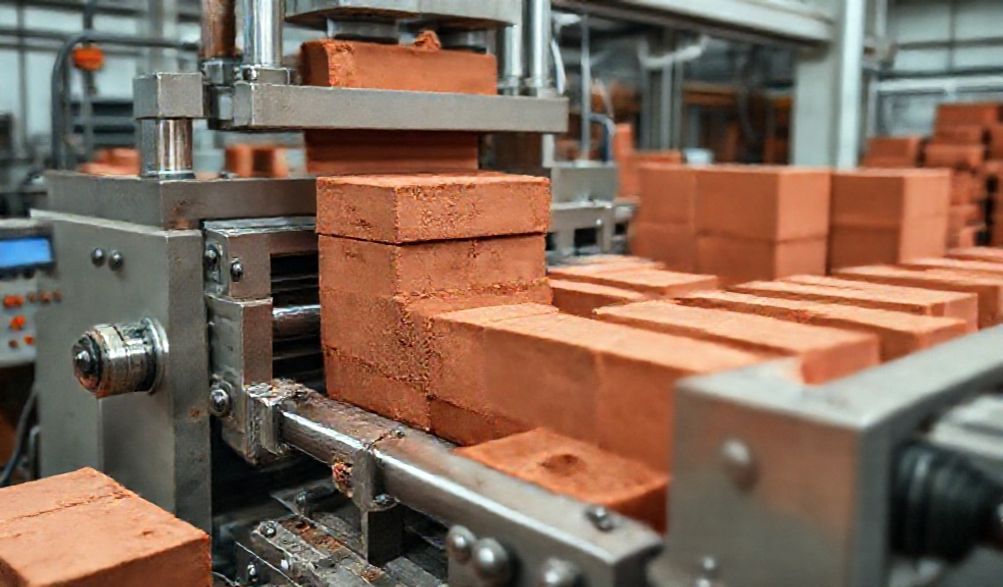
Jagorar Cikakke na Injin Yin Tubalin Yumbu: Nau'uka, Fa'idodi & Yadda Ake Zaɓa
Gabatarwa
A zamanin da masana'antar gine-gine ke neman kayan gini masu dorewa, ƙarfi, da araha, akwai wani mafita na dindindin da ke ci gaba da tsayawa ƙarfi: tubalin yumbu. Tsawon shekaru dubu, yumbun da aka gasa ya kasance ginshiƙin matsugunin ɗan adam, tun daga tsoffin wayewar kai har zuwa shimfidar birane na zamani. A yau, wannan kayan da ya dore yana fuskantar farfaɗowa, wanda ba da gangan ba ne, amma saboda ci gaban fasaha a masana'antar.na'urar yin tubalin yumbushine ne injin wannan farfaɗowar, yana canza ɗanyen ƙasa zuwa ingantattun sassan gini tare da ingantacciyar inganci da daidaito da ba a taɓa gani ba.
Wannan cikakken jagora an ƙirƙira shi ne don ’yan kasuwa da ke kallon shiga cikin kayan gini, masu shingen bulo da suka kafa waɗanda ke neman haɓakawa, da kuma manajoji ayyuka waɗanda ke neman ƙarin iko akan kayansu na gini. Manufarmu ita ce bayyana duniyar injinan tubalin yumbu. Za mu bi ta cikin ainihin fasahar, mu rarraba nau’ikan injuna daban-daban da ake da su, mu ƙididdige fa’idodinsu na zahiri, kuma mu ba da tsari mai bayyanawa, mai aiki don zaɓar kayan aikin da ya dace da takamaiman burinku.
Abubuwan da aka gabatar a nan an haɗa su ne daga zurfin nazarin masana'antu, takamaiman ƙayyadaddun masana'anta, da tarin ilimin aiki. Manufarmu ita ce mu sanya muku da ingantaccen bayani mai aminci, mai canza rikitaccen yanke shawara na saka hannun jari zuwa wani mataki na dabaru mai ƙarfi ga kasuwancin ku ko aikin ku.
Fahimtar Fasahar Yin Tubalin Daga Yumbu
Kafin a zuba jari a cikin injina, yana da mahimmanci a fahimci tafiyar tubalin yumbu da kuma rawar da injin ke takawa a kowane mataki. Injinan zamani tsarin ƙwaƙƙwaran tsare-tsare ne da aka ƙera don inganta tsarin da ya shafe ƙarni.
Tsarin Samar da Cibiyar: Daga Laka Mai Danye zuwa Tubalin Da Ya Kammala
Canza yumbu mai laima zuwa bulo mai ƙarfi, mai tsari, waƙa ce mai matakai huɗu, kowane mataki yana da mahimmanci ga ingancin samfurin ƙarshe.
- Shirya Kayan Aiki:Duk ya fara da yumbu. Za a fara niƙa yumbun da aka zaɓa don murƙushe manyan guntu, sannan a haɗa shi da ruwa kuma wani lokacin ana ƙara abubuwa (kamar yashi ko sawdust don rage raguwa) a cikin injin niƙa. Wannan tsarin "dafa" yana haifar da nau'i mai kama da juna, wanda ya dace da ƙirar gyare-gyare.
- Tsarin Ƙirƙira/Ƙirƙira:Wannan shi ne zuciyar aikin injin. Ana tilasta yin gyare-gyare da yumbu da aka shirya, da farko ta ɗaya daga cikin hanyoyi biyu:
- Tsarin fitarwa:Ana tura yumbu ta cikin maƙasudin siffar da ake so ta hanyar wani babban auger, yana haifar da ci gaba da ginshiƙin yumbu wanda daga nan ake yanka shi zuwa guntu-guntu na guda ɗaya. Wannan ya dace da samar da adadi mai yawa na daidaitattun siffofi.
- Matsawa.Ana shigar da yumbu a cikin wani nau'i kuma ana matsa shi ƙarƙashin babban matsi ta hanyar ram na hydraulic ko na inji. Wannan hanyar sau da yawa tana samar da tubalan masu kauri, masu kaifi, kuma tana da kyau ga masu shimfidawa ko siffofi na musamman.
- Bushewa:Wani Muhimmin Mataki don Ƙarfi. Sabbin tubalan "kore" suna da rauni sosai. Dole ne a bushe su a hankali daidai don cire danshi ba tare da haifar da tsage-tsage ko karkace ba. Ana iya yin haka a cikin filayen bushewa na iska (ya dogara da yanayi) ko a cikin na'urorin bushewa na ɗaki don saurin sakamako mai daidaito.
- Tsarin Harbi/Kiln:Samun Ƙarfafawa da Ƙarfi na Ƙarshe. Ana gasa tubalan da aka bushe a cikin murhu a yanayin zafi tsakanin digiri 900°C zuwa 1200°C. Wannan yana ƙarfafa yumbu, yana ba tubalan ƙarfinsu na dindindin, juriya, jure yanayi, da kuma launi mai ban sha'awa.
Abubuwan Muhimman na Na'urar Yin Tubalin Yumbu na Zamani
Tsarin inji na yau da kullun tsarin haɗe-haɗe ne na mahimman sassa da yawa:
- Na'urar Matsewa ko Rukunin Matsawa: The core powerhouse. An extruder features a large barrel with a rotating auger. A compression machine uses a heavy-duty mold box and a hydraulic ram.
- Tsarin Yanka: For extrusion machines, the continuous clay column must be sliced. This is done by a cutting system using taut wires (for softer clay) or hard metal blades, synchronized to produce blocks of exact length.
- Conveyor and Transfer Systems: A network of belts and transfers that move raw material into the machine, carry green blocks out to the drying area, and handle material between stages in automated plants.
- Control Panels & Automation Interfaces: The brain of the operation. Modern machines feature PLC (Programmable Logic Controller) panels that allow operators to set parameters, monitor production, and diagnose issues, ensuring consistent quality and efficiency.
Types of Clay Block Making Machines
The market offers solutions for every scale of operation, from artisan workshops to industrial megaprojects. Your choice depends fundamentally on your production goals and budget.
Na'urorin Hannu da Na'urorin Raba-Automatik
These machines represent the entry point into block manufacturing, emphasizing flexibility over sheer output.
- Amfani Mafi Kyau: Perfect for small-scale production, community-led housing projects, rural construction, or manufacturers specializing in custom, artistic, or non-standard block shapes.
- Abubuwan da suka fi kyau:
- Ƙaramin Zuba Jari na Farko: Significantly more affordable, reducing financial barriers to entry.
- Simplicity & Flexibility: Easier to maintain and adjust for different products. Often use interchangeable molds.
- Lower Infrastructure Needs: Require less space and can often run on single-phase power.
- Rashin Kyau:
- Higher Labor Intensity: Require multiple operators for material handling, feeding, and block removal.
- Lower Output & Consistency: Production is slower, and product quality can vary more with operator skill.
- Physical Demanding: The work is hands-on and can be strenuous.
Fully Automatic Clay Block Making Plants
These are complete, integrated production lines where raw clay enters one end, and finished, palletized blocks emerge from the other, with minimal human intervention.
- Amfani Mafi Kyau: Medium to large-scale brick yards supplying regional construction markets, large infrastructure projects, or entrepreneurs focused on high-volume, standardized production.
- Abubuwan da suka fi kyau:
- High, Predictable Output: Can produce tens of thousands of blocks per shift, enabling you to meet large orders and tight deadlines.
- Matsakaicin Daidaito: Automation ensures every block has identical dimensions, density, and appearance.
- Reduced Labor Costs: One or two operators can manage the entire line, controlling it from a central panel.
- Integrated Processes: Often include automated handling, stacking, and even feeding to dryer/kiln systems.
- Rashin Kyau:
- Significant Capital Investment: The upfront cost is substantial.
- Space and Infrastructure: Requires a large, dedicated facility with three-phase power, robust flooring, and sometimes special foundations.
- Technical Complexity: Requires trained personnel for operation and maintenance.
Mobile Clay Block Machines
Mounted on trailers or skids, these units bring the factory directly to the construction site.
- Amfani Mafi Kyau: Large, remote construction projects (dams, remote housing), disaster relief housing, or situations where transporting finished blocks is prohibitively expensive.
- Abubuwan da suka fi kyau:
- Eliminates Transport Costs: Manufacture blocks on-site using locally sourced clay, slashing logistics expenses.
- Project Versatility: Can be moved from one site to another as projects are completed.
- Rapid Deployment: Can be set up and made operational relatively quickly.
- Rashin Kyau:
- Lower Capacity: Generally have lower output than stationary industrial plants.
- Site Dependency: Reliant on site access to water, power (often requiring a generator), and raw clay of suitable quality.
- Weather Vulnerability: Production can be disrupted by on-site weather conditions.
Top Benefits of Investing in a Clay Block Machine
Moving from being a purchaser to a producer of clay blocks unlocks a suite of strategic advantages that impact your bottom line, project timelines, and final build quality.
Economic and Operational Advantages
- Cost Efficiency per Block: While the initial outlay is high, the per-unit production cost of machine-made blocks is typically far lower than purchased blocks over time, especially at scale. You control the primary cost variables: raw material and energy.
- Production Speed and Deadline Control: Owning your production capacity decouples you from supplier lead times and market shortages. You can accelerate production to meet critical project milestones, giving you a powerful competitive edge.
- Reduced Supply Chain Dependency: You are no longer vulnerable to price fluctuations, delivery delays, or quality issues from third-party suppliers. This vertical integration adds resilience and predictability to your operations.
Quality and Performance Benefits
- Superior Control Over Specifications: You dictate the block’s density, compressive strength, and absorption rate by fine-tuning the clay mix, moisture content, and machine pressure. This allows you to produce blocks that exceed local standards for specific applications.
- Dimensional Consistency for Faster Construction: Machine-made blocks, especially from automatic lines, have near-perfect uniformity. This allows masons to work faster with thinner, more consistent mortar joints, leading to straighter walls, less waste, and reduced labor time on-site.
- Ability to Produce Custom Solutions: With access to different molds or dies, you can produce niche products—special shapes for corners or arches, branded pavers, or hollow blocks with specific insulation properties—catering to specialized markets and commanding higher margins.
Sustainability and Environmental Impact
- Natural and Abundant Material: Clay is a locally available, natural resource. Using it reduces the need for energy-intensive materials like concrete.
- Energy-Efficient Modern Systems: Contemporary kilns and dryers are designed to recycle heat and use cleaner fuels, significantly reducing the carbon footprint compared to older clamp kilns.
- Durability Equals Sustainability: Clay blocks create structures that last for centuries with minimal maintenance. They are non-combustible, resistant to pests and rot, and have excellent thermal mass, contributing to energy-efficient buildings over their entire lifecycle. This embodies the principle of “build once, build well.”
How to Choose the Right Machine for Your Needs
Selecting a machine is not about buying the most powerful one; it’s about finding the perfect fit for your unique situation. This decision-making framework will guide you.
Ƙididdige Bukatun Samarwa
Begin by answering these foundational questions with realistic, data-driven answers:
- What is my required output in blocks per day or month? (Base this on confirmed orders, market study, and growth projections).
- What is the scale and nature of my projects or target market? (Low-cost housing, high-end villas, commercial infrastructure?).
- What types of blocks do I need to produce? (Solid, hollow, perforated, paving bricks, special shapes?).
- What is the quality and availability of my raw clay source?
Critical Machine Specifications to Compare
With your needs defined, compare machines using these tangible metrics:
- Ƙarfin Samarwa (Tubali a cikin Sa'a): Ensure the machine’s rated capacity exceeds your peak demand to allow for maintenance and downtime. Remember, capacity varies by block type.
- Bukatar Wutar Lantarki: Check voltage (single or three-phase), total connected load (in kW), and any hydraulic power pack needs. Can your site infrastructure support it?
- Matakin Sarrafa Kansa: Balance the higher cost of full automation against the long-term savings in labor and gains in consistency. How many operators are needed?
- Footprint and Space: Measure the machine’s dimensions and add space for material storage, block drying/curing, and operator access. Don’t forget vertical clearance if needed.
Supplier Evaluation and Post-Purchase Support
The machine is only as good as the company behind it. This is where long-term risk is managed.
- Manufacturer Reputation: Research the company’s history, number of installations, and client testimonials. Look for manufacturers with a proven track record in your region or with your type of clay.
- Technical Support & Training: Confirm that the supplier provides comprehensive installation supervision, thorough operator training, and readily available technical support (phone, online, or on-site).
- Warranty and Spare Parts: Scrutinize the warranty terms. Crucially, ensure that wear parts (molds, cutting wires, auger tips) are readily available for purchase. A machine waiting weeks for a spare part is a major financial loss.
Mafi kyawun Ayyuka da Kulawa
Protecting your investment requires a disciplined approach to operation and care. A well-maintained machine ensures safety, productivity, and longevity.
Ensuring Safe and Efficient Operation
- Horar da Ma'aikatan Aiki Cikakke: No one should operate the machine without formal training on startup/shutdown procedures, normal operations, and emergency protocols.
- Routine Safety Checks: Implement a pre-shift checklist: inspect guards and safety interlocks, check for hydraulic leaks, ensure emergency stop buttons are functional, and verify that all moving parts are clear.
Preventive Maintenance Checklist
Adhering to a scheduled maintenance plan prevents catastrophic failures.
- Kullum: Lubricate all grease points as per the manual, clean excess clay from the extruder mouth, cutting zone, and conveyors, and check belt tensions.
- Mako-mako: Inspect wear parts like cutting wires, auger tips, and mold liners for damage. Check hydraulic fluid levels and filter condition. Tighten any loose bolts or fittings.
- Kowane wata: Perform a more thorough inspection of motors, gearboxes, and electrical connections. Calibrate sensors on automated systems.
Troubleshooting Common Issues
- Block Cracking or Warping: Usually points to issues in the drying phase—too fast, uneven, or improper clay preparation (incorrect moisture or tempering).
- Machine Jams or Poor Extrusion: Often caused by foreign material (stones, metal) in the clay, overly dry/stiff clay feed, or a worn auger/barrel in an extruder. Regular raw material screening is essential.
FAQ Section
Q: What is the average production output of a medium-capacity automatic clay block machine?
A: Output varies significantly by model and block type. A typical medium-capacity automatic plant can produce between 8,000 to 20,000 standard solid blocks (e.g., 200mm x 100mm x 100mm) per 8-hour shift.
Q: What kind of clay is best suited for block making machines?
A: Machines are versatile, but the ideal clay has good plasticity (so it molds well) and minimal impurities like large stones or organic matter. A blend of different clays or adding sand is common. A professional soil test is highly recommended before purchase to ensure compatibility.
Q: How much space is needed to set up a clay block production line?
A: Space needs vary dramatically. A small semi-automatic line with open-air drying might need 500-1,000 sq. meters. A full automatic plant with integrated chamber dryers and a tunnel kiln is an industrial facility that may require 5,000 to 10,000+ sq. meters of covered and uncovered space.
Q: What is the typical ROI (Return on Investment) period for such machinery?
A: There is no single answer. For a well-utilized, medium-scale automatic plant in a region with strong construction demand, a ROI period of 2 to 5 years is a common benchmark. It depends entirely on your operational efficiency, local block prices, and production capacity utilization.
Q: Can these machines produce different types of blocks, like paving or hollow blocks?
A: Absolutely. This is a key advantage. Most machines use interchangeable molds or dies. By switching these out, the same base machine can produce a range of products: solid wall blocks, hollow blocks, paving bricks, veneer bricks, and even custom architectural shapes.
Ƙarshe
Zaɓinna'urar yin tubalin yumbu is a pivotal decision that extends far beyond a simple equipment purchase. It is an investment in the foundational quality of your builds, the long-term sustainability of your business, and your autonomy within the construction supply chain. We’ve explored the intricate technology that powers modern production, the spectrum of machines available from manual to fully automatic, and the compelling economic and qualitative benefits of bringing production in-house.
The path forward requires aligning a clear understanding of your production needs with the technical specifications of available machinery, all while partnering with a reputable supplier known for robust support. The right machine does more than make blocks; it builds opportunity, resilience, and legacy.
Ready to move forward? We recommend contacting several reputable manufacturers with your specific project details and production goals to request detailed quotations and, if possible, factory visit opportunities. For further, personalized guidance on matching a machine to your local clay characteristics and market conditions, consider consulting with an independent industry specialist or engineer.
In a world seeking sustainable building solutions, the marriage of ancient clay with modern machinery offers a proven, powerful, and profitable path. By investing in the right equipment, you are not just buying a machine—you are harnessing the enduring potential of the earth to build a stronger future.
<