
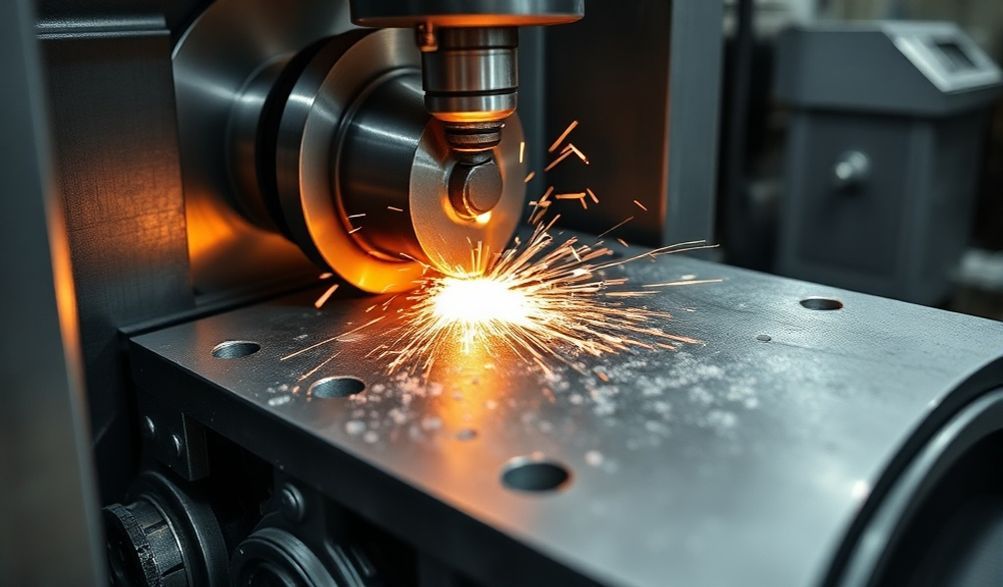
Jagorar Cikakke na Injin Niƙa Block Silinda: Daidaito, Tsari, da Aiki
Gabatarwa
Ka yi la'akari da injin a matsayin zuciyar abin hawa, sannan kuma toshe silinda a matsayin ɗakunansa. Wannan babban simintin gyare-gyare shine tushen da aka gina ƙarfi, aminci, da inganci a kai. Saman bene nasa—muhimmin fuskar haɗin gwiwa ga kan silinda—dole ne ya zama mara aibi. Ko da ƙananan lahani a cikin lebur ko yanayin yanayin na iya haifar da gazawa mai ban tsoro: fashewar gasket na kan, ɗigon ruwan sanyaya, asarar matsawa, da fashewar injin mai kashe-kashe.
Kalubalen a bayyane yake. Bayan dubban zagayowar zafi, yuwuwar zafi mai yawa, ko sarrafa injin da ya gabata, bencin injin ba kasafai yake cikakke ba. Niƙa na iya gyara karkacewa, amma don ƙarshe, ƙarewar micron-matakin da injunan zamani ke buƙata, ana buƙatar madaidaicin mafita. A nan ne injin niƙa na block na silinda ke shiga cikin haske.
Ga ƙwararrun masu sake gina injuna, shagunan aiki, da ƙwararrun masu'ikan injina, wannan kayan aiki na musamman ba abin alatu ba ne; shine tushen inganci. Shi ne bambanci tsakanin injin da kawai ke aiki da wanda ke rufewa daidai kuma yana aiki da aminci na dogon lokaci. Cimma ƙayyadaddun ƙayyadaddun saman kamar na manyan kamfanoni kamar Fel-Pro ko OEMs—wanda galibi ana auna su cikin madaidaicin ƙimar RA (Matsakaicin Rashin Santsi)—yana buƙatar tsari da kayan aiki masu dacewa.
Wannan cikakken jagora ya zurfafa cikin duniyar injinan niƙa toshe silinda. Za mu bincika yadda suke aiki, nau'ikan da ake da su, mahimman fasalulluka masu muhimmanci, da kuma matakai-matakan da ƙwararru ke amfani da su. Ko kuna kafa sabon shago ne ko kuma kuna neman haɓaka aikin injinan ku, wannan albarkatun yana ba da cikakkun bayanai da kuke buƙata don fahimtar wannan muhimmiyar fasaha.
Menene Injin Niƙa Block Silinda? Aikin Cibiyar da Muhimmancinsa
A zahiri, injin niƙa block na silinda wata kayan aiki ce ta daidaitaccen da aka ƙera don babban manufa ɗaya: don sake tabbatar da fili mai siffar lissafi da takamaiman yanayin saman a kan bene na injin da rajistar hular babban ɗaukar hoto. Mataki ne na ƙarshe, na ƙayyadaddun mataki a cikin shirya saman bene.
Ma'anar Kayan Aiki: Fiye da Na'urar Niƙa Kawai
Ko da yake yana amfani da ƙurar ƙurar, kiran shi kawai "niƙa" yana rage ƙimar daidaitonsa. Ba kamar naƙa benci ba, wannan tsari ne mai ƙarfi, wanda aka ƙera shi don cire kayan a cikin ƙananan matakai kamar su dubun dubunnan inci.
- Fa'idar Niƙa:Yana da muhimmanci a bambanta shi da wasu hanyoyin. Niƙa tana amfani da abin yankan mai haƙori da yawa don yanke kayan kuma yana da kyau don cire adadi mai yawa. Broaching yana jan abin yankan a saman. Niƙa, duk da haka, yana amfani da abin yankan mai ɗaure don yanka tare da ƙananan maki marasa ƙidaya. Wannan ya sa ya fi dacewa don cimmaƘarshe gama da cikakken leburAna buƙata don rufewa. Tsarin kammalawa ne, ba na cire kayan da yawa ba.
Me Yasa Aikin Niƙa daidai-gwargwado ba za a iya sallamawa ba wajen Gina Injin
Zuba jari a cikin wannan tsari yana ba da riba kai tsaye a cikin aikin injin da kuma dorewa. Ga dalilin da ya sa ba za a iya sasantawa ba:
- Sealing Integrity: This is the foremost reason. The head gasket must seal immense pressures (combustion) and contain various fluids (oil, coolant). A non-flat surface creates low spots where clamping force is inadequate, leading to leaks. The specific surface texture (RA) also allows the gasket material to “bite” and conform properly.
- Performance & Longevity: A perfectly flat deck ensures uniform clamping force from every head bolt. This prevents distortion, maintains optimal compression ratios across all cylinders, and eliminates localized hot spots that can cause pre-ignition. In short, it builds a balanced, happy engine.
- Meeting Specifications: Industry authorities are clear. Gasket manufacturers publish required RA ranges. For instance, a traditional composite gasket might require 60-120 RA, while a modern Multi-Layer Steel (MLS) gasket demands a smoother 30-60 RA finish. A dedicated grinder is the tool that reliably hits these targets.
Types of Cylinder Block Grinding Machines
Not all block grinding solutions are created equal. The right choice depends on your shop’s volume, budget, and precision requirements.
Traditional Surface Grinders with Specialized Fixturing
Many shops start here. A standard, heavy-duty surface grinder can be adapted for engine blocks.
- Yadda Ake Aiki: Custom fixtures, often magnetic chucks with precision ground parallels and adjustable stops, are used to hold and align the block on the machine table.
- Abubuwan da suka fi kyau: Maximum versatility. The same machine can surface flywheels, cylinder heads, and other components when not doing blocks.
- Rashin Kyau: Setup is more complex and time-consuming for each block. The machine’s design may not offer the ultimate rigidity needed for the largest diesel blocks, potentially affecting finish quality.
Dedicated Cylinder Block Grinders
These are purpose-built machines designed from the ground up for engine blocks. Brands like Peterson Machine Tool are synonymous with this category.
- Yadda Ake Aiki: They feature a massive, fixed base with integrated ways. The block is mounted to a heavy sled or fixture that moves under a powerful, stationary grinding head. They often include dedicated setups for grinding main bearing caps in perfect register with the deck.
- Abubuwan da suka fi kyau: Unmatched rigidity and stability for the task. Setup is often faster and more repeatable with dedicated alignment features. Integrated flood coolant systems are standard. They are the workhorses of professional engine machine shops.
- Rashin Kyau: They are typically a single-purpose machine, taking up dedicated floor space.
CNC Cylinder Block Grinding Centers
This is the pinnacle of technology, found in high-volume OEM remanufacturing facilities and top-tier performance shops.
- Yadda Ake Aiki: A computer numerically controls all axes of motion (X, Y, Z, and often wheel rotation). The block is fixtured, and the machine executes a programmed routine.
- Abubuwan da suka fi kyau: Absolute, repeatable precision. Ability to create complex features like O-ring grooves, fire rings, or specific surface patterns. Dramatically reduces operator skill dependency for basic operations and improves throughput.
- Rashin Kyau: Very high capital cost. Requires programming knowledge and more sophisticated maintenance.
Key Features and Components to Evaluate
When selecting a machine, whether new or used, these are the critical components that determine its capability and longevity.
The Grinding Wheel: Abrasive, Grit, and Bond
The wheel is the cutting tool. Its composition is selected for the material and desired finish.
- Abrasive Type: Cubic Boron Nitride (CBN) wheels are the modern standard for cast iron. They stay sharp longer, run cooler, and produce a superior finish compared to traditional aluminum oxide. For aluminum blocks, a specific aluminum-oxide wheel formulation is used to prevent “loading,” where soft metal clogs the wheel pores.
- Grit Size: A coarser grit (e.g., 80-120) is used for roughing to remove material. A finer grit (e.g., 180-220+) is used for the final finishing pass to achieve the required RA value.
- Bond: The material that holds the abrasive. Vitrified (glass-like) bonds are common for precision grinding.
Machine Rigidity and Spindle Power
This is the foundation of precision. A flimsy machine will chatter, creating a wavy, unacceptable surface.
- Gini: Look for heavily ribbed, cast iron or fabricated steel bases and columns. Mass dampens vibration.
- Spindle Power: A powerful spindle motor (5 HP and up is common for dedicated machines) maintains consistent wheel speed under load, preventing slow-down that can affect finish.
Precision Movement: Ways, Screws, and Digital Readouts (DRO)
These components control the movement of the wheel or table.
- Ways: Hardened and ground steel or replaceable linear guide ways ensure smooth, friction-free movement without play.
- Feed Screws: Precision ball screws provide smooth, accurate table or head movement.
- Digital Readout (DRO): A must-have. A high-quality DRO on the vertical (Z) axis allows the operator to control depth of cut with precision, critical for maintaining correct deck height and removing the minimum necessary material.
Fixturing and Setup Systems
A perfectly ground block starts with a perfectly aligned block. The fixturing is arguably as important as the machine itself.
- Block Alignment: Dedicated machines use V-blocks, alignment pins, or precision machined registers to square the block’s deck to the grinding path.
- Main Cap Attachments: A key feature of dedicated grinders is an attachment to grind the main bearing cap parting surfaces flush with the block deck after align honing.
Coolant and Swarf Management
Grinding generates significant heat and abrasive waste (swarf).
- Flood Coolant: A non-negotiable system that drenhes the work area. It prevents thermal distortion of the block, washes away swarf to prevent re-cutting, and extends wheel life.
- Filtration: A magnetic separator or paper filter system keeps the coolant clean, protecting pumps and ensuring a consistent finish.
The Professional Grinding Process: A Step-by-Step Overview
A quality outcome is the result of a meticulous process. Here’s how professionals approach a block grind.
Step 1: Inspection and Cleaning
The job begins long before the machine is powered on.
- Clean: The block is hot-tanked or thoroughly cleaned to remove all grease, oil, and debris. Any contamination will ruin the grinding wheel and the finish.
- Inspect: The block is checked for cracks (often via Magnafluxing). Core shift is measured to ensure there is enough material to grind without breaking into water jackets.
Step 2: Precise Fixturing and Alignment
This is the most critical step. As the adage goes, “You can’t grind in accuracy that wasn’t set up.”
- The block is mounted to the machine’s fixture or chuck.
- Using a precision dial indicator, the deck surface is “swept” to ensure it is perfectly parallel to the machine’s travel. This may involve shimming or adjusting the fixture.
- The block is also squared so its centerline is parallel to the grinding wheel path. In a professional shop, this setup can take longer than the actual grinding.
Step 3: The Grinding Pass
With setup verified, the grinding begins.
- Dressing the Wheel: The grinding wheel is “dressed” with a diamond tool to true its face and expose fresh, sharp abrasive.
- Roughing Pass: A initial pass is made with a moderate depth of cut (e.g., 0.002″) to clean up the surface and establish flatness.
- Finishing Pass: The final pass uses a very light cut (often 0.0005″ or less) with a fine-grit wheel to achieve the target surface finish. The cross-feed rate is slow and consistent.
Step 4: Post-Grinding Inspection and Finish Verification
The proof is in the measurement. The block is not complete until it passes inspection.
- Flatness Check: A precision ground straightedge and feeler gauges are used to check for any deviation from flat across the entire deck, diagonally, and around bolt holes.
- Surface Finish Verification: A profilometer is used to measure the RA value of the finished surface, ensuring it meets the gasket manufacturer’s specification. This is the final stamp of quality.
How to Choose the Right Machine for Your Shop
Selecting a cylinder block grinder is a significant investment. Ask these questions to guide your decision.
Assessing Your Volume and Block Variety
- Girma: Do you grind a few blocks a month or several per week? High volume justifies a faster, dedicated or CNC machine.
- Girman Block & Nau'in: Do you work primarily on small-block Chevys, or do you need to accommodate large diesel blocks? This determines the necessary table size, horsepower, and rigidity.
- Shop Versatility: If you need one machine for multiple tasks (heads, flywheels), a surface grinder with fixtures may be the best starting point.
New vs. Used Equipment: A Practical Consideration
- New Machines: Come with a warranty, modern features, and support. The cost is higher.
- Used Machines: Can offer tremendous value. Critical Inspection Points:
- Check the ways for wear or scoring.
- Test spindle runout with a dial indicator.
- Power up the machine to listen for unusual noises.
- Ensure all components (DRO, coolant pump) are functional.
Budgeting Beyond the Sticker Price
The machine cost is just the beginning. Factor in:
* Tooling: Multiple grinding wheels, diamond dressers, and specialized fixtures.
* Installation: Electrical requirements (often 3-phase), foundation, and coolant plumbing.
* Maintenance: Ongoing costs for filters, coolant, and eventual spindle rebuilds.
Brand Reputation and Support
Research manufacturers. An established brand with a good reputation for durability is key. Perhaps more importantly, ensure parts and technical support are available. A machine you can’t get parts for is a very expensive boat anchor.
Tambayoyin da ake yawan yi (FAQ)
Q1: What is the ideal surface finish (RA) for a cylinder block deck?
A: There is no single “ideal” finish; it is dictated by the gasket manufacturer’s specification. For composite gaskets, 60-120 microinches RA is typical. For modern MLS gaskets, a smoother 30-60 RA is often required. Always verify the spec for the specific gasket you are using.
Q2: Can I grind an aluminum block with the same setup as cast iron?
A: Not exactly. Special precautions are essential:
* Use a wheel specifically formulated for aluminum (softer bond to prevent loading).
* Use a coolant designed for aluminum to prevent staining and oxidation.
* Adjust speeds/feeds, as aluminum dissipates heat differently and can distort more easily.
Q3: How much material is typically removed during a block grinding operation?
A: The goal is minimum material removal. A typical cleanup grind might remove only 0.003″ to 0.010″ (0.076 – 0.254 mm). The primary objective is to achieve flatness and finish, not to lower the deck. Preserving deck height is critical for maintaining the designed compression ratio and valve timing.
Q4: Is it necessary to grind main bearing caps after align honing?
A: Yes, it is considered a best practice in professional engine building. The clamping force of align honing can slightly distort the main cap register surfaces. Grinding them ensures they are perfectly flush with the block deck, which maintains correct deck height and uniform gasket sealing across the entire block.
Ƙarshe
The cylinder block grinding machine represents a commitment to quality. It is the tool that transforms a machined surface into a precision sealing plane, capable of meeting the exacting demands of OEM engineers and high-performance builders alike. In an industry where microns matter, it provides the control necessary to deliver reliable, powerful, and leak-free engines.
This precision is not just about tolerances on a page; it’s the direct link to customer satisfaction and shop reputation. An engine that seals perfectly runs stronger and lasts longer. If you are building or upgrading a machining operation, prioritize hands-on training and never underestimate the importance of meticulous setup and measurement. When outsourcing, don’t hesitate to ask a shop about their process and inspection standards.
As technology advances, the fundamentals of grinding remain, but with tools like CBN abrasives and CNC automation pushing the boundaries of speed and consistency even further. For the serious engine professional, mastering this process is not the end of the journey, but a solid foundation for everything that follows.
<