
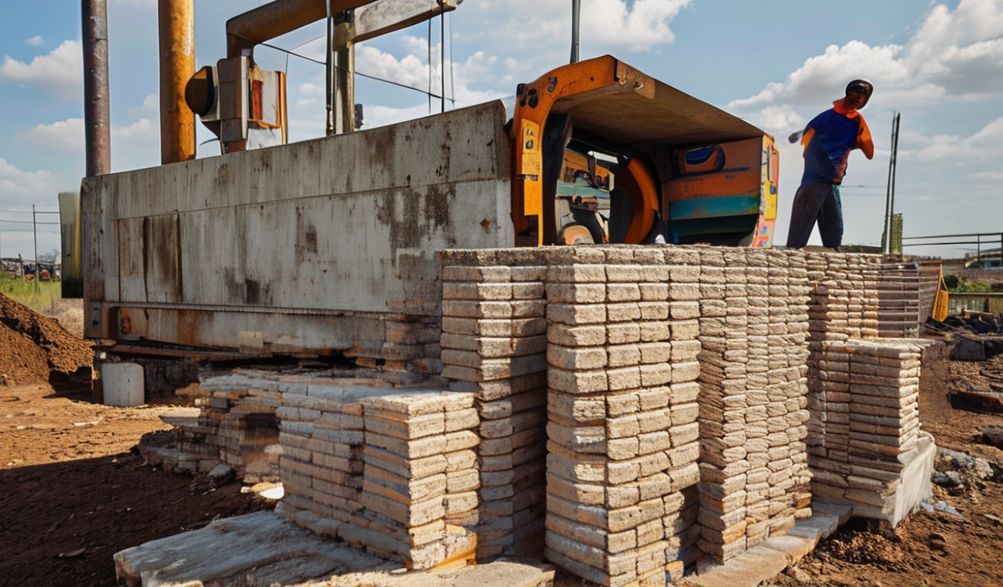
Jagorar Cikakke don Injin Yin Tubalin Siminti na FUDA a Kenya
Hausalin Kenya yana canzawa. Daga cikin biranen Nairobi da Mombasa masu cike da hargitsi zuwa garuruwan da ke tasowa a fadin kananan hukumomi, an fara bunƙasar gine-gine. Sakamakon ƙaura da yawan jama'a ke yi zuwa birane, shirin gidaje masu araha na ƙasa, da manyan ayyukan samar da ababen more rayuwa, buƙatar kayan gini ba ta taɓa yin yawa ba kamar yadda take a yanzu. A tsakiyar wannan juyin juya halin gine-ginen akwai wani ɗan ƙaramin abu mai mahimmanci: tubalin siminti.
Duk da haka, ga masu gini, kwangila, da 'yan kasuwa, cika wannan buƙatu yana zuwa da manyan kalubale. Rashin daidaiton ingancin bulo na hannu, hauhawar farashin aiki, yawan samarwa mara tabbas, da takaicin na'urori marasa aminci, masu saurin lalacewa, na iya hana ci gaba da rage riba. Neman shine don samun mafita wanda ke ba dainganci, inganci, da amincia kai a kai.
Shigar da na'urorin kera bulo na musamman. Wannan jagora ya mai da hankali kan suna daya da ya shahara a cikin masana'antar:FUDA Injin Yin Tubalin SimintiGa ƙwararrun ƴan Kenya da ke neman saka hannun jari a cikin ƙarfin samar da su, zaɓin kayan aikin da ya dace yana da muhimmanci. Wannan cikakken rubutu yana aiki azaman ingantaccen tushen ku, wanda aka gina akan nazarin fasaha da fahimtar kasuwa, don taimaka muku tantance ko injin FUDA shine dabarun saka hannun jari don tura ayyukanku ko kasuwancin ku gaba a cikin yanayin Kenya.
Fahimtar Kasuwar Kenya don Injinan Yin Tubali
Don yin hankali a zuba jari, dole ne ka fara fahimtar yanayin. Bangaren gine-gine na Kenya ba wai kawai yana girma ba; yana ci gaba, yana haifar da takamaiman dama da kalubale ga masu samar da tubali.
Trends na Gina Gidaje Da Ke Haɓaka Buƙatu a Kenya
Buƙatar tubalan tana ƙarfafa ta hanyar siminti, da kuma dogon lokaci na yanayi:
- Haɓakar Birane da Ayyukan Gidaje cikin Gaggawa:Al'ummar birane na Kenya suna karuwa cikin sauri, wanda ke haifar da buƙatar gidaje mara iyaka. Masu ci gaban kamfanoni masu zaman kansu da shirye-shiryen da gwamnati ke tallafawa kamar naShirin Gidaje Mai Arahasuna kaddamar da ayyuka a fadin kasar, duk suna bukatar miliyoyin tubalan masu inganci.
- Shirye-shiryen Gwamnati na Kayayyakin More Rayuwa:Bayan gidaje, manyan ayyuka a hanyoyi, makarantu, asibitoci, da wuraren kasuwanci suna cikin fifikon gwamnati. Waɗannan ayyukan suna buƙatar daidaitattun kayan gini masu ɗorewa, suna haifar da ingantacciyar kasuwa ga masu samar da tubalan da ake dogaro da su.
Ƙalubalen Manyan Masu Samar da Shinge a Kenya
Kewaya wannan kasuwa mai ban sha'awa yana buƙatar shawo kan matsalolin gida:
- Canje-canjen Farashin Kayan Masana'antu:Farashin siminti, yashi, da tsakuwa na iya bambanta, wanda kai tsaye ke shafar farashin samarwa da ribar riba. Yin amfani da kayan aikin cikin inganci yana da muhimmanci.
- Samun Wutar Lantarki Mai Dogaro:Yayin da hanyar sadarwar wutar lantarki ke faɗaɗawa, amincin wutar lantarki na iya zama abin damuwa a wasu yankuna. Samarwa ba zai iya jurewa kasancewa garkuwar katsewar wutar lantarki akai-akai ba.
- Bukatar Kayan Aiki Masu Ƙarfi, Masu Sauƙin Kulawa: In a market where downtime is lost income, machinery must be robust, simple to maintain, and built to withstand demanding, continuous use. Easy access to spare parts is non-negotiable.
Why Choose a FUDA Concrete Block Making Machine?
With numerous brands available, what sets FUDA apart for the Kenyan market? It boils down to specialized engineering, practical design, and benefits that align with local business needs.
FUDA Brand Overview: Expertise and Global Reach
FUDA is not a generic machinery manufacturer. It is a specialized industrial group with a core focus on research, development, and production of concrete block making machines and plants. With years of expertise and a presence in markets across Africa, Asia, and beyond, FUDA has engineered its equipment based on real-world production feedback. This specialization translates into machines designed for one primary task: producing perfect blocks, efficiently and reliably.
Key Features & Technical Advantages
FUDA machines incorporate several design philosophies that offer clear advantages:
- Ginin Ƙarfi: Heavy-duty steel frames, quality hydraulic systems, and reinforced components ensure the machine can handle the rigors of daily production, season after season.
- Fasaha Mai Ban Mamaki: Through interchangeable moulds, a single FUDA machine can typically produce a wide array of block types crucial for Kenyan construction:
- Interlocking Stabilized Soil Blocks (ISSBs)
- Standard Hollow Blocks (6″, 5″, 4″)
- Tsari Mai Ƙarfi
- Paving Bricks and Kerbstones
- Graded Efficiency: FUDA offers a range from manual/semi-automatic to fully automatic models. This means you can choose a machine whose output (from 1,000 to over 10,000 blocks per 8-hour shift) matches your business scale, avoiding over or under-investment.
- Clear Operational Tiers:
- Semi-otomatik: Operator feeds the mix and removes blocks. Ideal for controlled, lower-volume production.
- Gaba Daya Mai Sarrafa Kansa: Integrated mixer, conveyor, and stacker. Designed for minimal labor and maximum output.
Benefits Tailored for Kenyan Entrepreneurs
These technical features translate into direct, tangible benefits for your Kenyan operation:
- Superior Cost-Effectiveness & ROI: Automation reduces dependency on large manual labor teams. High precision minimizes material waste (cement and aggregate). Faster production cycles mean you can fulfill larger orders and grow revenue faster, accelerating your return on investment.
- Guaranteed Quality Consistency: Every block from a FUDA machine is identical in dimension, density, and finish. This standardization is critical for structural integrity, speed of construction (walls go up faster), and professional reputation. You can confidently supply blocks that meet or exceed Kenyan building standards.
- Durability for Local Conditions: These machines are engineered for tough environments. With proper basic maintenance, they deliver consistent performance, resisting the wear and tear that sidelines lesser equipment.
Detailed Look at Popular FUDA Models for Kenya
FUDA’s range allows you to select a model that fits your exact production goals. Here’s a breakdown of common categories suited for Kenya.
Semi-Automatic Models: Ideal for Small/Medium Businesses
Perfect for startups, small construction firms, or community projects. They offer a great balance of affordability and mechanized efficiency.
- Example Model: QMJ4-35 (Mobile Egg-Laying Type)
- Aiki: Manual feeding of concrete mix. The machine vibrates and compresses the block, then the operator moves it to a curing area. The machine itself is mobile on wheels.
- Sakamako: Can produce approximately 800-1200 blocks (like 4″ hollow blocks) per 8-hour shift.
- Ƙarfi: Can be configured for a standard electric motor or a diesel engine, crucial for areas with unstable grid power.
- Ya Dace Da: Entrepreneurs starting a block yard, contractors producing blocks for specific housing projects, or for on-site production at remote locations.
Fully Automatic Models: For High-Volume Production
Designed for established block manufacturing businesses, large housing developments, or suppliers to major infrastructure projects.
- Example Model: QFT10-15 (Fully Automatic Stationary Plant)
- Aiki: Features an automatic mixer, conveyor belt for feeding, automatic pressing and ejection, and a block stacker. Requires minimal operator intervention.
- Sakamako: High-capacity production, potentially over 10,000 blocks per shift depending on block type.
- Infrastructure Needs: Requires a prepared, level factory floor space, reliable three-phase electrical connection (though diesel options may exist), and a consistent supply of raw materials.
- Ya Dace Da: Industrial-scale block production for supply to the wider market or mega-projects.
Mobile Block Machines: Flexibility for On-Site Production
These combine the concept of a semi-automatic machine with enhanced mobility.
- Fadada: They can be easily towed by a tractor or truck directly to a construction site. This eliminates block transportation costs over long distances, reduces handling damage, and allows for production exactly where blocks are needed. Ideal for large, remote farms, ranch developments, or regional infrastructure projects.
Critical Considerations Before Buying in Kenya
The excitement of a new machine must be tempered with careful planning. Here are the non-negotiable factors to evaluate.
Assessing Your Needs: Project Scale, Budget, and Block Types
Ask yourself this checklist:
* What is my primary block product? (Hollow, interlocking, paving?)
* What is my current and projected daily/weekly demand?
* What is my total available investment budget (machine, shipping, installation, working capital)?
* Do I have a dedicated, secure yard or factory space?
* What is my access to skilled or trainable labor?
Power Requirements & Alternative Solutions
This is a critical technical decision.
* Samfuran Lantarki: Cleaner and often cheaper to run, but dependent on stable grid power, typically 3-phase for larger models.
* Diesel-Powered Models: Higher fuel cost but offer complete independence from the grid. This is often the preferred and more reliable choice for many Kenyan businesses, especially outside major urban centers. Always confirm the fuel consumption specs.
After-Sales Support: The Most Important Factor
Your relationship with the mai bayarwa is more important than the relationship with the machine brand. A machine without support is a future scrap metal.
* Verification is Key: Before any payment, you must verify:
* Spare Parts Inventory: Do they stock common wear parts (moulds, mixer blades, hydraulic seals, vibration motors) locally in Kenya?
* Technical Service: Do they have trained technicians on call for installation, commissioning, and repairs?
* Warranty: What is covered, for how long, and what are the terms?
* Action: Demand to see their service workshop and speak to past clients.
The Procurement Process in Kenya
Navigating the import and setup process smoothly requires a clear roadmap.
Finding a Reputable Supplier or Direct Importer
- Vet Local Agents: Search for authorized or established FUDA distributors in Kenya. Check their physical address, years in business, and online presence.
- Check References: A credible supplier will gladly provide contacts for previous customers. Visit these clients if possible to see the machine in operation and ask about their experience with support.
- Verify Authenticity: Ensure you are getting a genuine FUDA machine, not a counterfeit or “FUDA-type” clone. Request original documentation and manufacturing details.
Cost Breakdown: Machine, Shipping, Customs, and Installation
Get a comprehensive written quote that breaks down all costs to avoid surprises:
1. FOB Price: Cost of the machine at the Chinese port.
2. Shipping & Insurance: Sea freight to Mombasa port.
3. Kenyan Costs: Port clearing charges, import duty (verify the correct HS code with your agent), railway or trucking to your site.
4. Shigarwa & Horarwa: Clarify if this is included or an extra cost.
Installation, Training, and Getting Started
A professional supplier will manage this phase:
* Installation: They should supervise the uncrating, placement, and initial leveling of the machine.
* Commissioning & Training: A technician should run the first batches of blocks, training your operators on safe use, daily maintenance, basic troubleshooting, and optimal mix ratios.
* Handover: You should receive all manuals, warranty cards, and a list of recommended local spare parts.
Tambayoyin da ake yawan yi (FAQ)
Q1: What is the approximate price range for a FUDA block making machine in Kenya?
A: Prices vary significantly based on model and automation. A semi-automatic mobile machine (like the QMJ4-35) may start from KSh 1.2 – 2.5 million, while a fully automatic stationary plant can range from KSh 5 – 15+ million. These are estimates; you must get a detailed quote from a supplier that includes all shipping, duty, and installation costs.
Q2: Can FUDA machines produce interlocking blocks suitable for Kenyan building standards?
A: Absolutely. Many FUDA models are explicitly designed with moulds for popular interlocking block types (like the “Maendeleo” or diamond pattern). The key is to ensure the machine’s vibration and pressure produce blocks with sufficient compressive strength. Always test your produced blocks at a certified lab to ensure they meet KS standards for your intended application.
Q3: What kind of after-sales service and spare parts availability can I expect in Kenya?
A: This is the most critical question. Service levels depend entirely on your chosen local supplier. Before purchasing, you must confirm they hold a physical inventory of critical spare parts (moulds, hydraulic hoses, vibration motors) in Kenya and have technicians available for support. A trustworthy supplier will have a clear, written service agreement.
Q4: How do I calculate the potential profitability of a FUDA block making machine business?
A: Use this simplified framework: Estimate your machine’s daily output capacity. Research the current selling price per block in your target market. Deduct your costs per block (raw materials, labor, power/fuel, maintenance, and overhead). The difference is your gross margin. Project your monthly sales volume to model cash flow. We strongly recommend developing a full business plan.
Q5: Are there any successful examples of FUDA machines being used in Kenya?
A: Reputable suppliers should be able to provide references. FUDA machines are known to be operational in various Kenyan counties, supporting businesses from block manufacturing yards in Kiambu and Nakuru to large-scale housing projects in Eldoret and Kisumu. Ask your potential supplier for contact information of local clients you can visit—seeing is believing.
Ƙarshe
Zuba jari a cikin...FUDA Injin Yin Tubalin Siminti represents a strategic decision to harness efficiency, quality, and scalability in Kenya’s vibrant construction market. It is a move from unpredictable manual labor to controlled, mechanized production that can enhance your reputation, increase your profitability, and allow you to compete for larger contracts.
The final and most crucial recommendation is this: conduct thorough due diligence. Clearly define your production needs, research the models that match them, and, above all, partner with a reputable, locally-established supplier. The right supplier is your guarantee of long-term machine uptime, access to spare parts, and ultimately, the success of your investment.
Ready to explore specific models and get a quote tailored to your Kenyan operation? Contact a verified and experienced FUDA equipment supplier in Kenya today to discuss your requirements, see detailed specifications, and take the first step towards transforming your block production.
<