
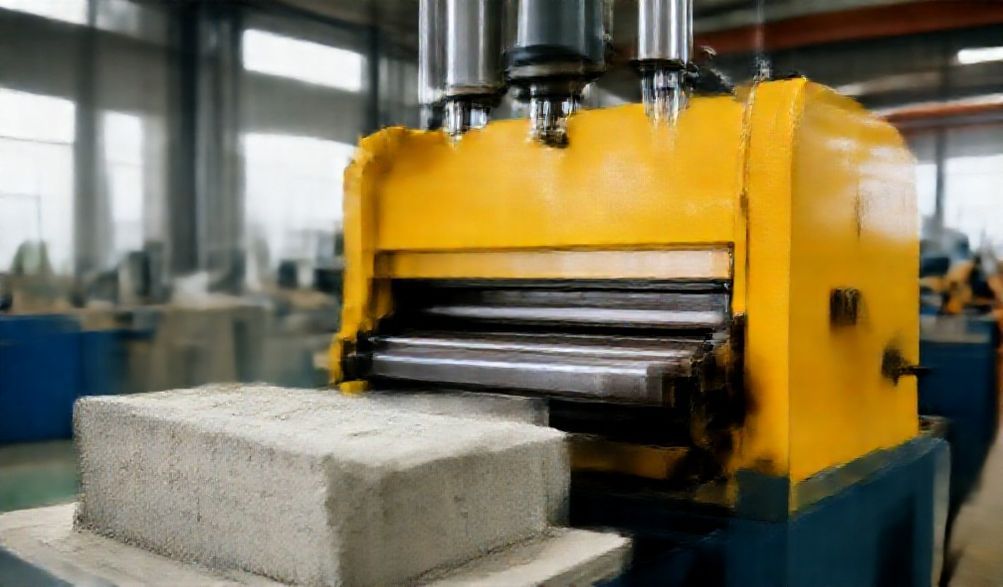
Jagorarku ga Manyan Masana'antun Kera Na'urorin Yin Bulo na Semi-Automatic Hydraulic na China
Gabatarwa
Shin kai gini ne, dan kwangila, ko ɗan kasuwa da ke cikin matsi? A gefe ɗaya, ayyukanka ko kasuwancinka na buƙatar samar da bulo mai inganci kuma abin ya dogara. A ɗayan gefen, hauhawar farashin sayan bulo ko babban jarin da ake kashewa don cikakkun hanyoyin samar da su ta atomatik yana rage ribarka. Wannan matsala - buƙatar samar da bulo mai tsada, mai inganci, da sarrafawa - kalubale ce ta duniya a cikin gine-gine da kera bulo.
Shigo da injin yin bulo na hydraulic mai taimakon kai. Wannan kayan aikin yana wakiltar madaidaicin dandali na dabara, yana ba da haɗin gwiwar kuzari mai ƙarfi na sarrafa kai don haɓaka yawan samarwa da kulawar hannu don sassaucin mahimmanci, duk a cikin ƙaramin jari fiye da cikakken masana'anta mai sarrafa kansa. Ga ƙananan zuwa matsakaitan ayyuka, sau da yawa shine mafi kyawun shiga ko haɓakawa.
Duk da haka, kewaya kasuwa mai girma naMasana'antun Sin na injinan yin bulo na hydraulic mai sarrafa kansaYana iya zama abin tsoro. Ta yaya za ku ware masu mutunci daga waɗanda ba su da aminci? Wannan jagora an tsara shi don ya zama cikakken taswirar ku. Manufarmu ita ce isar da ƙwararrun bincike, mara son kai, da cikakkun bayanai, ta yin amfani da zurfin ilimin masana'antu don taimaka muku yanke shawara na siyayya cikin kwarin gwiwa da sanin ya kamata. Za mu wuce kwatankwacin farashi mai sauƙi don bincika muhimman abubuwan inganin na'ura, amincin masana'anta, da tallafin tallace-tallace na dogon lokaci waɗanda da gaske ke ayyana ƙima.
Me Ya Zabi Na'urar Hydraulic Semi-Automatic daga China?
Zaɓar kayan aiki da suka dace shi ne muhimmiyar shawarar kasuwanci. Zaɓar samfurin hydraulic mai sarrafa kansa daga China dabarar da ke da fa'idodi masu ƙarfi a fannin fasaha da tattalin arziki.
Daidaitaccen Ma'auni na Inganci da Araha
Alamar "semi-oto" ita ce mabuɗin ƙimar tsammaninta. Ba kamar injinan da ake sarrafa da hannu gaba ɗaya ba waɗanda ke da ƙwazo a cikin aiki kuma suna jinkiri, samfurin semi-oto yana ɗaukar mafi mahimmancin aiki mai tsanani—ƙanƙara—ta hanyar tsarin na'urar motsa ruwa. Yawanci ma'aikacin yana ciyar da albarkatun ƙasa kuma yana cire bulo da aka gama, amma injin yana tabbatar da kowane toshe yana matsewa tare da ƙarfi mai girma daidai.
- Kuɗin Ma'aikata vs. Kuɗin Jari:Wannan yana rage matsin jiki sosai kuma yana ƙara yawan aikin da ma'aikaci ke yi idan aka kwatanta da injunan hannu, yayin da yake guje wa manyan kuɗin jari da kuɗin kulawa na cikakken tsarin sarrafa kai tare da sarrafa mutum-mutumi da sarrafa PLC masu sarkakiya.
- Fadar Ruwa:Jigon wannan na'ura shine tsarin hydraulic dinta. Tana amfani da matsi mai ƙarfi da aka sarrafa akan ƙirar bulo. Wannan matsin ne ke tabbatar da:
- Matsakaicin Yawa: Eliminating air pockets for a solid, durable brick.
- Ƙarfi Mafi Girma: Achieving compressive strengths suitable for load-bearing construction.
- Matsayin Inganci Mai Dorewa: Every brick, from the first to the last of the day, is produced under identical pressure, guaranteeing uniformity in size and strength.
China’s Manufacturing Ecosystem: Scale, Expertise, and Innovation
China’s dominance in manufacturing this machinery isn’t accidental. It’s the result of a mature, integrated industrial ecosystem.
- Global Industrial Hub: China has developed into the world’s foremost manufacturing hub for construction machinery. This concentration of industry means specialized supply chains for hydraulic components, steel fabrication, and precision molds are readily available and highly competitive.
- Decades of Refined Expertise: Many Chinese manufacturers have been refining brick machine designs for 20-30 years. They’ve iteratively solved common problems, optimized production flows, and adapted to international standards and market demands.
- Innovation and Value: This scale and experience translate directly to better value for you. You gain access to advanced, reliable technology—such as improved sealing systems for hydraulics or more wear-resistant mold designs—at a price point often unmatched by manufacturers in other regions. The competition fosters continuous improvement.
Key Features to Evaluate in a Quality Machine
To make a smart purchase, you must look beyond glossy brochures and assess the core engineering of the machine. Here’s what separates a robust, long-term asset from a problematic piece of equipment.
Core Mechanical & Hydraulic Specifications
These are the non-negotiable foundations of performance and longevity.
- Hydraulic System Pressure & Stability: Don’t just look at the maximum pressure (measured in MPa or PSI). Inquire about the system’s design for stable pressure holding. A system that maintains consistent pressure throughout the compaction cycle produces stronger, more uniform bricks. Ask about the brand and quality of the pump, valves, and cylinders.
- Ingancin Gyare-gyare & Kayan Aiki: The mold is the heart that shapes your product. It must be made from high-grade, hardened steel (e.g., Cr12 or similar alloy steel) to withstand constant abrasion and pressure.
- Sarrafa da Daidaito: A precisely machined mold ensures brick dimensional accuracy and a smooth surface finish.
- Heat Treatment: Molds should be heat-treated to enhance surface hardness, drastically extending their service life.
- Machine Frame Construction: The frame must absorb immense vibration and stress. A heavy-duty, welded steel frame is standard for stability. Some high-end models may use reinforced cast iron sections for critical vibration points. A flimsy frame will lead to misalignment, wear, and breakdowns.
Operational Features for Productivity
These specifications determine how well the machine will fit your business needs.
- Ƙarfin Samarwa: This is usually stated as “blocks per 8-hour shift” or “blocks per hour.” Be realistic. A machine rated for 3000 blocks/day might achieve that under perfect conditions with a skilled operator. Factor in time for mold changes, maintenance, and material feeding. Choose a capacity that exceeds your current need to allow for growth.
- Versatility in Brick Types: Can it produce only solid blocks, or can it be easily adapted?
- Matsalolin da ake iya musanya: The ability to quickly switch molds to produce hollow blocks, interlocking paving stones, curb stones, or designer blocks adds tremendous business flexibility.
- Sauƙin Samun Kayan Aiki: Ensure the machine can handle your local raw material mix, whether it’s standard concrete (cement, sand, aggregate), fly ash, or soil.
- Ease of Operation and Changeover: A well-designed machine prioritizes user-friendliness. Look for features like:
- A logical, accessible control panel.
- A mold change system that doesn’t require excessive time or specialized tools.
- Clear access points for lubrication and routine maintenance.
Safety and Control Systems
Productivity means nothing without safety.
- Standard Safety Features: Essential items include physical guards on moving parts (especially the hydraulic cylinder), an emergency stop button within easy reach, and safety locks to prevent operation during maintenance.
- Kwamitin Sarrafawa: It should be simple, intuitive, and robust. Look for a panel with clearly labeled switches or a digital display for setting vibration/pressure time. The components should be industrial-grade, not cheap consumer parts.
How to Identify a Trustworthy Chinese Manufacturer
Finding a manufacturer is easy; finding a reliable partner is the real task. Due diligence is your most powerful tool.
Verifying Factory Credentials and Experience
Start with the digital paper trail.
- Business License: A legitimate manufacturer will have a valid business license. You can often verify this through Chinese business registry platforms (like the National Enterprise Credit Information Publicity System).
- Takaddun shaida: While not a guarantee, certifications indicate a commitment to systems. ISO 9001 (Quality Management) is a strong positive signal. Certificates for specific products (like CE for Europe) show experience in exporting to regulated markets.
- Rikodin Aiki How long has the company been manufacturing brick machines? A 10+ year history suggests stability and accumulated expertise. An active export history to regions like Africa, Southeast Asia, or the Middle East demonstrates an understanding of international logistics and support.
The Critical Role of Factory Audits and Site Visits
If possible, always “see” the operation. This is the single most effective verification step.
- Virtual or Physical Tours: Most reputable factories are accustomed to providing live video tours via WhatsApp, Zoom, or WeChat. Insist on this.
- What to Look For During the Tour:
- Production Floor: Is it organized? Are welding and machining areas professional?
- Kula da inganci: Do you see gauges for testing hydraulic pressure? Are there procedures for checking finished machines?
- R&D/Testing Area: Are they testing new molds or machine configurations? This shows investment in innovation.
- Questions to Ask: “Can you show me your quality control checklist?” “What is your process for testing the hydraulic system before shipment?” “Can I speak to a current overseas customer for a reference?”
Analyzing After-Sales Service and Support
The true cost of a machine includes its upkeep. The manufacturer’s post-sale policy is critical.
- Warranty: A clear, written warranty is mandatory. Standard is 12 months for the whole machine, excluding wear parts like molds. Understand exactly what is covered and the process for making a claim.
- Tallafin Fasaha: What is provided?
- Manunai Daki-daki: Electrical diagrams, hydraulic schematics, and parts lists in English.
- Horarwa: Comprehensive video guides are common. Is on-site installation/training available (for a fee)?
- Communication: Is there a dedicated technical contact for email/WhatsApp support? What are their response time commitments?
- Spare Parts Supply: This is often the biggest long-term concern.
- Availability: Will they provide a recommended spare parts list? Do they keep common parts (seals, relays, sensors) in stock?
- Logistics: How quickly can they ship parts? Can they use DHL/FedEx for urgent shipments? Do they have local agents or warehouses in your region?
Navigating the Selection and Purchase Process
Turning your selection into a successful delivery requires careful process management.
From Inquiry to Delivery: A Step-by-Step Guide
- Detailed RFQ (Request for Quotation): Don’t just ask for a price. Send a specification sheet: desired brick type/size, daily output, raw materials, voltage (e.g., 380V/3Phase/50Hz), and any special requirements. This ensures comparable quotes.
- Comparing Proforma Invoices (PI): The PI is a formal offer. Compare not just the bottom line, but what’s included: standard accessories, spare parts package, packaging (export wooden case), and the offered warranty terms.
- Understanding Payment Terms & Incoterms:
- Payment: Standard is 30% deposit via T/T (Telegraphic Transfer), 70% balance against copy of shipping documents. Letters of Credit (L/C) are also common but more complex.
- Incoterms: FOB (Kyauta akan Jirgi) means you pay for main shipping and insurance. CIF (Cost, Insurance, Freight) means the supplier arranges and pays for shipping to your nearest port. CIF is often simpler for first-time buyers.
- Pre-shipment Inspection: Before the balance payment, insist on a video inspection of the finished machine. They should run it under power, demonstrate functions, and show the packing process.
- Shipping, Customs, and Installation: The supplier provides shipping documents (Bill of Lading, Commercial Invoice, Packing List). Use a reliable freight forwarder or clearing agent in your country. Prepare your foundation and power connection as per the machine manual before it arrives.
Red Flags and Common Pitfalls to Avoid
- Ghost Factories: A manufacturer with no verifiable physical address or one that only uses stock photos should be avoided.
- Too-Good-To-Be-True Pricing: A price far below market average almost always indicates inferior components, poor construction, or a scam.
- Vague Warranty or Support: Hesitancy to provide a clear warranty document or a promise of “lifetime support” with no specifics is a major warning sign.
- Payment Pressure: Demands for 100% payment upfront before production begins is highly unusual and risky. The standard deposit structure protects both buyer and seller.
FAQ Section
Q1: What is the average price range for a semi-automatic hydraulic brick machine from China?
A: Prices vary significantly based on capacity, configuration, and quality. A basic model might start around $4,000 – $6,000 USD, while high-capacity, versatile models with advanced features can range from $10,000 to $25,000+. Always request a detailed quote based on your specific requirements.
Q2: Can the machine be customized for specific brick sizes or raw materials?
A: Absolutely. Reputable manufacturers specialize in customization. You can order custom molds for unique brick sizes or designs (e.g., special interlocking patterns). They can also adjust machine settings and provide guidance on optimizing the raw material mix for your local soil, fly ash, or concrete aggregates.
Q3: What is the typical lead time for production and shipping?
A: After order confirmation and deposit, standard production time is 15-30 days. Sea freight shipping then takes approximately 20-45 days, depending on your destination port. Always factor in potential delays at customs in your country.
Q4: Do manufacturers provide installation and training?
A: Yes, credible manufacturers do. Standard support includes comprehensive operation and maintenance manuals, video guides, and remote assistance via video call. For an additional cost, most can arrange for an engineer to travel to your site for on-site installation and hands-on training, which is highly recommended for first-time users.
Q5: How do I handle maintenance and source spare parts?
A: A reliable partner will provide a maintenance schedule and a list of critical spare parts (like hydraulic seals, O-rings, and electrical components). They should commit to supplying these parts for the long term (5-10 years). For urgent breakdowns, ensure they can ship small parts via international courier within a few days.
Ƙarshe
Zaɓar daidaiChina semi-automatic hydraulic brick making machine manufacturer is a multifaceted decision that blends technical assessment with rigorous partner verification. It’s about finding the optimal intersection of a well-engineered machine, a credible and transparent factory, and a robust support framework.
Investing time in thorough research and due diligence, using the criteria outlined in this guide as your checklist, is not an obstacle—it’s the foundation of a successful long-term partnership. This upfront effort transforms your purchase from a simple transaction into a strategic investment that will serve as a profitable, reliable asset for years to come.
As your next step, we encourage you to prepare a clear, detailed summary of your project requirements. Use this document to contact potential suppliers. Their responsiveness, the clarity of their answers, and the comprehensiveness of their proposals will quickly separate the true partners from the mere sellers.
<