
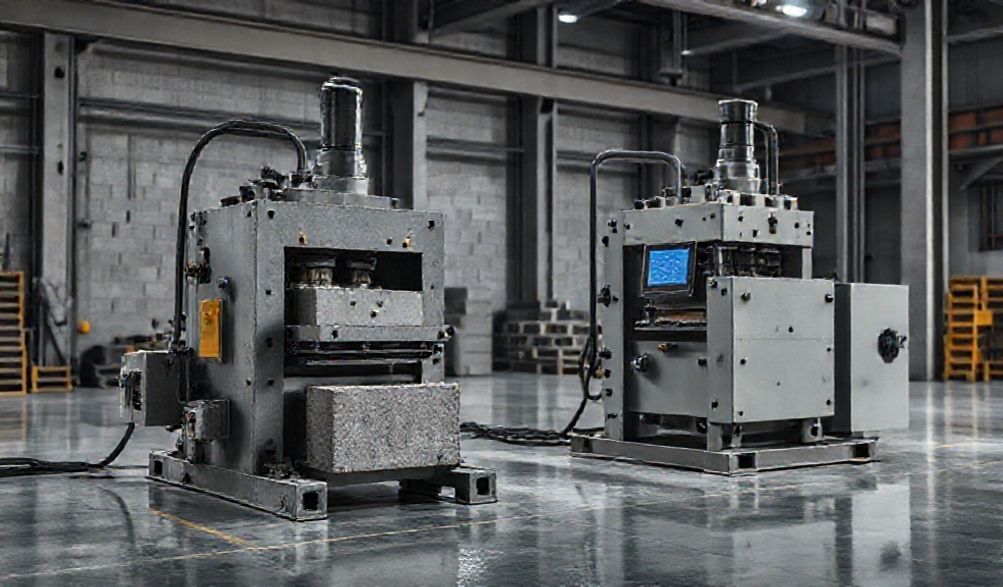
Your Ultimate Guide to Block Gal Machine Factory & FUDA Block Making Machine Factory
Finding a reliable, high-quality block making machine is a universal challenge for construction businesses, contractors, and manufacturing startups. The right machine is the heartbeat of your operation, directly impacting your output, product quality, and bottom line. Yet, the search often leads to a maze of manufacturers, each promising durability, efficiency, and the best value.
Choosing the right factory partner is a decision that extends far beyond the initial price tag. It’s about investing in a machine’s longevity, its level of automation to save on labor, and the critical after-sales support that keeps your production line running smoothly for years. With so much at stake, where do you begin?
This guide provides an in-depth, unbiased look at two notable names you’re likely to encounter in your search: Block Gal Machine FactorykumaKamfanin Kera Na'urorin Gina Tubalin FUDA. Our analysis is grounded in industry research, technical specifications, and market reputation, compiled to help you make an informed, trustworthy decision. We’ll compare and contrast these factories across key criteria, empowering you to identify the best partner for your specific block production needs.
Understanding Your Block Making Machine Needs
Before diving into specific brands, it’s crucial to define your own requirements. A machine perfect for a large-scale infrastructure project may be overkill and financially draining for a small landscaping business. This self-assessment is the first step toward a smart investment.
Types of Blocks and Products
What will you be producing? The end product dictates the necessary machine type and mold technology.
- Tubalin Caku-caku na Kankare: The standard for load-bearing walls in construction.
- Tubalan Siminti Masu Ƙarfi:Ana amfani da shi don gina ginshiƙai, shimfidar hanya, da kuma inda ake buƙatar mafi ƙarfin ƙarfi.
- Dutsen Shinge & Tubalin Masu Haɗin Kai: For driveways, walkways, and patios; often require color mixers and specialized pallets.
- Curbstones and Specialty Blocks: For landscaping and civil projects, requiring unique mold designs.
Your end-use—whether for residential building, commercial development, landscaping, or large-scale infrastructure—will set the parameters for machine capacity and capability.
Key Machine Selection Criteria
With your product goals in mind, evaluate these core factors:
- Ƙarfin Samarwa: Measured in blocks per hour or per 8-hour shift. A small manual machine might produce 800-1,000 blocks/day, while a fully automatic line can exceed 20,000.
- Matakin Sarrafa Kansa:
- Manual: Lowest cost, highest labor intensity.
- Semi-otomatik: A balance of cost and efficiency; some processes like mixing or stacking may be mechanized.
- Gaba Daya Mai Sarrafa Kansa: High initial investment but minimal labor; integrates batching, mixing, molding, curing, and stacking.
- Nau'in Injin:
- Kayan rubutu: High-output machines for fixed-plant production.
- Mobile (Egg-Laying): Moves along a concrete floor, producing blocks in situ. Ideal for starting or on-site production.
- Budget & ROI: Consider total cost of ownership: purchase price, shipping, installation, maintenance, and operating costs. Calculate how quickly increased production will pay for the machine.
In-Depth Profile: Block Gal Machine Factory
Company Overview and Reputation
Block Gal Machine Factory has established itself as a focused manufacturer in the block machinery sector. While specific operational history can vary in source details, they are generally recognized for catering to a market seeking practical, cost-effective solutions. Their reputation, particularly in certain regional markets, is built on providing functional machinery that meets core production needs without excessive complexity.
Online analysis shows a presence geared towards direct client engagement. Testimonials and reviews, where available, often highlight the factory’s responsiveness and the value-for-money proposition of their machines. They appear to have carved a niche serving small to medium-sized enterprises (SMEs) and startups looking for reliable entry into block manufacturing.
Product Range and Technical Specifications
Block Gal’s product line typically centers on essential, robust block making machines. Their range often includes:
- Matsi na Hannu da Matsi na Rago-da-kai: Ideal for lower-budget startups or small-scale production.
- Injinoni na Tubalin Siminti: Stationary models with capacities suitable for small to medium operations.
- Mobile Egg-Laying Machines: A practical choice for on-site production or businesses with limited space.
Their machines are generally designed for durability and ease of operation, focusing on core functionalities that get the job done. You’ll find models that efficiently produce standard hollow blocks, solid blocks, and paving stones.
Strengths and Potential Considerations
Strengths:
* Farashin Gasar: Often a primary advantage, providing an accessible entry point into block manufacturing.
* Focused & Robust Build: Machines are frequently designed for reliability in their target markets, with straightforward mechanics that are easier for local technicians to understand and maintain.
* Direct Engagement: The potential for more direct communication and negotiation with the factory.
Potential Considerations:
* Limited Model Range: May not offer the extensive, highly automated production lines of larger global exporters.
* Regional Focus: Service networks and spare parts availability might be strongest in their primary markets.
* Takaddun shaida: It is essential to verify the specific international certifications (like CE) for the model you intend to purchase, based on your country’s import regulations.
In-Depth Profile: FUDA Block Making Machine Factory
Company Overview and Reputation
FUDA Block Making Machine Factory presents itself as an established and scaled manufacturer with significant export experience. They often highlight a longer operational history, a larger manufacturing footprint, and a client base that spans multiple continents. This scale suggests a structured approach to production, quality control, and international logistics.
Their reputation is frequently bolstered by visible certifications (such as ISO for quality management systems and CE for product safety), which are critical for exporting to many markets. They may cite involvement in larger projects or supply to government contracts, which can serve as indicators of their capacity to handle substantial and complex orders. This positions them as an authoritative player for businesses looking to scale or requiring rigorous compliance standards.
Product Range and Technical Specifications
FUDA typically offers a comprehensive portfolio, showcasing a progression from basic to highly advanced systems:
- Full Spectrum of Automation: From semi-automatic machines to completely unmanned, computer-controlled production lines.
- Integrated Plant Solutions: They often supply not just the block machine, but the entire production line—including batching plants, mixers, conveyors, automatic pallet feeders, and stackers.
- Mai da hankali kan Ƙirƙira: Many of their models emphasize features like energy-efficient hydraulic systems, high-frequency vibration for better block density, and user-friendly PLC (Programmable Logic Controller) touchscreen interfaces.
- Specialty Machines: Capabilities for producing a wide array of specialty products like interlocking bricks, curbstones, and insulated blocks.
Strengths and Potential Considerations
Strengths:
* Wide Product Portfolio: A “one-stop-shop” for everything from a single machine to a complete turnkey factory.
* Advanced Technology: Access to higher levels of automation, precision, and production line integration.
* Global Service Framework: A more developed network for international spare parts supply and technical support, crucial for operations in remote locations.
* Strong Certifications: Clear adherence to international manufacturing and safety standards, simplifying the import process.
Potential Considerations:
* Higher Entry Price: Advanced technology and comprehensive systems come at a higher initial capital cost.
* Complexity: Highly automated lines may require more skilled personnel for operation and maintenance.
* Ma'auni: Their systems might be over-engineered (and over-budget) for very small or simple production needs.
Head-to-Head Comparison: Making an Informed Choice
To synthesize the information, here’s a direct comparison across key decision-making criteria.
Side-by-Side Analysis Table
| Criteria | Block Gal Machine Factory | FUDA Block Making Machine Factory |
| :— | :— | :— |
| Typical Price Point | Generally more competitive, focusing on value. | Mid to High-range, reflecting technology and scale. |
| Mafi Kyau | Startups, SMEs, regional businesses, specific project-based needs. | Growing businesses, large-scale production, export-oriented plants, turnkey solutions. |
| Automation Range | Primarily manual and semi-automatic models. | Full spectrum, from semi-automatic to fully integrated automatic lines. |
| Key Strength | Cost-effectiveness and practical, robust design for core applications. | Technological advancement, comprehensive line supply, and global compliance. |
| Service Network | Often more regionally concentrated. | Structured for broader international support. |
Decision-Making Scenarios
-
Choose Block Gal IF… your priority is a cost-effective, reliable machine to start production or meet specific regional demand. You value straightforward technology that is easier to maintain locally and have a more constrained initial budget. Your production needs are well-defined and don’t require complex, fully integrated automation in the short term.
-
Choose FUDA IF… you are scaling up your operation and need a high-capacity, automated production line. You plan to produce a complex mix of block types and value advanced control systems. Your market requires stringent international certifications, and you need the assurance of a structured global support network for spare parts and technical service. You are investing in a long-term, high-output plant.
Critical Due Diligence Before Purchasing
Regardless of the factory you lean toward, thorough due diligence is non-negotiable. This step separates a successful investment from a costly mistake.
Questions to Ask Any Supplier
- Warranty & Parts: What is the warranty period and what does it specifically cover? What is the lead time and cost structure for critical spare parts?
- Support & Training: Do you provide installation, commissioning, and on-site operator training? Is remote video support available?
- Quotation Clarity: Can you provide a detailed, line-item quotation that includes the machine, optional accessories, shipping (CIF/FOB terms), and estimated installation costs?
Verifying Factory Credentials
- Factory Visit/Virtual Tour: Insist on seeing the production facility, either in person or via a live video tour. This verifies their operational scale and quality control processes.
- Abokan Kasuwanci: Ask for 2-3 references from clients in a similar business or region. Actually contact them. Ask about machine performance, reliability, and the quality of after-sales service.
- Certification Verification: Request copies of relevant certificates (CE, ISO, etc.) and verify their authenticity if possible through the issuing bodies.
Tambayoyin da ake yawan yi (FAQ)
Q1: What is the typical lead time for a block making machine from these factories?
A: Lead times vary significantly. A standard model might ship in 15-30 days, while customized or large automated lines can take 60-90 days or more. Always get a confirmed, written production and delivery timeline in your contract.
Q2: Can these machines be customized for special block shapes or mixes?
A: Yes, customization is common, primarily through custom mold design. Some factories can also customize mixer specifications for unique aggregate mixes. Clear communication, detailed drawings, and understanding the associated costs and timeline adjustments are vital.
Q3: How important is after-sales service, and what should it include?
A: It is absolutely critical. Comprehensive service should include detailed operation/maintenance manuals, video guides, access to remote troubleshooting (via phone/email/video call), and a clear protocol for dispatching engineers if on-site repair is needed. The availability of a digital parts catalog is also a major plus.
Q4: Are there key certifications I should look for in a block making machine?
A: The most important are CE (indicating compliance with EU health, safety, and environmental standards, widely recognized globally) and ISO 9001 (Quality Management Systems). Also check for any specific electrical or safety standards mandated by your country’s import regulations.
Ƙarshe
The journey to finding the right block making machine factory hinges on a clear understanding that the “best” choice is entirely relative to your specific production goals, scale, and budget. There is no one-size-fits-all answer.
Block Gal Machine Factory may offer the pragmatic, value-driven solution perfect for getting a business off the ground or serving a local market efficiently. In contrast, FUDA Block Making Machine Factory might be the strategic partner for an operation poised for scaling, requiring advanced technology and global compliance.
Use the detailed profiles and direct comparison in this guide as your foundational research. Let this information empower your conversations with suppliers. Ask the tough questions, verify the credentials, and always align the machine’s capabilities with your business plan. Our goal is to provide objective, well-researched information, building a trustworthy resource you can rely on in the complex construction machinery landscape.
Ready to take the next step? Download our comprehensive Supplier Question Checklist to ensure you cover all critical points in your negotiations. For further insights, explore our resources on block machine operation and preventive maintenance to maximize your investment.
<