
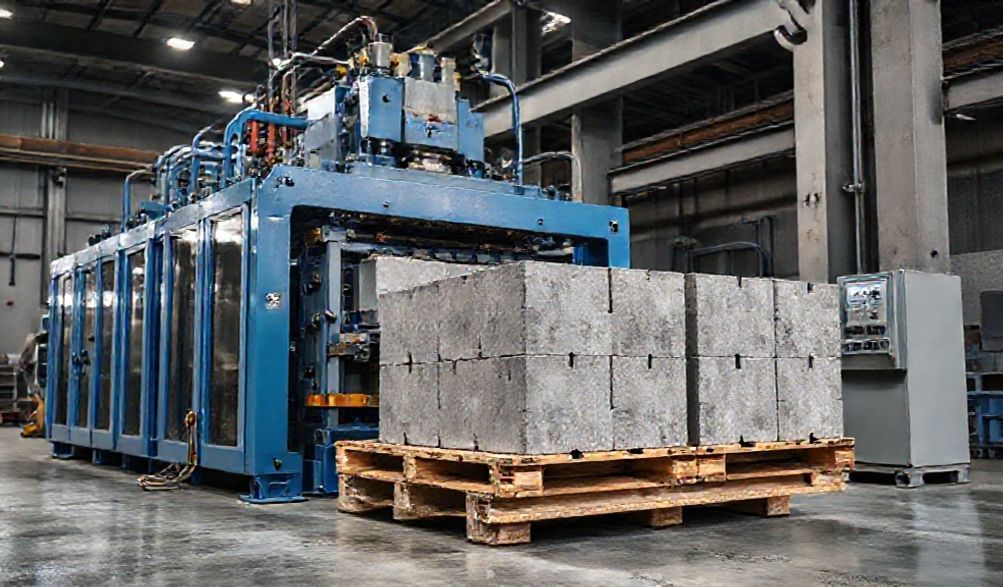
Cikakken Jagorar Kan Masana'antun Injin Buluwa: Duba Kan Masana'anta na FUDA na Injin Kera Buluwa.
Masana'antar gine-gine ta duniya babbar inji ce ta ci gaba, tana haifar da bukatar da ba ta da iyaka ga kayayyakin gine-gine masu inganci da araha. A tsakiyar wannan sarkar samarwa—daga ayyukan gidaje na birane zuwa manyan kayayyakin more rayuwa—akwai wata fasaha mai mahimmanci: injin yin bulo na zamani. Ga ’yan kasuwa, kamfanonin gine-gine, da masana’antun siminti da ake yin shi a shirye-shirye, saka hannun jari a cikin injin da ya dace ba siyayya ce kawai ba; yanke shawara ce ta dabara wacce ke bayyana iyawar samarwa, ingancin samfur, kuma daga karshe, ribar kasuwanci.
Wannan jagorar an tsara ta ne don zama babban tushen ku. Za mu bincika mahimman abubuwan da ya kamata ku yi la'akari da su yayin zabar masana'antar kera injin toshe, don tabbatar da cewa jarin ku ya kawo riba mai kyau. Sa'an nan kuma za mu yi amfani da wannan tsari a cikin cikakken nazarin wani fitaccen mai aiki a masana'antar: masana'antar injin bulo ta FUDA. Abubuwan da muka tattara an haɗa su ne daga ma'aunin masana'antu, bitar bayanan fasaha, da mafi kyawun hanyoyin sayayya, suna ba ku tushe mai daidaito da iko don yanke shawara.
Zaɓin Maɗaukakin Masana'anta na Na'urar Kera Tubali: Mawuyacin Hali
Kewaya kasuwar duniya ta masu kera na’urori na iya zama abin tsoro. Mai da hankali kan waɗannan mahimman wurare zai taimaka ka raba shugabannin kasuwa daga sauran.
Ƙimanta Ƙwarewar Masana'antu da Ƙarfin Fasaha
Tushen ingantacciyar na'ura shine ƙwarewar da ke bayanta. Masu kera na gaskiya, ba kamfanoni na kasuwanci kawai ba, suna saka hannun jari sosai a bincike da haɓakawa.
- Bincike da Injiniyanci a Cikin Gida:Nemo shaidar ƙungiyar injiniya mai kwazo. Wannan yawanci ana nuna shi ta hanyar fasahohin da aka ba da haƙƙin mallaka, ci gaba da sabunta samfura, da ikon samar da mafita na musamman. Mai kera da ke ƙirƙira tsarin hydraulic da dabaru na sarrafawa da kansa yawanci yana ba da aminci mafi girma da tallafi mafi kyau.
- Wuraren samarwa da kula da inganci.Ingantaccen gini yana da matukar muhimmanci. Taya a yi tambaya game da:
- Hanyoyin Kera KayayyakiAmfani da cibiyoyin sarrafa CNC, walƙiya ta robot, da layin haɗawa na zamani.
- Takaddun Ingancin Kayayyaki:Takaddar ISO 9001 alama ce mai ƙarfi ta tsarin kula da inganci. Don fitar da kaya zuwa yankuna da yawa, alamar CE tana da mahimmanci, tana nuna bin ka'idojin kiwon lafiya, aminci, da muhalli na Turai.
- Samo Kayan Aiki:Amfani da kayan aikin da aka yi da suna, masu inganci ga sassa masu mahimmanci kamar famfunan hydraulic, PLCs, da tsarin lantarki.
Kewayon da Kwarewar Injiniyoyin da Ake Bayarwa
Bukatun kasuwancin ku na iya canzawa. Wani masana'anta mai tarin fayiloli yana ba da haɓaka kuma yana tabbatar da cewa kun sami na'urar da ta dace da aikin ku na yanzu.
- Nau'in Injina:
- Injin Yinƙi na Gina Tubali a Wuri.Na'urori masu fitarwa mai girma don samar da tsire-tsire masu tsayayye. Sun dace da manyan ayyuka da kuma samar da kasuwar gida.
- Na'urorin Sake Gina Tubalan Wayoyin Hannu (Masu Sanya Kwai): Lower investment, movable on-site. Perfect for producing bricks directly where they are needed, reducing transport costs.
- Automation Spectrum: Ranges from manual and semi-automatic (operator-dependent) to fully automatic, PLC-controlled lines with robotic pallet feeders and stackers.
- Yawan Amfani da Samfura: Can one machine produce multiple products? Check for compatibility with molds for:
- Tubalin Hollow (kala-kala na kauri)
- Tsari Mai Ƙarfi
- Paving Stones & Interlocking Bricks
- Tubalin Kan Tudu da Iyakokin Lambu
Machine Performance, Output Capacity, and Automation Level
Specifications tell the performance story. Align them with your business plan.
- Key Performance Indicators (KPIs):
- Sauyin kowane Sa'a: The number of molding cycles the machine can complete.
- Blocks a kowane Zagayowar: How many units (e.g., of a standard 400x200x200mm hollow block) are produced each cycle.
- Daily Output (8/24-hour): The realistic production volume under working conditions.
- Girman Pallet: Determines the maximum block size the machine can produce.
- Hydraulic Pressure & Vibration Force: These directly impact block density and strength.
- Choosing Automation: Match the level to your labor costs and scale.
- Manual/Semi-Auto: Lower upfront cost, higher labor requirement. Good for small startups.
- Fully Automatic (PLC): Higher efficiency, consistent quality, lower long-term labor cost. Essential for medium to large-scale production.
After-Sales Support: Installation, Training, and Spare Parts
The relationship begins after the sale. Inadequate support can turn a powerful machine into a costly paperweight.
- Global Service Network: Does the manufacturer have agents or service engineers in your region? Proximity matters for urgent issues.
- Shigarwa & Kaddamarwa: Will they send an engineer to supervise installation, calibrate the machine, and ensure it runs correctly? This is often a separate but critical cost item.
- Horon Cikakke: Operator and maintenance training is non-negotiable. It should cover daily operation, routine maintenance, basic troubleshooting, and safety procedures.
- Samun Kayan Gyara: Verify that genuine spare parts (molds, hydraulic seals, vibrator motors) are kept in stock and can be shipped promptly. Long lead times for parts cripple production.
Deep Dive: FUDA Brick Making Machine Factory Analysis
Let’s apply the above criteria to examine a specific manufacturer, the FUDA brick making machine factory, to illustrate the evaluation process.
Bayanin Kamfani da Matsayin Masana'antu
Note: The following is a generalized profile based on the public-facing information typical of established Chinese heavy machinery manufacturers. Readers must verify all details directly with FUDA.
FUDA is positioned as a professional manufacturer of construction machinery, specializing in concrete block making machines, paver machines, and related equipment. Typically, such factories are located within major industrial hubs in China, benefiting from extensive supply chains. They have established an export-oriented business model, supplying machinery to markets in Africa, Southeast Asia, the Middle East, and South America. Their industry standing is built on offering a balance of robust machinery at competitive price points, catering significantly to cost-conscious buyers and emerging markets.
Core Product Line and Technological Features
FUDA’s product range typically encompasses the common machine types needed for block production:
- QMJ Series (Stationary Block Machines): These are likely their core fully automatic machines, featuring PLC control systems, automatic pallet feeders, and product stackers. They are designed for high-volume, fixed-plant production.
- QFT Series (Mobile Block Machines): Often referred to as “egg-layer” machines, these are simpler, mobile units for on-site production of solid blocks, hollow blocks, and pavers.
- Promoted Technological Features: In their communications, manufacturers like FUDA often highlight:
- High-Pressure Vibration Systems: Utilizing multiple vibrator motors to ensure dense, strong block compaction.
- Zane-zanen da ke da ƙarfin kuzari: Such as variable displacement hydraulic pumps that reduce power consumption.
- User-Friendly PLC Interfaces: Touchscreen panels for easy parameter setting (vibration time, pressure) and fault diagnosis.
- Heavy-Duty Structural Frames: Reinforced steel construction for stability and longevity under constant vibration.
Strengths and Considerations
A balanced view is essential for any investment.
- Potential Strengths:
- Farashin Gasar: Often a primary advantage, offering a lower initial capital outlay.
- Kewayon Kayayyaki: Ability to supply various machine types and custom molds from a single source.
- Machine Durability: Emphasis on heavy-duty construction suitable for demanding operational environments.
- Key Considerations for Due Diligence:
- Verify All Claims: Request video evidence of machines running, ask for specific component brands (e.g., Siemens PLC, Rexroth hydraulics?).
- Abokan Kasuwanci: Insist on contact information for past clients in a region similar to yours. Speak to them about machine performance and after-sales support.
- Scrutinize Support Terms: Clearly understand what the warranty covers (parts only? labor?), its duration, and the process for claiming it. Get details on spare parts pricing and delivery timelines.
- Cultural & Communication Nuance: Be prepared for clear, detailed communication. Define all technical specifications and commercial terms explicitly in the contract.
The Procurement Process: From Inquiry to Installation
A structured approach to procurement minimizes risk and ensures you get the machine you ordered.
How to Effectively Communicate with Manufacturers
Your initial inquiry should be detailed to receive an accurate quote. Include:
* Project location and intended use.
* Desired block types, sizes, and strengths.
* Required daily output (in 8-hour or 24-hour shifts).
* Specifications of local raw materials (cement grade, aggregate size and type).
* Local voltage and frequency (e.g., 380V/50Hz or 440V/60Hz).
Understanding Quotations and Negotiating Terms
A professional quote should be itemized. Ensure it includes:
* Machine Price: Clarify if it’s FOB (Free On Board port in China) or CIF (Cost, Insurance, Freight to your port).
* Detailed Specifications: A technical data sheet for the exact model quoted.
* Scope of Supply: A complete list of what’s included (e.g., standard molds, spare parts kit, control cabinet).
* Commercial Terms: Payment schedule (e.g., 30% deposit, 70% before shipment), production time, and delivery estimate.
* Warranty Terms: The formal warranty document should be attached.
Factory Inspection and Machine Testing (Pre-Shipment)
If feasible, this is the most valuable step.
* Factory Visit: Inspect the workshop, welding quality, and assembly process.
* Production Test Run: Crucially, insist on a test using a raw material mix that closely matches what you will use. This demonstrates the machine’s capability with ka materials and reveals any potential issues with block quality before shipment.
Maximizing Your Investment in a Block Making Machine
Your machine’s performance depends heavily on how you operate and maintain it.
Optimal Raw Material Preparation for Quality Blocks
The machine can only compact what you feed it.
* Mix Design: A standard mix might be 1 part cement, 3-6 parts aggregate (sand/stone chips), with just enough water for cohesion. The ideal ratio depends on your materials and desired strength.
* Daidaiton Abu Use clean, well-graded aggregates. Moisture content in sand must be stable. Inconsistent materials lead to variable block quality.
* Maganin Ciwon Ciki: Proper curing (keeping the blocks moist for 5-7 days) is essential for achieving final strength. Plan for a covered curing area.
Routine Maintenance Schedule for Long Machine Life
Preventive maintenance is cheaper than repairs.
* Kullum: Clean the machine, especially the mold area. Check hydraulic oil levels and for leaks. Lubricate all guide rails and moving parts.
* Mako-mako: Check and tighten bolts and fasteners. Inspect mold liners for wear. Clean hydraulic filters.
* Kowane wata: Perform a more thorough inspection of the hydraulic system, vibrator motors, and electrical connections. Change hydraulic oil and filters as per the manual’s schedule.
Troubleshooting Common Operational Issues
- Low Block Strength: Check vibration time and pressure. Verify cement content and quality of raw materials. Ensure proper compaction.
- Surface Cracks: Usually caused by too much water in the mix or improper curing (drying too fast).
- Blocks Sticking to Mold: Mold liners may be worn or dirty. Ensure a proper release agent is used. Check for under-compaction.
- Hydraulic Leaks or Slow Movement: Inspect seals and hoses. Check hydraulic fluid level and cleanliness. Air in the system can also cause slow operation.
Tambayoyin da ake yawan yi (FAQ)
Q1: What is the average lead time for a block making machine from order to delivery?
A: Lead times vary significantly. For a standard model, expect 30-45 days for production after deposit, plus 30-60 days for sea shipping, depending on the destination. Customized machines or complex automation lines will take longer.
Q2: Can FUDA or similar manufacturers customize machines for specific block designs?
A: Yes, most reputable manufacturers offer custom mold design and fabrication as a core service. You provide the block drawing, and they engineer the mold. This adds time (2-4 weeks) and cost to the project but is essential for producing unique designs.
Q3: What is the typical warranty period for a block making machine, and what does it cover?
A: Standard warranties often range from 12 to 24 months for core components like the frame, hydraulic cylinder, and main shaft, from the date of shipment or commissioning. Crucially, wear parts like mold liners, seal rings, and filter elements are almost always excluded. Always read the warranty document line by line.
Q4: How do I ensure the machine is compatible with the electrical standards and voltage in my country?
A: This must be specified in your initial inquiry. A professional manufacturer will configure the control panel, motors, and heaters to match your local voltage (e.g., 415V/50Hz) and include the correct plug types or terminal connections.
Q5: What kind of training is provided for our operators and maintenance staff?
A: Standard practice includes providing detailed English operation & maintenance manuals. The most valuable training occurs during commissioning, where the sent engineer trains your team on-site for several days. Negotiate for this to be included. Some manufacturers now also offer online video tutorials.
Ƙarshe
Selecting a block machine making manufacturer is a decision that reverberates through the life of your business. It hinges on a careful balance of technical capability, machine performance, and—perhaps most critically—the quality of long-term support. By focusing on manufacturing expertise, product versatility, and concrete after-sales terms, you can mitigate risk and secure a productive asset.
We encourage you to use this guide as a framework for your due diligence. Shortlist multiple manufacturers, prepare detailed project requirements, and engage in thorough technical and commercial discussions. Request and check client references, and if possible, witness the machinery in operation.
Ready to take the next step? Begin by formalizing your production goals and raw material data. Then, reach out to manufacturers like the FUDA brick making machine factory for detailed consultations and quotations. For continued guidance on running your block-making operation, explore our resources on [optimizing concrete mix designs for block production].
<