
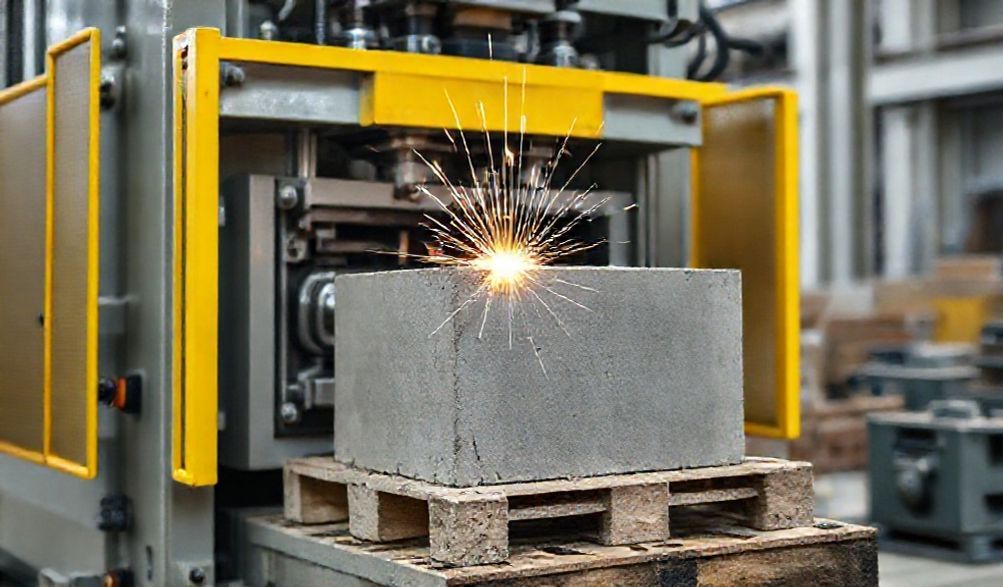
Jagorar Cikakkiyar Ku Don Siyan Injin Yin Buloci na Siyarwa a Shekarar 2024
Gabatarwa
Karuwawar ginin duniya ba ta nuna alamun raguwa ba. Daga ayyukan gidaje na birane zuwa muhimman ababen more rayuwa, buƙatar kayan gini masu inganci da araha ba ta da iyaka. A tsakiyar wannan buƙatar akwai tubalan siminti - tushen ginin zamani mai sassauƙa da ƙarfi. Ga ƙwararrun ƴan kasuwa, kwangila, da masu kasuwanci, wannan yana ba da dama mai mahimmanci: mallakar hanyoyin samarwa. Na'urar yin tubal ba kayan aiki kawai ba ce; yana iya zama hanyar haɓaka kasuwanci, sarrafa sarkar wadata, da kuma samun kudin shiga mai dorewa.
Duk da haka, sarrafa kasuwa donInjin yin bulo na sayarwazai iya zama aiki mai wahala. Yawan nau'ikan samfura, babban jari, da kuma ƙamus na fasaha na iya sa ma mai siye mai ƙwazo ya ruɗe cikin sauri. Ta yaya za ka zaɓi tsakanin tsarin hannu, rabin atomatik, ko cikakken tsarin atomatik? Wane ƙarfin samarwa kake...da gaskeYana bukata? Mafi mahimmanci, ta yaya za ku tabbatar cewa kuna saka hannun jari a cikin na'ura mai aminci daga wani mai sayarwa mai aminci, ba kawai sayen ciwon kai na gaba ba?
Wannan jagora an tsara ta ne don ta zama cikakkiyar albarkatun ku. An gina ta akan binciken masana'antu, ƙayyadaddun fasaha, da la'akari da masu siye na aiki, manufarmu ita ce mu ɗora muku ilimin ƙwararru. Za mu bayyana fasahar, mu rarraba mahimman abubuwan zaɓi, kuma mu ba da cikakkiyar hanya don yin siyayya mai ƙarfi da sanin abin da ake yi. A ƙarshen, za ku san daidai yadda ake nemo daidaiInjin yin bulo na sayarwadon ayyukanku na musamman da burin kasuwancinku.
Fahimtar Injinan Yin Tubali: Nau'uka da Aikace-aikace
Kafin ka shiga cikin bayanin kayayyaki da masu tallafi, yana da muhimmanci ka gina tushen ilimi mai ƙarfi. Fahimtar nau'ikan injuna daban-daban da abin da za su iya samarwa shine mataki na farko na daidaita jarin ka da hangen nesa na ka.
Menene Injin Yin Buloki?
A hankalin ainihinsa, injin yin bulo wata na'ura ce da ke tattara kayan aiki—yawanci cakuda siminti, yashi, dutse, da ruwa—a cikin nau'in kayan don samar da wani kauri mai ƙarfi na musamman da girman. Tsarin ya dogara da haɗakar matsewa mai ƙarfi da, a yawancin injunan zamani, jijjiga don kawar da ramukan iska da kuma tabbatar da ƙarfin tsarin.
Ci gaban ya kasance mai muhimmanci. Daga injunan bugu na hannu masu sauki, fasaha ta ci gaba zuwa hada da tsare-tsare na kwamfuta masu sarkakiya wadanda ke sarrafa komai ta atomatik daga hadawa da hadawa zuwa warkewa da jeri. Wannan aikin atomatik yana kawo ci gaba mai ban mamaki a daidaito, samarwa, da kuma ingancin aiki.
Manyan Nau'ikan Injin Kera Bulul da ake Sayarwa
Zaɓin da kuka yi a nan zai canza gudanar aikinku, buƙatun ma'aikata, da riba sosai.
-
Matsarorin Tukwane na Hannu:
- Bayanan sirri:Ana aiki gaba ɗaya da lefofi na hannu. Ƙarancin fitarwa (yawanci tubalan 300-500 a kowace rana).
- Mafi Kyau Don:Ayyuka masu ƙanƙanta, kamfanoni masu farawa da ƙaramin jari, wurare masu nisa da babu wuta, ko kera tubalan na musamman da ƙaramin yawa.
- Abubuwan da ake la'akari da su: Highly labor-intensive and physically demanding. Lowest upfront cost.
-
Injinoyin Yinƙaƙƙarfan Tubalan na Wucin Gadi:
- Bayanan sirri: A balanced hybrid. Key processes like compaction and vibration are powered (electrically/hydraulically), but mold filling and block removal are often manual.
- Mafi Kyau Don: Small to medium-sized businesses, growing block yards, and contractors. Offers a great balance between output (1,000 – 4,000 blocks per day) and investment.
- Abubuwan da ake la'akari da su: Requires some operational labor but is far more efficient than manual machines. The most popular choice for entry-to-mid-level commercial production.
-
Injinoyin Gina Tubalan Gabaɗaya na Kansa:
- Bayanan sirri: The pinnacle of production. These are complete systems with automated material feeding, molding, curing, and pallet handling. Often controlled by Programmable Logic Controllers (PLCs).
- Mafi Kyau Don: Large-scale block manufacturing plants, industrial operations, and businesses targeting high-volume supply contracts.
- Abubuwan da ake la'akari da su: Highest capital cost but lowest cost-per-block due to minimal labor and maximum output (10,000+ blocks per day). Requires significant space and stable utility supply.
-
Na'urorin Sake Kera Tubalan Wayoyin Hannu:
- Bayanan sirri: Mounted on a trailer or truck bed for easy transportation.
- Mafi Kyau Don: On-site production for large construction projects (e.g., housing developments, road projects). Eliminates transport costs for finished blocks.
- Abubuwan da ake la'akari da su: Output is usually in the semi-automatic range. The primary benefit is logistical, not necessarily productive.
Me Kuke Iya Samarwa? Bayan Tubalan Na Al'ada
Modern machines are incredibly versatile. With interchangeable molds, a single machine can be your production hub for multiple profitable products:
- Tubalin Ƙofa: The standard for load-bearing walls in construction.
- Tsari Mai Ƙarfi: For foundations, pavements, and heavy-duty applications.
- Shinge & Shinge Masu Haɗin Kai:Don hanyoyin mota, hanyoyin tafiya, da baranda.
- Curb Stones & Kerbs: For road construction and landscaping.
- Decorative and Specialty Blocks: For aesthetic walls, garden edges, and custom designs.
Shawarwarin Ƙwararru: When evaluating a Injin yin bulo na sayarwa, always inquire about mold compatibility and cost. A machine that can easily switch between producing hollow blocks and popular paving stones offers much greater market flexibility.
Abubuwan Muhimman Da Ya Kamata A Yi La'akari Da Su Kafin Ka Siyo
This is where your due diligence pays off. Moving beyond basic types, you must scrutinize the details that separate a suitable machine from the perfect one for your operation.
Assessing Your Production Needs & Business Goals
Start by asking the hard questions:
* What is my target daily or weekly output? Be realistic about current demand and growth projections.
* What is the scale of my projects or target market? Supplying a single construction site differs from supplying a regional retail network.
* What is my available labor force and skill level? A fully automatic machine needs a skilled technician, not just operators.
* What is my budget, including ancillary costs? (More on this in the Investment section).
Your answers will naturally point you toward a machine type. A goal of 2,000 blocks per day for local contractors strongly suggests a robust semi-automatic system.
Technical Specifications Deep Dive
These are the non-negotiable numbers on the spec sheet. Understand them.
- Cycle Time & Output Capacity: Don’t just look at the “blocks per hour” (BPH) claim. Understand the lokacin zagayowar—the time to produce one block cycle. A faster cycle means higher output. Remember, theoretical BPH often assumes perfect conditions; factor in realistic downtime for mold changes and maintenance.
- Girman Block da Saurin Gyare-gyare na Molds: Check the machine’s maximum mold dimensions (length, width, height). Can it produce the block sizes your market demands? How quickly and easily can molds be changed? A quick-change mold system boosts productivity when switching products.
- Bukatar Wutar Lantarki: This is critical for installation. Does the machine require a standard 220V/380V three-phase connection? What is the power consumption (kW)? For hydraulic machines, note the required hydraulic pressure and pump capacity. Ensure your facility’s utilities can support it.
- Matakin Sarrafa Kansa & Tsarin Gudanarwa: A semi-automatic machine with a simple relay system is easier and cheaper to repair than one with a proprietary PLC. However, a PLC on a fully automatic machine offers precision, diagnostics, and consistency. Choose the complexity that matches your technical support capability.
Quality & Durability Checkpoints
A machine is a long-term asset. Inspect its build quality.
- Ginin Firam The frame should be made of high-grade, reinforced steel. Thicker steel and robust welding at stress points prevent warping and ensure longevity under constant vibration.
- Abubuwan Tsakiya: Brand names matter. Reputable hydraulic pumps (e.g., Bosch Rexroth), cylinders, and electrical components (Siemens, Schneider) are signs of quality. They may cost more upfront but fail less often.
- Tsarin Girgiza: This is the heart of block density. Look for systems with multiple high-frequency vibrators (under the mold table and on the mold head). Adjustable vibration frequency and amplitude allow you to optimize compaction for different raw material mixes.
Navigating the Market: How to Find Reliable Sellers
Finding a machine is easy. Finding a reliable machine from a trustworthy partner is the challenge. Your supplier relationship is as important as the machine itself.
Where to Find Block Making Machines for Sale
- Direct Manufacturers: Buying from the source often gets you the best price and direct technical knowledge. Research manufacturers in your country and key exporting nations (e.g., Germany, Italy, Turkey, China, India).
- Authorized Distributors & Dealers: Local or regional dealers provide valuable after-sales support, spare parts, and often, installation services. They act as your local point of contact.
- Reputable Industrial Marketplaces: Platforms like Alibaba (for global suppliers), Thomasnet, or industry-specific B2B sites are excellent for discovering and comparing multiple suppliers.
- Caution: Be wary of deals that seem too good to be true on general classifieds sites. The risk of receiving obsolete, poorly built, or misrepresented equipment is high.
Vetting Suppliers: A Buyer’s Checklist
Before requesting a quote, vet the company:
* History & Reputation: How long have they been in business? Search for their company name + “reviews” or “complaints.” Ask for a client portfolio.
* Request References: A confident supplier will provide contact information for past clients, preferably in your region. Call them. Ask about machine performance, reliability, and support.
* Takaddun shaida: Look for quality management certifications like ISO 9001. For electrical safety, CE marking is crucial for the European market and indicates adherence to standards.
* After-Sales Package: This is critical. What does the warranty cover (parts, labor, duration)? Is installation and operator training included? How are spare parts shipped, and what are typical lead times?
The Importance of After-Sales Support
The sale is just the beginning. A machine breakdown without support can halt your entire business.
* Shigarwa & Kaddamarwa: Professional installation ensures the machine is calibrated and running correctly from day one.
* Operator Training: Proper training prevents misuse, reduces wear-and-tear, and ensures safety.
* Tallafin Fasaha: Is support available via phone, email, or video call? What are the response time guarantees?
* Spare Parts Logistics: Confirm that wear-and-tear parts (seals, vibrator motors, mold liners) are readily available and not prohibitively expensive.
Investment Analysis: Cost, ROI, and Financing
Let’s talk numbers. A clear financial picture turns a purchase from an expense into a strategic investment.
Understanding the Total Cost of Ownership
The machine’s price tag is only part of the story. Your total investment includes:
* Machine Price: The base cost.
* Jigilar kaya & Gudanar da kaya Can be substantial for international orders. Clarify Incoterms (FOB, CIF, etc.).
* Customs Duties & Taxes: Consult with a customs broker in your country.
* Installation & Foundation: Concrete foundation work, electrical hookup, and possibly a shelter.
* Ancillary Equipment: A concrete mixer, conveyor, pallets, and a curing rack system.
* Raw Material Inventory: Initial stockpile of cement, aggregates.
* Labor & Operating Costs: Wages, electricity, water, maintenance.
Calculating Your Potential Return on Investment (ROI)
A simplified framework:
1. Estimate Daily Output: e.g., 2,000 blocks (from your semi-automatic machine).
2. Determine Local Selling Price: e.g., $0.50 per standard hollow block.
3. Calculate Gross Daily Revenue: 2,000 x $0.50 = $1,000.
4. Estimate Daily Operating Costs: Raw materials ($300) + labor ($100) + utilities/maintenance ($50) = $450.
5. Calculate Daily Net Profit: $1,000 – $450 = $550.
6. Factor in Initial Investment: If your total setup cost (machine + everything else) was $55,000, your simple payback period would be roughly 100 days ($55,000 / $550/day).
This is a basic model. Your actual numbers will vary, but it illustrates the powerful economics of block production.
Financing and Payment Options
- Outright Purchase: Best if you have capital; avoids interest.
- Manufacturer Financing: Some large manufacturers offer in-house financing plans.
- Equipment Leasing: Preserves cash flow; payments may be tax-deductible.
- Bank Loan: A traditional route for business equipment acquisition.
FAQ: Your Questions About Buying a Block Making Machine Answered
Q1: What is the average price range for a block making machine for sale?
Prices vary wildly. Manual machines start from a few thousand dollars. Semi-automatic machines range from $15,000 to $50,000+. Fully automatic production lines can cost from $80,000 to several hundred thousand dollars, depending on capacity and automation.
Q2: Can one machine produce different types and sizes of blocks?
Yes, absolutely. This is achieved by changing the mold. Ensure the machine you buy supports easy mold changes and that the desired molds are available from the supplier.
Q3: How much space is required to install and operate a block making plant?
For a semi-automatic operation, you need space for the machine, a mixing area, a curing area (where blocks gain strength), and storage for raw/finished materials. A minimum of 5,000 – 10,000 sq. ft. is a good starting point for a small commercial yard.
Q4: What raw materials are needed, and how do I ensure their quality?
The primary materials are cement, sand (fine aggregate), and gravel (coarse aggregate). The quality and gradation of these materials directly affect block strength. Use clean, well-graded aggregates and fresh Portland cement. Test your mix design regularly.
Q5: What is the typical lead time from order to delivery and installation?
For standard models from stock, 4-8 weeks is common, including shipping. For custom configurations or complex lines, it can take 3-6 months. Always get a written delivery timeline.
Q6: Are there any essential safety features I should look for?
Yes. Look for emergency stop buttons, safety guards on moving parts (vibrators, hydraulic arms), and electrical overload protection. Proper operator training is the most critical safety feature of all.
Q7: How do I maintain my block making machine for optimal lifespan?
Follow the manufacturer’s manual diligently. Key tasks include daily cleaning, weekly checking of bolt tightness, regular lubrication of moving parts, and monitoring hydraulic fluid levels and cleanliness. Preventive maintenance is far cheaper than major repairs.
Conclusion: Making an Informed Investment
Purchasing a block making machine is a significant step that requires careful navigation. We’ve walked through the essential journey: from understanding your own production needs and the different machine types, to diving deep into technical specs and build quality. We’ve emphasized the paramount importance of vetting suppliers for their reliability and after-sales support, and we’ve broken down the financials to view this as a calculable investment.
Remember, the cheapest machine can become the most expensive if it leads to downtime, poor quality blocks, and a lack of support. Your goal is to build a partnership with a reputable supplier who sees your success as their own. The right Injin yin bulo na sayarwa is more than a piece of equipment—it’s a strategic business asset that can build the foundation of your profitability for years to come.
Ready to discuss your specific project needs? Contact our team of experts for a personalized consultation and quote.
Download our free comprehensive buyer’s checklist to take with you as you evaluate suppliers and machines.
Explore our detailed reviews and comparisons of top block making machine models to further refine your search.
<