
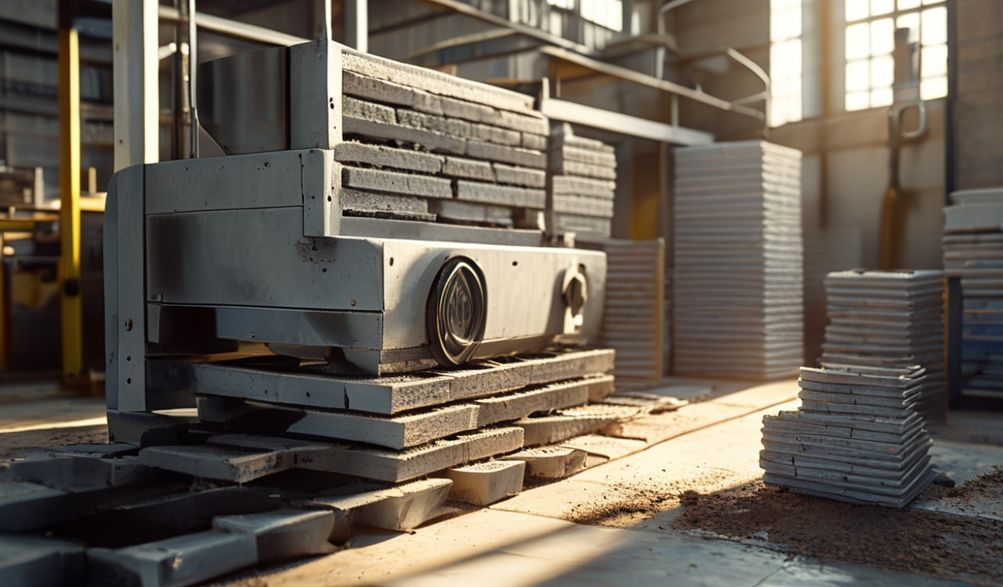
Interlocking Bricks Machine Cost: A 2026 Buyer’s Guide & Price Breakdown
परिचय
You’re a small contractor planning your next housing project, or perhaps an entrepreneur spotting an opportunity in the booming construction sector. You’ve heard about interlocking bricks—their durability, speed of construction, and eco-friendly appeal. The logical next step? Investing in an interlocking bricks machine. But a quick online search leaves you more confused than ever. Prices range from a few thousand to several hundred thousand dollars. What’s the real cost?
This guide is designed to cut through that noise. Compiled from current industry data, direct manufacturer specifications, and practical insights from business owners, this isn’t just a price list. It’s a comprehensive blueprint for your total investment. We’ll demystify what drives the price, what you actually get at different budget levels, and how to budget accurately—including the often-hidden costs that can make or break your project’s profitability.
Whether you’re a small-to-medium construction business, a real estate developer looking to control material supply, or an individual starting a brick-making venture, this 2026 guide will equip you with the knowledge to make a confident, informed purchase.
Understanding Interlocking Brick Machines: Types and Applications
Before we talk numbers, it’s crucial to understand what you’re buying. The type of machine you need is the single biggest factor determining cost, and choosing the wrong one is the most expensive mistake you can make.
मैनुअल बनाम सेमी-ऑटोमैटिक बनाम पूरी तरह से स्वचालित मशीनें
The level of automation defines the machine’s core function, output, and price bracket.
-
Manual Interlocking Brick Machines:
- वे कैसे काम करते हैं: Entirely human-powered. Operators manually fill the mold with raw material, compress it using a lever or screw mechanism, and then release the finished brick.
- सर्वोत्तम: Very small-scale projects, personal use, community builds, or NGOs in remote areas with limited electricity.
- Cost Driver: Low complexity, basic materials. The price is for the mold and compression mechanism alone.
- आउटपुट: Typically 100-500 bricks per 8-hour day, heavily dependent on operator stamina.
-
Semi-Automatic Interlocking Brick Machines:
- वे कैसे काम करते हैं: A balance of human operation and mechanical assistance. Operators feed material, but the machine uses an electric or diesel engine to power a vibration system and/or hydraulic press for compaction. This ensures consistent brick density and strength.
- सर्वोत्तम: Small to medium-sized businesses, block yards, and contractors supplying multiple projects. Offers the best balance of affordability and professional output.
- Cost Driver: Engine power (HP), quality of the hydraulic or vibration system, and build durability.
- आउटपुट: Can range from 500 to 2,500 bricks per 8-hour shift, depending on model and crew.
-
Fully Automatic Interlocking Brick Machines:
- वे कैसे काम करते हैं: Computer-controlled production lines. They automatically mix, feed, compress, cure, and sometimes even stack and palletize bricks with minimal human intervention.
- सर्वोत्तम: Large-scale commercial production, industrial plants, and entrepreneurs targeting mass supply to major construction firms or government projects.
- Cost Driver: High degree of engineering, advanced control systems, conveyor belts, automated palletizers, and often a higher degree of customization.
- आउटपुट: Starts from 3,000 bricks per day and can exceed 20,000+ for large plants.
Key Machine Specifications That Impact Cost
Within each category, technical specifications cause significant price variations. Understanding these will help you decode supplier quotations.
- उत्पादन क्षमता (ईंटें प्रति घंटा/दिन): This is the primary cost driver. A semi-automatic machine producing 1,000 bricks/day will cost significantly less than one rated for 2,500 bricks/day, even from the same brand.
- Power Source (Electric, Diesel, Hybrid):
- इलेक्ट्रिक Common for semi and fully automatic models in areas with stable grid power. Cleaner operation, lower noise.
- डीज़ल: Essential for sites with no electricity. Engines add to the upfront cost and ongoing fuel expenses.
- हाइब्रिड: Offers flexibility but at a higher purchase price.
- मोल्ड प्रकार और अनुकूलन: The mold defines the brick’s shape and interlocking pattern.
- मानक साँचे: For common patterns (e.g., honeycomb, zigzag) are included.
- कस्टम मोल्ड्स: Needed for unique architectural designs or specific engineering requirements. These can add 15-50% to the base machine cost.
- Automation Level & Features: Features like automatic material mixing, conveyor belt feeding, and brick stacking/palletizing systems incrementally add cost but reduce labor and increase consistency.
Detailed Cost Breakdown: From Machine Price to Total Investment
Let’s move to the core of the matter: the numbers. Remember, the machine’s sticker price is just the entry ticket. A realistic budget accounts for the कुल निवेश.
1. Upfront Machine Purchase Price Ranges (2026 Estimates)
Based on current market trends and projected inflation for machinery, here are the estimated price brackets you can expect in 2026. Critical Disclaimer: These are global estimate ranges. Final prices vary wildly based on brand, quality, exact capacity, and, most importantly, your region and local supplier margins.
- Manual Interlocking Brick Machines: $1,000 – $5,000
- Semi-Automatic Interlocking Brick Machines: $5,000 – $25,000
- Fully Automatic Interlocking Brick Plants: $25,000 – $150,000+
A simple, entry-level semi-automatic model might be found near the $5,000 mark, while a high-output, feature-rich model from a premium brand will push toward the $25,000 ceiling. Fully automatic systems are a major capital investment.
2. Beyond the Sticker Price: Hidden and Operational Costs
This is where practical experience in budgeting is essential. Overlooking these can strain your finances.
- Shipping, Customs, and Installation (10-25% of machine cost): If importing, you must budget for:
- Freight Charges: Sea or air freight.
- Insurance: For the shipment.
- Customs Duties & Taxes: Varies drastically by country. Research your local import regulations.
- Local Transport & Installation: Getting the machine from the port to your site and paying for a technician to install and commission it (if not included).
- Foundation & Workspace: The machine needs a perfectly level, reinforced concrete base. You also need a sheltered workspace (a shed or factory building) for consistent production and material storage.
- Raw Material Costs (Ongoing): The cost of soil/sand, cement (typically 5-10% mix), and any color pigments. This is your primary variable cost of production.
- Labor & Training: Even for semi-automatic machines, you need 2-3 operators. For automatic lines, you need skilled technicians. Factor in wages and initial training costs.
- Maintenance, Spare Parts, and Downtime: Regular lubrication, replacement of wear parts (like mold liners, hydraulic seals), and potential breakdowns. A maintenance budget of 3-5% of the machine’s cost per year is a prudent rule of thumb.
3. Return on Investment (ROI) Analysis: When Will It Pay for Itself?
The ultimate question. A simplified framework for estimation:
Conceptual Formula:
(Total Machine Cost + Setup & Installation) / (Profit per Brick * Monthly Production) = Approximate Payback Period in Months
Example for a Semi-Automatic Machine:
* Total Investment (Machine + Setup): $15,000
* Profit per Brick (Sale Price – Raw Material Cost): $0.15
* Monthly Production (22 working days): 22 days * 1,200 bricks/day = 26,400 bricks
* Monthly Profit: 26,400 * $0.15 = $3,960
* Payback Period: $15,000 / $3,960 ≈ 3.8 months
Factors That Drastically Improve ROI:
* High Local Demand: A strong market for interlocking bricks shortens the sales cycle.
* Cost Advantage: If your machine-produced bricks are cheaper or superior to traditional fired bricks or concrete blocks in your area.
* सरकारी प्रोत्साहन: Some regions offer tax breaks or subsidies for eco-friendly construction technologies like soil-stabilized interlocking bricks.
Key Factors Influencing the Final Price You Pay
Two buyers can purchase seemingly identical machines at very different prices. Here’s why.
Brand Reputation and Country of Origin
- European & North American Brands (e.g., Germany, Italy): Synonymous with high engineering standards, durability, and advanced automation. You pay a premium for the brand, perceived reliability, and often superior after-sales support. Prices are at the top of the range.
- Asian Brands (e.g., India, China): Offer highly competitive pricing and have made significant strides in quality. They dominate the mid-range market. The key is vetting the specific manufacturer thoroughly, as quality can vary.
- Local Manufacturers/Assemblers: May offer the best value when considering shipping and service. You save on import duties and freight, and service calls are faster. However, their technological sophistication may vary.
New vs. Used Machines: Pros, Cons, and Price Differences
-
New Machine:
- फायदे: Full warranty, latest technology, energy-efficient models, reliable performance from day one, manufacturer training.
- नुकसान: Higher upfront capital requirement.
- Price: 100% of market rate.
-
Used Machine:
- फायदे: Can be 30-50% cheaper than a new equivalent.
- नुकसान: No or limited warranty, unknown maintenance history, risk of hidden wear, potential obsolescence, difficulty sourcing exact spare parts.
- Inspection Checklist: If considering used, inspect for: crack-free mainframe, smooth operation of hydraulic cylinders, condition of the mold, hours of use (if metered), and availability of service manuals.
Local Market Dynamics: Demand, Competition, and Import Duties
A supplier in a region with high demand and little competition has less incentive to offer competitive prices. Conversely, in a saturated market, you may find better deals. Always account for Import Duties and VAT, which can add 15-40% to the CIF (Cost, Insurance, Freight) value of an imported machine.
How to Get the Best Value: A Smart Buyer’s Checklist
Follow this actionable, experience-based process to avoid pitfalls and secure a good deal.
Step 1: Accurately Assess Your Needs
Answer these questions honestly:
* What is the scale of my project or business? (Total bricks required)
* What is my realistic daily brick production requirement?
* What is my available labor force and skill level?
* What is my total budget ceiling, including setup and 3 months of operating capital?
Step 2: Research and Shortlist Reputable Suppliers
- Check business licenses and years in operation.
- Search for client testimonials and case studies.
- Crucially, investigate their after-sales service network. Do they have local technicians? What is their spare parts availability guarantee?
Step 3: Always Request a Detailed Quotation (Pro Forma Invoice)
A professional quote should include:
* Clear Price Terms: Is it FOB (Free on Board) port of origin or CIF (Cost, Insurance, Freight) to your nearest port?
* Detailed Machine Specifications: Model, capacity (bricks/hour), power (HP), weight, dimensions.
* Comprehensive Warranty: Scope and duration (e.g., 1 year on parts, 6 months on labor).
* List of Included Spare Parts & Tools.
* Installation & Training Offer: Is it included, paid, or not offered?
Step 4: Ask for a Live Demonstration or Customer References
Never buy based on brochures alone. Insist on:
* A video call live demonstration of the exact model you’re considering.
* Contact information for 2-3 previous customers in a similar business. Call them and ask about machine performance and supplier support.
Frequently Asked Questions (FAQ) About Interlocking Brick Machine Costs
Q1: What is the cheapest type of interlocking brick machine?
ए: Manual machines have the lowest upfront purchase price, often starting around $1,000. However, factor in high labor costs and very low output, which may not be cost-effective for any commercial venture.
Q2: Can I get a good automatic machine under $10,000?
ए: It is highly unlikely to find a new, reliable fully automatic machine in this price range. Offers in this bracket typically refer to semi-automatic machines. Be extremely wary of deals that seem too good to be true—they often involve poor-quality materials and zero support.
Q3: How much does it cost to run a semi-automatic machine per day?
ए: Here’s a simplified sample for an electric model:
* शक्ति: 5HP motor = ~3.7kW. Running 8 hours = 29.6 kWh.
* Electricity Cost (@ $0.15/kWh): $4.44
* Labor (2 workers @ $15/day): $30
* Raw Materials (for 1,200 bricks): ~$60
* Estimated Daily Running Cost: ~$94.44 (excluding maintenance and overhead).
Q4: Are there any financing options available for these machines?
ए: Yes. Some established manufacturers offer in-house installment plans. More commonly, look into equipment financing or business development loans from local banks, microfinance institutions, or agricultural development programs that support productive assets.
Q5: What is the single most important thing to check before buying?
A: After-sales service and spare parts availability. A machine is a long-term investment. A breakdown is inevitable. Ensure your supplier has a proven, responsive service team and stocks critical spare parts locally. This is more valuable than a 5% discount on the purchase price.
निष्कर्ष
The true “interlocking bricks machine cost” is a sum far greater than its purchase price. It encompasses shipping, installation, raw materials, labor, and maintenance. As this guide has outlined, your path to a sound investment starts with a ruthless assessment of your actual needs, followed by diligent supplier vetting focused on long-term support, not just short-term savings.
Our final, experience-driven recommendation is this: Purchase a machine that matches your verified production needs from a supplier with an impeccable service track record. Opting for a slightly more expensive model from a reputable provider is almost always cheaper in the long run than dealing with the downtime and lost revenue from a “bargain” machine that lacks support.
Use the checklist provided, ask the hard questions, and seek advice from local construction associations or existing brick makers. Armed with transparent information, you can now move forward to make a confident, financially sound investment that will build the foundation of your business for years to come.
<