
The Ultimate Guide to Automatic Pallet Block Nailing Machines: Efficiency & ROI
परिचय
If you’re in the pallet manufacturing business, you know the daily grind all too well. The relentless pressure to meet order volumes, the challenge of finding reliable labor, and the constant battle against inconsistent quality and costly waste. These aren’t just minor headaches; they’re significant threats to your profitability and growth. For decades, the industry has relied on manual labor or semi-automatic jigs for block attachment—a process that is inherently slow, physically demanding, and prone to human error.
Today, a transformative solution is redefining production floors: the automatic pallet block nailing machine. This isn’t merely an incremental upgrade; it’s a fundamental shift towards intelligent, streamlined manufacturing. This guide is designed to cut through the sales jargon. Our purpose is to provide a comprehensive, unbiased resource based on deep industry knowledge, empowering business owners and operations managers to make a fully informed capital investment decision. We will explore how these machines work, detail their tangible and intangible benefits, outline critical selection criteria, and, most importantly, provide a clear framework for understanding the return on investment (ROI) an automatic pallet block nailing machine can deliver to your operation.
What is an Automatic Pallet Block Nailing Machine? (Core Function & Operation)
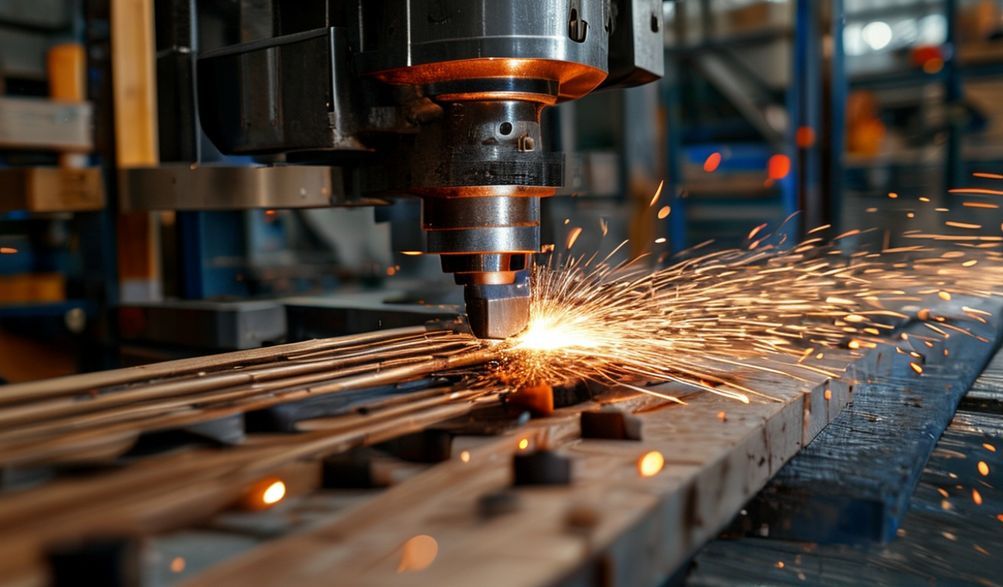
At its core, an automatic pallet block nailing machine is a programmable, self-contained work cell designed to precisely attach wooden blocks to stringer boards or deck boards with minimal human intervention. It replaces the manual processes of positioning, holding, and nailing, automating the most labor-intensive step in pallet assembly.
मुख्य घटक और वे एक साथ कैसे काम करते हैं
मुख्य भागों को समझने से मशीन का संचालन स्पष्ट हो जाता है:
- Feeding Systems: Separate magazines or hoppers automatically feed both the pallet blocks and the fasteners (nails or staples) to the work area. A lumber positioning system, often with powered rollers or conveyors, presents the stringer board accurately.
- Precision Nailing Head(s): This is the heart of the machine. Pneumatic or electro-pneumatic nail guns, mounted on a rigid frame, are positioned to drive nails at exact, pre-set locations and depths. Multi-head machines can attach several blocks simultaneously.
- Pneumatic/Hydraulic System: Provides the consistent, high-force power required to drive nails into dense hardwood reliably. A stable air supply is a critical utility requirement.
- PLC (Programmable Logic Controller) Control Panel: The machine’s brain. Operators use a user-friendly interface (often a touchscreen) to select pallet programs, adjust settings, and monitor machine status. The PLC coordinates all movements and sequences.
- Safety Enclosures & Features: Integrated steel guarding, safety light curtains, and two-hand initiation controls are standard to ensure operator safety during the high-force nailing cycle.
The Automated Nailing Process Step-by-Step
The automation cycle is a marvel of efficiency:
- लोड हो रहा है: An operator (or an upstream conveyor) places a stringer board onto the machine’s infeed table.
- पोजिशनिंग: The machine’s actuators clamp and position the stringer board with pinpoint accuracy.
- Block Feed & Placement: Blocks are released from the magazine and dropped or placed onto the pre-marked or sensed locations on the stringer.
- Clamping & Nailing: A pressure head clamps the block firmly to the stringer. The nailing head(s) then fire, driving the precise number of fasteners to the correct depth.
- निष्कासन: The clamps release, and the now-assembled stringer-and-block component is ejected onto an outfeed table or conveyor, ready for the next assembly stage.
This entire cycle takes mere seconds, repeating with unwavering consistency.
Key Benefits of Automating Your Pallet Block Assembly
Investing in automation is a strategic business decision. The benefits extend far beyond simply “going faster.”
Dramatically Increased Production Speed and Output
The contrast with manual methods is stark. While a skilled two-person team might assemble 50-100 stringer sets per hour manually, a single automatic machine can typically produce 300 to 800+ block attachments per hour, depending on the configuration and pallet design. This translates to a potential 200-400% increase in output per labor hour, allowing you to fulfill larger orders and reduce lead times without expanding your workforce.
अद्वितीय स्थिरता और गुणवत्ता नियंत्रण
Human fatigue leads to variation. An automatic machine eliminates this. Every nail is driven to the same depth, at the same angle, in the exact programmed location. This results in:
- Stronger, More Reliable Pallets: Uniform nail placement maximizes withdrawal resistance and shear strength.
- Reduced Product Rejection: Consistent quality means fewer pallets fail customer inspections or internal quality checks.
- न्यूनतम अपशिष्ट: Precise nailing drastically reduces split blocks and damaged stringers, directly saving material costs.
Significant Reduction in Labor Costs and Fatigue
This is often the most compelling financial driver. One machine, overseen by a single operator, can replace multiple dedicated nailing stations.
- Direct Labor Savings: Reallocate high-cost labor to more value-added tasks like machine tending, quality inspection, or shipping.
- Indirect Benefits: Eliminate the costs associated with repetitive strain injuries, absenteeism, and the high turnover common in physically demanding roles. You’re not just saving wages; you’re building a more sustainable workforce.
संचालनात्मक सुरक्षा में वृद्धि
Modern machines are engineered with safety as a priority. Enclosed nailing zones prevent access during the cycle, light curtains stop the machine if a hand breaches the work area, and two-hand controls ensure the operator is clear before initiation. This proactive approach minimizes the risk of serious hand and eye injuries common in manual nailing, protecting your employees and reducing liability.
खरीदने से पहले विचार करने योग्य महत्वपूर्ण कारक
Choosing the right machine is crucial. A misaligned purchase can lead to underutilization, constant changeover headaches, and a poor ROI. Approach this as a strategic analysis of your business needs.
Assessing Your Production Needs: Volume, Pallet Size, and Block Type
Start with a deep audit of your own operation:
- दैनिक/साप्ताहिक वॉल्यूम What is your current output, and what are your growth targets? The machine’s capacity should align with your 3-5 year plan.
- Pallet Size Matrix: Document the full range of stringer lengths and widths you produce. Machines have maximum and minimum size limits.
- Block Pattern Variety: Do you primarily run standard 9-block patterns, perimeter-base pallets, or winged blocks? Some machines are dedicated to one pattern for maximum speed, while others offer “quick-change” capabilities for mixed production.
मशीन विनिर्देशों का गहन विश्लेषण
Once you know your needs, scrutinize the technical specs:
- Fastener Compatibility: What nail or staple size (gauge, length, head type) does it use? Is it compatible with your current inventory?
- Lumber Tolerance Range: Can it handle the natural variation in your hardwood stringer thickness and width?
- पावर आवश्यकताएँ: What is the required air pressure (PSI) and air consumption (CFM)? You may need to upgrade your compressor system.
- Footprint & Integration: Measure your floor space. Consider how the machine will integrate with existing conveyors or material flow.
Durability, Build Quality, and Ease of Maintenance
This equipment is a long-term asset. Protect your investment:
- Frame & Construction: Look for heavy-duty, welded steel frames that can withstand years of vibration and load. Weight is often a good indicator of stability.
- Component Brands: Are the PLC, pneumatics, and bearings from reputable, widely-available manufacturers? This simplifies future repairs.
- Service Accessibility: Can routine maintenance points (lubrication fittings, filters, nail magazines) be reached easily? Good design minimizes downtime. As experienced manufacturers often note, a common oversight is failing to plan for maintenance access in the production layout.
Understanding the ROI of Your Investment
The upfront cost is significant, but the financial return makes it a compelling investment. Let’s break down the math and the broader value.
Calculating Your Payback Period: A Simple Framework
You can estimate your payback period with a straightforward formula. First, gather your data:
- Machine Cost: Include the purchase price, shipping, installation, and initial training.
- Monthly Labor Savings: Calculate the fully burdened wages (including benefits) of the workers the machine will replace or reassign. If it saves 3 full-time equivalents (FTEs), that’s your monthly saving.
- Monthly Scrap/Waste Savings: Estimate the value of blocks and stringers currently lost to errors and splits. Automation can reduce this by 70% or more.
सूत्र: (Total Machine Cost) / (Monthly Labor Savings + Monthly Scrap/Waste Savings) = Payback Period in Months
For example: A $75,000 machine saving $4,000/month in labor and $1,000/month in waste has a payback of 15 months ($75,000 / $5,000). After that, the savings flow directly to your bottom line.
Beyond Direct Savings: The Value of Scalability and Competitiveness
The ROI isn’t just in cost avoidance. It’s in growth enablement:
- स्केलेबिलिटी: You can increase output without the linear increase in labor, improving your marginal profit on every additional pallet.
- Competitive Bidding: With lower cost structures and faster turnaround times, you can confidently bid on larger, more profitable contracts that were previously unfeasible.
- Business Resilience: You become less vulnerable to labor market fluctuations and can maintain consistent quality and output regardless of staffing challenges.
It’s important to be realistic. Factor in potential hidden costs like ongoing preventative maintenance contracts, spare part inventories, and the learning curve during initial deployment.
अक्सर पूछे जाने वाले प्रश्न (एफएक्यू)
Q: What is the typical production speed of an automatic pallet block nailing machine?
ए: Speeds vary widely based on configuration. A single-head machine might attach 300-500 blocks per hour, while a multi-head machine designed for a specific pattern can reach 800-1200+. The key variables are the number of nailing heads, block pattern complexity, and the machine’s cycle time.
Q: Can one machine handle different pallet sizes and block patterns?
ए: It depends on the machine. “Quick-change” or programmable models allow for different patterns and sizes with tooling adjustments and program selection, which may take 5-15 minutes. Dedicated machines are faster for high-volume, single-pattern production but lack flexibility. Discuss your product mix with suppliers.
Q: How technically skilled do operators need to be?
ए: Basic operation—loading, starting cycles, clearing simple jams—requires minimal training. However, understanding basic troubleshooting, performing daily maintenance (lubrication, cleaning), and executing pattern changeovers requires more thorough training. The technical burden shifts from manual skill to procedural and maintenance knowledge.
Q: What kind of maintenance schedule do these machines require?
ए: Consistent maintenance is key to longevity.
* दैनिक Blow out dust and debris, check nail/block magazines, inspect safety devices.
* साप्ताहिक: Lubricate all moving points per the manual, check pneumatic filters.
* Monthly/Annually: Inspect wear parts like driver blades and guides, check torque on frame bolts, and have a certified technician perform a full system check.
Q: Are there financing options available for this equipment?
ए: Yes, most reputable dealers and manufacturers partner with equipment financing companies. Options like leasing, installment loans, or rent-to-own plans are common. These can preserve your working capital and allow the machine’s own productivity to help pay for itself.
निष्कर्ष
The journey from manual nailing to automated assembly represents a significant leap forward for any pallet manufacturer. As we’ve explored, an automatic pallet block nailing machine delivers transformative benefits: radical gains in production speed and output, unwavering product consistency, substantial reductions in labor costs and physical strain, and a fundamentally safer work environment.
Investing in the right automation is a strategic business decision that extends far beyond a simple machinery purchase. It’s an investment in your company’s efficiency, quality reputation, and future scalability. We encourage you to use the frameworks in this guide—audit your production bottlenecks, calculate your potential savings, and scrutinize machine specifications against your long-term needs.
The next step is to move from research to evaluation. Request live demonstrations from reputable suppliers, ask for customer references, and see the technology in action. By making an informed choice, you can position your operation for sustained growth and competitiveness in the modern market.
<