
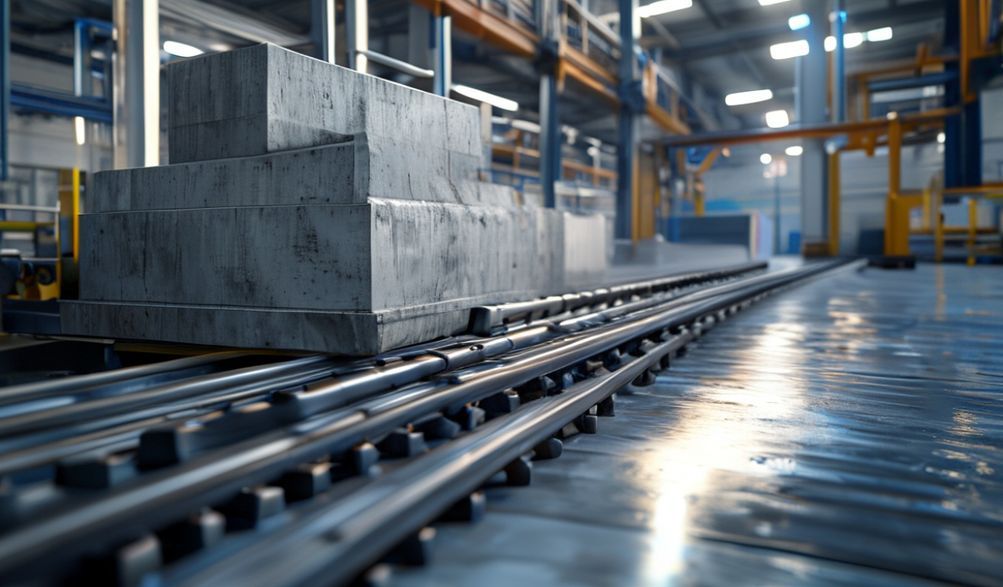
Your Ultimate Guide to China Concrete Block Making Machines: Why FUDA Factory is a Leading Supplier
The global construction industry runs on efficiency. At the heart of modern, cost-effective building projects lies a simple, yet revolutionary product: the concrete block. From foundations to facades, these versatile building materials are in constant demand. Meeting this demand requires reliable, productive machinery. For businesses worldwide, sourcing a high-quality concrete block making machine is a pivotal investment that can define profitability and growth.
China has firmly established itself as the world’s workshop, and industrial machinery is no exception. The country’s vast manufacturing ecosystem offers a staggering array of options for block making equipment, presenting both immense opportunity and a significant challenge: how do you navigate this complex landscape to find a trustworthy partner?
This guide serves as your comprehensive, unbiased resource. We will delve into the world of concrete block making machines, analyze the pros and cons of sourcing from China, and provide a detailed, evaluative look at one specific supplier—the FUDA block making factory. Our goal is not to sell you a machine, but to arm you with the industry knowledge, critical questions, and verification tools needed to make a confident, informed purchase decision that powers your business for years to come.
कंक्रीट ब्लॉक निर्माण मशीनों को समझना: प्रकार और अनुप्रयोग
Before evaluating suppliers, it’s crucial to understand the product itself. A concrete block making machine is more than just a press; it’s a system designed to transform raw materials—cement, aggregates, and water—into precise, durable construction components through a process of mixing, molding, and curing.
कंक्रीट ब्लॉक बनाने वाली मशीनें कैसे काम करती हैं?
प्रक्रिया, हालांकि निष्पादन में परिष्कृत है, एक तार्किक क्रम का पालन करती है:
- मिश्रण: Raw materials are combined in a pan or planetary mixer to create a homogeneous, semi-dry concrete mix.
- मोल्डिंग और संघनन: This mix is fed into a mold box. A hydraulic system or mechanical vibration applies immense pressure, compacting the material and forcing out air pockets to form a dense block.
- निष्कासन: The newly formed block (often called a “green” block due to its uncured state) is ejected from the mold onto a pallet or directly onto a curing rack.
- इलाज: The blocks are moved to a curing area. While steam curing in kilns accelerates the process for high-output factories, ambient air curing over 14-28 days is also standard. This allows the blocks to gain their full structural strength.
Key Machine Types for Different Business Scales
Choosing the right machine depends entirely on your production goals and budget.
- मैनुअल और सेमी-ऑटोमैटिक मशीनें: Ideal for entrepreneurs, small construction firms, or community projects.
- ऑपरेशन: Require significant manual labor for feeding mix and removing blocks.
- आउटपुट:कम उत्पादन (जैसे, 8 घंटे की शिफ्ट में 500-2000 ब्लॉक)।
- फायदा: Lowest capital investment, simplicity, and ease of maintenance.
- पूरी तरह से स्वचालित ब्लॉक निर्माण मशीनें: The workhorses for commercial block yards and large construction companies.
- ऑपरेशन: Fully automated via Programmable Logic Controller (PLC). They feature automatic material batching, mixing, molding, block stacking, and pallet return systems.
- आउटपुट: High-volume production (e.g., 10,000 to 30,000+ blocks per shift).
- फायदा: Maximum efficiency, consistent quality, and reduced labor costs.
- मोबाइल ब्लॉक मशीनें: A niche but valuable solution.
- ऑपरेशन: Mounted on a trailer or skids for easy transport to construction sites.
- फायदा: Eliminates the cost and breakage associated with transporting blocks over long distances. Produce blocks directly where they are needed.
Beyond Standard Blocks: Paving Stones, Curbs, and Interlocking Blocks
Modern machines are incredibly versatile. By simply changing the mold, a single machine can produce a diverse product line:
* खोखले और ठोस ब्लॉक: Standard building blocks.
* Paving Stones & Slabs:ड्राइववे, पैदल मार्ग और आँगन के लिए।
* इंटरलॉकिंग ब्लॉक्स: Used for retaining walls and erosion control without mortar.
* Curbs & Kerbstones: For road and landscape edging.
This versatility allows a business to adapt to market demands and maximize revenue from a single equipment investment.
Why Source from China? Evaluating the Supplier Landscape
Sourcing machinery from overseas is a major decision. Understanding the inherent advantages and potential pitfalls of the Chinese market is the first step to success.
The Advantages of Chinese Manufacturing
- लागत-प्रभावशीलता: This is the primary driver. Chinese manufacturers benefit from economies of scale, a mature supply chain, and competitive labor costs, translating to lower prices for buyers without always compromising on core functionality.
- Manufacturing Scale and Supply Chain: China’s industrial clusters mean a block machine factory has ready access to every component—from hydraulic cylinders and PLCs to specialized steel molds. This integration speeds up production and reduces costs.
- Technological Adoption: Contrary to old stereotypes, many leading Chinese factories now employ advanced German or Japanese hydraulic systems, Siemens or Mitsubishi PLC controls, and utilize CAD/CAM for design. The technology is often on par with Western equivalents at a fraction of the price.
सामान्य चुनौतियाँ और उनसे कैसे निपटें
- Quality Variance: The market has both exceptional and subpar manufacturers. Solution: Diligent supplier vetting is non-negotiable. Focus on verifiable evidence of quality, not just claims.
- Communication and Logistics: Language barriers and time zone differences can cause delays. Solution: Use clear, simple language in communications. Request detailed technical documents in English. For logistics, understand Incoterms (like FOB or CIF) and consider using a freight forwarder.
- बिक्री के बाद की सेवा: This is the most common concern. Solution: Prioritize suppliers who offer clear, documented after-sales policies, remote video support, readily available spare parts lists, and have a history of supporting international clients.
In-Depth Supplier Focus: Is FUDA Block Making Factory the Right Choice?
Let’s apply a critical lens to a specific example: FUDA Block Making Factory. This analysis is based on the profile of a typical established Chinese manufacturer in this sector. Prospective buyers must conduct their own due diligence.
Company Profile: History, Scale, and Manufacturing Capabilities
FUDA presents itself as a specialized manufacturer, often located within an industrial machinery hub like Quanzhou or Linyi. A typical profile for a factory like FUDA might include:
* History: Often established for 10-20+ years, indicating experience and stability.
* स्केल: May operate from a factory complex spanning thousands of square meters, with in-house welding, machining, and assembly lines.
* Capability: Likely has the capacity to produce dozens of machines per month, from simple manual models to fully automated production lines.
Analyzing FUDA’s Machine Portfolio
A supplier’s product range tells you about their expertise. A company like FUDA would typically offer:
* Small-scale Machines: Models like the क्यूएमजे4-45 (a manual/semi-automatic egg-layer type) for entry-level buyers.
* Medium-scale Stationary Machines: Such as the क्यूसीएम4-30, a stationary machine with higher output for small to medium businesses.
* पूरी तरह स्वचालित लाइनें: Complete plants with block makers, mixers, stackers, and pallet conveyors for turnkey high-volume production.
* विशेष मशीनें: Equipment for producing colored paving stones, interlocking blocks, or curb stones.
Assessing FUDA Against Key Supplier Criteria
Here is how you would evaluate them on critical points:
- Quality & Testing: Ask: What grade of structural steel is used (e.g., Q235 is standard)? Are vibration motors from reputable brands? Request videos or photos of the production process and finished machine welds.
- Technical Support & Documentation: A trustworthy supplier provides comprehensive English manuals, electrical wiring diagrams, and foundation drawings पहले shipment. This is a key indicator of professionalism.
- After-Sales & Parts Supply: Clarify: What is the warranty period (e.g., 12 months on main parts)? How quickly can they ship common wear parts like mold liners or hydraulic seals? Do they offer video call support for troubleshooting?
- Certifications & Standards: While not always mandatory, CE certification demonstrates an effort to meet international safety and design standards. ISO quality management certification is another strong positive indicator.
The Smart Buyer’s Checklist: How to Vet Any Chinese Supplier
Use this actionable framework to protect your investment, regardless of the supplier you contact.
Pre-Contact Research Phase
- व्यवसाय की वैधता सत्यापित करें: Check for an Alibaba “Verified Supplier” badge or, even better, a Chinese business license number. Cross-reference the company name on independent directories.
- Analyze Online Presence: A professional, informative website with detailed machine specs, clear contact information, and factory photos is a good sign. Be wary of sites with only stock images and vague text.
- Seek Out Reviews & References: Look for customer testimonials with photos or videos of installed machines. Politely ask the supplier for contact information of previous clients in your region.
Critical Questions to Ask During Inquiry
When you make contact, move beyond price. Ask these technical and operational questions:
* “Can you provide the technical drawing and full specification sheet for the [Model Number]?”
* “What is the thickness of the steel used in the main frame and mold box?”
* “What brands are the core components (hydraulic pump, PLC, vibration motor)?”
* “Do you offer a factory audit or live video tour of the production floor and a working machine?”
* “What is included in the FOB price? (e.g., machine, standard molds, spare parts kit, manuals)”
Securing Your Transaction
- Use Secure Payment: Platforms like Alibaba Trade Assurance provide a layer of protection by holding payment until you confirm satisfactory delivery.
- Demand a Detailed Proforma Invoice (PI): The PI should list every item, part number, quantity, and individual price. There should be no vague line items like “miscellaneous fees.”
- Understand Shipping Terms: Know the difference between FOB (Free On Board)—where you own the goods once they’re on the ship and handle shipping/insurance—and सीआईएफ (लागत, बीमा और भाड़ा)—where the supplier arranges shipping to your port. FOB often provides more control and cost transparency.
Maximizing Your Investment: From Purchase to Production
Your relationship with the supplier doesn’t end at payment. Planning for installation and operation is key to ROI.
Planning for Installation and Commissioning
- नींव The supplier must provide foundation drawings. A fully automatic machine requires a massive, reinforced concrete foundation to absorb vibration.
- Utilities: Confirm power requirements (voltage, phase, amperage), compressed air needs, and water supply for mixing.
- Support: Discuss the terms for commissioning. Will they send an engineer (at what cost?), or will they provide remote guidance? Factor this into your budget and timeline.
Operational Training and Routine Maintenance
- Training: Ensure your operators are trained on safety, daily operation, and basic troubleshooting. Documented procedures are essential.
- रखरखाव कार्यक्रम: Follow the supplier’s recommended maintenance. Daily greasing, weekly bolt checks, and regular hydraulic oil changes prevent 90% of major breakdowns. Create a simple logbook.
Sourcing Raw Materials: Cement, Aggregates, and Mix Design
The best machine cannot produce good blocks with poor materials.
* सामग्री: Use clean, well-graded aggregates (sand, gravel, or crushed stone) and fresh, reputable-brand cement.
* Mix Design: The supplier should provide a basic starting mix ratio (e.g., 1 part cement : 6 parts aggregate). You will need to test and adjust based on your local materials and desired block strength (e.g., 7 MPa, 15 MPa).
FAQ Section
Q: What is the typical price range for a concrete block making machine from China?
ए: Prices vary dramatically. A small manual machine can start around $5,000 – $10,000. A mid-range stationary machine may cost $25,000 – $50,000. A large, fully automatic production line can range from $80,000 to over $150,000. Always get itemized quotes based on your specific needs.
Q: Can I visit the factory before purchasing?
ए: For large orders, it is highly recommended. Most reputable suppliers, including factories like FUDA, welcome serious buyers for factory inspections. If travel isn’t possible, insist on a comprehensive live video tour of the facility.
Q: What is the lead time for manufacturing and shipping?
ए: Standard production time is typically 15-30 days after deposit. Sea shipping (the most common method) can take 30-45 days to major global ports, plus customs clearance and inland freight. Always budget a total of 2-4 months from order to installation.
Q: How do I handle machine breakdowns or need spare parts?
ए: This underscores choosing a supplier with strong after-sales. They should provide a detailed spare parts list with codes. For breakdowns, you should have access to technical support via WhatsApp/WeChat video calls. Reliable suppliers keep an inventory of common wear parts for express shipment.
Q: Are Chinese machines compatible with our local voltage and standards?
ए: You must specify your requirements during the order. Reputable manufacturers can configure the electrical system (motors, control panel) for your local standard (e.g., 380V/3Phase/50Hzया440V/60Hz). This should be clearly stated in the contract and on the machine nameplate.
निष्कर्ष
Sourcing a concrete block making machine from China, whether from FUDA Factory or another manufacturer, represents a significant strategic opportunity for business growth. The potential for cost savings and access to capable technology is real. However, this opportunity is unlocked not by finding the lowest price, but by identifying the most reliable partner.
Your journey should be guided by meticulous research, technical verification, and a relentless focus on after-sales support. Use the checklist and critical questions provided here as your shield against poor decisions. Remember, you are not just buying a machine; you are investing in the production backbone of your business for the next decade. By prioritizing credibility, communication, and clear contracts, you can confidently navigate the global market and secure the equipment that will build your future, block by solid block.
<