
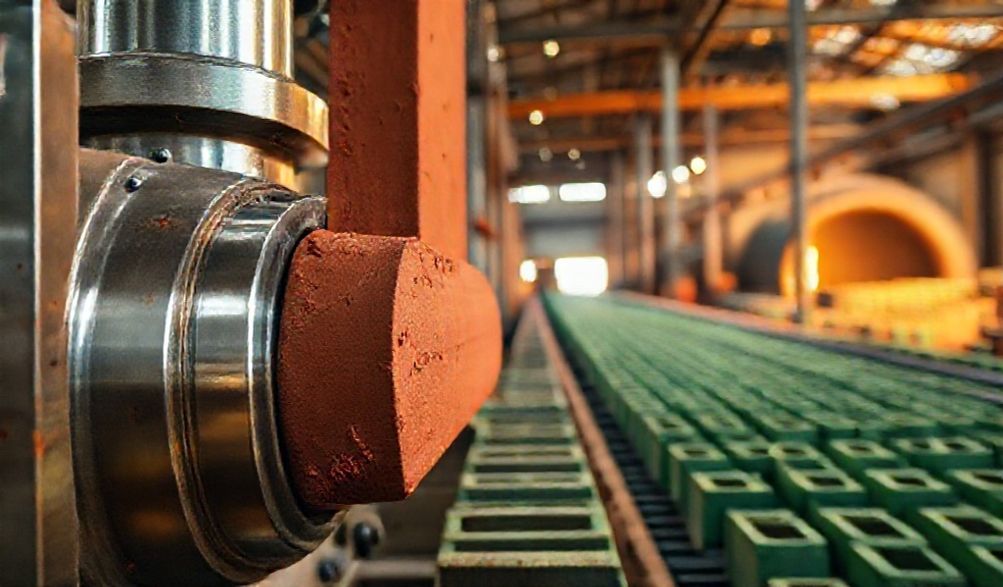
क्ले ब्रिक बनाने की मशीनरी का अंतिम मार्गदर्शक: प्रकार, प्रक्रियाएं और आधुनिक नवाचार
परिचय
सहस्राब्दियों से, मिट्टी की ईंटों ने मानव सभ्यता की रीढ़ बनाई है, प्राचीन बेबीलोन की दीवारों से लेकर आज के आधुनिक आकाशचुंबी इमारतों के शहरी दृश्यों तक। यह स्थायी विरासत एक साधारण, प्राकृतिक सामग्री पर आधारित है जिसे आग द्वारा रूपांतरित किया गया है। हालाँकि, इस शिल्प में एक गहरी औद्योगिक क्रांति आई है। हाथ से ढलाई से मशीनीकृत उत्पादन की ओर बदलाव ने केवल उत्पादन बढ़ाया ही नहीं है; इसने स्थिरता, गुणवत्ता और वास्तुशिल्प संभावनाओं को पुनः परिभाषित किया है। आज, इस परिवर्तन का केंद्र...मिट्टी की ईंट बनाने की मशीनरी.
निर्माताओं, बिल्डरों या उद्यमियों के लिए, सही उपकरण का चयन एक महत्वपूर्ण निर्णय है जो दक्षता, उत्पाद गुणवत्ता और अंततः लाभप्रदता को निर्धारित करता है। फिर भी, मशीनरी के परिदृश्य—साधारण मैनुअल प्रेस से लेकर विस्तृत, पूरी तरह से स्वचालित संयंत्रों तक—को नेविगेट करना एक चुनौतीपूर्ण तकनीकी भूलभुलैया हो सकता है। आप मशीन को अपनी मिट्टी, अपने बाजार और अपनी दृष्टि से कैसे मिलाते हैं?
यह व्यापक मार्गदर्शिका उस प्रक्रिया को स्पष्ट करने के लिए तैयार की गई है। हम ईंट निर्माण के मूल सिद्धांतों में गहराई से जाएंगे, मशीनरी के पूर्ण प्रकारों का अन्वेषण करेंगे, और एक उत्पादन लाइन को बनाने वाले प्रमुख घटकों को विस्तार से समझाएंगे। केवल एक सूची से अधिक, यह मार्गदर्शिका उद्योग ज्ञान, परिचालन सर्वोत्तम प्रथाओं और तकनीकी अंतर्दृष्टि को समाहित करती है, ताकि आप अपनी परियोजना या व्यवसाय के लिए एक आत्मविश्वासपूर्ण और सूचित निर्णय ले सकें। चाहे आप किसी मौजूदा संचालन को विस्तारित कर रहे हों या एक नए उद्यम की नींव रख रहे हों, समझमिट्टी की ईंट बनाने की मशीनरीपहला महत्वपूर्ण कदम है।
क्ले ब्रिक निर्माण को समझना: मूल सिद्धांत और सामग्री तैयारी
किसी भी मशीन को चालू करने से पहले, सफलता कच्चे माल और मूलभूत प्रक्रिया से निर्धारित होती है। ईंट निर्माण में वास्तविक विशेषज्ञता मिट्टी के विज्ञान और परिवर्तन के शाश्वत चरणों से शुरू होती है।
मिट्टी की भूमिका: गुण और तैयारी
सभी मिट्टी एक जैसी नहीं होती। आदर्श ईंट की मिट्टी एक संतुलित मिश्रण होती है:
* सिलिका (50-60%):कंकालीय संरचना प्रदान करता है और संकुचन को कम करता है।
* अल्यूमिना (20-30%):प्लास्टिसिटी प्रदान करता है, जिससे मिट्टी को ढाला जा सकता है।
* नीबू (≤ 5%):फ्यूजन बिंदु को कम करता है और सिलिका को बांधने में सहायता करता है।
* आयरन ऑक्साइड (≤ 7%):फ्लक्स के रूप में कार्य करता है और फायरिंग पर क्लासिक लाल रंग देता है।
खदान से उत्पादन तक की यात्रा में सावधानीपूर्वक तैयारी शामिल है:
1. जीतना:खदानों या गड्ढों से मिट्टी का निष्कर्षण।
2. अपक्षय:तत्वों के संपर्क में लाकर मिट्टी के गांठों को तोड़ना और प्लास्टिसिटी में सुधार करना।
3. मिश्रण:विभिन्न स्रोतों से मिट्टी को मिलाकर एक सुसंगत, इष्टतम संरचना प्राप्त करना।
4. टेम्परिंग:पानी मिलाकर और अच्छी तरह मिलाकर, आकार देने के लिए आवश्यक सटीक नमी की मात्रा प्राप्त करना। यह वह स्थान है जहाँ मशीनरी पहली बार संलग्न होती है, और आवश्यक नमी काफी भिन्न होती है—सख्त एक्सट्रूज़न में केवल 12-15% पानी की आवश्यकता होती है, जबकि नरम मिट्टी की प्रक्रियाओं में बहुत अधिक पानी का उपयोग होता है।
कच्ची मिट्टी से बने ईंट तक: आवश्यक चरण
सभी ईंट उत्पादन, चाहे उसका पैमाना कुछ भी हो, चार सार्वभौमिक चरणों का पालन करता है। आधुनिक मशीनरी को प्रत्येक चरण को अनुकूलित करने के लिए डिज़ाइन किया गया है।
1. तैयारी:मिट्टी को एक समरूप, कार्य योग्य पिंड में कुचलना, पीसना, छानना और मिलाना।
2. गठन:प्लास्टिक मिट्टी को उसका आकार देना (यह अधिकांश ईंट बनाने वाली मशीनों का प्राथमिक कार्य है)।
3. सुखाना:प्लास्टिसिटी के लिए मिलाए गए पानी को धीरे-धीरे हटाया जा रहा है ताकि भट्ठी में दरारें और विस्फोट रोके जा सकें।
4. निकाल देना Sintering the dried bricks in a kiln at high temperatures (870°C – 1100°C) to achieve permanent strength and durability.
Types of Clay Brick Making Machinery: From Manual to Fully Automatic
The level of automation you choose is the single biggest factor influencing your capital investment, labor needs, and production capacity. Here’s a breakdown of the primary categories.
Manual & Semi-Automatic Machines (Small Scale/Low Investment)
These machines prioritize low cost and simplicity over high output.
* विवरण: This category includes hand-operated presses (like the CINVA-Ram) or small, motorized machines that perform a single function, such as mixing or basic pressing. The forming process often requires significant manual labor for feeding and removing bricks.
* सर्वोत्तम: Artisanal workshops, heritage brick production, small-batch specialty bricks, community-led projects, or areas with unreliable electricity. They are excellent for proof-of-concept or very low-volume needs.
* Pros and Cons:
* फायदे: Very low initial investment, minimal infrastructure needs, easy to operate and maintain, highly flexible for custom shapes.
* नुकसान: Very low output (often 500-2000 bricks per day), high labor intensity, inconsistent product quality dependent on operator skill, physically demanding work.
Automatic Brick Making Machines (Medium to Large Scale)
This is the workhorse of the commercial brick industry, offering a balance of automation, output, and cost.
* विवरण: These are integrated systems where the core forming process is automated. A typical setup includes a feeder, a pugmill mixer, an extruder, and an automatic wire-cut or column-cut system. Bricks are formed continuously, cut to size, and conveyed to a stacking area, often with automated pallet placement.
* प्रमुख घटक:दvacuum de-airing pugmill is critical here, removing air pockets to produce denser, stronger bricks. The extruder forces the clay through a die to form a continuous column, which is then cleanly sliced by the cutter.
* Output & Power: Output can range from 10,000 to 60,000 bricks per 8-hour shift, depending on the model and brick size. Power requirements typically range from 30 HP to over 100 HP for the main drive.
Fully Automatic Production Lines (Industrial Scale)
These represent the pinnacle of automation, designed for maximum output with minimal manual intervention.
* विवरण: Think of this as a complete, computer-coordinated factory. It integrates automatic forming with automated handling systems that transport green bricks through controlled tunnel dryers and directly into and out of tunnel kilns. Robotic arms or stacker cranes handle the setting and unsetting of bricks on kiln cars.
* विशेषताएँ: Programmable Logic Controller (PLC) panels govern the entire process. Sensors monitor clay consistency, extrusion pressure, dryer humidity, and kiln temperatures. The goal is a “hands-off” production flow from raw material to finished, fired brick.
* Focus: The emphasis is on unparalleled volume (often exceeding 100,000 bricks daily), exceptional consistency, and drastically reduced labor costs. The investment is substantial, but the efficiency and scale are transformative.
Key Machinery Components and Their Functions
Understanding the individual components demystifies the entire system and aids in maintenance and troubleshooting.
The Heart of the System: Clay Mixers and Pugmills
This is where the process truly begins. The mixer’s job is to homogenize the clay and water into a plastic mass. A pugmill takes it further—a twin-shafted mixer with knives that not only blends but also kneads and de-airs the clay.
* Vacuum Pugmills: The industry standard for quality brick production. They subject the clay to a vacuum chamber, removing entrapped air. This prevents laminations, reduces drying shrinkage, and dramatically increases the fired strength and frost resistance of the final brick.
Forming the Brick: Extruders and Molds
The extruder is the defining component of most modern brick plants.
* How It Works: The prepared clay is fed into a barrel containing a powerful, spiraling auger. This screw action compresses the clay and forces it through a tapered die at the end of the barrel. The die is a precision metal block that forms the clay into the desired cross-sectional profile (e.g., solid, perforated, or hollow).
* The Cutting Mechanism: As the continuous column of clay emerges, a cutting system slices it into individual bricks. This can be a series of taut wires (wire-cutting) for a soft, textured finish or a gang of blades for column cutting.
Auxiliary Equipment for a Complete Line
The forming machine is just the start. A efficient plant requires supporting systems:
* Brick Dryers: Green bricks must be dried slowly and evenly. Tunnel dryers (bricks move on carts through a controlled humidity/temperature zone) are standard for medium/large scale. Chamber dryers are used for smaller batches or specialty products.
* Handling & Stacking Systems: This includes palletizers, conveyor belts, cross-transfer cars, and forklifts designed to handle fragile green bricks. Automation here significantly reduces breakage and labor.
* Compatibility is Key: The output rate of the extruder must be matched to the capacity of the dryer and the kiln. A bottleneck at any point cripples efficiency.
How to Choose the Right Clay Brick Making Machinery
Selecting equipment is a strategic exercise, not just a purchase. Here’s a framework for your decision.
Assessing Your Needs: Key Selection Criteria
Answer these questions methodically:
* उत्पादन क्षमता: What is your realistic daily or weekly output target? Always factor in market demand and growth potential.
* Clay Type: Have your local clay tested. Its plasticity, shrinkage, and mineral content will determine the required preparation process and the suitability of certain extruders. A sandy clay, for instance, behaves very differently from a fat, high-alumina clay.
* Brick Type: What are you producing? Standard building bricks, paving bricks, or hollow blocks? Each may require different die designs and, sometimes, different forming pressures.
* Budget & ROI: Calculate the total cost of ownership: machine purchase, installation, power, labor, maintenance, and spare parts. Model a realistic payback period based on your production costs and selling price.
* Power & Space: Do you have reliable three-phase electrical supply? What is the footprint of the entire proposed line, including space for raw material storage, drying, and finished goods?
Supplier Evaluation: Ensuring Quality and Reliability
Your relationship with the machinery supplier is a long-term partnership.
* Reputation & Service: Prioritize suppliers with a proven track record. What does their after-sales service look like? Is technical support readily available?
* Due Diligence: Request a list of client references and, if possible, visit an existing installation to see the machine in operation. Ask the operator about performance and support.
* स्पेयर पार्ट्स: Ensure that critical wear parts (augers, dies, cutter wires, gearboxes) are standardized or readily available from the supplier. Downtime waiting for a unique part is a profit killer.
Modern Innovations and Sustainability in Brick Machinery
The industry is evolving, driven by efficiency and environmental responsibility.
Energy-Efficient and Eco-Friendly Technologies
- Alternative Material Use: Modern pugmills are designed to effectively mix industrial by-products like fly ash or bottom ash with clay, creating a valuable product from waste and improving brick properties.
- Reduced Consumption: Innovations include high-efficiency drives on extruders, improved insulation on dryers, and heat recovery systems that capture waste heat from the kiln to pre-heat the dryer.
- Water Management: Closed-loop water recycling systems in clay preparation areas are becoming standard, minimizing freshwater consumption and waste runoff.
Automation and Smart Technology Integration
- IoT & Monitoring: Sensors embedded in machinery can now feed real-time data on motor load, bearing temperature, and extrusion pressure to a central dashboard. This allows for predictive maintenance, preventing catastrophic failures.
- Precision Controls: Advanced PLC systems allow operators to save and recall exact recipes for different brick products, ensuring repeatable quality and simplifying changeovers.
FAQ Section
Q1: What is the approximate cost range for a clay brick making machine?
ए: The range is vast. A simple manual press can cost a few thousand dollars. A mid-range automatic extruder with basic auxiliary equipment can start from $50,000 to $200,000. A complete, fully automatic production line with drying and kiln handling can run into the millions. A detailed needs assessment is the only way to establish a meaningful budget.
Q2: What is the difference between a clay brick machine and a concrete block machine?
ए: The core difference is the material and forming process. Clay brick machinery uses plastic, wet clay and forms it through एक्सट्रूज़न. Concrete block machines use a dry, no-slump mix of cement, sand, and aggregate and form blocks through high vibration and compression in a rigid mold. They are fundamentally different technologies.
Q3: Can one machine produce different sizes and types of bricks?
ए: Yes, but with qualification. By changing the extrusion die and adjusting the cutter spacing, most extruders can produce different sizes and profiles (e.g., solid to perforated). However, each changeover requires downtime, and extreme changes in clay formulation might also be needed. It’s a matter of flexibility versus dedicated, high-speed production.
Q4: How important is the drying process after the bricks are formed?
ए: It is absolutely critical. Improper or rushed drying is a leading cause of cracks, warping, and defects that only become apparent after firing. Controlled drying in a dedicated dryer (chamber or tunnel) is essential for high yields and quality in any serious production setup.
Q5: What are the most common maintenance requirements for this machinery?
ए: Consistent maintenance is key to longevity:
* दैनिक Clean all clay contact surfaces thoroughly to prevent hardened buildup.
* साप्ताहिक: Lubricate all bearings, gears, and moving parts as per the manufacturer’s manual.
* Monthly: Inspect wear parts: the extruder auger, the die liner, cutter wires/blades, and mixer blades for signs of wear.
* Annually: Conduct a comprehensive check of electrical systems, motors, and hydraulic systems (if equipped).
निष्कर्ष
Choosing मिट्टी की ईंट बनाने की मशीनरी is a strategic decision that reverberates through every aspect of your operation. It’s a balance of scale, material science, product ambition, and financial planning. From the manual press preserving an ancient craft to the fully automated plant shaping the cities of tomorrow, the right machinery is more than equipment—it’s an investment in the quality, consistency, and long-term viability of your enterprise.
As you move forward, let this guide serve as your foundation. Conduct thorough research, consult with multiple reputable suppliers, and don’t hesitate to ask for demonstrations and client testimonials. If you’re new to the industry, consider starting with a pilot-scale project to understand the process dynamics before a major commitment.
The future of brickmaking is being written by technological innovation, making production more efficient, sustainable, and precise than ever before. By making an informed choice today, you position yourself not just to build bricks, but to build a resilient and successful business.
<