
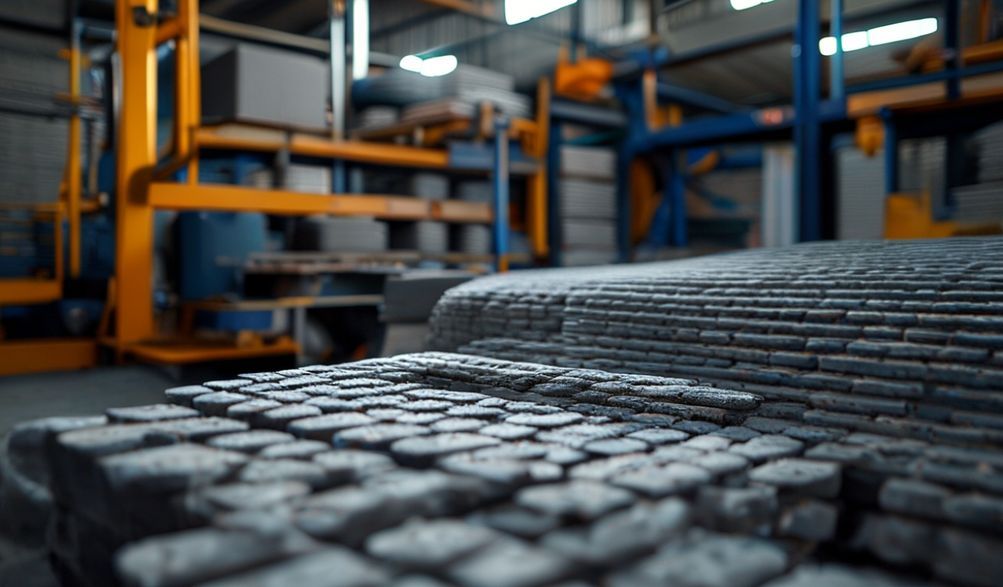
Fly Ash Bricks Machine Price in 2026: A Complete Cost & Investment Guide
परिचय
Navigating the world of fly ash brick manufacturing machinery can feel overwhelming. Between fluctuating price tags, technical jargon, and long-term investment risks, how do you make a confident decision? This comprehensive guide is crafted for entrepreneurs, construction professionals, and sustainability advocates exploring the fly ash brick industry.
We will demystify the complete cost structure of fly ash brick manufacturing machines, moving beyond just the sticker price. Drawing on industry data, manufacturer specifications, and practical investment principles, this post provides a trustworthy roadmap for evaluating machinery costs, operational expenses, and long-term ROI.
Understanding these factors is crucial for making an informed, profitable, and sustainable business decision. Let’s build your knowledge from the ground up.
Understanding Fly Ash Brick Manufacturing Machines
Before discussing rupees, dollars, or euros, it’s essential to understand what you’re investing in. A fly ash brick machine is more than just a metal frame; it’s a precision-engineered system designed to transform waste into valuable building materials.
फ्लाई ऐश ईंट मशीनें कैसे काम करती हैं?
At its core, the process relies on compacting a mixture of fly ash (typically 60-65%), sand or stone dust, lime, gypsum, and water under immense pressure. This compaction can be achieved through two primary methods:
- Hydraulic Compression: A hydraulic ram exerts precise, high pressure (measured in tons) into a mold cavity, forming a dense, uniform brick. This is the most common method for high-quality bricks.
- कंपन और संपीड़न: The mixture is vibrated vigorously in a mold while being simultaneously compressed. This helps in better compaction and finishing.
मुख्य घटक that define the machine include:
* हाइड्रोलिक प्रणाली: The heart of the machine, comprising pumps, cylinders, and valves.
* नियंत्रण कक्ष: Ranges from simple levers to advanced PLC (Programmable Logic Controller) systems.
* Moulds/Dies: Interchangeable molds that define the brick’s size and shape (solid, hollow, paver, interlocking).
* मिश्रण इकाई: Often a separate pan mixer that ensures a homogeneous raw material blend.
Types of Machines & Their Impact on Price
The level of automation is the single biggest factor influencing a fly ash brick machine’s price. Here’s a breakdown:
- Manual Fly Ash Brick Machines: These are entry-level, lever-operated or small hydraulic machines. They require significant manual labor for feeding, compacting, and brick ejection. While they have the सबसे कम अग्रिम लागत, they result in high labor costs and low, inconsistent output (100-500 bricks per hour). Ideal for very small-scale or experimental setups.
- अर्ध-स्वचालित मशीनें: This category offers a balance. Key processes like compression and ejection are automated, but feeding raw material into the hopper and brick removal may be manual. They offer a मध्यम स्तर की कीमत with substantially higher, more consistent output (500-2,500 bricks per hour) and better quality control. The sweet spot for many new entrepreneurs.
- पूर्ण स्वचयंत्रित पौधे: These are production lines with minimal human intervention. They feature automatic material feeding, conveying, pressing, stacking, and sometimes palletizing. They command a significant investment but provide very high output (2,500-10,000+ bricks per hour) with low labor costs and exceptional consistency. Suitable for large-scale commercial production.
- मोबाइल ईंट बनाने की मशीनें: Mounted on a trailer, these are designed for on-site production, eliminating transport costs for bricks. Their price includes the mobility feature and is influenced by capacity. They bring unique cost considerations like fuel and site logistics.
Breaking Down the Cost: Fly Ash Brick Machine Price Factors
The price tag is a culmination of several technical and commercial factors. Let’s dissect them to understand what you’re really paying for.
1. मशीन का प्रकार और स्वचालन स्तर
As outlined above, automation is a primary cost driver. Here’s a closer look at the correlation:
* मैनुअल मशीनें: Low initial cost, but the कुल स्वामित्व लागत (टीसीओ) can be high due to labor intensity and lower efficiency.
* Semi & Fully Automatic: Higher initial investment is offset by long-term labor savings, higher output, and better quality uniformity. The return on investment (ROI) calculation must factor in these operational savings.
2. Production Capacity (Bricks Per Hour)
Capacity is directly proportional to price. A machine is rated for a specific output under ideal conditions.
* Low-Capacity (500-1000 BPH): Suitable for local, small-scale demand. Lower power consumption and footprint.
* Medium-Capacity (1000-2500 BPH): The most common range for profitable small-to-medium enterprises (SMEs).
* High-Capacity (2500+ BPH): Requires a confirmed large market or contract supply. The machine price, ancillary equipment, and operational costs scale up significantly.
3. Brand, Quality & Origin of Manufacture
Where and by whom the machine is built drastically affects its price and longevity.
* Established International Brands: Often come with a premium for advanced R&D, global service networks, and proven durability. Spare parts may be costlier.
* Reputable Domestic Manufacturers: Can offer excellent value—combining good quality, understanding of local raw materials, and easier after-sales support at a competitive price.
* Generic/Low-Cost Suppliers: The lowest upfront cost, but this often comes with risks: inferior materials (affecting pressure-bearing capacity), lack of testing, and virtually no after-sales service. This can lead to frequent breakdowns and a much shorter lifespan.
4. Key Technical Specifications
These are the engineering details that justify price differences between two machines of the same type and capacity.
* दबाव (टन भार): A 100-ton press will cost more than a 60-ton press. Higher pressure generally produces denser, stronger bricks.
* मोटर शक्ति: Measured in HP or kW. A more powerful motor ensures consistent performance but increases electricity consumption.
* नियंत्रण प्रणाली: A basic relay system is cheaper than a digital PLC with a touchscreen interface. PLCs offer precision, programmability, and easier troubleshooting.
* अनुकूलन: Standard brick sizes are included. Requiring custom molds for special shapes, interlocking designs, or unique textures adds to the cost.
Beyond the Machine: The Total Project Investment
The machine invoice is just one part of the financial picture. A successful plant requires a holistic budget. Overlooking these costs is a common pitfall for new investors.
Ancillary Equipment & Setup Costs
You cannot run a plant with just the brick press.
* Raw Material Prep: A pan mixer is essential. Conveyor belts, crushers for sand, and screening equipment may also be needed.
* Curing Infrastructure: Bricks gain strength over 14-28 days of curing. This requires space: curing sheds, racks, and water spray systems.
* Handling Equipment: Pallets, trolleys, and potentially a forklift for larger plants.
* Civil & Utilities: Land cost (owned or leased), shed construction for the machine and storage, and a stable 3-phase power connection. Don’t forget the cost of a water source and storage.
Operational & Recurring Costs
These are the day-to-day expenses that determine your profitability.
* कच्चा माल: Fly ash (often low-cost or free from power plants), sand/stone dust, lime/cement, gypsum, and water. Transportation of these materials is a key cost.
* श्रम Wages for machine operators, mixers, handling staff, and supervisors.
* Utilities: Electricity is the major cost, especially for hydraulic systems. Water for mixing and curing.
* रखरखाव: Regular oil changes, filter replacements, and hydraulic fluid. The biggest recurring cost is often mould/die replacement due to wear and tear.
Price Ranges & Sample Budget Estimates (2026)
Disclaimer: The following figures are indicative estimates for the Indian market as of 2026 projections. Prices vary wildly based on exact specifications, brand, negotiation, location, and currency fluctuations. Always obtain multiple detailed quotations.
Indicative Price Table for Machinery
| Machine Type | Estimated Price Range (₹) | Key Considerations |
| :— | :— | :— |
| Manual Machine | ₹1.5 – ₹3 Lakhs | Very low output, high labor cost. |
| Semi-Automatic Machine | ₹5 – ₹15 Lakhs | Best for starting a business. Capacity varies within range. |
| Fully Automatic Plant | ₹20 Lakhs – ₹1 Crore+ | For large-scale industrial production. |
| Mobile Brick Machine | ₹8 – ₹20 Lakhs | Includes trailer & engine. Capacity dependent. |
Case Study: Sample Budget for a Medium-Scale Unit
Let’s estimate the total project cost for setting up a semi-automatic plant with a goal of 1,500 bricks per hour.
-
1. Machinery & Core Equipment:
- Semi-Auto Fly Ash Brick Machine (1500 BPH): ₹9,00,000
- Pan Mixer (with loader): ₹2,50,000
- Subtotal: ₹11,50,000
-
2. Setup & Infrastructure (One-Time):
- Land Development & Shed Construction (3000 sq. ft): ₹5,00,000
- Electrical Transformer/Connection: ₹1,50,000
- Curing Racks & Water System: ₹1,00,000
- Trolleys & Tools: ₹50,000
- Subtotal: ₹8,00,000
-
3. Working Capital (Initial Months):
- Raw Material Stock (1 month): ₹2,00,000
- Labor Salaries (1 month): ₹1,00,000
- Utilities & Contingency: ₹1,00,000
- Subtotal: ₹4,00,000
-
Total Estimated Project Investment: ₹23,50,000 (Approx. ₹23.5 Lakhs)
This is a simplified example. A detailed Project Report (DPR) is non-negotiable.
अपने निवेश के लिए सर्वोत्तम मूल्य कैसे प्राप्त करें
Smart buying is as important as the buying itself. Follow this expert advice to protect your investment.
Researching & Selecting a Reliable Supplier
- Checklist:
- Insist on a factory visit to see build quality.
- Ask for and actually contact client references.
- Verify the warranty period (1 year is standard) and what it covers.
- Map their service network. Is there an engineer within a reasonable distance?
- Red Flags:
- Vague or unwillingness to share technical specifications.
- No clear answer on after-sales support or spare parts availability.
- A price suspiciously lower than all other quotes.
Key Questions to Ask Before Buying
- “What is the installed power requirement (in kW) for the entire setup?”
- “What is the standard lead time for critical spare parts like hydraulic seals or pumps?”
- “Do you provide comprehensive training for our operators and maintenance staff?”
- “Can you provide a detailed, itemized quotation that includes all ancillary equipment, installation, and taxes?”
Financing Options & Government Subsidies
- Financing: Most banks offer MSME (Micro, Small & Medium Enterprises) business loans for capital expenditure. Have your detailed project report and business plan ready.
- Subsidies: Many governments promote fly ash utilization. In India, for instance, various state and central policies (like those from the Ministry of Environment, Forest & Climate Change) encourage fly ash use. There may be capital subsidy schemes, tax benefits, or preferential procurement for eco-friendly products. Consult a local industry association or government MSME office for the latest, location-specific schemes.
अक्सर पूछे जाने वाले प्रश्न (एफएक्यू)
Q1: What is the cheapest fly ash brick machine available?
A: Manual machines have the lowest purchase price. However, their high labor cost and low output make them the “cheapest” only in the very short term. For a business, a semi-automatic machine often provides a better cost-per-brick over time.
Q2: Can I get a good quality automatic machine under ₹10 lakhs?
A: You can get a good अर्ध-स्वचालित machine with a capacity of around 800-1200 bricks per hour in this range. A true, fully automatic plant typically requires a larger investment. Focus on the supplier’s reputation and the machine’s total cost of ownership.
Q3: How much profit can I make from a fly ash brick plant?
A: Profit margins are highly variable but can range from 15% to 30% per brick after all costs. A plant producing 10,000 bricks daily can be very profitable. Key drivers are your raw material (especially fly ash) cost, operational efficiency, and local selling price.
Q4: Is fly ash brick manufacturing a profitable business?
A: Yes, it has strong profit potential due to rising demand for green building materials, low-cost raw materials (using industrial waste), and often supportive regulations. Profitability is not automatic—it hinges on sound planning, quality production, and effective sales.
Q5: What is the lifespan of a fly ash brick machine?
A: With proper maintenance, a quality machine can last 10-15 years or more. Critical components like hydraulic pumps may need overhauling during this period. Neglect or buying poor-quality equipment can reduce this to just a few years.
Conclusion & Final Recommendations
Investing in a fly ash brick manufacturing machine is a strategic decision with significant environmental and economic potential. As we’ve explored, the “price” is not a single number but a spectrum defined by your production goals, quality standards, and the total project scope.
Our final recommendations:
- Prioritize Total Cost of Ownership (TCO): The cheapest machine can become the most expensive. Factor in 5-10 years of maintenance, energy use, labor, and potential downtime.
- Match Machine to Market: Conduct thorough local market research. Don’t buy a 5,000 BPH machine if your area can only absorb 2,000 bricks a day. Start with scalable, realistic capacity.
- Quality Over Price: Your machine is your primary asset. Investing in reliable build quality and a supplier with strong after-sales service is insurance against catastrophic failure and lost reputation.
- Conduct Due Diligence: This is your most important task. Visit running plants, talk to owners, scrutinize supplier claims, and never skip the detailed project report.
By approaching your investment with this comprehensive understanding of costs—from the hydraulic pump to the curing shed—you lay a solid, profitable, and sustainable foundation for your fly ash brick business.
This guide is compiled based on industry research, technical specifications from leading manufacturers, and economic principles of small-scale industrial projects. It is intended for informational purposes to aid in preliminary planning. We strongly advise consulting with financial advisors and conducting a detailed feasibility study tailored to your specific location and market before making any investment.
<