
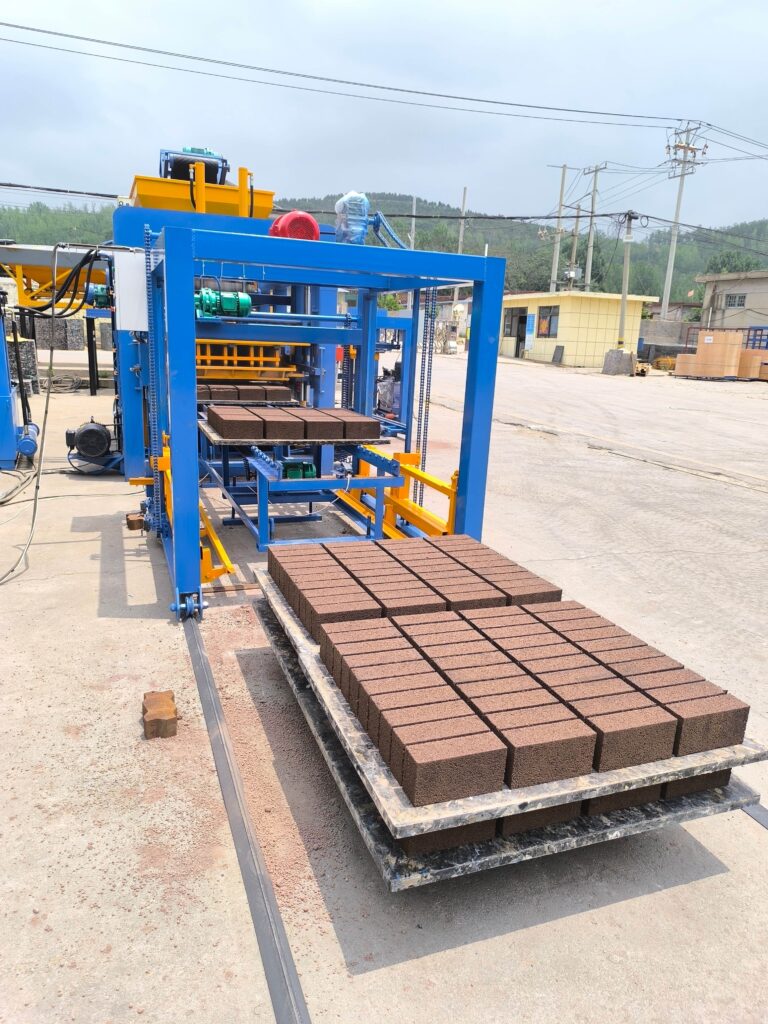
The Integral Role of Modern Brick Machinery in Advancing Sustainable Construction
Foundations of Sustainability: From Resource to Building
Optimizing Material Usage and Minimizing Waste
The first and most direct contribution of machinery to sustainability lies in its precision and efficiency with raw materials.
- High-Precision Compaction and Molding: State-of-the-art presses utilize advanced control systems to deliver exact pressure and vibration, resulting in bricks and blocks with exceptional dimensional accuracy and consistent density. This precision minimizes breakage and defects during production, handling, and transportation, dramatically reducing material waste sent to landfill. It also allows for the use of thinner mortar joints in construction, further decreasing material consumption on-site.
- On-Site Production Potential: Certain mobile or modular brick-making machines enable production directly at or near construction sites. This model drastically cuts down on the fossil fuel emissions associated with long-distance transportation of heavy masonry units from a central plant. It also allows for the use of locally sourced, site-won materials, reducing the environmental footprint of extraction and logistics.
Facilitating the Use of Alternative and Recycled Materials
Perhaps the most significant advancement is the ability of modern machines to transform waste into valuable building resources.
- Engineered for Diverse Feedstocks: Contemporary brick-making equipment is increasingly designed to process a wide range of non-traditional materials. This includes industrial by-products like fly ash from coal combustion, slag from steel production, and foundry sand. It also encompasses construction and demolition waste (CDW), such as crushed concrete, brick, and glass.
- Stabilization and Compaction Technology: To successfully incorporate these often variable materials, machines employ sophisticated stabilization techniques—through mechanical compression, vibration, and the precise addition of low-percentage stabilizing agents (like lime or cement). This creates durable products without the need for high-temperature firing, saving immense amounts of energy.
- Closing the Material Loop: By enabling the use of post-consumer and post-industrial waste, this machinery actively contributes to a circular economy. It diverts material from landfills, reduces the demand for virgin clay or aggregate mining, and creates a market for recycled content, building a more resilient and sustainable material ecosystem.
Energy and Emission Reductions in the Production Phase
The Shift to Energy-Efficient Production Methodologies
The manufacturing process itself is a major focus for sustainability gains, with machinery at the core.
- Eliminating the Firing Process: The rise of hydraulically pressed or chemically cured blocks represents a paradigm shift. Machines that produce high-quality compressed earth blocks (CEBs) or stabilized blocks do not require the energy-intensive kiln-firing stage, which is responsible for the majority of traditional brick manufacturing’s carbon emissions (often from fossil fuel combustion) and air pollutants.
- Advanced Curing Systems: For products that require curing, modern machinery is integrated with efficient systems. Autoclaved aerated concrete (AAC) plants use pressurized steam curing, which is more energy-controlled than traditional kilns. Some systems incorporate heat recovery technologies to capture and reuse waste thermal energy, significantly boosting overall energy efficiency.
On-Board Intelligence and Process Optimization
Smart technology embedded in production lines ensures operations run at peak efficiency.
- Adaptive Control Systems: Modern PLCs can dynamically adjust machine parameters—such as pressure, cycle time, and material feed—based on real-time sensor data regarding material moisture and consistency. This optimization prevents energy waste from over-processing and ensures every unit is produced with minimal energy input.
- Predictive Maintenance: IoT-connected machinery can monitor its own health, predicting failures before they occur. This prevents unexpected downtime and avoids the wasteful production of sub-standard units. It also ensures the machine always operates at its designed efficiency, preventing gradual energy waste from misaligned or worn components.
Enhancing the Sustainability of the Final Building
Manufacturing High-Performance Building Envelopes
The capabilities of the machinery directly influence the thermal and environmental performance of the building constructed with its products.
- Producing Insulative Units: Machines can be equipped with molds and systems designed to create specialized bricks and blocks that enhance building efficiency. This includes units with integrated insulation cavities, interlocking designs that reduce thermal bridging, and lightweight aerated blocks with naturally high insulating properties. These products directly contribute to reducing the operational energy required to heat and cool buildings over their lifetime.
- Precision for Airtightness: The dimensional accuracy afforded by advanced machinery means walls can be built with tighter, more uniform joints. This improves the building’s airtightness, a critical factor in energy-efficient building envelopes, reducing unwanted heat loss or gain.
Durability and Longevity
Sustainable construction is inherently linked to longevity. Buildings that last longer require fewer resources for renovation and replacement.
- Consistent Quality for Structural Integrity: The uniform density and strength achieved by precision machinery result in masonry products with predictable and reliable structural performance. This leads to more durable, resilient buildings with longer service lives, embodying the principle of “build it once, build it right.”
- Resistance to Environmental Factors: Machines can produce bricks and blocks engineered for specific climatic challenges, such as high freeze-thaw resistance or moisture resilience. This durability reduces maintenance needs and extends the lifecycle of the structure, further amortizing the initial embodied energy and resources over many decades.
Economic and Market Advantages for the Supply Chain
Aligning with Green Building Standards and Certification
The construction market is increasingly governed by green standards.
- Enabling Certification Credits: Buildings seeking certification under systems like LEED, BREEAM, or Green Star earn credits for using materials with recycled content, locally sourced materials, and low embodied carbon. Brick-making machinery that facilitates these attributes directly enables your clients (manufacturers) to produce products that are highly sought-after for certified projects, opening premium market segments.
- Meeting Regulatory Requirements: Governments worldwide are implementing regulations on embodied carbon in construction. Supplying machinery that helps producers lower their products’ carbon footprint ensures your clients remain compliant and competitive in a regulated future.
Creating Value from Waste Streams
Modern machinery transforms a cost center into a potential revenue stream.
- For Producers: Equipment that can utilize low-cost or negatively priced waste materials (like fly ash or crushed construction debris) significantly reduces raw material costs. This improves profit margins and provides a powerful marketing story about product sustainability.
- For Distributors: This narrative provides a compelling dual-value proposition to sell: economic savings through efficient production और access to the growing market for green building materials. It elevates your role from equipment supplier to strategic sustainability partner.
Conclusion
The question is no longer whether brick-making machinery has a role in sustainable construction, but how central that role has become. From raw material processing to the performance of the finished building, advanced manufacturing technology is a critical driver of environmental responsibility in the construction sector. By enabling the efficient use of recycled materials, eliminating energy-intensive processes, and producing high-performance, durable building components, this generation of equipment addresses the full spectrum of sustainability—environmental, economic, and social.
For distributors, dealers, and procurement experts, this represents a transformative opportunity. The machinery you provide is no longer merely a production tool; it is a gateway to a more sustainable and profitable future for your clients. By understanding and articulating these contributions—from waste diversion and energy savings to enabling green certifications—you position yourself at the forefront of the industry’s evolution. Championing this technology means more than selling machines; it means actively participating in building a more resilient, efficient, and sustainable world, one brick at a time.
FAQ
Q1: Our clients are traditional clay brick manufacturers. Is this sustainable machinery relevant to them?
A: Absolutely. The transition can be incremental. For example, they can adopt machines that allow for precise blending of recycled content (like grog – crushed fired brick waste) into their clay mix, reducing virgin material use and waste. They can also invest in more efficient kiln car handling systems or dryers that integrate with modern, energy-saving presses. The focus is on making their existing process more resource-efficient and less wasteful, which improves both sustainability and cost-effectiveness.
Q2: Are building products made from recycled materials using this machinery structurally sound and code-compliant?
A: Yes, when produced correctly on appropriate equipment. The key is that the machinery must be capable of properly processing and stabilizing the alternative materials. The final products must undergo standard engineering tests (compressive strength, water absorption, durability) to achieve relevant certifications and comply with national building codes. Reputable machinery manufacturers provide technical support to ensure the end product meets all required standards for safety and performance.
Q3: Doesn’t the focus on automation and high-tech features make the machinery less accessible or suitable for developing markets?
A: Not necessarily. The principles of sustainability can be applied across technological levels. While full automation maximizes efficiency, there are robust, manually operated or semi-automatic machines designed specifically for developing economies. These units can still enable the use of local earth or stabilized waste materials, creating durable products without firing, which is a massive sustainability win. The market offers a spectrum of solutions for different contexts.
Q4: As a distributor, how do we quantify and communicate the “sustainability benefit” of this machinery to cost-focused buyers?
A: Translate sustainability into tangible economic metrics. Create comparison sheets that show:
- Cost Savings: Reduced raw material costs when using waste streams vs. virgin clay/aggregate.
- Energy Savings: Lower fuel or electricity bills from eliminating kilns or using high-efficiency drives.
- Market Premium: Potential for higher selling prices or access to new contracts for products with recycled content or green certifications.
- Risk Mitigation: Future-proofing against rising carbon taxes or stricter material regulations.
Q5: Is there after-market demand for buildings made from these “sustainable” bricks and blocks?
A: Demand is growing rapidly. Driven by corporate sustainability goals, government mandates for public projects, and consumer awareness, architects, contractors, and developers are actively seeking building materials with lower embodied carbon and strong environmental credentials. Producing such materials directly taps into this expanding market, offering a clear competitive advantage to forward-thinking manufacturers.
