
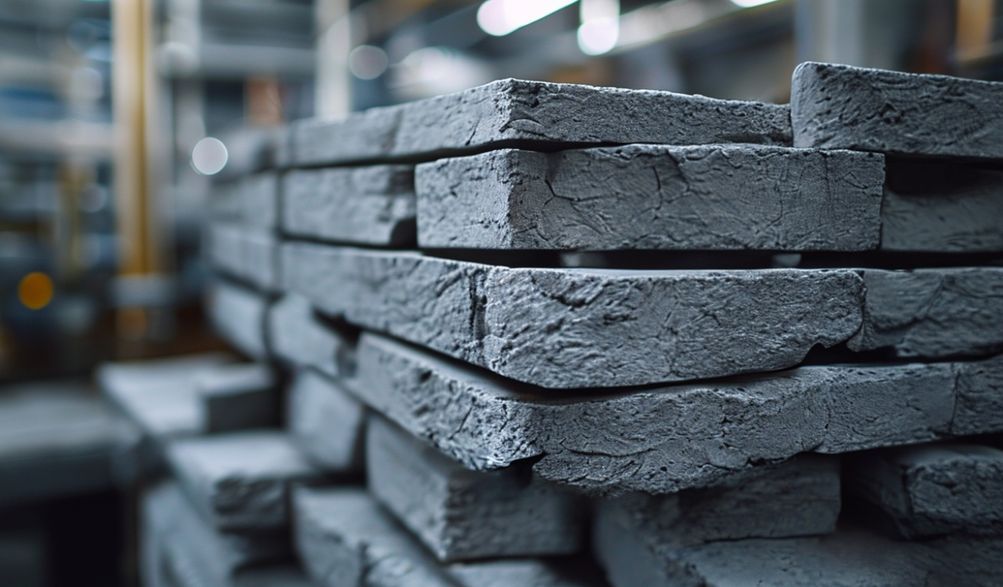
मशीन-निर्मित सीमेंट ईंटें: निर्माण, लाभ और उपयोगों के लिए एक आधुनिक मार्गदर्शिका
सहस्राब्दियों तक, ईंट बनाने की कला ने निर्माण की लय को परिभाषित किया। यह मिट्टी, साँचे और धूप का एक श्रमसाध्य नृत्य था, जो ऐसी सामग्री प्रदान करता था जिससे हमारी प्रारंभिक सभ्यताओं का निर्माण हुआ। फिर भी, आज की बढ़ती मांग और कठोर इंजीनियरिंग मानकों की दुनिया में, क्या ऐसी पारंपरिक विधियाँ कदम मिला सकती हैं?
क्या हो अगर आप मजबूत, अधिक एकसमान संरचनाओं को तेजी से और कम अपशिष्ट के साथ बना सकें? यह कोई काल्पनिक प्रश्न नहीं बल्कि निर्माण सामग्री उत्पादन के यंत्रीकरण द्वारा लाई गई वास्तविकता है। जैसे-जैसे वैश्विक बुनियादी ढांचे और आवास की जरूरतें बढ़ रही हैं, उद्योग ने सटीकता, दक्षता और एकरूपता की ओर निर्णायक रूप से कदम बढ़ा दिया है।
यह मार्गदर्शिका उद्योग निर्माण मैनुअल, स्थापित सिविल इंजीनियरिंग सिद्धांतों और अनुभवी निर्माण पेशेवरों की अंतर्दृष्टि के संश्लेषण से तैयार की गई है। हमारा लक्ष्य एक विश्वसनीय, क्रियाशील संसाधन प्रदान करना है जो अव्यवस्था को दूर करता है। हम मशीन से बनी सीमेंट ईंटों के निर्माण प्रक्रिया को स्पष्ट करेंगे, पारंपरिक तरीकों पर उनके ठोस फायदों का विस्तार से वर्णन करेंगे, उनके विविध अनुप्रयोगों का पता लगाएंगे और आपकी परियोजना या व्यावसायिक उद्यम के लिए सही मशीनरी चुनने के लिए एक स्पष्ट रूपरेखा प्रदान करेंगे।
मशीन द्वारा निर्मित सीमेंट ईंटों को समझना
प्रक्रियाओं और लाभों में गहराई से जाने से पहले, यह स्पष्ट समझ बनाना महत्वपूर्ण है कि मशीन से बनी सीमेंट ईंटें क्या होती हैं और उनमें क्या शामिल होता है।
मशीन से बने सीमेंट ईंटें क्या हैं?
Machine-made cement bricks are precisely engineered construction blocks. They are produced by compacting a semi-dry mixture of cement, fine aggregates (like sand or stone dust), and water under high mechanical pressure and vibration in an automated machine.
This process is fundamentally different from both clay bricks and handmade cement blocks:
- Vs. Clay Bricks: Clay bricks are formed from natural clay and shale, then fired in a kiln at extremely high temperatures. Machine-made cement bricks are not fired; they gain strength through a chemical curing process.
- Vs. Handmade Blocks: While the raw materials may be similar, handmade blocks rely on manual compaction in molds, leading to significant variation in density and strength. Machine production eliminates this inconsistency.
Core Components and Raw Material Quality
The quality of the final brick is inextricably linked to the quality of its inputs. Here’s what matters:
- सीमेंट: This is the binding agent. Ordinary Portland Cement (OPC 43 or 53 grade) is most common. Portland Pozzolana Cement (PPC) is also excellent, often offering better workability and long-term strength. Always use fresh, lump-free cement stored in dry conditions.
- एग्रीगेट्स: These provide bulk and strength.
- रेत Should be coarse, well-graded, and clean. High silt or organic content drastically reduces brick strength and bond with cement.
- Stone Dust/Crushed Stone: Provides excellent compaction and strength. Must be free from clay and other impurities.
- पानी: Often overlooked, water quality is critical. Use only clean, potable water. Impurities can interfere with the cement hydration reaction.
E-E-A-T Pro Tip: You can perform a simple field test for sand silt content. Take a 50ml transparent bottle, fill it halfway with sand, then add clean water until it’s three-quarters full. Shake vigorously for a minute and let it settle for an hour. The silt layer settled on top of the sand should not exceed 6-8% of the total sand height. More than that indicates poor-quality sand.
The Manufacturing Process: From Raw Material to Finished Brick
The magic of machine-made bricks lies in a controlled, repeatable process. Each step is designed to maximize density and uniformity.
Step 1: Batching and Mixing
Precision begins here. Ingredients are measured by weight (not volume) for accuracy. Common mix ratios are 1:4:4 or 1:6 (Cement:Sand:Stone Dust). Automated batching systems offer the best consistency, but manual weigh-batching can also be effective with careful operation. The goal is a homogeneous, semi-dry mix where the material holds its shape when squeezed in a fist.
Step 2: Compaction and Molding
This is the heart of the operation. The mixed material is fed into a mold cavity on the machine. Then, through a combination of high-frequency vibration and hydraulic or mechanical pressure, the mixture is compressed to a fraction of its original volume.
- Key Benefit: This intense compaction expels air voids, dramatically increasing the brick’s density. Higher density directly translates to higher compressive strength, lower water absorption, and better durability.
Step 3: Curing and Drying
After ejection from the mold, the “green” bricks have shape but little strength. Curing is the controlled process of maintaining adequate moisture and temperature to allow the cement to fully hydrate and develop strength.
- Machine-made bricks are typically water-cured (sprayed with water and covered) or steam-cured in chambers. This controlled environment, as opposed to unpredictable sun-drying, ensures uniform and optimal strength development over 14-28 days.
Step 4: Quality Control and Testing
Reputable manufacturers adhere to strict quality standards. Key tests include:
- Compressive Strength Test: The primary measure of a brick’s load-bearing capacity (e.g., IS 2185 in India, ASTM C90 in the USA). Machine bricks consistently meet specified grades (e.g., 5, 7.5, 10, 15 N/mm²).
- Water Absorption Test: Measures porosity. Lower absorption (typically <10-15%) means better resistance to weather and frost.
- Dimensional Tolerance Check: Ensures every brick is within a few millimeters of the standard size, facilitating faster construction.
Key Advantages of Using Machine-Made Cement Bricks
The mechanized process confers a suite of benefits that address the core challenges of modern construction.
Superior Strength and Structural Integrity
The high-compaction process yields bricks with superior and, more importantly, consistent compressive strength. This allows for:
* Safer load-bearing walls in multi-story constructions.
* Potential reduction in wall thickness for the same load.
* Enhanced seismic resistance due to uniform material behavior.
Unmatched Uniformity and Precision
Every brick is a near-perfect replica of the last. This geometric precision leads to:
* Faster laying: Masons work more efficiently without sorting or trimming.
* Less mortar consumption: Uniform joints require less mortar, saving material cost.
* Smoother finishes: Walls require less plaster, and exposed brickwork looks aesthetically superior.
Enhanced Productivity and Economic Efficiency
- उच्च उत्पादन: Machines can produce from hundreds to thousands of bricks per shift, ensuring steady supply for large projects.
- श्रम निर्भरता कम होना Automation reduces the heavy manual labor required in traditional methods.
- Reduced Waste: Minimal breakage and fewer rejects compared to fragile, sun-dried bricks.
पर्यावरणीय और स्थिरता लाभ
- Utilization of Waste: Many machines can use industrial by-products like fly ash (from coal plants) or slag, turning waste into a resource.
- सामग्री दक्षता: Precise batching and low waste rates mean efficient use of raw materials.
- कम अवतारित ऊर्जा: The process generally requires less energy than firing clay bricks in a kiln.
- Local Production: Bricks can be manufactured close to construction sites, slashing transportation emissions.
Applications in Modern Construction
The versatility of machine-made cement bricks makes them suitable for a wide range of applications.
Load-Bearing and Non-Load-Bearing Walls
- Load-Bearing: Higher-grade bricks (e.g., 10 N/mm² and above) are used for structural walls in houses, apartments, and commercial buildings. The consistent strength allows for reliable engineering calculations.
- Non-Load-Bearing: Lower-grade bricks are perfect for partition walls, compound walls, and infill walls in framed structures.
Pavements, Walkways, and Landscaping
Interlocking cement paving bricks are a popular product from these machines. They offer:
* Rapid Installation: Dry-laid on a sand bed, they can be used immediately.
* Permeability: Gaps allow water to percolate, reducing runoff.
* टिकाऊपन: High resistance to weathering and heavy foot traffic.
Specialized Uses: Hollow Blocks, Partition Blocks
- खोखले ब्लॉक: These have cavities, making them lighter, improving thermal and acoustic insulation, and reducing the dead load on building frames. Ideal for high-rise construction.
- Solid Partition Blocks: Thinner, lighter blocks specifically designed for quick construction of interior walls.
Choosing the Right Brick Making Machine
Selecting equipment depends on your scale, budget, and objectives.
मशीनों के प्रकार: मैनुअल से पूरी तरह स्वचालित तक
- Manual “Egg-Laying” Machines: Operator-dependent. Low output, low investment. Good for micro-enterprises.
- Stationary Hydraulic Presses: Semi-automatic. Good quality bricks, medium output. Requires a small team.
- Mobile Press Machines: Can be moved around a yard. Higher production than stationary presses.
- पूर्ण स्वचयंत्रित पौधे: Computer-controlled, with automatic feeding, mixing, compaction, and stacking. Very high output (thousands per hour), minimal labor, but requires significant capital investment.
Key Selection Criteria
- उत्पादन क्षमता: Match the machine’s bricks-per-hour output to your project needs or market demand.
- Brick Output Size & Molds: Ensure it can produce the brick size you need (e.g., standard, hollow, paving). Check if custom molds are available.
- शक्ति स्रोत: Electric (clean, lower op-cost), Diesel (good for areas with unreliable power), or Hybrid.
- बिक्री के बाद की सेवा: This is critical. Choose a supplier known for reliable technical support, training, and spare parts availability.
Cost Analysis and ROI Considerations
- Capital Cost: Increases with automation level.
- Operational Cost: Includes raw materials, power/fuel, labor, and maintenance.
- ROI Factors: Local brick price, raw material accessibility, scale of operation, and machine uptime. A detailed business plan is essential for entrepreneurs.
अक्सर पूछे जाने वाले प्रश्न (एफएक्यू)
Q1: Are machine-made cement bricks stronger than traditional red clay bricks?
ए: Typically, yes. The high-compaction manufacturing process often results in machine-made cement bricks having higher and, crucially, more consistent compressive strength than many traditional fired clay bricks. This makes them particularly well-suited for modern, multi-story, and engineered load-bearing construction.
Q2: What is the typical curing time for these bricks before they can be used?
ए: While they gain enough handling strength to be stacked within 24 hours, a proper curing period of 14 to 28 days is essential for the bricks to reach their specified design strength. This controlled curing process is far more reliable and faster than the weeks of sun-drying required for traditional bricks.
Q3: Can I start a small-scale brick-making business with a basic machine?
ए: Absolutely. Manual or semi-automatic machines are popular and viable entry points for small businesses and entrepreneurs. Success depends on a solid business plan, a reliable supply of quality raw materials, and a clear understanding of local market demand, competition, and regulatory requirements.
Q4: How do I check the quality of machine-made bricks on-site?
ए: Perform these simple checks: 1) Strike two bricks together – a clear, metallic ringing sound indicates good compaction and solidity. 2) Check for uniform color and texture, and sharp, intact edges. 3) Drop a brick from a waist-high height onto a hard surface – a good quality brick should not break. 4) For critical projects, always request and verify the manufacturer’s test certificates for compressive strength and water absorption.
Q5: Are fly ash-based cement bricks a good choice?
ए: Yes, they are an excellent and sustainable choice. Fly ash bricks utilize a waste product, are often lighter, and can have better thermal insulation properties than standard cement-sand bricks. Ensure they are manufactured to relevant quality standards (like IS 3812) by a reputable supplier.
निष्कर्ष
The shift from manual craftsmanship to mechanized precision in brick production represents more than just a technological upgrade; it is a fundamental alignment with the needs of 21st-century construction. Machine-made cement bricks deliver a powerful combination of demonstrable strength, geometric uniformity, economic efficiency, and environmental sensibility.
As we have outlined, this advantage is rooted in controlled engineering processes—from precise batching and high-pressure compaction to scientific curing—all backed by standardized quality testing. Choosing these bricks is therefore a strategic decision for building durable, reliable, and cost-effective structures.
We encourage you to assess your specific project requirements. Consult with reputable machinery suppliers and, for structural applications, a qualified civil engineer. The most convincing step is often to visit a certified manufacturing plant or request samples. See the precision, feel the density, and test the quality for yourself. Your next construction endeavor deserves the solid foundation that only modern, machine-made quality can provide.
<