
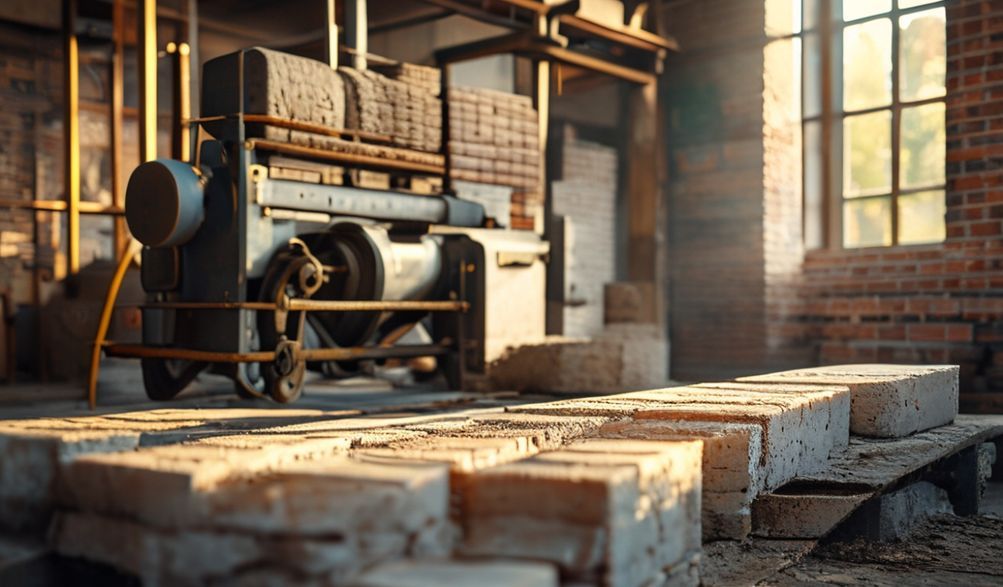
मकिगा ब्रिक्स मशीन की कीमत केन्या 2026 में: एक संपूर्ण मार्गदर्शिका और फूडा ब्लॉक मेकिंग फैक्ट्री के साथ तुलना
परिचय
केन्या का निर्माण क्षेत्र शहरीकरण, बुनियादी ढांचा परियोजनाओं और किफायती आवास की बढ़ती मांग से प्रेरित आर्थिक विकास का एक शक्तिशाली केंद्र है। उद्यमियों, ठेकेदारों और डेवलपर्स के लिए, जो इस उछाल का फायदा उठाना चाहते हैं, ईंट बनाने के उपकरण का चुनाव एक महत्वपूर्ण प्रारंभिक निवेश है। सही मशीन एक लाभदायक उद्यम का इंजन बन सकती है, जबकि गलत चुनाव परियोजनाओं के ठप होने और वित्तीय दबाव का कारण बन सकता है।
यह मार्गदर्शिका बाजार में सबसे आम तुलनाओं में से एक: स्थानीय स्तर पर सम्मानितमकिगा ईंट मशीन की कीमत केन्या में बनाम फूडा ब्लॉक निर्माण कारखाने से आयातित प्रस्तावों केहमारा विश्लेषण वर्तमान बाजार अनुसंधान, तकनीकी विवरण और उद्योग के खिलाड़ियों से एकत्रित अंतर्दृष्टि पर आधारित है, ताकि आप सूचित और आत्मविश्वासपूर्ण निर्णय ले सकें। हम समझते हैं कि कीमतें गतिशील होती हैं, जो मॉडल, स्थान और विदेशी मुद्रा दरों से प्रभावित होती हैं। इसलिए, हम केवल स्थिर संख्याएँ नहीं, बल्कि पारदर्शी ढाँचे और व्यावहारिक सलाह प्रदान करने के लिए प्रतिबद्ध हैं।
इस लेख के अंत तक, आप दोनों ब्रांडों की स्पष्ट समझ, विभिन्न मॉडलों का विस्तृत मूल्य विश्लेषण और केन्याई संदर्भ के लिए तैयार की गई एक रणनीतिक खरीद मार्गदर्शिका प्राप्त करेंगे। आइए वह मशीन खोजें जो आपके प्रोजेक्ट के पैमाने, बजट और दीर्घकालिक व्यावसायिक लक्ष्यों के साथ पूरी तरह मेल खाती हो।
अपनी आवश्यकताओं को समझना: मैनुअल बनाम सेमी-ऑटोमैटिक बनाम ऑटोमैटिक ब्रिक मशीनें
ब्रांड और कीमतों की तुलना करने से पहले, अपनी परिचालन आवश्यकताओं को परिभाषित करना आवश्यक है। मैनुअल, सेमी-ऑटोमैटिक और ऑटोमैटिक मशीनों के बीच चुनाव मूल रूप से आपके व्यवसाय मॉडल, लागत और विकास क्षमता को आकार देता है।
परियोजना का पैमाना और आउटपुट आवश्यकताएं
- छोटे पैमाने पर (स्वयं करें, होमस्टेड, सूक्ष्म उद्यम):इस स्तर में व्यक्तिगत परियोजनाएं, छोटी संरचनाएं, या बहुत स्थानीय बिक्री शामिल है। दैनिक उत्पादन आवश्यकताएं मामूली हैं।
- अनुशंसित प्रकार:मैनुअल मशीनें। ये मानव-शक्ति से चलती हैं, जो ऑपरेटर के कौशल और श्रम के आधार पर प्रतिदिन लगभग 200-500 ब्लॉक बनाती हैं।
- मध्यम-स्तरीय (एसएमई, स्थानीय आपूर्ति, बढ़ता व्यवसाय):यहाँ, आप कई परियोजनाओं, छोटे आवासीय विकासों, या खुदरा दुकानों की आपूर्ति कर रहे हैं। नियमित, उच्च दैनिक उत्पादन की आवश्यकता है।
- अनुशंसित प्रकार:अर्द्ध-स्वचालित मशीनें। इनमें अक्सर कंपन और संघनन के लिए डीजल इंजन या इलेक्ट्रिक मोटर का उपयोग किया जाता है, जिसमें कुछ मैन्युअल फीडिंग और ब्लॉक निकालने की आवश्यकता होती है। 8-घंटे की शिफ्ट में उत्पादन 1,000 से 5,000 ब्लॉक तक हो सकता है।
- बड़े पैमाने पर (वाणिज्यिक उत्पादन, प्रमुख आपूर्तिकर्ता):यह बड़े ठेकेदारों, डेवलपर्स को आपूर्ति करने या व्यापक बाजार की सेवा करने के लिए है। उत्पादन उच्च, सुसंगत और कुशल होना चाहिए।
- अनुशंसित प्रकार:पूर्ण स्वचालित उत्पादन लाइनें। ये प्रणालियाँ खिलाने, मिश्रण करने, दबाने, सख्त करने और ढेर लगाने को स्वचालित करती हैं। इनमें पर्याप्त पूंजी की आवश्यकता होती है, लेकिन ये न्यूनतम मैनुअल श्रम के साथ प्रतिदिन हजारों ब्लॉकों का उत्पादन कर सकती हैं।
बजट और निवेश क्षमता
आपकी वित्तीय योजना स्टिकर मूल्य से परे देखनी चाहिए।
* प्रारंभिक पूंजीगत व्यय: Manual presses are the most affordable entry point. Semi-automatic machines represent a mid-tier investment. Fully automatic lines require substantial capital.
* Long-term ROI & Operational Costs: Consider power consumption (electricity/fuel), labor costs (more automation means fewer operators), maintenance, and the cost of spare parts. A cheaper machine with high maintenance costs may be less profitable than a more expensive, reliable one.
Available Space and Power Supply
- Workshop Size: Manual machines can operate in a small shed or even outdoors. Semi-automatic machines need more space for operation and curing areas. Automatic lines require a significant industrial shed or factory setup.
- Power Needs: This is crucial in Kenya. Many manual machines need no power. Semi-automatic models may require a reliable single-phase or three-phase electrical connection or a diesel engine. Fully automatic lines almost always require robust three-phase power.
Makiga Engineering Services Ltd.: A Deep Dive
For many Kenyans, Makiga is synonymous with affordable, durable brick-making. As a homegrown Kenyan social enterprise, they have built a reputation on simplicity and accessibility.
Company Profile and Reputation in Kenya
Founded in Kenya, Makiga Engineering Services Ltd. has a decades-long history of designing and manufacturing appropriate technology. They are celebrated for:
* Local Production & Understanding: Their machines are designed for the Kenyan environment, considering local materials, skills, and challenges.
* Durability and Simplicity: Machines are built to last with robust materials and straightforward mechanics that local artisans can understand and repair.
* Community Trust: A widespread network of dealers and a long presence in the market have fostered significant trust, especially among rural entrepreneurs and youth groups.
Popular Makiga Brick Machine Models and Specifications
Here’s a look at some of their flagship products, with estimated price ranges based on current market trends (Note: Prices are indicative and subject to change. Always confirm with authorized dealers).
Makiga Interlocking Stabilized Soil Blocks (ISSB) Press
- विवरण: A purely manual lever-operated press for making interlocking soil blocks. It’s eco-friendly, using stabilized soil (mixed with a little cement), and produces blocks that require less mortar.
- प्राथमिक उपयोग: Ideal for affordable housing projects, perimeter walls, and eco-buildings.
- Estimated Price Range in KES: Ksh 25,000 – Ksh 45,000.
Makiga Multi-Purpose Vibrated Block Press
- विवरण: This is a step up, often featuring an electric motor or diesel engine to power a vibrator for superior compaction. It can produce a variety of blocks (hollow, solid, paving) by changing molds.
- प्राथमिक उपयोग: Perfect for small to medium businesses supplying standard concrete blocks to the local market.
- Estimated Price Range in KES: Ksh 80,000 – Ksh 180,000 (varies greatly based on power source and level of automation).
Makiga Stone Press Machine
- विवरण: A specialized manual or semi-automatic press designed for producing high-quality paving stones (slabs) for landscapes, driveways, and walkways.
- प्राथमिक उपयोग: Landscaping businesses and diversification for block manufacturers.
- Estimated Price Range in KES: Ksh 40,000 – Ksh 70,000.
Advantages of Choosing a Makiga Machine
- Low Entry Cost & Affordability: The most significant advantage, making entrepreneurship in construction accessible.
- Ease of Use and Maintenance: Simple mechanics mean local fundis can easily operate and repair them, minimizing downtime.
- Strong Local Support Network: Spare parts are generally available within the country, and many dealers offer basic training.
- Suitability for Rural Areas: Many models require no electricity, empowering businesses in off-grid locations.
FUDA Block Making Factory: An Overview of Chinese-Made Machines
When production scale and automation become priorities, Kenyan businesses often look to international manufacturers like FUDA.
Who is FUDA? Global Manufacturer Profile
FUDA is a major Chinese industrial machinery manufacturer and exporter, part of a large ecosystem of similar factories. They are known for:
* Industrial Scale Manufacturing: Producing a wide range of machinery from semi-automatic to fully automatic production lines.
* Global Export Reach: Their machines are sold worldwide, often through agents or directly to large buyers.
* Technological Variety: Offering more advanced features like programmable logic controllers (PLCs), higher vibration frequencies, and integrated pallet return systems.
Common FUDA Block Making Machine Models in the Kenyan Market
These machines are typically imported by local agents or ambitious entrepreneurs directly. Prices are more complex due to import costs.
FUDA QT4-25 Semi-Automatic Block Machine
- विवरण: A workhorse for SMEs. It’s a stationary machine that produces blocks on pallets. It requires manual feeding of raw material and removal of finished blocks, but the pressing and vibration are powered.
- प्राथमिक उपयोग: Medium-scale commercial block production.
- Estimated Price Range in KES: Ksh 1.2 Million – Ksh 2.0 Million (This is a landed cost estimate including shipping, insurance, and customs duties. The ex-factory price is lower).
FUDA QMY4-30 Mobile Egg-Laying Block Machine
- विवरण: A popular “egg-layer” type. It mixes, compresses, and then lays the finished block directly onto a level concrete casting surface, eliminating the need for costly pallets.
- प्राथमिक उपयोग: A more affordable entry into higher-volume production, suitable for businesses with ample casting yard space.
- Estimated Price Range in KES: Ksh 800,000 – Ksh 1.5 Million (landed cost estimate).
FUDA Fully Automatic Block Production Line
- विवरण: This is a complete factory-in-a-system. It includes automatic batching, mixing, conveying, pressing, curing, and stacking. It requires significant setup and technical knowledge.
- प्राथमिक उपयोग: Large-scale industrial production for supplying major construction projects or distributors.
- Price Indicator: A significant investment, often quoted in USD starting from $50,000 and going far higher, excluding shipping, installation, and commissioning costs.
Pros and Cons of Sourcing from FUDA
फायदे:
* Higher Production Capacity: Designed for volume, far outpacing manual and most semi-automatic machines.
* Greater Automation: Reduces reliance on manual labor and can improve consistency.
* Advanced Technology: Often incorporates more efficient hydraulic and vibration systems.
नुकसान:
* High Capital Cost: The initial investment is substantial.
* Complex Import Logistics: Navigating shipping, customs clearance, duty, VAT, and port handling requires expertise and adds cost.
* After-Sales Service Challenges: While local agents may offer support, direct imports can face long wait times for technical help or spare parts, leading to costly downtime.
Head-to-Head Comparison: Makiga vs. FUDA for the Kenyan Buyer
Let’s distill the information into a direct comparison to clarify the choice.
Key Decision Factors
- Capital Outlay: Makiga is the clear winner for low initial cost. FUDA machines represent a serious capital investment.
- Production Volume: FUDA dominates in output capacity. If your business plan requires thousands of blocks per day, Makiga manual/semi-auto machines may not suffice.
- After-Sales & Spares: Makiga has a definitive local advantage. Finding a mechanic or spare parts is generally easier and faster.
- Ease of Use & Training: Makiga machines are simpler to learn and operate. FUDA machines, especially automatics, may require dedicated training for operators and maintenance staff.
- कुल स्वामित्व लागत: Consider all costs over 3-5 years. A Makiga machine has lower repair costs but may have higher labor costs per block. A FUDA machine has high depreciation and potential import-related repair costs but lower labor costs per block.
Price & Specification Comparison Table
| Feature | Makiga (e.g., Multi-Purpose Vibrated) | FUDA (e.g., QT4-25 Semi-Auto) |
| :— | :— | :— |
| Model Type | Semi-Automatic / Manual | Semi-Automatic |
| सर्वोत्तम | Startups, SMEs, Rural Businesses | Established SMEs, Medium-Scale Production |
| Approx. Price (KES) | Ksh 80,000 – 180,000 | Ksh 1.2M – 2.0M (Landed) |
| Daily Output Capacity | 500 – 2,000 blocks | 3,000 – 5,000 blocks |
| Power Needs | Single-Phase or Diesel | Typically Three-Phase Electric |
| Local Support | Excellent (Local dealers & workshops) | Variable (Depends on agent quality) |
| Core Advantage | Affordability & Local Accessibility | Production Speed & Automation |
Essential Buying Guide & Tips for Kenya
Arm yourself with knowledge to avoid common pitfalls and ensure a smooth purchase.
Where to Buy Authentic Machines in Kenya
- For Makiga: Purchase from official Makiga dealers in major towns like Nairobi, Mombasa, Kisumu, or Nakuru. You can find their official dealer list on the Makiga website or by contacting their head office.
- For FUDA: This requires more diligence. Look for established, reputable Kenyan machinery agents with a physical office, showroom, and service workshop. Avoid dealing directly with unknown overseas suppliers without a local presence unless you have extensive import experience.
Critical Questions to Ask Before Purchase
- “What is the warranty period and what does it cover?” Get this in writing.
- “Do you provide installation and basic operator training?” This is crucial for semi-automatic and automatic machines.
- “Where are spare parts kept, and what is the typical lead time for a critical component like a mould or motor?”
- “Can I see this machine working at a client’s site?” A reputable seller will often arrange this.
Hidden Costs to Budget For
- परिवहन: Cost of moving the machine from the dealer or port to your site.
- Installation & Foundation: Some machines require a strong, level concrete foundation.
- Import Costs (For FUDA/direct imports): This is a major category:
- Sea Freight & Insurance
- Port Handling Charges
- Customs Duty
- Value Added Tax (VAT)
- Clearing Agent Fees
- Power Upgrade: You may need to install a three-phase power line, which can be costly.
अक्सर पूछे जाने वाले प्रश्न (एफएक्यू)
Q1: What is the cheapest Makiga bricks machine available in Kenya?
ए: The manual Interlocking Stabilized Soil Block (ISSB) press is typically the most affordable entry point, with prices starting around Ksh 25,000. Always confirm the latest price and availability with an official dealer.
Q2: Can I import a FUDA machine directly from China to save money?
ए: While theoretically possible, it is fraught with risk for first-time importers. Challenges include verifying the supplier’s legitimacy, navigating complex Kenyan customs procedures, arranging cost-effective shipping, and—most critically—managing repairs without local technical support. The “savings” can quickly evaporate due to delays, hidden charges, or breakdowns.
Q3: Which machine has better resale value in Kenya?
ए: Makiga machines generally have a more active and predictable secondary market. Their simplicity, brand recognition, and ease of repair make them attractive to used buyers. Reselling a complex imported machine like a FUDA can be more difficult and may involve a steeper depreciation.
Q4: Are there financing options available for these machines?
ए: Yes, options exist. Some local Makiga dealers offer in-house installment plans. For larger investments like FUDA machines, you would likely need to explore business asset financing or loans from banks or microfinance institutions. A solid business plan will be required.
Q5: How much can I earn per month with a Makiga vs. a FUDA machine?
ए: Earnings are highly dependent on your market, pricing, operational efficiency, and overheads. A simplified model:
* Makiga (Manual): Lower overhead but lower output. Profit is tightly linked to your direct labor and sales volume.
* FUDA (Semi-Auto): Higher potential revenue due to volume, but with significantly higher fixed costs (loan repayment, power, maintenance). Success requires consistent, large-volume sales to cover these costs and become profitable.
निष्कर्ष
The decision between a Makiga and a FUDA block-making machine is not about identifying a universally “superior” brand. It is about selecting the right strategic tool for your specific business stage, financial capacity, and market ambitions in Kenya.
To simplify:
* Choose a Makiga machine if: You are taking your first steps into brick production, have a constrained budget, value simplicity and local service, operate in a rural or off-grid area, or are catering to small-to-medium projects. It is the definitive choice for proof-of-concept and building foundational experience.
* Consider a FUDA machine if: You have an established client base with proven demand, require high daily output to fulfill large contracts, possess the significant capital needed for investment and import logistics, and have access to (or can hire) technical expertise for operation and maintenance.
Our final, most crucial advice is to conduct physical due diligence. Visit authorized dealers, see the machines in operation, and speak to current owners about their experiences. Your investment is the cornerstone of your business—prioritize reliability, support, and a clear path to profitability over the allure of the lowest initial price tag. Use this guide to formulate your questions, and approach your purchase with the confidence of an informed buyer.
<