
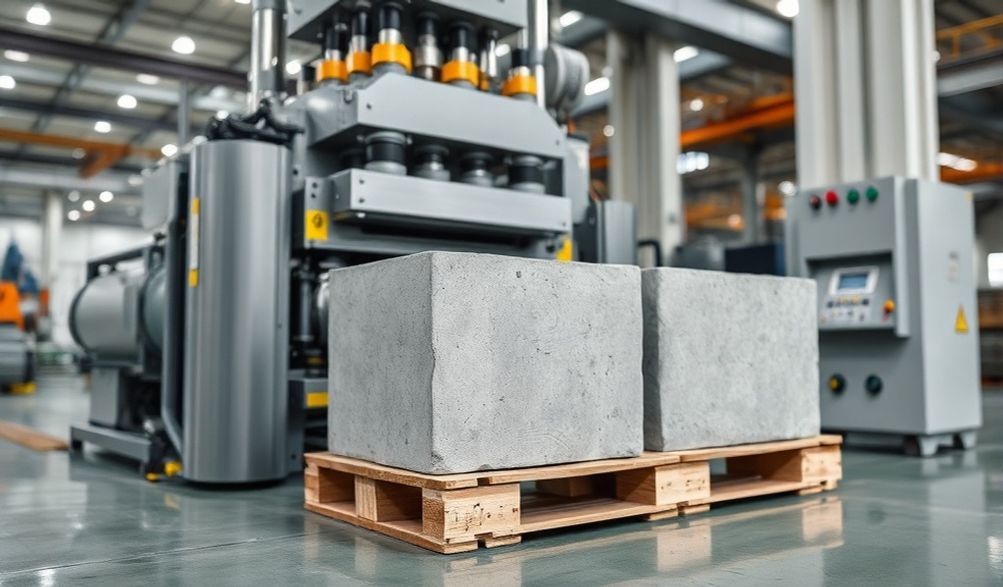
The Ultimate Guide to China Block Bricks Making Machines: Types, Prices & How to Choose
परिचय
The global demand for construction materials is ceaseless. At the heart of countless infrastructure projects, from humble homes to towering skyscrapers, lies a fundamental building block: the brick. Meeting this demand efficiently, consistently, and profitably requires moving beyond manual labor to the power of automation. China has emerged as the world’s foremost hub for manufacturing block bricks making machines, offering an overwhelming array of options for every scale and budget.
For buyers, this abundance can be a double-edged sword. Navigating the sea of suppliers, technical specifications, and price points from China can be a daunting, confusing process. How do you distinguish a reliable, high-performance machine from a substandard one? What are the true costs beyond the initial price tag?
This guide is designed to be your definitive compass. Our purpose is to provide a comprehensive, unbiased, and expert-backed resource to empower your purchasing decision. The information herein is synthesized from industry analysis, deep technical understanding, and current market trends, ensuring you receive reliable, authoritative, and practical advice. We will demystify the types of machines, decode key features, provide transparent pricing context, and give you a step-by-step framework for selecting a trustworthy supplier. Let’s build your knowledge from the ground up.
Understanding Block Bricks Making Machines: Core Technology & Benefits
Before diving into specifications and suppliers, it’s crucial to understand what these machines do and why they are a transformative investment for construction-related businesses.
एक ब्लॉक मेकिंग मशीन कैसे काम करती है?
At its core, a block making machine automates the process of forming raw material into precise, durable bricks or blocks. The process, while sophisticated in its automation, follows a logical sequence:
- मिश्रण: Raw materials (typically cement, sand, aggregate, fly ash, and water) are precisely combined in a mixer to form a homogeneous concrete or mortar.
- ढलाई This mixture is fed into a mold cavity on the machine. The mold defines the brick’s shape—hollow, solid, paver, interlocking, etc.
- संघनन और कंपन: This is the heart of the process. The machine employs high mechanical pressure (often hydraulic) and simultaneous vibration to densely compact the mixture within the mold. This removes air pockets and ensures the brick’s structural integrity and strength.
- निष्कासन और उपचार: The newly formed, “green” block is ejected from the mold onto a pallet or directly onto a curing rack. It then undergoes a curing process (often steam-cured for speed) to reach its full strength before being used in construction.
The level of human intervention in this cycle defines the machine’s automation: from manual feeding and lever operation to fully automatic systems where robots handle everything from raw material batching to stacked pallets of finished blocks.
Key Advantages of Using a Modern Block Machine
Investing in a modern machine from China isn’t just about buying equipment; it’s about upgrading your entire production capability.
- उच्च उत्पादन दक्षता और स्थिरता: Machines produce hundreds or thousands of identical blocks per hour, far surpassing manual output. This consistency ensures uniform size and quality, critical for efficient construction.
- उल्लेखनीय श्रम लागत में कमी: Automation drastically reduces the number of workers needed, lowering long-term operational costs and minimizing reliance on manual labor shortages.
- Versatility in Product Output: By simply changing the mold, a single machine can produce a variety of products—solid bricks for walls, hollow blocks for lightweight construction, paving stones for landscaping, or interlocking blocks for retaining walls. This allows you to cater to multiple market segments.
- Improved Brick Strength and Durability: Controlled pressure and vibration create blocks with higher density and compressive strength than manually produced ones, leading to safer, longer-lasting structures.
- लागत-प्रभावशीलता: For medium to large-scale projects or commercial block manufacturing, the return on investment (ROI) is compelling. The savings in labor, material efficiency (less waste), and speed of production quickly offset the initial capital expenditure.
Types of Block Making Machines from China: A Detailed Breakdown
The Chinese market caters to every need. Understanding the primary classifications is your first step in narrowing down your choice.
By Operation Mode
-
मैन्युअल ब्लॉक बनाने की मशीनें:
- Use Cases: Ideal for very small-scale, rural projects, startups with minimal capital, or producing bricks on-site for a single construction project.
- फायदे: Lowest upfront cost, simple operation, no power requirement for basic lever models.
- नुकसान: Very low output (e.g., 300-500 blocks per day), high labor intensity, inconsistent quality dependent on the operator.
-
सेमी-ऑटोमैटिक ब्लॉक निर्माण मशीनें:
- Use Cases: The sweet spot for most small to medium-sized block manufacturing businesses. They balance cost with meaningful productivity.
- विशेषताएँ: Often feature a hydraulic system for compaction, mechanical vibration, and may include a conveyor for moving blocks. Loading of raw material and removal of finished blocks may still be manual or partially mechanized.
- क्षमता: A typical workhorse model might produce 1,000 to 5,000 blocks per 8-hour shift.
-
पूरी तरह से स्वचालित ब्लॉक निर्माण मशीनें:
- Use Cases: Designed for high-volume, industrial-scale production with minimal human intervention.
- विशेषताएँ: These are complete production lines. They include automatic batching plants, mixer feeders, robotic pallet handling systems, stackers, and sophisticated Programmable Logic Controller (PLC) panels to control the entire process.
- आउटपुट: Can produce 10,000 to 30,000+ blocks per day with a crew of just 2-4 people.
By Brick Output Type
- कंक्रीट होलो ब्लॉक बनाने की मशीन: The most common type globally. Produces blocks with cavities, reducing weight and material cost while maintaining strength. Used for walls in buildings.
- Cement Solid Brick Making Machine: Produces dense, solid bricks used for foundations, pavements, and applications requiring very high load-bearing capacity.
- Paver / Interlocking Block Making Machine: Specializes in producing aesthetically pleasing, high-density paving stones for driveways, walkways, and public spaces. Interlocking models create a stable surface without mortar.
- Fly Ash Brick Making Machine: An eco-friendly and cost-effective option that uses fly ash (a waste product from coal plants) as a primary raw material. These machines are popular in regions promoting sustainable construction and where fly ash is readily available.
By Production Capacity
- Small Scale Machines: Often manual or semi-automatic. Suitable for entrepreneurs, community projects, or on-site production for a specific build. Investment is lower, but scalability is limited.
- Medium Scale Machines: Typically robust semi-automatic or entry-level fully automatic models. They support a growing block yard business supplying local contractors and builders. This category offers the best balance for serious commercial ventures.
- Large Scale Plant Machines: Fully automatic production lines. These are capital-intensive investments for established manufacturers aiming to dominate regional supply or produce blocks for major infrastructure projects.
Critical Features to Evaluate When Choosing a Machine
Looking beyond the basic type, these technical details separate a reliable workhorse from a problematic machine.
Core Mechanical Specifications
- Pressure Force (Tonage): This is a critical indicator of final block quality. Higher pressure (e.g., 150 tons vs. 80 tons) compacts the raw material more densely, resulting in stronger, more durable, and more water-resistant blocks. Match the tonnage to the density requirement of your target block type.
- Mold Quality and Interchangeability: The mold is a consumable part that defines your product. High-quality, hardened steel molds last longer and produce blocks with sharper edges. Check how easily molds can be changed on the machine to switch between products.
- साइकिल समय और उत्पादन आउटपुट: Don’t just look at the “blocks per hour” claim. Understand the cycle time (the time to produce one batch of blocks) and how it translates to a realistic 8-hour shift output, accounting for mold changes and maintenance.
Automation & Control Systems
- PLC and Vibration Systems: In automatic machines, a PLC is the brain. It ensures consistent operation. A well-designed, multi-directional vibration system is equally important—it ensures the mixture is evenly distributed and compacted in every corner of the mold. Ask about the vibration motor power and frequency.
- संचालन और रखरखाव में सुगमता: The control panel should be user-friendly, possibly with a touchscreen interface. Access points for routine maintenance (greasing, inspection) should be readily accessible. Complex machines that are difficult to service will lead to costly downtime.
Build Quality & Durability Factors
- Steel Grade and Frame Construction: The machine frame must withstand constant high-pressure cycles. Inquire about the thickness and grade of steel used (e.g., Q235, Q345). A robust, welded frame is essential for longevity.
- Quality of Core Components: The brand and origin of the hydraulic system (pump, valves, cylinders) and electrical components (motors, PLC brand like Siemens or Mitsubishi) are major durability indicators. “German hydraulics” often command a premium but suggest higher reliability.
- Warranty and After-Sales Support: A clear, comprehensive warranty (typically 1-2 years for core parts) is a sign of supplier confidence. More crucial is their plan for after-sales support: do they provide detailed manuals, video tutorials, remote troubleshooting, and a ready supply of spare parts?
China Block Machine Market: Pricing Factors & Investment Guide
Price is a major consideration, but understanding what drives the cost prevents you from making false comparisons.
What Determines the Price of a Block Making Machine?
- स्वचालन का स्तर: This is the single biggest cost driver. A manual press may cost a few thousand dollars, while a fully automated line can exceed several hundred thousand.
- Production Capacity and Model: Higher output capacity requires larger, more powerful components, increasing the price.
- Brand Reputation & Component Sourcing: A supplier using premium, internationally recognized components (e.g., Siemens PLC, Rexroth hydraulics) will charge more than one using generic Chinese parts. The supplier’s own brand equity also affects price.
- Customization Requirements: Standard models are cheapest. Requiring special mold sizes, unique block designs, or specific voltage/power configurations will add cost.
Estimated Price Range Overview
- महत्वपूर्ण अस्वीकरण: Prices fluctuate based on steel costs, shipping, and model specifics. The following are broad estimates. You must obtain direct, detailed quotations from suppliers.
- मैनुअल मशीनें: $1,500 – $5,000 USD
- अर्ध-स्वचालित मशीनें: $8,000 – $30,000 USD
- Fully Automatic Machines (Standalone): $40,000 – $100,000+ USD
- Complete Fully Automatic Production Lines: $100,000 – $500,000+ USD
Calculating Your ROI (Return on Investment)
A machine is an investment. To justify it, consider:
* Local Market Demand: What is the selling price of blocks in your area?
* कच्चे माल की लागत: What is your cost for cement, aggregate, etc.?
* उत्पादन क्षमता: How many blocks can you realistically sell per day?
* Labor & Overhead Savings: How many workers will the machine replace? What are your electricity and maintenance costs?
* Machine Uptime: A reliable machine with 90% uptime generates far more revenue than a cheaper one that is frequently broken.
A simple ROI calculation: (Total Investment Cost) / (Monthly Profit from Machine Operation) = Months to break even.
How to Select a Reliable Supplier from China: A Step-by-Step Checklist
This is the most critical phase of your journey. Diligence here protects your investment.
Verifying Supplier Credentials
- Check Business Licenses & Audits: Use platforms like Alibaba’s “Verified Supplier” status as a starting point, but dig deeper. Can they provide a copy of their business license? Have they had independent factory audits (e.g., SGS)?
- Assess Experience & Specialization: How many years have they been manufacturing block machines? Do they focus on this niche, or are they a general equipment trader? A specialist is preferable.
- Request Client References & Portfolios: Ask for contact information for past clients in your region or a similar market. A credible supplier will have a portfolio of installed machines and client testimonials/videos.
Communication and Technical Support
- Evaluate Technical Communication: Can you speak directly with a technical engineer who understands your questions about pressure, cycle times, and raw material formulas? Miscommunication at this stage is a major red flag.
- Clarify Support Structure: What is included? Detailed English manuals? Installation drawings? Online video support? The option (and cost) for an engineer to travel to your site for installation and training?
- Understand Warranty & Spare Parts: Get the warranty terms in writing. How are spare parts shipped? What is the typical lead time for a critical component? Do they have a parts inventory list with prices?
The Importance of Factory Visits & Sample Testing
- Arrange a Virtual or Physical Tour: If a visit isn’t feasible, insist on a live video tour of the factory floor. See the machines being assembled. Assess the organization and scale of the operation.
- Request a Production Sample Video: Ask the supplier to produce a batch of blocks using the specific mold type you intend to buy. This tests both the machine’s function and the final product quality.
- Master Shipping & Logistics: Get a detailed FOB (Free On Board) or CIF (Cost, Insurance, Freight) quote. Understand who handles customs clearance in your country, what documentation is provided, and what insurance covers.
Frequently Asked Questions (FAQ) About China Block Making Machines
Q1: What is the average lead time for manufacturing and shipping from China?
A: For standard models, production can take 15-30 days after order confirmation. Shipping by sea freight can add 30-60 days depending on the destination port. Always confirm specific timelines with your supplier.
Q2: Can the machine use local raw materials (like soil, fly ash, or crushed stone)?
A: Most machines are highly adaptable. The key is providing the supplier with samples of your local raw materials. They can then recommend the optimal mix ratio and, if necessary, adjust the machine’s vibration and pressure settings to suit your materials.
Q3: What is the typical power requirement (voltage) for these machines?
A: Small manual/semi-auto machines may run on standard 220V/380V, 3-phase power. Larger fully automatic lines typically require 380V, 3-phase, 50Hz power (standard industrial power in many countries). Specify your local voltage, and the supplier can configure the motors accordingly.
Q4: How many workers are needed to operate a semi-automatic vs. fully automatic machine?
A: A semi-automatic machine may require 3-5 people for material handling, feeding, and block removal. A fully automatic line, with automated material handling and pallet systems, can often be run by 2-4 operators primarily monitoring the control system.
Q5: Do Chinese suppliers provide installation and training?
A: Most reputable suppliers provide detailed installation manuals and video guides. On-site installation and training by a Chinese engineer are usually offered as a paid service (covering their travel, accommodation, and daily rate). This is highly recommended for complex automatic lines.
Q6: How do I handle maintenance and source spare parts in my country?
A: Before purchasing, request a list of common spare parts (seals, vibration motors, hydraulic hoses). Many suppliers will recommend purchasing a starter kit. Establish a clear channel for ordering parts, which are typically shipped via air express for urgent needs. Some suppliers have agents or warehouses in key regions.
निष्कर्ष
Choosing the right block bricks making machine from China is a significant decision that hinges on a clear understanding of your own needs, the technical landscape, and the supplier market. We’ve walked through the essential steps: defining your production goals based on project scale, understanding the core types and features that drive performance, budgeting realistically while calculating potential ROI, and, above all, implementing a rigorous process for vetting suppliers.
Remember, the lowest price often carries the highest risk. Your due diligence in verifying supplier credentials, clarifying support terms, and seeking proof of performance through samples and references is the most critical investment you can make upfront. Use this guide as your structured framework when engaging with potential suppliers. Approach them with informed, specific questions.
Now, you are equipped to move forward. Prepare a detailed requirement sheet outlining your desired block types, target output, raw materials, and local conditions. Then, start contacting suppliers not as a novice, but as an informed buyer ready to build a successful partnership and a profitable business.
<