
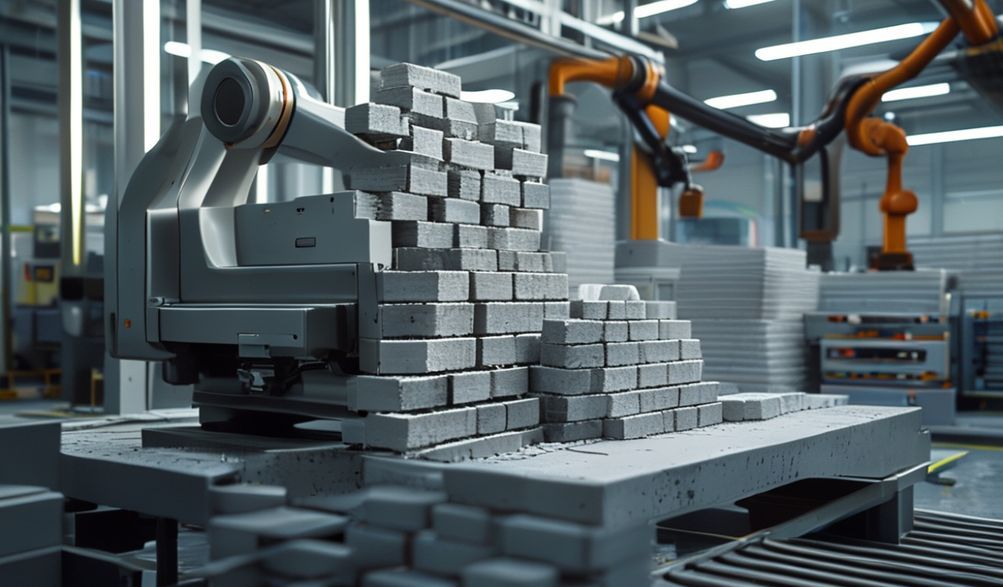
A Comprehensive Guide to China’s Leading Concrete Block Making Machine Factories
परिचय
In the world of construction, few materials are as ubiquitous and essential as the concrete block. From foundational walls to decorative pavers, these units form the literal and figurative bedrock of modern infrastructure. Behind every reliable block is a machine engineered for precision, durability, and efficiency. For global buyers, from large-scale construction firms to ambitious entrepreneurs, the quest for this equipment increasingly leads to one dominant source: China.
The phrase “China blocks making machine factories” represents a vast and dynamic industrial ecosystem. It is a marketplace of immense opportunity, yet one that requires navigational expertise. The sheer number of manufacturers, the spectrum of technology from basic to fully automated, and the complexities of international trade can be daunting.
This guide serves as your definitive compass. We will move beyond superficial listings to deliver an authoritative, experience-driven analysis of the industry. You will gain a clear understanding of why China leads, how to separate market leaders from the rest, and the critical steps to ensure a successful procurement. Whether your goal is to establish a new block yard or revolutionize an existing one, the insights here will empower you to make an investment that builds value for years to come.
Understanding the Chinese Block Making Machine Industry Landscape
To source effectively, one must first understand the terrain. China’s position as the global manufacturing powerhouse for block making machinery is not accidental. It is the result of decades of strategic development, creating an environment where scale, innovation, and supply chain mastery converge.
Why China Dominates Global Block Machine Manufacturing
Several interconnected factors solidify China’s dominance in this sector:
- Scale of Production and Supply Chain Integration: China’s manufacturing clusters create unparalleled economies of scale. Factories have immediate access to a local network of suppliers for every component—from high-grade steel plates and hydraulic cylinders to programmable logic controllers (PLCs) and electric motors. This vertical integration drastically reduces costs and streamlines production timelines.
- Technological Advancement and R&D Investment: The stereotype of Chinese manufacturing as purely low-cost is outdated. Leading factories invest heavily in research and development. They employ teams of mechanical, electrical, and software engineers focused on improving vibration efficiency, energy consumption, automation integration, and IoT connectivity. Many collaborate with European technical partners to adopt and adapt global best practices.
- Competitive Pricing and Cost-Efficiency: The combination of scale, integrated supply chains, and skilled labor results in a compelling price-to-performance ratio. Buyers can access advanced technology—such as servo-driven systems and fully automated production lines—at a fraction of the cost often associated with Western or Japanese brands, without necessarily sacrificing core quality.
Key Industrial Clusters and Hubs in China
Manufacturing is not evenly distributed but concentrated in specialized regions. Knowing these hubs helps in targeting factories with the right expertise.
- Fujian Province (especially Quanzhou & Jinjiang): Arguably the heart of China’s block machine industry. This region is renowned for its concentration of manufacturers, particularly strong in mobile “egg-laying” block machines and mid-range stationary machines. It’s a hub of intense competition and rapid innovation.
- शानडोंग प्रांत: Known for robust, heavy-duty industrial machinery. Factories here often specialize in large, fully automatic stationary production lines designed for high-volume output and extreme durability. The engineering culture emphasizes strength and longevity.
- गुआंगडोंग प्रांत: Leveraging the region’s expertise in electronics and export logistics, manufacturers here are often at the forefront of integrating smart controls, advanced PLCs, and IoT features into their machines. They are highly adaptable to international market demands.
Types of Block Making Machines Produced in China
The diversity of equipment available is vast, catering to every conceivable business model and production goal.
- स्टेशनरी ब्लॉक बनाने की मशीनें: These are high-output powerhouses. Blocks are produced on a stationary pallet-fed table and then transported via forklift or automatic stacker to a curing area. Ideal for large-scale plants with dedicated space.
- Mobile Block Making Machines (Egg-Laying Type): The defining feature is mobility. The machine produces a block and then moves forward, laying the block directly onto a level concrete casting bed. Perfect for on-site production or businesses with limited capital for handling equipment.
- स्वचालित बनाम अर्ध-स्वचालित लाइनें:
- अर्ध-स्वचालित: Machines require operator intervention for feeding raw material (manually or via loader) and removing finished products. Offers a balance of output and affordability.
- पूरी तरह से स्वचालित: Integrated systems with automatic batching, mixing, conveying, block making, curing, and stacking/palletizing. They require minimal human oversight and deliver maximum output and consistency.
- विशेषीकृत मशीनें: Beyond standard hollow blocks, Chinese factories produce dedicated machines for interlocking paving stones, curbstones, retaining wall blocks, roof tiles, and even specialized shapes for landscaping.
How to Identify and Evaluate Reputable Factories
With thousands of companies claiming to be top manufacturers, a rigorous vetting process is your most critical tool. This stage is where due diligence separates successful partnerships from costly mistakes.
Essential Factory Credentials and Certifications to Verify
Do not take claims at face value. Request and verify documentation.
- ISO 9001 Certification: This international standard for Quality Management Systems is a baseline indicator that the factory follows documented procedures for design, production, and inspection. It signals a commitment to consistency.
- सीई मार्किंग: Mandatory for exporting to the European Economic Area. It indicates the machine meets EU safety, health, and environmental protection requirements. Note: A responsible factory will have specific CE certification for its machinery models, not just a general company certificate.
- In-house R&D and Engineering Team: A factory with its own engineering department is more capable of troubleshooting, customizing solutions, and providing meaningful after-sales support. Ask for organizational charts or profiles of key technical staff.
- Patent Holdings: Patents for unique vibration systems, hydraulic circuits, or control software are strong indicators of genuine innovation and technical depth, not just assembly.
Key Evaluation Criteria During Factory Selection
Move beyond brochures and engage with these substantive factors.
- Production Capacity & Lead Times: A factory operating at 120% capacity may promise unrealistic delivery. Ask about their current order book and standard lead time for a machine like yours. A transparent and manageable timeline is better than an improbably short one.
- Machine Quality & Components: The brand of core components is a telling quality proxy. Inquire specifically about:
- हाइड्रोलिक्स: Are pumps and valves from recognized brands like Rexroth, Kawasaki, or Yuken?
- PLCs & Electricals: Are controls from Siemens, Mitsubishi, or Schneider?
- Bearings & Motors: Are they from SKF, NSK, or reputable Chinese brands like Wannan?
- Technical Support & After-Sales Service: This is often the differentiator. What does their support package include? Look for: comprehensive English manuals and wiring diagrams, availability of training videos, a defined warranty period (typically 12 months), guaranteed response time for technical queries, and a network of overseas agents or partners for local support.
- अनुकूलन क्षमता: Can they adapt the machine for your local cement specifications, aggregate size, or unique block design? The best factories will ask for your material samples and may have a lab to test them.
The Critical Role of Factory Audits (Virtual and On-Site)
If a physical visit isn’t feasible, a virtual audit is non-negotiable.
- The Virtual Tour: Demand a live video walkthrough of the workshop—not a pre-recorded marketing video. Focus on:
- Workshop Organization: Is it clean, orderly, and safe? Chaotic workshops often lead to chaotic quality control.
- वेल्डिंग और फैब्रिकेशन: Look at the quality of welds on machine frames. Are they smooth, consistent, and clean?
- Assembly Stations: See if machines are being assembled with care and precision.
- Testing Area: Do they run finished machines under load before shipment?
- मुख्य प्रश्न पूछने के लिए:
- “Can you show me your quality inspection checklist for a machine before shipment?”
- “What is your process for testing the hydraulic system for leaks and pressure?”
- “Can you provide contact information for 2-3 recent international clients in a region similar to mine?”
- Client Portfolio Review: Ask for case studies or project photos. A factory with a global footprint and experience in your target climate (e.g., tropical, desert, cold) is a significant advantage.
Navigating the Sourcing and Procurement Process
Once you’ve shortlisted 3-5 credible factories, the procurement phase begins. Meticulous management here protects your investment.
Effective Communication with Chinese Manufacturers
Clarity prevents misunderstandings that cost time and money.
- Prepare a Detailed RFQ (Request for Quotation): This should be a technical document, not just an email. Include: desired block types and dimensions, target hourly/daily output, degree of automation, local voltage and phase, preferred component brands (if any), and any site-specific constraints.
- Use Drawings and Visuals: A sketch of your desired block dimensions is worth a thousand words. Share photos of your production site.
- Manage Communication: Use clear, simple English in written communication. Confirm understanding by having them paraphrase key points. Tools like WeChat are common for quick updates, but keep all formal agreements and technical specs on email.
Understanding Incoterms, Logistics, and Shipping
Heavy machinery shipping is a specialized field. Understand your responsibilities.
- Common Incoterms:
- FOB (Free On Board) [Named Port]: You pay for the machine loaded on the ship. You are responsible for and control the main ocean freight, insurance, and destination port costs. Offers more control and often lower overall cost.
- CIF (Cost, Insurance, and Freight) [Named Port]: The supplier arranges and pays for ocean freight and insurance to your destination port. You handle costs from the port onward. Simpler but less control over shipping quality.
- पैकेजिंग: Ensure the quote includes “export wooden case packaging.” Machines must be crated, waterproofed, and internally secured to withstand a sea voyage. Request photos of the packaging before shipment.
- Logistics Planning: Don’t wait until the machine arrives. Plan for offloading at your port, inland transportation to your site (requiring a low-bed trailer for heavy machines), and customs clearance in your country. Your supplier should provide a detailed packing list and commercial invoice for customs.
Quality Control: From Pre-Shipment Inspection to Installation
Never skip the final checks.
- Pre-Shipment Inspection (PSI): Hire a reputable third-party inspection company (e.g., SGS, Bureau Veritas, or a local agent) to visit the factory before crating. They will verify that the machine matches the purchase order, check assembly quality, test functions, and document everything with a report. This is your strongest leverage point.
- Factory Acceptance Test (FAT): For large, complex lines, you or your agent may attend a formal test at the factory where the machine is run to produce sample blocks, verifying output and quality.
- स्थापना और कमीशनिंग: Clarify what support is provided. Will the factory send an engineer to your site for installation and training? If not, do they provide detailed installation manuals and remote video support? Ensure you have a plan for foundation preparation (they should provide foundation drawings) and local electrical connection before the machine arrives.
Trends and Future Outlook for Block Machine Technology in China
The industry is not static. Leading factories are driving innovation that defines the future of block production.
The Rise of Smart Manufacturing and Industry 4.0
- IoT-Enabled Monitoring: Machines are now equipped with sensors and 4G/5G modules that allow owners to monitor production counts, machine status (pressure, temperature, vibration), and fault alarms in real-time from a smartphone app. This enables predictive maintenance, reducing downtime.
- AI and Machine Vision: Advanced lines incorporate cameras that scan each block for dimensional accuracy and surface defects, automatically rejecting sub-standard units and adjusting machine parameters for consistency.
Sustainability and Eco-Friendly Production
- सामग्री लचीलापन: Modern machines are designed to handle high percentages of industrial by-products like fly ash, slag, and recycled construction aggregate, supporting the production of greener building materials.
- ऊर्जा दक्षता: The adoption of variable-frequency drives (VFDs) for motors and more efficient hydraulic systems significantly reduces electricity consumption, lowering the carbon footprint and operational cost of the plant.
Market Adaptation and Global Demand Shifts
- Compliance with Diverse Standards: Top manufacturers now design machines to produce blocks meeting ASTM (US), BS (UK), EN (EU), and IS (India) standards, demonstrating true global adaptability.
- Demand for Turnkey Solutions: Buyers increasingly want more than just a machine; they want a complete plant solution. Chinese factories are responding by offering integrated services including plant layout design, raw material formula guidance, and full production line commissioning.
अक्सर पूछे जाने वाले प्रश्न (एफएक्यू)
Q1: What is the typical price range for a block making machine from China?
ए: There is no single “typical” price, as it depends entirely on automation, output, and configuration. A small manual or semi-automatic machine can start from \$5,000 – \$20,000. A robust stationary plant may range from \$50,000 – \$150,000. Large, fully automatic production lines with palletizers and handling systems can range from \$200,000 to over \$500,000. Always request itemized quotes based on your specific output requirements.
Q2: How can I ensure the machine quality without visiting the factory?
ए: A multi-step approach is key. First, conduct a live video audit of the production facility. Second, insist on contacting 2-3 existing international clients for references. Third, and most importantly, mandate a comprehensive Pre-Shipment Inspection (PSI) by an independent third-party agency. Their report will be your objective quality assurance.
Q3: What after-sales support can I expect from a Chinese manufacturer?
ए: Standard support includes English operation and maintenance manuals, electrical diagrams, and remote troubleshooting via video call. The most reliable suppliers offer a parts list with OEM codes, a starter kit of critical spare parts, detailed training videos, and a warranty (usually 12 months on major components). Clarify their policy on dispatching engineers for on-site installation.
Q4: Are Chinese block machines compatible with our local raw materials?
ए: Leading factories have vast experience with global material variations. They can often provide guidance on mix design. For optimal results, you can send samples of your local cement, sand, and aggregate to the factory. They can then test the mix and, if necessary, customize the machine’s vibration frequency, pressure settings, or even mold design to ensure perfect block quality with your materials.
Q5: What are the most common mistakes to avoid when sourcing from China?
ए:
* Prioritizing Price Over Value: The cheapest quote often leads to the highest long-term cost in repairs and downtime.
* Skipping Due Diligence: Failing to verify certifications, audit the factory, or check references.
* Vague Specifications: Providing unclear requirements leads to a machine that doesn’t fit your needs.
* Neglecting Logistics: Not planning for shipping, customs, and installation until the last minute.
* Forgetting About Spare Parts: Not ordering a basic set of critical spares (seals, sensors, relays) with the machine, which can halt production for weeks if one fails.
निष्कर्ष
Sourcing a ब्लॉक बनाने की मशीनसेचीन is a strategic decision that blends significant opportunity with a need for diligent process. It is an investment that goes beyond the purchase price, impacting your productivity, product quality, and profitability for a decade or more. The path to success is not found by chasing the lowest bid, but by engaging in a knowledgeable, systematic, and relationship-driven selection process.
This guide has equipped you with the framework to navigate the landscape of China blocks making machine factories with authority. You now understand the industry’s strengths, possess a clear checklist for evaluating manufacturers, and have a roadmap for managing procurement and quality control. The expertise, scale, and innovative drive within China’s manufacturing sector are ready to be leveraged.
Your journey begins with action. Use this knowledge to compile a targeted shortlist of factories that demonstrate the credentials, technical capability, and service ethos that match your ambition. Approach them with detailed, professional project specifications. Remember, in international heavy machinery trade, thorough preparation and clear communication are the most valuable currencies.
Ready to Start Your Sourcing Journey? Begin by researching factories with proven export histories and reach out with a clear, comprehensive RFQ. Your future in block production is waiting to be built.
<