
Your Complete Guide to Small Block Making Machines: Types, Costs & How to Choose
Imagine you’re a contractor who just landed a job to build a backyard patio and retaining wall for a local homeowner. Or perhaps you’re an entrepreneur who sees a constant demand for paving bricks in your growing community. The idea of producing your own blocks is appealing—control over supply, better margins, and project independence. But the thought of hand-mixing and molding concrete is dauntingly slow, and the price tag on a massive, fully automated block plant is utterly prohibitive.
This is the precise gap that a छोटी ब्लॉक बनाने की मशीन is designed to fill. It’s the powerful, practical solution that bridges the divide between inefficient manual labor and unaffordable industrial automation. This comprehensive guide synthesizes years of industry knowledge, technical specifications, and hands-on operational advice. Our goal is to provide you with an expert, trustworthy resource to navigate your purchase decision confidently, ensuring you find the perfect machine to turn your concrete ideas into solid, profitable reality.
What is a Small Block Making Machine? Defining Your Solution
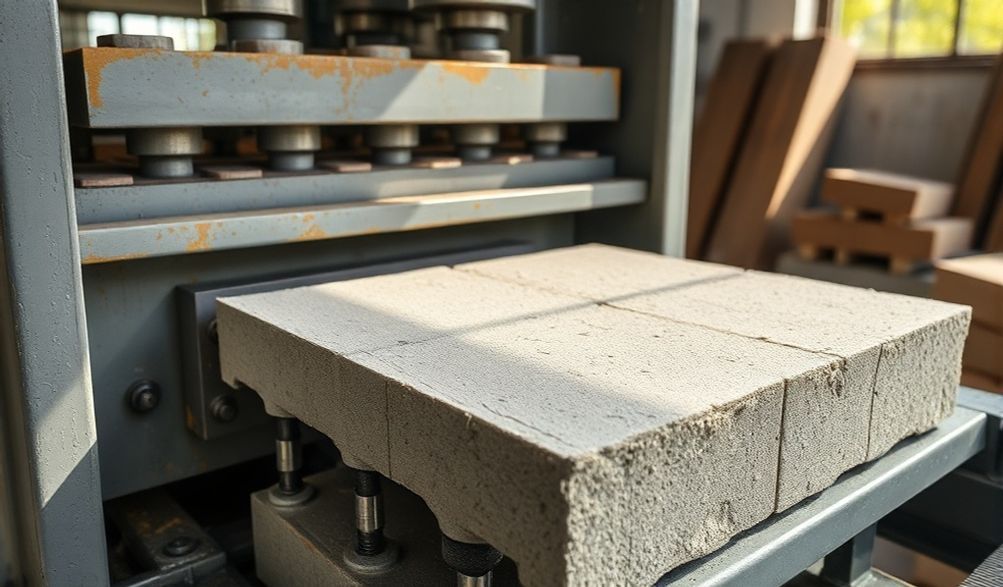
At its core, a small block making machine is a compact, purpose-built device that automates the most labor-intensive parts of block production: compaction and molding. By using mechanical vibration and applied pressure, it transforms a dry concrete mix into dense, consistently shaped, and high-strength blocks.
मुख्य कार्य और आउटपुट
These machines typically feature a mold box (or multiple mold cavities) into which the raw concrete mix is fed. A powerful vibration motor packs the mix tightly, removing air pockets, while a press head—often manual, mechanical, or hydraulic—applies the final top pressure. The result is a precisely formed “green” block that is then ejected onto a pallet or the ground to cure. The most common outputs include:
* खोखले ब्लॉक: For lightweight, insulating construction walls.
* ठोस ब्लॉक: For foundations, load-bearing walls, and heavy-duty applications.
* पेविंग स्टोन्स और इंटरलॉकिंग ब्रिक्स:ड्राइववे, पैदल मार्ग और आँगन के लिए।
* Curbs, Grass Pavers, and Specialty Shapes: For landscaping and civil projects.
आदर्श उपयोगकर्ता और अनुप्रयोग
This machinery isn’t for multinational construction firms; it’s for the backbone of local building economies. The ideal users are:
* Small Construction Businesses: To produce materials on-site for their own projects, cutting costs and delays.
* Homeowners & DIY Enthusiasts: Tackling substantial projects like garden paths, sheds, or decorative walls.
* Startups & Entrepreneurs: Launching a local block supply or paving stone business with manageable overhead.
* सामुदायिक सहकारी समितियाँ और गैर-सरकारी संगठन (एनजीओ): Facilitating affordable housing or infrastructure projects in developing regions.
Key Benefits of Investing in a Small Scale Block Maker
Moving from manual methods or outsourced supply to your own small-scale production offers transformative advantages.
Cost-Effectiveness and ROI
The financial argument is compelling. The initial investment is a fraction of the cost of large industrial plants. You dramatically reduce labor costs—one operator can achieve the output of several manual workers. By producing on-demand, you minimize material waste from over-ordering and eliminate the markup and transport costs of buying from a distributor. For a business, this can lead to a surprisingly fast return on investment.
Operational Flexibility and Efficiency
These machines are designed for practicality. Most models are relatively simple to operate, requiring minimal specialized training. Their often mobile or semi-stationary nature means you can set up production right at your job site, a game-changer for remote projects. This “produce-what-you-need, when-you-need-it” flexibility is a significant strategic advantage.
Quality and Consistency
This is where machines truly outshine manual labor. A छोटी ब्लॉक बनाने की मशीन delivers uniform dimensions, weight, and density in every batch. Consistent compaction translates directly to higher compressive strength (measured in MPa), meaning more durable and reliable structures. Furthermore, it allows you to experiment with and standardize custom mixes or colors for a unique product offering.
Types of Small Block Making Machines: A Detailed Breakdown
Choosing the right type is your first major decision. Here’s a breakdown of the most common categories.
मैन्युअल ब्लॉक बनाने की मशीनें
- विवरण: These are entirely human-powered. The operator uses a lever to compress the concrete mix within a mold, often after manually tamping.
- फायदे: They are the most affordable entry point, completely portable (no power needed), and have zero energy running costs.
- नुकसान: Output is low (50-100 blocks per day), and the process is physically strenuous.
- सर्वोत्तम: Extremely small, personal projects or contexts with no reliable electricity. Think of a homeowner building a single garden wall.
अर्ध-स्वचालित ब्लॉक निर्माण मशीनें
- विवरण: This is the most popular category for small businesses. An electric or diesel engine powers a vibration system for compaction. The operator manually fills the mold with mix and removes the finished block, but the core forming process is mechanized.
- फायदे: Excellent balance between cost, output (300-800 blocks per 8-hour shift), and consistent quality. Significantly less physically demanding than manual machines.
- नुकसान: Requires a power source (single or three-phase electricity, or a diesel generator).
- सर्वोत्तम: The vast majority of small-scale commercial operations and serious project work. They offer the best blend of productivity and affordability.
Mobile Block Machines (Egg-Laying Type)
- विवरण: A fascinating and efficient design. This self-contained unit mixes, molds, and then “lays” the finished blocks directly onto a prepared ground surface as it slowly moves forward on wheels.
- फायदे: Eliminates the need for pallets or trays. Incredibly efficient for producing large, continuous areas of paving or flooring.
- नुकसान: The blocks must cure where they are laid, locking the machine in place for 24-48 hours. Less versatile for producing different block types on the fly.
- सर्वोत्तम: Contractors specializing in large paved areas like parking lots, industrial floors, or pavements.
Stationary Small Plant Setups
- विवरण: This is a coordinated system where a small pan mixer or concrete mixer feeds material (often via a simple conveyor or skip hoist) into a fixed block machine that automatically cycles.
- फायदे: Highest level of automation and output within the “small” spectrum (1,000+ blocks per shift). Reduces manual labor to mainly feeding raw materials.
- नुकसान: Higher capital cost, requires more permanent space and foundation, and is less mobile.
- सर्वोत्तम: A dedicated small factory setting where the business focus is solely on block production for supply to multiple clients.
खरीदने से पहले विचार करने योग्य महत्वपूर्ण कारक
Beyond the machine type, drill down into these essential specifications to match a model to your exact needs.
Production Capacity (Blocks per Hour/Day)
Don’t just look at the theoretical maximum. Consider realistic, sustainable output over an 8-hour shift, accounting for mixing time, mold changes, and operator breaks. A common mistake is buying an oversized machine that operates inefficiently at low capacity. Match the output to your verified project pipeline or sales forecast.
Block Type and Size Versatility
What will you be producing most? Ensure the machine comes with, or can accommodate, molds for your primary block type. Check the mold changeover process—is it a quick, tool-free operation or a lengthy task? Some machines offer multi-cavity molds for producing several blocks per cycle, boosting efficiency.
Power Source and Requirements
This is a practical constraint. Do you have reliable three-phase industrial power, or only single-phase? If you’re on a remote site, a diesel-powered machine might be essential. Verify the voltage, phase, and power rating (kW) of electric models against your available supply.
Build Quality and Durability
The difference between a machine that lasts a decade and one that fails in a year is in the construction. Inspect (or request detailed photos of) the frame thickness, the quality of the steel, and the brand of the critical vibration motor. A machine with a sturdy, reinforced frame and a reputable, industrial-grade vibration motor (like an Italian OLI or similar) is worth a premium.
After-Sales Support and Warranty
This is a non-negotiable trust factor. A machine is a long-term investment. Prioritize suppliers who offer:
* A clear, written warranty (typically 1 year on major components).
* Readily available spare parts (molds, wear plates, vibration motors).
* Accessible technical support, whether via phone, video call, or detailed manuals.
A supplier’s willingness to provide customer references is a strong positive signal.
The Financials: Cost Analysis and Budgeting
Let’s translate features into dollars and sense. Prices vary widely by region, manufacturer, and specifications, but these ranges provide a framework.
Upfront Purchase Price Ranges
- मैनुअल मशीनें: $500 – $2,500 USD.
- अर्ध-स्वचालित मशीनें: $3,000 – $15,000 USD. The price scales with output capacity, automation features (like automatic feeding), and build quality.
- Mobile Egg-Layers: $8,000 – $25,000 USD.
- Small Stationary Plants: $15,000 – $50,000+ USD.
Operating and Maintenance Costs
Factor in ongoing expenses:
* Energy: Electric models consume 2-7 kW per hour; diesel models use 1-3 liters per hour.
* रखरखाव: Regular greasing of bearings, checking bolts for tightness, and cleaning.
* Mold Wear: Molds are consumable items. High-quality, hardened steel molds last longer but cost more upfront.
Calculating Your Potential Profitability
For a business, a simple framework is:
1. Cost per Block: (Cost of Cement + Sand/Aggregate + Water + Energy + Labor + Machine Depreciation) / Number of Blocks.
2. Local Selling Price: Research what similar blocks sell for in your area.
3. Gross Margin: Selling Price – Cost per Block.
Even a small margin, multiplied by hundreds of blocks per day, can create a viable business. The key is controlling your input costs and achieving consistent quality that commands a fair price.
Operating Your Machine: Best Practices for Success
Owning the machine is step one. Operating it correctly is what ensures quality and profitability.
The Right Concrete Mix Design
The machine can only form what you feed it. A standard, high-quality mix for blocks is:
* 1 part Portland cement
* 3 parts clean, sharp sand (or a blend of sand and fine aggregate)
* Just enough water for a “dry” mix (This is critical. The mix should hold its shape when squeezed but not be sloppy. Too much water drastically reduces final strength.)
A common rookie error is using a wet, soupy mix meant for pouring foundations. For paving stones, you may incorporate color pigments or additives for enhanced durability.
Step-by-Step Operating Procedure
- Safety First: Wear safety glasses, gloves, and sturdy boots.
- तैयारी: Ensure the machine is on a level surface. Lubricate mold interiors lightly with oil to prevent sticking.
- मिश्रण: Prepare a consistent, dry concrete batch.
- खिलाना: Fill the mold cavities evenly and slightly overfull.
- Cycling: Engage the vibration (typically 5-15 seconds) followed by the press head to form the block.
- निष्कासन और उपचार: Gently remove the green block onto a pallet. Move pallets to a covered, flat area to cure for at least 24-48 hours before handling. Blocks reach handling strength quickly but require 7-28 days of moist curing to achieve their full design strength (e.g., 15-20 MPa).
Essential Maintenance Tips for Longevity
- दैनिक Clean all concrete residue from the mold, press head, and frame. Check for loose bolts.
- साप्ताहिक: Grease all lubrication points per the manual. Inspect the vibration motor mounts.
- Monthly: Check wear parts like mold liners and the press head plate for significant wear. Inspect electrical connections for tightness.
अक्सर पूछे जाने वाले प्रश्न (एफएक्यू)
Q: What is the average production output of a small block making machine?
ए: Output varies dramatically by type. A manual machine may produce 50-150 blocks per day. A semi-automatic model can produce 300-1,200 blocks in an 8-hour shift. Mobile and stationary small plants can reach 2,000-5,000 blocks per day.
Q: Can I use a small block machine to start a business?
ए: Absolutely. It’s a proven, low-barrier-to-entry business model. Success hinges on identifying local demand (construction, landscaping), producing consistently high-quality blocks, and providing reliable service. Start by supplying local contractors and homeowners.
Q: How much space do I need to operate one?
ए: You need space for the machine itself (a 10’x10′ area is often sufficient), plus areas for raw material storage (sand, aggregate, cement), mixing, and, most importantly, block curing. A covered, flat curing yard of at least 500-1000 sq. ft. is recommended for serious production.
Q: What is the typical lead time for blocks to cure and be ready for use?
ए: Blocks can be carefully demolded after 24 hours. They gain enough strength for careful stacking and transport in 3-7 days. However, for full structural strength (as per ASTM C90 or similar standards), they require 28 days of proper curing, kept moist and protected from direct sun and wind.
Q: How do I choose a reputable supplier or manufacturer?
ए: Conduct due diligence. Look for companies with a verifiable track record of several years. Request and actually contact customer references. Ask for material certifications for their steel. Watch out for suppliers who are evasive about technical details or offer warranties that seem too good to be true. A trustworthy supplier will be transparent and eager to answer your technical questions.
निष्कर्ष
A छोटी ब्लॉक बनाने की मशीन is more than just a tool; it’s an empowerment device for small contractors, savvy DIYers, and aspiring entrepreneurs. It turns the fundamental building material of concrete into a source of efficiency, quality, and potential income.
Your path to the right machine starts with a clear-eyed assessment of your needs: your required output, target block types, budget, and site conditions. Let this guide be your framework. Remember, the cheapest option is rarely the most cost-effective in the long run. Prioritize solid build quality, reliable after-sales support, and a supplier with a reputation for trustworthiness.
Use the factors outlined here to create a shortlist of potential models. Then, take the most important step: contact those suppliers with specific, informed questions. Don’t hesitate to request a live video demonstration of the exact machine you’re considering. Seeing it in action is the final, crucial piece of due diligence that will lead you to a confident, successful investment.
<