
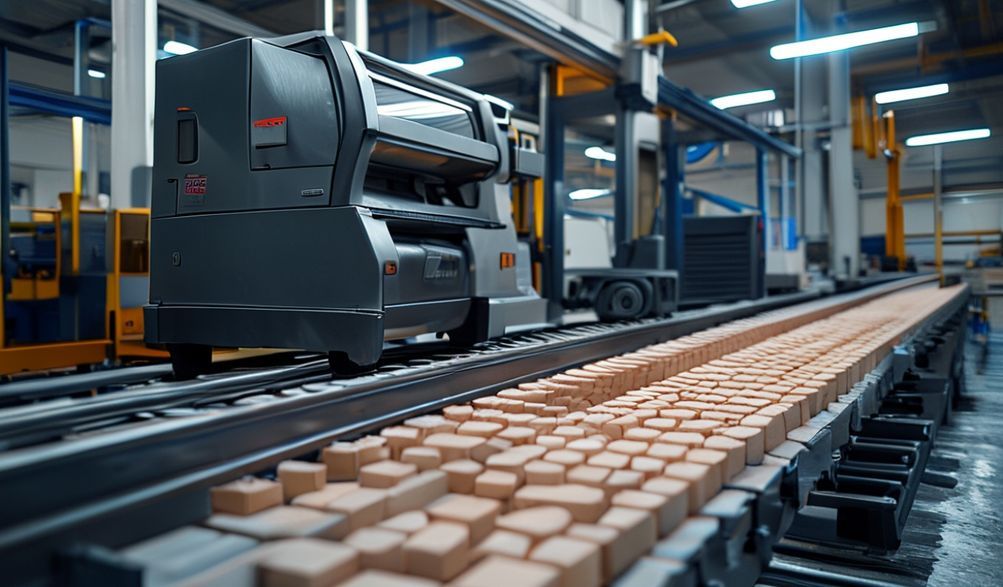
एक विश्वसनीय ब्लॉक ब्रिक्स बनाने की मशीन आपूर्तिकर्ता खोजने के लिए आपकी अंतिम मार्गदर्शिका
परिचय
हर बिल्डर, ठेकेदार और निर्माण सामग्री क्षेत्र के उद्यमी को यह एहसास होता है। किसी परियोजना की समयसीमा सख्त हो जाती है, लाभ मार्जिन सिमट जाते हैं, और आपके मूल उत्पाद—साधारण ब्लॉक या ईंट— की गुणवत्ता गहन जाँच के दायरे में आ जाती है। आपके उत्पादन की दक्षता और आपके द्वारा रखी गई प्रत्येक इकाई की मजबूती ही एक सफल, लाभदायक उद्यम और एक लॉजिस्टिक दुःस्वप्न के बीच का अंतर हो सकती है। अक्सर, इस सफलता या विफलता की जड़ केवल मशीन ही नहीं, बल्कि उसके पीछे जिस साझेदार को आप चुनते हैं, वह होता है।
दो दशकों से अधिक के निर्माण उपकरण और मशीनरी उद्योग के अनुभव के साथ, हमारी टीम ने दुनिया भर में सैकड़ों ब्लॉक यार्ड और कारखानों का दौरा किया है। हमने सीधे तौर पर देखा है कि कैसे एक सिद्धांत-आधारित साझेदारी के साथब्लॉक ईंट बनाने की मशीन आपूर्तिकर्ताएक व्यवसाय को आगे बढ़ा सकता है, जबकि केवल कीमत पर आधारित एक खराब विकल्प वर्षों तक परिचालन संबंधी समस्याओं और वित्तीय नुकसान का कारण बन सकता है।
यह व्यापक मार्गदर्शिका अव्यवस्था को दूर करने के लिए तैयार की गई है। हम आपको आपूर्तिकर्ताओं की पूरी तरह से जांच करने के लिए आवश्यक उद्योग ज्ञान और महत्वपूर्ण मूल्यांकन ढांचे से लैस करेंगे। आपका लक्ष्य केवल एक मशीन खरीदना नहीं है; बल्कि गुणवत्ता, स्थायित्व और अटूट दीर्घकालिक समर्थन की एक प्रणाली में निवेश करना है। हम इस जटिल, उच्च-दांव वाले निर्णय को एक स्पष्ट, चरण-दर-चरण प्रक्रिया में बदल देंगे, जिसमें आवश्यक चयन मानदंड, मशीन के प्रकार, स्पष्ट चेतावनी संकेत और वे सटीक प्रश्न शामिल होंगे जो आपको पूछने की आवश्यकता है।
केवल मशीन की कीमत से ज़्यादा मायने रखता है आपका आपूर्तिकर्ता चुनाव
आपूर्तिकर्ता का चयन अक्सर एक लेन-देन संबंधी बाद की सोच के रूप में माना जाता है। यह एक मौलिक गलती है। आप केवल एक उपकरण नहीं खरीद रहे हैं; आप एक दीर्घकालिक साझेदारी में प्रवेश कर रहे हैं जो आपके दैनिक संचालन को वर्षों तक प्रभावित करेगी। प्रारंभिक चालान स्वामित्व की कुल लागत का एक छोटा सा हिस्सा है।
एक "सस्ती" मशीन की वास्तविक लागत
संदेहजनक रूप से कम कीमत का टैग अक्सर सबसे महंगा विकल्प साबित होता है। एक अविश्वसनीय आपूर्तिकर्ता से घटिया मशीन की छिपी हुई लागतें किसी भी प्रारंभिक "बचत" को तेजी से खत्म कर देती हैं।
- क्रोनिक ब्रेकडाउन:निम्न-ग्रेड स्टील और अनधिकृत हाइड्रोलिक घटक समय से पहले विफल हो जाते हैं। अनियोजित डाउनटाइम उत्पादन रोक देता है, परियोजनाओं में देरी करता है, और आपकी प्रतिष्ठा को नुकसान पहुंचाता है।
- खराब ईंट की गुणवत्ता:असंगत कंपन, अपर्याप्त दबाव और खराब साँचे की सहनशीलता से कम संपीड़न शक्ति वाले, खराब आयामी सटीकता और उच्च टूटने की दर वाले ब्लॉक बनते हैं। इससे भारी मात्रा में सामग्री बर्बाद होती है और बैचों को अस्वीकार कर दिया जाता है।
- उच्च परिचालन लागत:अक्षम, पुरानी मोटर प्रणालियाँ अत्यधिक बिजली की खपत करती हैं। खराब इंजीनियरिंग वाली प्रणालियों को संचालित करने के लिए अधिक शारीरिक श्रम की आवश्यकता हो सकती है, जिससे आपका वेतन बिल बढ़ जाता है।
- समर्थन शून्य:जब मशीन खराब हो जाती है, तो आपूर्तिकर्ता पहुँच से बाहर हो जाता है या "ऑपरेटर त्रुटि" का आरोप आप पर लगा देता है, जिससे आपको महंगे पुर्जों की तलाश करनी पड़ती है और मरम्मत का रास्ता अकेले ही ढूँढना पड़ता है।
Beyond the Sale: The Importance of After-Sales Service
The sale is where the relationship begins, not ends. A reputable supplier’s value is proven in the years after installation. Key non-negotiable services include:
- पेशेवर स्थापना और कमीशनिंग: Proper setup by factory-trained technicians is crucial for safety, performance, and warranty validation.
- व्यापक ऑपरेटर प्रशिक्षण: Well-trained staff maximize output, minimize waste, and perform basic maintenance, preventing minor issues from becoming major failures.
- Clear & Honest Warranty: Understand what is covered, for how long, and the claim process. A strong warranty reflects confidence in product quality.
- स्पेयर पार्ट्स की उपलब्धता: A robust, transparent supply chain for genuine wear parts (like moulds, mixer blades, hydraulic seals) is essential to minimize downtime.
Supplier Reliability & Project Timelines
Your construction or production schedule depends on reliable timelines. A dependable supplier ensures:
* Accurate lead times and on-time delivery.
* Complete and correct shipping documentation.
* Proactive communication, preventing costly delays in customs clearance or site readiness.
Key Factors to Evaluate a Block Machine Supplier
Arm yourself with this actionable checklist to systematically assess potential partners.
Proven Industry Experience and Reputation
Longevity and a solid reputation are strong initial indicators of trustworthiness.
* व्यवसाय के वर्ष: Look for a supplier with a track record measured in decades, not years. They have navigated market cycles and evolved with technology.
* Case Studies & Portfolio: Request specific examples of projects similar to yours in scale and output. A real supplier will have a rich portfolio.
* Client Testimonials & References: Ask for contact information for 2-3 recent clients, preferably in your region. A confident supplier will provide them. Actually call these references.
Manufacturing Expertise and Quality Control
This separates true manufacturers from mere traders.
* OEM vs. Trader: An Original Equipment Manufacturer (OEM) designs and builds their machines, controlling the entire quality process. A trader simply resells, often with little technical knowledge or long-term accountability.
* Standards & Certifications: Look for international certifications like आईएसओ (quality management systems) and सीई (meeting EU health, safety, and environmental standards). These are audited benchmarks.
* Quality of Materials: Ask specific questions: “What grade of steel is used for the frame and moulds?” “What brands are the hydraulic pumps, PLCs, and electrical components?” (e.g., Siemens, Schneider, Bosch Rexroth). Branded components are more reliable and easier to service.
Product Range and Technical Capability
A supplier with a broad, deep range demonstrates engineering expertise.
* Machine Spectrum: They should offer solutions across the spectrum—from simple manual egg-layers to fully automated stationary plants with robotic pallet handling. This shows they can match the right technology to your needs.
* अनुकूलन: Can they provide molds for your specific required brick types (solid, hollow, paving, interlocking, specialty shapes)? Can the machine be adapted for unique raw material mixes?
* इन-हाउस अनुसंधान और विकास: A supplier investing in research and development is continuously improving efficiency, durability, and automation features, ensuring your machine isn’t obsolete upon purchase.
Comprehensive Support Ecosystem
Drill down into the specifics of their support पहले you buy.
* After-Sales Breakdown: Get a written outline of what their service includes: installation duration, training days, warranty period and coverage, remote support options.
* Spare Parts Network: Do they have a dedicated parts department? What is their estimated delivery time for critical wear parts to your location?
* Documentation: High-quality, clear operation and maintenance manuals in your language are a sign of a professional outfit.
Understanding Different Types of Block Making Machines
Choosing the right machine type is fundamental. Here’s a breakdown to guide your discussion with suppliers.
मैनुअल और सेमी-ऑटोमैटिक मशीनें
- सर्वोत्तम: Startups, small-scale projects, low-budget entry, and regions with lower labor costs.
- ऑपरेशन: Require significant manual labor for material feeding, block ejection, and pallet movement. Semi-automatic models may have a hydraulic press or simple conveyor.
- आउटपुट: Lower production capacity (e.g., 500 – 2,000 blocks per 8-hour shift).
- मुख्य विचार: While lower in capital cost, the total cost per block may be higher due to labor intensity and lower consistency.
Fully Automatic Stationary Plants
- सर्वोत्तम: High-volume commercial production, large construction projects, and businesses focused on maximum efficiency and ROI.
- ऑपरेशन: Integrated systems with automatic material batching, mixing, conveying, pressing, curing, and pallet return. Controlled by a central Programmable Logic Controller (PLC).
- आउटपुट: High and consistent capacity (e.g., 5,000 – 20,000+ blocks per 8-hour shift).
- मुख्य विचार: Represents a significant investment but offers the lowest cost per block, superior consistency, and reduced direct labor.
मोबाइल ब्लॉक बनाने की मशीनें
- सर्वोत्तम: On-site production for large, decentralized projects (e.g., remote housing developments, long roadways). Eliminates transport costs for finished blocks.
- ऑपरेशन: Mounted on a trailer, these are typically diesel-powered and can produce blocks directly at the construction site.
- फायदा: Drastically reduces logistics costs and block damage during transport.
- मुख्य विचार: Output is generally lower than large stationary plants, and raw material must be transported to the machine.
Key Machine Specifications to Compare
When reviewing quotes, compare these core specs apples-to-apples:
* आउटपुट क्षमता: Blocks per hour (under standard conditions).
* साइकिल टाइम: Time to produce one pallet of blocks.
* दबाव (टन भार): The compacting force of the hydraulic press (e.g., 150 tons). Higher pressure generally means denser, stronger blocks.
* मोटर शक्ति: Total installed power (kW), impacting energy consumption.
* स्वचालन स्तर: Degree of manual intervention required.
Red Flags: How to Spot an Unreliable Supplier
Protect your investment by recognizing these common warning signs.
Vague or Non-Existent Communication
- Slow, unprofessional email responses.
- Inability to connect you directly with a sales or applications engineer for technical questions.
- Providing blurry, copied specifications sheets without their company branding.
“Too Good to Be True” Pricing
- A price 30-50% lower than other reputable quotes for a similar specification.
- Inability to explain the cost difference through material or component choices.
- Pressure to pay a large deposit upfront with vague delivery promises.
Lack of Transparency
- No verifiable physical factory address; only a P.O. Box or trade office.
- Refusal to provide a live video tour of their manufacturing facility or current machines in operation.
- Warranty terms that are unclear, extremely short (e.g., 90 days), or filled with loopholes.
No After-Sales Plan
- The conversation consistently circles back to price and payment terms, with no detailed discussion of installation, training, or support.
- Evasive answers about spare parts availability and cost.
- Stating that “the local agent will handle service” without defining the agent’s relationship or capabilities.
Essential Questions to Ask Your Potential Supplier
Walk into negotiations with this experience-based toolkit.
Questions About the Product
- “Can you provide a detailed bill of materials listing all major components (hydraulic pump, PLC, vibration motor) and their manufacturer brands?”
- “What is the expected operational lifespan (in cycles or years) of the core wear parts, specifically the moulds, mixer liners, and hydraulic seals?”
- “Is it possible to conduct a live material test at your facility or arrange a trial with a machine currently in operation? Can you provide raw material mix design guidance?”
Questions About Support and Service
- “Can you provide the warranty document in advance? What is explicitly included and excluded? What is the process for filing a claim?”
- “Do your technicians provide on-site installation supervision and operator training? For how many days, and what is the daily cost if not included?”
- “For our location in [Your Country/Region], what is your standard lead time for delivering critical spare parts like a hydraulic power pack or a set of vibration motors?”
Questions About Logistics and Compliance
- “What Incoterms do you offer (e.g., FOB, CIF)? Who is responsible for shipping, insurance, and port charges?”
- “Do you provide all necessary documentation for customs clearance in our country, including a detailed packing list, commercial invoice, and certificate of origin?”
- “Does this machine model comply with the electrical safety standards (e.g., voltage, frequency, protection ratings) and workplace safety regulations of our country?”
अक्सर पूछे जाने वाले प्रश्न (एफएक्यू)
Q1: What is the average lead time for a block making machine from order to delivery?
For standard models, expect 30-60 days for production after order confirmation, plus 30-90 days for sea shipping, depending on destination. Fully customized or large plants can take 90-120 days. Always get a written commitment.
Q2: How do I calculate the ROI (Return on Investment) for a block machine?
A basic formula: (Total Project Revenue from Blocks – Cost of Raw Materials – Labor – Utilities – Maintenance) / Total Machine & Setup Investment = Time to ROI. A good supplier should help you model this based on your local block price and input costs.
Q3: What raw materials can be used, and does the supplier provide mix formulas?
Most machines use cement, aggregates (sand, gravel, crushed stone), and water. Many can also use fly ash, slag, or even certain soil types. A reputable supplier provides proven base mix formulas and guidance on local material adaptation.
Q4: What is the difference between a hydraulic and a vibration press system?
Modern block machines use a combination. High-frequency vibration consolidates the concrete mix in the mold to remove air pockets. The hydraulic system then applies immense, controlled pressure to compact and form the block, determining its final density and strength.
Q5: Can one machine produce multiple brick sizes and shapes? How complex is mold changeover?
Yes, by changing the mold. On simpler machines, this can be a manual process taking 1-2 hours. On advanced automatic lines, mold changeover can be semi-automated and much quicker. Discuss your product mix needs with the supplier.
Q6: What kind of foundation and power supply is required for the machine?
This is critical. Stationary plants require a heavy, leveled concrete foundation. Power requirements range from standard 3-phase industrial supply for smaller units to high-capacity connections for full plants. Your supplier must provide detailed foundation drawings and power specs before purchase.
निष्कर्ष
Selecting a ब्लॉक ईंट बनाने की मशीन आपूर्तिकर्ता is one of the most significant strategic decisions for your construction or manufacturing business. As we’ve outlined, it requires looking beyond the glossy brochure and the bottom-line price to evaluate the partnership’s true value: engineering integrity, manufacturing quality, and a robust, responsive support ecosystem that stands the test of time.
Our final piece of expert advice is this: conduct relentless due diligence. Request and actually contact client references. If feasible, invest in a visit to the supplier’s manufacturing facility—seeing their operation firsthand is invaluable. The confidence gained from seeing quality control processes and meeting the engineering team is worth the trip.
Ready to discuss your specific project needs with a trusted expert? Contact our team of engineers today for a personalized consultation and a detailed quote. We can also provide our comprehensive machine specification checklist to guide your evaluation of all potential suppliers. For over twenty years, we have built our reputation not just on the machines we make, but on the lasting success of the partnerships we forge, grounded in transparency, expertise, and unwavering support.
<