
Your Ultimate Guide to Hollow Blocks Making Machines in India (2026)
Introduction
India’s construction landscape is undergoing a monumental shift. Fueled by ambitious government initiatives like “Housing for All” and the relentless pace of urban development, the demand for robust, sustainable, and cost-effective building materials has never been higher. At the heart of this modern construction revolution lies the humble yet transformative hollow block. But for entrepreneurs and builders, the traditional method of manual production is a bottleneck of inconsistency, high labor dependency, and sluggish output that can cripple project timelines and profitability.
This is where technology bridges the gap. A hollow blocks making machine in India is no longer just a piece of equipment; it’s a strategic investment for scalability, quality control, and significant competitive advantage. Whether you’re a contractor looking to streamline on-site material supply, or an entrepreneur eyeing the lucrative construction materials market, choosing the right machine is the most critical decision you’ll make.
This comprehensive guide is crafted with a singular purpose: to arm you with expert, unbiased, and actionable information. Drawing on deep industry analysis, technical specifications, and current market trends, we will navigate the entire ecosystem of hollow blocks making machines in India. We promise to cut through the marketing noise and provide you with a clear roadmap—from understanding the different types of machines and key features to evaluating top manufacturers, analyzing costs, and finally, making a confident purchase decision. Let’s build the foundation for your success.
Understanding Hollow Blocks and Their Market in India
Before investing in the machine, it’s crucial to understand the product it creates and the market that demands it.
What are Hollow Blocks? Benefits Over Traditional Bricks
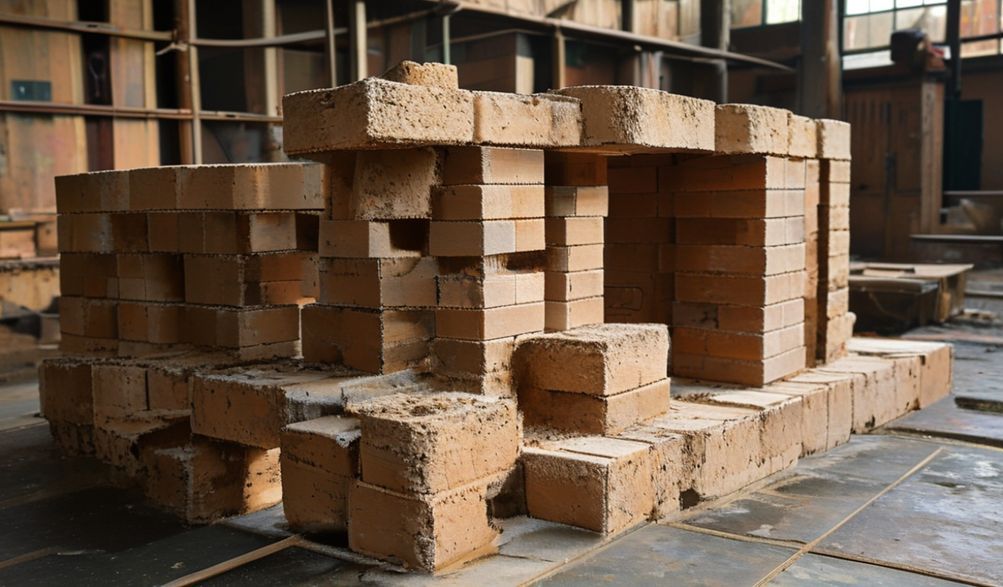
Hollow blocks, technically known as Concrete Masonry Units (CMUs), are precast building blocks made from a mixture of cement, sand, and aggregates (like fly ash or stone chips). Their defining characteristic is the presence of one or more large holes or “voids,” which typically constitute 25% to 50% of their total area.
Why are they rapidly replacing traditional clay bricks? The advantages are compelling:
- Superior Strength & Durability: They offer excellent compressive strength, often exceeding that of standard burnt clay bricks, leading to more durable structures.
- Lightweight: The hollow cores make them significantly lighter, easing handling, transportation, and reducing the overall dead load on the building foundation.
- Thermal & Acoustic Insulation: The air pockets within the blocks act as natural insulators, keeping interiors cooler in summer and warmer in winter, while also dampening sound transmission.
- Cost Efficiency: They require less mortar for joining due to their uniform size and shape. Their larger size also means faster wall construction, saving on labor costs.
- Sustainability: They are a prime vehicle for utilizing industrial by-products like fly ash (from thermal power plants), turning waste into a valuable resource and contributing to greener construction practices.
The Growing Demand for Hollow Blocks Machines in India
The surge in demand for hollow blocks is not accidental; it’s driven by powerful macroeconomic and policy forces.
- Government-Led Infrastructure Push: Flagship programs like PM Awas Yojana (Urban & Rural), the Smart Cities Mission, and massive investments in highways and metros are creating an unprecedented demand for standardized, high-quality building materials.
- Rise of Private Construction: The boom in residential complexes, commercial spaces, and industrial warehouses prioritizes speed and cost-effectiveness, which hollow block construction perfectly delivers.
- Shift Towards Prefabrication: The construction industry is increasingly leaning towards prefabricated and system-based building techniques. Hollow blocks, being precast, fit seamlessly into this modern methodology.
According to a report by the India Brand Equity Foundation (IBEF), the construction sector in India is expected to reach a market size of $1.4 trillion by 2025. This growth trajectory directly translates to a booming market for construction equipment and materials, making now an ideal time to invest in a hollow blocks making machine in India.
Types of Hollow Blocks Making Machines Available in India
The Indian market offers a spectrum of machines tailored to different scales of operation and investment capacities. Understanding these types is your first step.
Manual / Hand-Operated Machines
- Description: These are the most basic, lever-operated machines. The operator manually fills the mold with concrete mix, compacts it using a lever, and then releases the freshly formed block.
- Ideal For: Micro-entrepreneurs, very small-scale startups in rural or semi-urban areas, and individuals with extremely limited capital. They are also used for small, specific on-site needs.
- Output: Low (typically 300-500 blocks per 8-hour shift).
- Pros: Very low initial investment, minimal maintenance, no power requirement.
- Cons: Highly labor-intensive, low and inconsistent output, physical strain on operators, variable block quality.
Semi-Automatic Machines
- Description: This category strikes a balance between automation and cost. The process of mixing and feeding raw material is often manual, but the critical compaction and vibration processes are powered (by electric motor or diesel engine). They often feature a hydraulic system for block ejection.
- Ideal For: Small to medium-scale businesses (SMEs), contractors, and entrepreneurs looking for a serious production setup without the capital outlay of a full plant.
- Output: Moderate to Good (can range from 800 to 2,500+ blocks per 8-hour shift, depending on model).
- Pros: Good balance of price and productivity, consistent block quality due to mechanical vibration, less labor required than manual machines, reasonable ROI.
- Cons: Still requires a fair amount of manual intervention for feeding and block handling.
Fully Automatic Machines
- Description: These are complete production plants. They integrate automatic systems for material batching, mixing, conveying, high-frequency vibration, compaction, curing, and even block stacking/palletizing. Operations are controlled via a Programmable Logic Controller (PLC) panel.
- Ideal For: Large-scale manufacturing plants, high-volume suppliers to major construction projects, and businesses focused on maximum output with minimal manual labor.
- Output: High to Very High (Can produce 4,000 to 10,000+ blocks per 8-hour shift).
- Pros: Exceptional production capacity, unparalleled consistency in block quality, drastically reduced labor costs, high level of operational efficiency.
- Cons: Very high initial investment, requires significant space and stable three-phase power supply, complex maintenance requiring skilled technicians.
Mobile Block Making Machines
- Description: These are compact, trailer-mounted machines (often semi-automatic) designed to be towed directly to a large construction site.
- Ideal For: Large infrastructure projects (dams, roads, remote facilities) where transporting ready-made blocks over long distances is cost-prohibitive.
- Key Advantage: Eliminates transportation costs for the finished blocks, as production happens exactly where the material is needed.
Key Features to Evaluate When Buying a Machine in India
Beyond the type, scrutinizing these core features will ensure you get a machine that matches your long-term business needs.
Production Capacity (Blocks Per Hour)
Don’t just look at the manufacturer’s claimed “maximum” output. Understand the practical output for a standard 4″, 6″, or 8″ hollow block. Match this number with your sales projections and growth plans. Buying an under-capacity machine will limit you, while an over-spec machine will tie up capital unnecessarily.
Block Size and Mold Versatility
The true value of a machine often lies in its flexibility.
* Does it come with interchangeable molds? Can you produce different sizes of hollow blocks (4″, 6″, 8″)?
* Can it also make solid blocks, paving blocks, kerbstones, or designer tiles with additional molds?
A versatile machine allows you to diversify your product line and cater to a wider market with a single investment.
Power Requirement (Electric, Diesel, or Hybrid)
- Electric: Most common for semi and fully automatic machines. Requires a stable 3-phase connection. Most efficient and clean.
- Diesel: Crucial for areas with frequent power cuts or for mobile units. Offers operational independence but has higher running costs and maintenance.
- Hybrid: Some machines offer a diesel engine as a backup to an electric motor, providing the best of both worlds for unreliable power zones.
Automation Level and Control System
- Hydraulic System: Look for reputed brand hydraulics (e.g., Rexroth, Yuken) for reliability. The pressure determines compaction strength.
- Vibration System: High-frequency, externally mounted vibrators (from brands like OLI) are key for dense, strong blocks. The table vibration should be uniform.
- Control Panel: For semi-auto and above, a user-friendly control panel with timers for vibration and hydraulic cycles ensures consistent quality. PLC panels in automatic machines allow for precise programming.
Build Quality and After-Sales Service
This is non-negotiable. A machine is a long-term asset.
* Build: The frame should be made of heavy-duty steel plate and channels, not light-gauge metal. Welding should be robust.
* Critical for Trustworthiness: The most overlooked yet vital factor is after-sales support. A machine will need maintenance.
* Does the manufacturer have a service center or trained engineers in your region?
* What is the warranty period and what does it cover?
* Are spare parts (vibrator motors, hydraulic seals, control relays) readily available locally or do they take weeks to arrive?
* Do they provide proper installation supervision and operator training?
Always prioritize a manufacturer with a proven service network over a slightly cheaper one with no support.
Top Manufacturers and Suppliers of Hollow Blocks Machines in India
The market is populated with numerous players. Here are some established names known for their presence and reputation.
Established Indian Manufacturers
- Everon Impex: A leading name with a wide range from manual to fully automatic machines. Known for robust build quality and a strong pan-India dealer and service network.
- Apollo Inffratech: Part of the well-known Apollo group, they offer a comprehensive range of construction equipment, including concrete block making machines, and are recognized for their engineering.
- Reva Engineering Enterprises: A prominent manufacturer based in Coimbatore, a hub for industrial machinery, known for their semi-automatic and automatic models catering to the South Indian market extensively.
- Global Impex: Another Coimbatore-based manufacturer with a significant export and domestic presence, offering a variety of models at competitive price points.
Comparing Quality, Price, and Service Networks
| Aspect | Established Indian Brands | Budget Domestic Brands | Imported Machines (e.g., Chinese) |
| :— | :— | :— | :— |
| Build Quality | Generally good, using standardized components. | Can be variable; may use lower-grade materials. | Often good on paper, but quality can be inconsistent. |
| Price Point | Moderate to High. You pay for brand assurance. | Low to Moderate. | Often very competitive (low initial cost). |
|Service & Spares| Key Strength. Established network, easier spare part availability. | Limited; highly dependent on the specific supplier. | Major Weakness. Service lag, difficult/expensive spares, language barriers. |
| Best For | Buyers prioritizing reliability, support, and long-term peace of mind. | Buyers with tight budgets who can handle more maintenance risk. | Buyers focused solely on lowest upfront cost, often for specific projects. |
E-E-A-T Note: This comparison is based on general industry feedback and publicly available data. It is imperative to physically visit the manufacturer’s workshop, see a machine in operation, and ask for a list of recent customers in your area to get first-hand references.
The Option of Imported Machines
Imported machines, primarily from China, are available and can be attractive due to their lower upfront cost and sometimes advanced specifications. However, exercise extreme caution:
* Pros: Potentially lower purchase price, sometimes featuring high levels of automation.
* Cons: The biggest risk is the lack of reliable after-sales service. Getting a technician or a specific spare part can take months, leading to prolonged downtime. Customs clearance and import duties also add hidden costs.
Investment and Profitability Analysis
Let’s translate this into numbers. A clear financial picture is essential.
Hollow Blocks Machine Price Range in India (2026 Estimate)
- Manual Machines: ₹ 1,00,000 – ₹ 3,00,000
- Semi-Automatic Machines: ₹ 5,00,000 – ₹ 20,00,000 (wide range based on capacity and features)
- Fully Automatic Plants: ₹ 20,00,000 and above, can go into crores for large stationary plants.
- Important Disclaimer: Prices are highly variable based on configuration, brand, and location. Always get a detailed, itemized quotation.
Calculating ROI: From Raw Material to Profit
A simplified business model for a semi-automatic machine:
- Cost of Raw Material per Block (approx.): Cement, sand, fly ash – ₹ 25 to ₹ 35 (depending on regional prices).
- Selling Price per Block (approx.): ₹ 40 to ₹ 55 (again, region and quality dependent).
- Gross Profit per Block: ₹ 10 to ₹ 20.
- Daily Output: Assume 1,500 blocks (for a decent semi-auto machine).
- Daily Gross Profit: 1,500 blocks x ₹ 15 (avg. profit) = ₹ 22,500.
- Deduct Operational Costs: Labor (2-3 workers), power, rent, maintenance – estimate ₹ 7,000-₹ 10,000 per day.
- Daily Net Profit (approx.): ₹ 12,000 – ₹ 15,000.
This suggests a semi-automatic machine in the ₹ 8-10 lakh range could potentially recover its investment in 3-6 months of consistent operation, depending entirely on market demand, operational efficiency, and management.
Government Subsidies and Schemes
As a manufacturing MSME (Micro, Small & Medium Enterprise), you may be eligible for:
* Capital subsidy on plant & machinery under state-level industrial policies.
* Interest subsidy on loans.
* Schemes like Credit Linked Capital Subsidy Scheme (CLCSS) for technology upgradation.
* Always check the latest guidelines on the official MSME Ministry portal and your State Directorate of Industries website for the most current and applicable benefits.
Essential FAQ on Hollow Blocks Making Machines
What is the average cost of setting up a hollow block plant in India?
For a functional small-scale plant with a semi-automatic machine, basic raw material storage, and a curing area, the total setup cost can range from ₹ 10 lakhs to ₹ 25 lakhs, excluding land cost. A fully automatic plant requires a much larger investment.
Which is the best type of machine for a beginner with a budget of ₹ 5 lakhs?
A semi-automatic machine from a reputable Indian manufacturer would be the most prudent choice. It offers a significant upgrade from manual operation, provides consistent quality, and allows for business growth without the extreme complexity and cost of a fully automatic system.
What is the typical lifespan of a good quality machine?
With proper maintenance and usage, the core structure of a well-built machine can last 15-20 years or more. Wear-and-tear components like vibrator motors, hydraulic seals, and electrical parts will need periodic replacement.
Can I use fly ash in the mixture, and what is the ideal ratio?
Absolutely. Using fly ash is encouraged—it’s economical, eco-friendly, and can improve workability. A common mix ratio for hollow blocks is 1 part Cement : 2 parts Sand : 4 parts Fly Ash/Stone Dust (by volume). However, the ideal ratio depends on the desired block strength and the quality of your local materials. Start with standard mixes and experiment.
How important is after-sales service, and what should I look for?
It is the most critical factor after the machine itself. Look for: 1) A clear warranty document (at least 1 year on major parts), 2) Availability of a service engineer within a reasonable distance/time, 3) A ready stock of critical spare parts, and 4) Positive reviews from existing customers about their service experience.
What are the common problems/mistakes in block making and how to avoid them?
- Weak or Crumbling Blocks: Usually due to incorrect water-cement ratio (too much water), insufficient vibration time, or poor-quality cement/sand. Use a consistent, stiff mix and ensure proper compaction.
- Blocks Sticking to Mold: Caused by worn-out mold liners or insufficient application of mold release oil (like diesel). Keep molds clean and lightly lubricated.
- Surface Cracks: Often due to improper curing. Fresh blocks must be kept moist (covered with wet gunny bags) for at least 7 days to gain strength properly.
Conclusion and Final Checklist
Navigating the market for a hollow blocks making machine in India is a journey from understanding a promising opportunity to making a concrete capital investment. We’ve explored the robust market drivers, the types of machines available, the critical features that separate a good buy from a bad one, and the financial logic behind the venture.
As a final reinforcement of our guiding principle—Expertise, Authoritativeness, and Trustworthiness (E-E-A-T)—we urge you to conduct thorough due diligence. The information here is a powerful starting point, but your own verification through factory visits and customer references is irreplaceable.
Your Action-Oriented Buying Checklist:
- Define Your Goal: Clearly outline your daily/weekly production target, product types (block sizes), and firm budget.
- Shortlist Reputable Brands: Based on your research, narrow down to 3-4 manufacturers with strong service networks in your region.
- Visit and Inspect: Never buy blind. Visit the manufacturer’s workshop. See a live demonstration of the exact model you’re considering. Inspect the build quality and welding.
- Get Customer References: Ask for a list of at least 5-10 customers who bought a similar machine in the last 2-3 years. Call them. Ask about performance, downtime, and service responsiveness.
- Scrutinize Support Terms: Get the warranty terms in writing. Understand the service agreement—response time, travel charges, spare parts cost, and availability.
- Clarify Logistics: Confirm what’s included: installation, commissioning, and basic operator training. Get a final quote inclusive of all taxes and transportation to your site.
- Compare Holistically: Don’t just compare the price on paper. Compare the Total Value: Machine + Warranty + Service Support + Brand Reputation.
By following this disciplined approach, you won’t just be buying a machine; you’ll be investing in a reliable partner for your business growth. You are poised to contribute to India’s infrastructure story while building a profitable and sustainable enterprise of your