
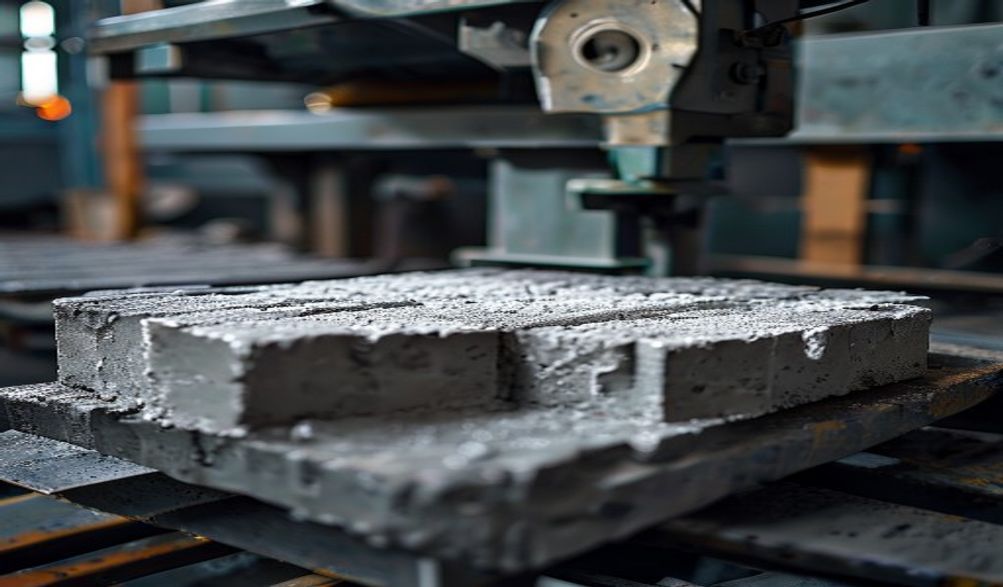
How to Choose a Hollow Block Brick Making Machine: A Comprehensive Buyer’s Guide
Investing in a hollow block making machine isn’t just a purchase; it’s a pivotal strategic decision for your construction business, manufacturing venture, or entrepreneurial project. The right machine becomes the heart of your operation, dictating your product quality, output capacity, and ultimately, your profitability. The wrong choice can lead to crippling downtime, inconsistent blocks, and financial strain.
With countless models, from simple manual presses to sprawling automated plants, navigating the market is complex. This guide cuts through the confusion. Drawing on industry standards, technical deep-dives, and hard-won operational insights, we provide a definitive, step-by-step framework to make a confident, informed decision tailored to your specific goals and budget. Let’s build the foundation for your success.
Understanding Your Production Needs and Goals
Before you look at a single machine brochure, you must look inward. A clear, quantified understanding of your own operation is the most critical step—and the one most often rushed. This is where real-world planning separates successful investments from costly mistakes.
Assessing Your Daily/Weekly Production Volume
Output needs vary wildly. A small contractor supplying a local housing project has vastly different requirements from an industrial plant supplying a city’s infrastructure.
- Calculate Real Requirements: Base this on actual contracts, market demand, and growth projections. Don’t just guess.
- Small-Scale (Startup/Local): Up to 1,000 – 2,000 blocks per day. Ideal for manual or semi-automatic machines.
- Medium-Scale (Established Business): 2,000 – 10,000 blocks per day. Typically requires a fully automatic stationary machine.
- Large-Scale Industrial/Project-Based: 10,000+ blocks per day. The domain of high-speed stationary plants or mobile “egg-layer” machines for mega-projects.
Pro Tip: Always add a 20-30% buffer to your calculated needs to account for growth and peak demand. Buying a machine that already operates at 100% capacity from day one leaves no room for expansion.
Defining Your Block Specifications
Your machine must produce the right blocks, not just any blocks. Your product line dictates the required machine features.
- Standard Sizes & Types: Know your market’s common demands (e.g., 4″, 6″, 8″ hollow blocks). Ensure the machine can accommodate the mold sizes.
- Specialty Products: Will you produce interlocking blocks, pavers, curb stones, or solid blocks? Versatility requires interchangeable molds and sometimes different pressure/vibration settings.
- Compressive Strength: This is non-negotiable. Residential blocks may require 3.5N/mm², while commercial or load-bearing applications need 7N/mm² or higher. The machine’s pressure capability directly influences this.
Analyzing Raw Material Availability
The machine is only as good as the mix you feed it. Local material quality is a defining constraint.
- Material Types: Identify your primary components: Fly ash (eco-friendly and cost-effective), cement, sand, stone dust, or recycled aggregates.
- Local Testing is Key: Always test your local sand and aggregates. Their moisture content, gradation, and impurities will affect the mix design and final block quality.
- Machine Compatibility: Discuss your material mix with manufacturers. Some machines are optimized for cement-heavy mixes, while others handle high fly-ash or aggregate ratios better.
Core Types of Hollow Block Making Machines
Understanding the fundamental categories of machines is where technical expertise becomes essential. Each type serves a specific purpose in the production ecosystem.
Manual and Semi-Automatic Machines
These are the entry point into block manufacturing, prioritizing low capital cost over high output.
- Ideal For: Startups, very low-volume production, NGOs in rural areas, or businesses with abundant, low-cost labor.
- Pros:
- Lowest upfront investment.
- Simple mechanics, easier to repair locally.
- Low power consumption.
- Cons:
- High labor intensity (multiple operators needed).
- Slow output and inconsistent quality due to human variables.
- Physically demanding work.
Fully Automatic Stationary Block Machines
This is the workhorse of the modern block manufacturing industry, offering the best balance of quality, output, and automation for fixed-location plants.
- Ideal For: Medium to large-scale dedicated production facilities.
- Key Features:
- High-pressure hydraulic systems and powerful vibration ensure dense, strong, uniform blocks.
- Programmable Logic Controller (PLC) systems allow for single-operator management.
- “Stationary” means blocks are formed on pallets, which are then moved to a curing area.
- Output: Can range from 4,000 to over 20,000 blocks per 8-hour shift, depending on model and mold configuration.
Fully Automatic Mobile Block Machines (Egg-Layers)
A specialized solution for massive, on-site production, where transporting blocks is a major cost and logistical hurdle.
- Ideal For: Large infrastructure projects (dams, roads, large housing estates), brick yards with vast space.
- How They Work: The machine moves slowly on rails or wheels, compacting the mix and “laying” the finished blocks directly onto a level prepared ground (like a chicken laying an egg).
- Pros:
- Eliminates the cost and handling of thousands of pallets.
- Incredibly high output for covering large areas.
- Cons:
- Requires a massive, perfectly level ground space.
- Blocks cure on the ground, requiring favorable weather or covered areas.
- Less versatile for producing multiple block types quickly.
Key Technical Specifications to Scrutinize
When comparing models, move beyond marketing claims. These technical details separate durable, efficient machines from underperforming assets.
Cycle Time and Production Capacity
A “2,000 blocks per hour” claim can be misleading if it doesn’t account for real-world conditions.
- Cycle Time: This is the total time to fill, compress, vibrate, and eject one set of blocks. A shorter cycle time means higher potential output.
- Mold Cavities: A machine with a 20-second cycle time and a 10-block mold produces more than one with a 15-second cycle and a 4-block mold. Multiply cavities by cycles per hour for a theoretical maximum.
- Real-World Output: Always deduct 20-25% for loading time, maintenance pauses, and operator breaks to get a practical daily production figure.
Pressure System and Vibration Mechanism
This is the soul of your block’s quality. It determines density, strength, surface finish, and dimensional accuracy.
- Hydraulic Pressure (Tonnage): Measured in tons (e.g., 150-ton press). Higher pressure compacts the raw material more densely, creating stronger blocks with lower water absorption. Match the tonnage to the strength requirements of your blocks.
- Vibration System: Look for high-frequency, planetary vibration mounted under the mold table. This ensures even compaction throughout the mix, eliminating weak spots and producing a smooth, finished surface on all sides of the block.
Power Requirements and Consumption
Operating costs matter. A cheap machine with a high-power hunger is a long-term liability.
- Electrical: Determine if you have reliable 3-phase power, which is standard for industrial machines. Smaller semi-automatics may run on single-phase.
- Diesel Options: Crucial for areas with unreliable electricity. They offer mobility but have higher fuel costs and require ventilation.
- Motor Rating: Check the total KW/HP rating of all motors (main, hydraulic, vibrator). Use this to calculate your hourly energy cost.
Machine Durability and Construction
This is about longevity and minimizing downtime. Inspect the build like a seasoned engineer.
- Frame: Must be heavy-duty, welded steel construction to withstand years of intense vibration without cracking or warping.
- Molds: The most critical wear part. They should be made from high-chromium, hardened steel for a long lifespan and precise block dimensions.
- Hydraulic System: Prefer well-known, standard-brand pumps, valves, and cylinders. Custom or obscure brands make future repairs difficult and expensive.
- Standard Parts: Ensure bearings, seals, and electrical components are standard, globally available types.
Beyond the Machine: Essential Support Factors
Your relationship with the manufacturer is as important as the machine itself. This is where trust is built—or broken.
Manufacturer Reputation and After-Sales Service
A machine is a long-term asset; you need a partner, not just a seller.
- Research: How long have they been in business? Ask for a client list and actually call references. Do they have a physical presence or just a website?
- After-Sales: What does the package include? Installation? On-site training for your operators? Is there a dedicated technical support hotline?
- Warranty & Spares: Understand the warranty terms (parts, labor, duration). Most importantly, ask about their spare parts inventory and delivery time. A 6-month wait for a critical part can shut down your business.
Cost Analysis: Initial Investment vs. Total Cost of Ownership
The purchase price is just the first line item.
- Initial Investment Breakdown:
- Main Block Machine
- Molds (for each block type)
- Pallets (hundreds may be needed for stationary plants)
- Essential Auxiliaries: Concrete mixer, conveyor, pallet stacker.
- Long-Term Costs (Total Cost of Ownership):
- Routine maintenance (lubricants, filters).
- Wear part replacement (mold liners, hydraulic seals).
- Energy consumption.
- Labor costs (higher for manual, lower for automatic).
- Downtime costs from breakdowns.
Safety Features and Ease of Operation
Protect your people and ensure smooth operation.
- Safety: Look for physical safety guards on all moving parts, clearly marked emergency stop buttons, and two-hand operation controls on semi-automatic machines to prevent accidents.
- Ease of Use: A user-friendly, logically laid-out control panel (with multilingual options if needed) reduces training time and operator error. Higher automation reduces fatigue and variability.
The Step-by-Step Selection Process
Let’s synthesize everything into a practical, actionable plan.
- Audit & Define: Complete the thorough needs analysis from Section 1. Document your required output, block types, material mix, and budget range.
- Research & Shortlist: Based on your audit, identify 3-5 reputable manufacturers whose machine categories (semi-auto, stationary auto, mobile) align with your needs.
- Request & Compare: Contact them with your detailed specifications. Request a formal, itemized quotation that includes machine specs, optional accessories, shipping, installation, training, and warranty terms. Compare these documents side-by-side.
- Validate: Ask each shortlisted manufacturer for 2-3 customer references in a similar business. Call them. If feasible, visit a working installation to see the machine in action, hear the noise, and speak to the operators.
- Decide: Make your final choice by weighing the technical suitability, total cost of ownership (not just price), and the confidence you have in the manufacturer’s support network.
Frequently Asked Questions (FAQ)
Q1: What is the average price range for a hollow block making machine?
A: Prices vary dramatically. Manual machines can start from a few thousand dollars, semi-automatic from $15,000-$50,000, and fully automatic stationary or mobile machines can range from $50,000 to over $300,000 depending on automation, capacity, and brand. Always demand an itemized quote to understand what is included.
Q2: Can one machine produce different sizes and types of blocks?
A: Yes, but you need to purchase interchangeable molds for each block type and size. Ensure the machine you choose supports easy and quick mold changing (often within 30 minutes) and has the hydraulic and vibration versatility for your planned product line.
Q3: How much space is required to install and operate a block making plant?
A: Space needs depend entirely on the machine type. A stationary plant with mixer, conveyor, block machine, and curing racks may need 1,000-5,000 sq meters. A mobile “egg-layer” requires a large, clear, level ground area for block laying and curing. Always consult the manufacturer’s layout recommendations during planning.
Q4: What is the most common mistake buyers make?
A: Choosing a machine based solely on the lowest upfront price without honestly considering production needs, machine durability, or after-sales support. This false economy often leads to higher long-term costs, inability to meet demand, and operational failures. Investing in quality and reliable service is crucial for profitability.
Q5: How important is raw material preparation?
A: Extremely important. The quality of the final block is only as good as the mix. You will absolutely need a quality mixer (like a planetary or pan mixer) to ensure a consistent, homogeneous blend. For optimal quality, you may also need a crusher or sieve to prepare well-graded aggregates.
Conclusion
Choosing the right hollow block making machine is a strategic decision that hinges on a clear-eyed understanding of your goals, a forensic evaluation of technical specs, and a partnership with a reputable manufacturer. It’s an investment that should pay dividends for years.
Remember, the cheapest sticker price often carries the highest long-term cost. Prioritize reliability, service, and total cost of ownership. Use this guide as your checklist, invest time in thorough research and factory visits, and don’t rush the process.
The right machine will become the reliable, productive engine of your business, turning raw materials into the very building blocks of your growth and success. Choose wisely.