
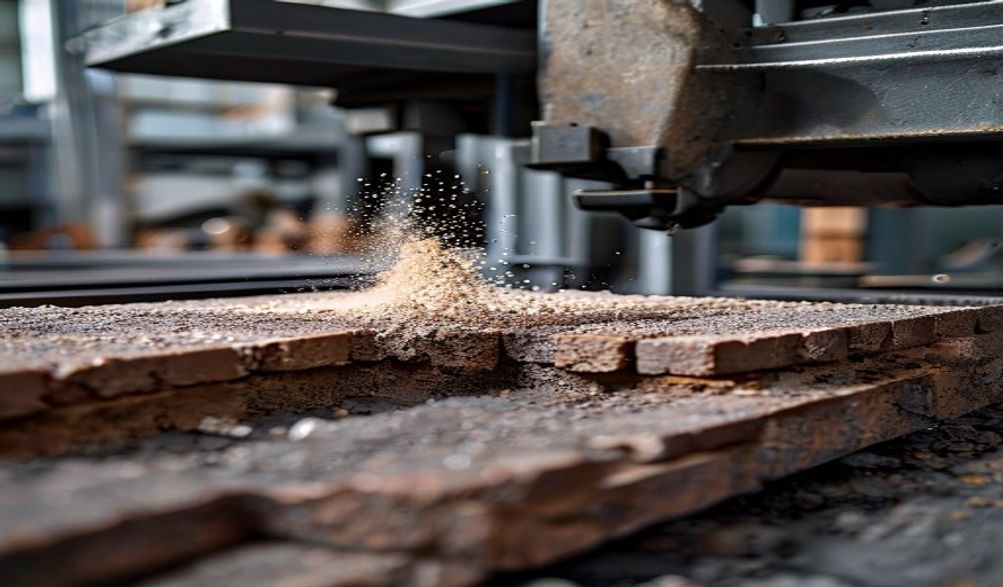
How to Choose the Right China Fly Ash Brick Making Machine: A Comprehensive Buyer’s Guide
Introduction
The global construction industry is undergoing a green revolution. As sustainability moves from a buzzword to a business imperative, fly ash bricks have emerged as a cornerstone of eco-friendly building. This shift creates a massive opportunity for entrepreneurs and construction firms. But the key to unlocking this potential lies in the heart of your operation: the brick making machine.
China stands as the undisputed global epicenter for manufacturing this vital equipment, offering an unparalleled combination of scale, technology, and value. However, navigating the vast landscape of hundreds, if not thousands, of Chinese suppliers can be a daunting and risky endeavor. Based on our decade of industry experience conducting direct factory audits and operating machinery across multiple projects, we’ve seen the consequences of a poor choice—costly downtime, inconsistent brick quality, and shattered revenue projections.
This guide is designed to cut through the noise. We’ll leverage deep, hands-on expertise to provide you with a trusted, step-by-step framework for making an informed and profitable investment. If you’re figuring out how to choose a China fly ash brick making machine, consider this your essential roadmap to success.
Understanding Fly Ash Brick Making Machines: Core Concepts
Before evaluating specific models or suppliers, it’s crucial to understand the fundamentals. This knowledge forms the bedrock of your purchasing decision.
What is a Fly Ash Brick Machine and How Does It Work?
A fly ash brick making machine is a specialized press that automates the production of bricks using fly ash (a by-product of coal combustion), cement, lime, gypsum, and water. The core principle is hydraulic compression.
- Mixing: Raw materials are precisely batched and mixed to form a homogeneous blend.
- Feeding: The mixture is fed into a mold box on the machine.
- Compaction: A high-tonnage hydraulic ram applies immense pressure (typically 120-200+ tons) to the material within the mold.
- Ejection: The newly formed, dense brick is ejected from the mold, often onto a pallet or conveyor.
- Curing: Bricks are then stacked and cured for a period to gain full strength, a process much faster than traditional clay brick firing.
This process transforms industrial waste into high-strength, uniform building blocks.
Key Advantages of Using Fly Ash Bricks
Understanding the product’s benefits reinforces the why behind your investment:
- Sustainability: Utilizes industrial waste (fly ash), reducing landfill burden and the carbon footprint associated with clay brick firing.
- Cost-Effectiveness: Raw materials are often cheaper, and the production process consumes less energy than fired bricks.
- Superior Strength & Durability: High compression yields bricks with excellent compressive strength, low water absorption, and better resistance to weathering.
- Thermal & Acoustic Insulation: Fly ash bricks offer better insulation properties than conventional clay bricks, leading to energy-efficient buildings.
- Uniformity & Aesthetics: Machine production ensures consistent size, shape, and finish, allowing for smoother plastering and more aesthetic appeal.
Why China is the Global Leader for This Machinery
China’s dominance isn’t accidental. It’s the result of systemic advantages:
- Manufacturing Scale & Supply Chain: Concentrated industrial hubs offer complete supply chains for steel, hydraulics, and electronics, driving down costs and speeding up production.
- Rapid Technological Adoption: Chinese manufacturers quickly integrate advancements in PLC controls, energy-efficient systems, and automation.
- Cost Competitiveness: The combination of scale, supply chain efficiency, and skilled labor results in significant price advantages without necessarily sacrificing quality.
- Export Experience: Suppliers are well-versed in international shipping, documentation, and catering to diverse global standards.
Critical Technical Specifications to Evaluate
This is where your due diligence begins. Comparing machines on paper is the first critical filter.
Production Capacity: Matching Output to Your Business Goals
Capacity is usually listed as bricks per hour (e.g., 1,000 – 10,000 pcs/hr). Be realistic.
- Underestimating leads to missed market opportunities.
- Overestimating means a higher upfront cost, larger space, and underutilized assets.
- Consider: Calculate your current and 5-year projected demand. Factor in an 8-hour effective production day, not 24 hours of theoretical maximum output.
Brick Size and Type Flexibility
Your market dictates your product mix. Ensure the machine can adapt.
- Mold Interchangeability: Can the machine easily switch molds to produce solid, hollow, paver, and interlocking bricks?
- Standard Sizes: Confirm it can produce common sizes (e.g., 230x110x75 mm for standard bricks).
- Custom Molds: Ask about the cost and lead time for custom mold designs. A quality, hardened steel mold is critical for brick finish and longevity.
Pressure and Power: The Engines of Quality
Hydraulic pressure (measured in tons) directly determines brick density and strength.
- General Range: Standard machines operate between 120 to 200 tons. Higher pressure generally produces stronger, denser bricks suitable for load-bearing applications.
- Power Consumption: Note the total installed motor power (KW). Higher capacity/automation means higher power draw—factor this into your operational costs.
Automation Level: From Manual to Fully Automatic
This choice balances capital expenditure with operational costs.
| Level | Labor Needed | Consistency | Upfront Cost | Best For |
| :— | :— | :— | :— | :— |
| Manual | High | Variable | Low | Very small-scale, entry-level projects. |
| Semi-Auto | Moderate | Good | Medium | Most small to medium businesses (SMBs). Balances cost and output. |
| Fully Auto | Low (1-2 operators) | Excellent | High | Large-scale production where consistency and labor savings are paramount. |
Key Component Quality: The Heart of Longevity
The brand and quality of core components dictate machine reliability and maintenance costs.
- Hydraulic System: Insist on known brands like Bosch Rexroth, Kawasaki, or Yuken. Cheap, no-name pumps and valves are the most common point of failure.
- PLC & Electricals: Brands like Siemens, Mitsubishi, or Schneider ensure stable control and easier troubleshooting.
- Structural Steel & Welding: The frame should be made from heavy-duty steel plate with clean, robust welding. This absorbs vibration and ensures alignment over years of use.
- Mold Steel: Molds should be made from high-grade, hardened alloy steel (e.g., Cr12MoV) for wear resistance.
Vetting Chinese Manufacturers: A Trust-Building Process
Finding a reliable partner is as important as selecting the right machine specs.
Beyond Alibaba: How to Identify Repifiable Suppliers
Alibaba is a starting point, not the finish line.
- Verify Business Licenses: Request their Business License (营业执照) and check for relevant certifications like ISO 9001 for quality management systems.
- Years in Operation: Prefer suppliers with a track record of 8-10+ years. It indicates stability and accumulated experience.
- Patent Ownership: Companies with patented technologies often have deeper R&D expertise.
- Physical Address & Scale: Use Google Earth or Baidu Maps to verify their factory location and size. A dedicated, sizable facility is a positive sign.
The Non-Negotiable Importance of Factory Audits (Virtual or In-Person)
Never skip this step. If you can’t visit, insist on a live video tour.
What to inspect during an audit:
- Production Floor: Is it organized? Are workers using proper procedures?
- Welding & Fabrication Quality: Look for clean, continuous welds on machine frames.
- Component Inventory: Do they stock branded hydraulics and electrical parts?
- Quality Control: Ask to see their QC checklist. Are they testing pressure, alignment, and doing trial runs before shipment?
- Finished Goods Warehouse: Seeing machines ready for export is a good sign of ongoing business.
Requesting and Analyzing Client References
A trustworthy supplier will provide verifiable references.
- Ask for Overseas Clients: Specifically request contacts in regions similar to yours (e.g., similar climate, raw material quality).
- Contact Them: Ask about machine performance, brick quality, after-sales support responsiveness, and any major issues faced.
- Check Project Photos/Videos: Authentic customer project photos are more valuable than glossy marketing material.
Decoding Quotations: Price vs. Value Breakdown
A detailed quote separates serious suppliers from traders.
Ensure the quotation itemizes:
- Machine base price
- Cost of each mold type
- Spare parts package
- Packaging (export wooden case standard)
- Shipping terms (FOB, CIF, etc.)
- Installation & commissioning charges (if offered)
- Warranty period (typically 12 months for parts, excluding wear items like molds)
Compare the total delivered cost and the value (component brands, warranty, support) across shortlisted suppliers.
The Selection Checklist: Your Step-by-Step Decision Matrix
Follow this experiential, step-by-step process to make a confident decision.
Step 1: Define Your Project Parameters
- Budget: Include machine, molds, shipping, import duties, installation, and working capital.
- Location: Consider factory space, power supply (voltage, phase), and ceiling height.
- Raw Material Analysis: Test your local fly ash, sand, and cement. Share the analysis with suppliers—machine settings must be tailored to your material.
Step 2: Shortlist 3-5 Manufacturers
Use the criteria above (tech specs, vetting) to create a shortlist of 3-5 credible suppliers. Avoid the temptation to get 20 quotes—it creates confusion.
Step 3: Engage in Deep Technical Communication
Send a detailed Request for Quotation (RFQ). Sample questions:
* “Can you provide the brand and model of the main hydraulic pump and PLC?”
* “What is the tolerance (in mm) for brick dimension variation?”
* “Will you provide a foundation drawing and electrical layout diagram?”
* “Can we conduct a test production using our raw material sample?”
Step 4: Evaluate After-Sales Support and Warranty Terms
This is your long-term safety net.
* Training: Is on-site or video training provided?
* Manuals: Are detailed electrical and hydraulic diagrams provided in English?
* Spare Parts: What is the lead time for critical spares? Do they guarantee availability for 5-10 years?
* Service Network: Do they have service engineers who can travel overseas, or do they partner with local agents?
Step 5: Final Negotiation and Contract Safeguards
- Payment Terms: Secure terms like 30% deposit, 70% before shipment. Never pay 100% upfront.
- Performance Clause: Contractually bind the machine to produce bricks meeting a specified strength (e.g., 7.5 MPa or higher).
- Inspection Rights: Stipulate your right to conduct a Pre-Shipment Inspection (PSI) by a third party before final payment.
Common Pitfalls to Avoid When Sourcing from China
Learning from others’ mistakes is the cheapest form of due diligence.
The “Too Good to Be True” Price Trap
A quote significantly lower than the market average almost always indicates inferior components, thin materials, or hidden costs. The Total Cost of Ownership (purchase price + maintenance + downtime) is what matters.
Overlooking Shipping, Customs, and Local Compliance
- Shipping: Understand Incoterms. For CIF, clarify who handles port clearance at your end.
- Customs: Research your country’s import duty code for brick making machines and prepare necessary documentation.
- Compliance: Ensure the machine’s electrical standards match your local grid.
Underestimating Installation, Commissioning, and Training
The machine arriving is only half the battle. You need a certified electrician, a solid concrete foundation (per the supplier’s drawing), and time for calibration. Factor this into your project timeline.
Neglecting Long-Term Spare Parts Availability
A machine is a 10-15 year asset. Confirm the supplier’s commitment to supplying spare parts in the future. Consider purchasing a critical spare parts kit upfront (seals, sensors, relays).
Frequently Asked Questions (FAQ)
Q1: What is the average price range for a quality China fly ash brick making machine?
A: Prices vary dramatically based on automation and capacity. A quality semi-automatic machine can range from $18,000 to $40,000, while a fully automatic production line can cost $50,000 to $150,000+ (FOB China). The variance is due to hydraulic brands, level of automation, and included accessories.
Q2: How can I verify the machine quality before making a payment?
A: Two key methods: 1) Pre-Shipment Inspection (PSI): Hire a third-party inspection agency (like SGS, BV) to check the machine at the factory against agreed specifications. 2) Live Video Test: Require the supplier to conduct a live video production run, using a sample of your raw materials if possible, to demonstrate performance and brick quality.
Q3: What is the typical lead time from order to delivery?
A: After order confirmation and deposit, typical lead times are 30-45 days for production, plus 25-40 days for sea freight, depending on your destination port. Always clarify and include these timelines in your contract.
Q4: Do Chinese manufacturers provide installation support overseas?
A: Practices vary. Many will send 1-2 engineers for installation and training, but the buyer typically covers airfare, accommodation, and a daily fee. Others provide comprehensive remote guidance via video call. This must be explicitly detailed in your sales contract.
Q5: What is the most common mistake first-time buyers make?
A: Choosing a supplier based solely on the lowest upfront price. This often leads to higher long-term costs through frequent breakdowns, poor brick quality, non-existent support, and ultimately, project failure. Investing in reliability and partnership always pays off.
Conclusion
Choosing the right China fly ash brick making machine is a strategic decision that hinges on three pillars: rigorous technical due diligence, meticulous manufacturer vetting, and a structured, step-by-step selection process. It’s about looking beyond the price tag to evaluate the total value and long-term partnership a supplier offers.
A well-chosen machine is not an expense; it’s a long-term asset that will form the foundation of your profitable, sustainable business. The goal is to move from being just a buyer to becoming a valued partner of a reliable Chinese manufacturer.
Ready to take the next step with confidence? Based on our extensive experience in the field, we invite you to leverage our expertise.
[Download our Free, Detailed Supplier & Machine Comparison Checklist] or [Contact Our Sourcing Experts for a Personalized Consultation]. We maintain direct relationships with pre-vetted, top-tier factories and can help facilitate your entire procurement journey, ensuring you master the process of how to choose a China fly ash brick making machine that delivers lasting success.