
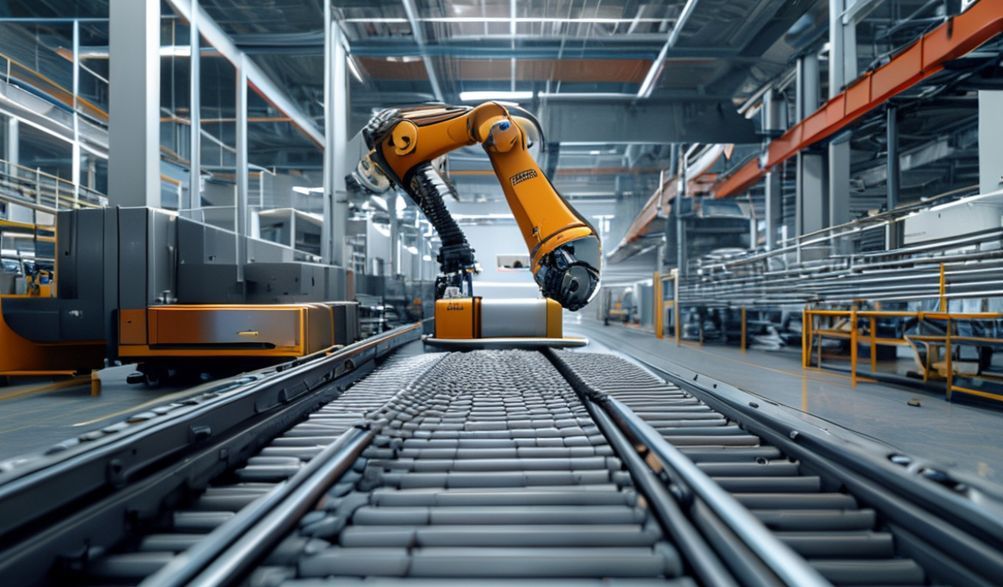
The Complete Guide to Fully Automatic Fly Ash Bricks Machines: A Look Inside the FUDA Factory
Entwodiksyon
The global construction industry is at a crossroads. With rising demands for sustainable, durable, and cost-effective building materials, the search for alternatives to traditional fired clay bricks has intensified. At the forefront of this green building revolution are fly ash bricks—a superior product that turns industrial waste into construction gold. Yet, the potential of this material is only unlocked through the technology used to produce it.
For decades, brick manufacturing was synonymous with labor-intensive processes, inconsistent quality, high material waste, and significant environmental tolls from kiln firing. These challenges have stifled productivity and profitability for many entrepreneurs and construction firms. The solution? Advanced, fully automatic fly ash bricks machines that transform production from an artisanal craft into a precise, high-volume industrial operation.
This comprehensive guide delves into the engineering and business case behind these automated powerhouses. We’ll use the operational principles of a professional factory, like the renowned FUDA brick making factory, as our benchmark. This post is crafted from industry knowledge, engineering principles, and insights into professional manufacturing to provide actionable intelligence for business owners, civil engineers, and project managers evaluating this significant investment.
We will explore the intricate workings of fully automatic machines, quantify their tangible benefits, outline the critical hallmarks of a top-tier manufacturer, and provide a practical framework for your purchasing decision. Let’s step inside the world of automated brick production.
Understanding Fly Ash Bricks and Automation
What Are Fly Ash Bricks? Composition and Superiority
Fly ash bricks are a precast construction material manufactured by compacting a carefully proportioned mixture. Their core composition typically includes:
- Fly Ash (50-65%): The primary raw material, a fine powder recovered from the exhaust gases of coal-fired power plants. This is a classic example of productive waste utilization.
- Cement (8-12%): Acts as the binding agent, providing initial green strength and contributing to long-term durability.
- Sand or Stone Dust (20-30%): Provides body, reduces shrinkage, and enhances the brick’s density.
- Dlo: Used for hydration and to achieve optimal workability for compaction.
This simple recipe yields a product with distinct advantages over traditional clay bricks:
- Fòs Konpresif Pi Wo: Ranging from 7.5 N/mm² to over 15 N/mm², they are structurally more robust.
- Izolasyon Tèmik Sipèryè: Fly ash bricks have lower thermal conductivity, keeping buildings cooler in summer and warmer in winter.
- Efikasite Pri: Lower raw material costs (using waste fly ash) and elimination of fuel for firing lead to significant production savings.
- Environmental Benefits: They consume a major industrial waste product (fly ash), reduce quarrying for topsoil, and eliminate the air pollution associated with brick kilns.
The Evolution from Manual to Fully Automatic Brick Making
The journey of brick making technology reflects the pursuit of efficiency and quality:
- Moulaj Manyèl: Laborers mix and press materials into molds by hand. Output is very low (a few hundred bricks per day), quality is inconsistent, and the process is physically demanding.
- Machin Semi-Otomatik: These machines mechanize the pressing or molding process, often with a hydraulic or mechanical press. However, material feeding, mixing, and brick removal are still largely manual. Output improves, but the process remains labor-dependent and prone to variability.
- Liy Otomatik Konplete pou Pwodiksyon: This represents the pinnacle of manufacturing technology. “Fully automatic” signifies a seamlessly integrated system where raw materials are automatically batched, mixed, molded, conveyed, and sometimes even stacked—all with minimal human intervention, guided by a central Programmable Logic Controller (PLC).
Inside a Fully Automatic Fly Ash Bricks Machine: How It Works
Eleman Prensipal Yo ak Fonksyon Yo
A fully automatic plant is a symphony of coordinated components. Understanding each part is key to appreciating the whole system.
- Raw Material Feeder & Batching System: This is the first stage of precision. Silo-based or hopper-fed systems use weigh feeders or volumetric feeders to dispense fly ash, cement, and sand in exact, programmable proportions. Consistency here is non-negotiable for consistent brick quality.
- Miksè Pàn: The batched dry materials are transferred to a heavy-duty pan mixer. Here, water is added, and rotating stars or blades ensure a homogeneous, uniformly moist mix in just 2-3 minutes. An inconsistent mix leads to weak or crumbling bricks.
- Hydraulic Press & Molding Station: The heart of the machine. The prepared mix is fed into high-precision steel molds. A multi-sided hydraulic press then applies immense pressure—often ranging from 80 to 200+ tons, depending on the model. This high-pressure compaction is what gives fly ash bricks their high density and strength without requiring firing.
- Sistèm Transpòtè A network of belt or roller conveyors automatically transports the freshly pressed “green bricks” from the press to the curing area. This eliminates manual handling, which can damage the fragile green bricks.
- Pwano Kontwòl PLC: The brain of the operation. This industrial computer allows operators to set and monitor all parameters: mix proportions, cycle times, pressure, and production counts. It enables true automation, diagnostics, and consistent repeatability.
The Production Cycle: Step-by-Step
The magic lies in the seamless, continuous cycle. Here’s how raw materials become finished bricks in minutes:
- Automatic Batching: The PLC commands the feeders to release precise amounts of fly ash, cement, and sand.
- Melanj: Materials are conveyed to the pan mixer, water is added, and a uniform mix is prepared.
- Moulaj & Konpresyon: The mix is fed into the mold cavity. The hydraulic press rams apply intense pressure for a pre-set duration, forming a perfectly shaped, dense brick.
- Ejeksyon ak Konveyans: The press retracts, and the brick is automatically ejected onto the waiting conveyor system.
- Gerizon: Green bricks are transported to a designated area for water curing or steam curing for 14-21 days, where they gain their ultimate strength.
- Paletizasyon: After curing, bricks are often automatically stacked onto pallets for easy storage and transport.
This cycle repeats every 15-30 seconds, 24/7, with relentless precision.
Key Benefits of Investing in a Fully Automatic Plant
Unmatched Productivity and Consistent Quality
The numbers speak for themselves. A mid-range fully automatic machine can produce 8,000 to 15,000 bricks in a single 8-hour shift. High-capacity models can exceed 30,000 bricks per shift. This volume is simply unattainable with manual or semi-automatic methods.
More important than sheer volume is konsistans. Every brick from an automatic press is identical in dimensions (e.g., 230mm x 110mm x 75mm) and weight. This uniformity ensures consistent compressive strength across the entire batch, simplifying structural calculations for engineers and reducing waste on the construction site due to dimensional irregularities.
Significant Labor and Operational Cost Savings
Automation dramatically reduces dependence on manual labor. Where a manual plant might require 15-20 workers, a fully automatic line can be supervised by 2-4 skilled personnel. This translates to massive long-term savings on wages, management, and associated costs.
Operational efficiency is also heightened. Precise batching minimizes raw material waste. The high first-pass quality means a drastically lower rejection rate. Furthermore, the efficient use of fly ash—a low-cost or sometimes free material—directly improves the bottom line.
Enhanced Sustainability and Environmental Compliance
This is a dual environmental win. First, these machines consume large volumes of fly ash, directly diverting this industrial byproduct from landfills and ash ponds. A single plant can utilize thousands of tons of fly ash annually.
Second, the process itself is cleaner. There is no firing, meaning zero emissions from coal or other fuels, no particulate matter release, and a significantly lower carbon footprint compared to traditional clay brick kilns. This makes compliance with increasingly strict environmental regulations much more straightforward.
Choosing the Right Manufacturer: Why Factories Like FUDA Lead the Way
Hallmarks of a Reputable Brick Machine Factory
Not all manufacturers are created equal. Your machine is a long-term capital asset, and the manufacturer is your long-term partner. Look for these critical attributes:
- Ekspètiz Enjenyè: The best factories have in-house R&D and design teams. They don’t just assemble parts; they engineer solutions. Look for evidence of innovation in their machine design and patents.
- Kalite Konstriksyon ak Materyòl: Inspect the use of materials. Critical components like the hydraulic system, frame, and especially the molds should be made from hardened, high-chrome steel to withstand constant abrasion and pressure, ensuring a long lifespan and minimal downtime.
- Comprehensive Support: The relationship begins after the sale. A reputable manufacturer provides turnkey services: plant layout design, on-site installation supervision, thorough operator training, a clear warranty, and a reliable supply chain for genuine spare parts.
Beyond the Machine: The FUDA Factory Philosophy
While specific details vary, a top-tier factory like FUDA operates on a philosophy that extends beyond selling hardware. They provide integrated solutions.
This includes consulting on the optimal plant layout for your space and workflow. They offer pèsonalizasyon—whether you need to produce standard bricks, hollow blocks, pavers, or interlocking blocks, they can adapt the machine with different molds and slight parameter adjustments. Their own stringent quality control protocols during manufacturing (e.g., testing hydraulic circuits, verifying PLC programs) ensure the machine arrives ready to perform. Finally, they stand behind their product with performance guarantees, not just equipment warranties.
Critical Considerations Before You Purchase
Evalye Kondisyon Pwojè Ou
Begin with a clear internal assessment. Ask yourself:
- What is my required chak jou oswa chak mwa to meet market demand?
- What brick sizes and types (solid, hollow, paving) do I need to produce?
- Is there a consistent and affordable local supply of fly ash, cement, and sand?
- Kisa total available space for the machine, raw material storage, curing area, and finished goods yard?
Financial Planning: Cost vs. Return on Investment (ROI)
The initial capital outlay is significant, encompassing the machine cost, shipping, installation, and site preparation. However, the ROI calculation is compelling.
Kad Ranmase sou Envestisman (ROI)
(Annual Profit from Brick Sales) / (Total Capital Investment) = ROI Timeframe
Annual profit is driven by your production volume, sale price per brick, and most importantly, your significantly lower production cost per brick (due to automation, labor savings, and material efficiency). A well-planned automatic plant can often achieve ROI within 1.5 to 3 years.
Site Preparation and Infrastructure Needs
Prepare your site to ensure smooth installation and operation:
- Foundation: A massive, vibration-resistant concrete foundation as per the manufacturer’s drawings.
- Alimantasyon Kouran: A stable, high-capacity three-phase electrical connection.
- Water Supply: Adequate water for mixing and curing.
- Espas: Covered area for the machine, ample outdoor space for raw material storage (fly ash, sand), and a organized curing area.
Kesyon yo poze souvan (FAQ)
Q1: What is the typical production capacity of a fully automatic fly ash bricks machine?
A: Capacity varies by model. Standard machines range from 8,000 to 20,000 bricks per 8-hour shift. High-end models can produce 25,000 to 35,000+ bricks per shift. The output also depends on the brick size and thickness being produced.
Q2: How much manpower is required to operate the plant?
A: A fully optimized system requires minimal manpower. Typically, 2-4 skilled personnel are sufficient to oversee material feeding, monitor the PLC, manage the curing process, and perform basic maintenance.
Q3: What is the lead time for machine delivery and installation?
A: Lead time depends on the manufacturer’s order book and the level of customization. For a standard model, expect 4 to 12 weeks for manufacturing. Installation and commissioning by factory engineers usually take 1-2 weeks on-site.
Q4: Can the machine produce different sizes and types of bricks/blocks?
A: Yes, one of the advantages of advanced machines is flexibility. By changing the mold set, the same machine can typically produce various solid bricks, hollow blocks, and paving blocks, provided the machine’s tonnage and platen size are suitable.
Q5: What kind of after-sales service should I expect from a manufacturer like FUDA?
A: You should expect a comprehensive support package: on-site installation and commissioning, detailed operator training, a warranty period (often 1-2 years), access to 24/7 remote technical support, and a guaranteed supply of genuine spare parts to minimize downtime.
Konklizyon
The transition to fully automatic fly ash brick manufacturing is more than an equipment upgrade; it’s a strategic business transformation. This technology delivers a powerful trifecta: radical improvements in productivity, guaranteed and superior product quality, and a genuinely sustainable manufacturing process. It addresses the core inefficiencies of the past while building a competitive advantage for the future.
When considering this investment, it is crucial to look beyond the initial price tag. Prioritize total value—the engineering quality of the machine, the proven reputation and expertise of the manufacturer, and the robustness of their long-term support system. Established factories like FUDA are not merely vendors; they are engineering partners invested in the success of your brick-making venture.
Ready to explore specifications for a fully automatic plant tailored to your specific production goals and local market? The next step is to contact a reputable manufacturer for a detailed consultation, request client references, and, if possible, schedule a visit to their factory to see the technology in action.
For more in-depth guides on innovative construction technology and sustainable manufacturing practices, consider subscribing to our industry insights.
<