
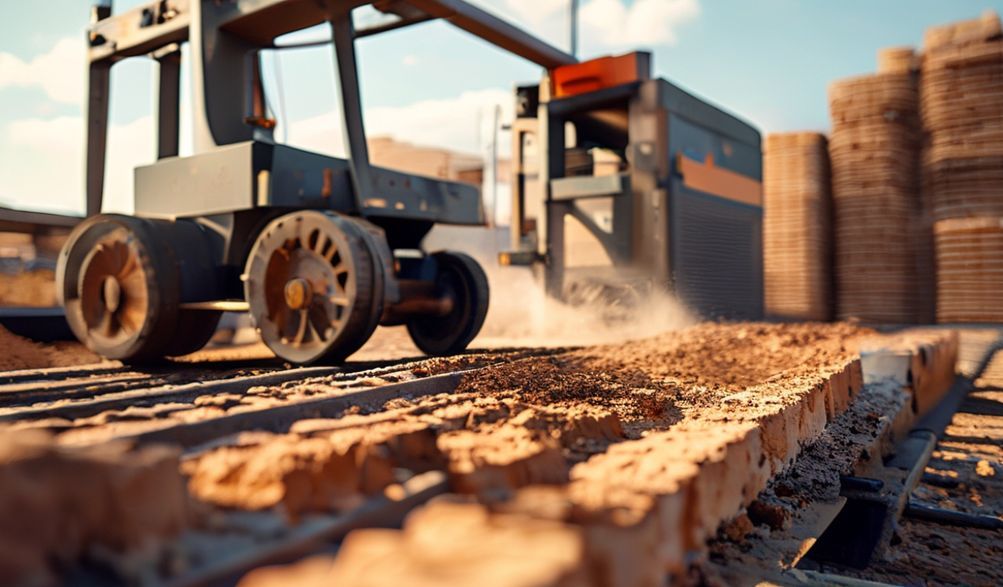
The Ultimate Guide to Automatic Mud Brick Making Machines: Efficiency, Cost & How to Choose
Entwodiksyon
In an era defined by the urgent need for sustainable development, the construction industry is undergoing a profound transformation. Architects, builders, and communities are looking back to move forward, rediscovering the virtues of ancient, eco-friendly materials. At the forefront of this renaissance is the humble mud brick—a building block with millennia of proven durability, exceptional thermal mass, and near-zero embodied energy. Yet, for all its benefits, traditional manual production has been its Achilles’ heel: painfully slow, labor-intensive, and prone to inconsistent quality.
This is where modern engineering steps in, bridging timeless material science with cutting-edge automation. The automatic mud brick making machine is not merely a tool; it’s a paradigm shift. It transforms a craft-based, seasonal activity into a streamlined, year-round commercial operation, making sustainable building not just an ecological choice, but an economically compelling one.
As a specialist in construction technology and sustainable materials, I’ve seen firsthand how this automation can empower small businesses, accelerate community projects, and redefine supply chains. This guide is designed to be your comprehensive, unbiased resource. We will dissect how these machines work, quantify their tangible benefits, explore the different types available, and provide a detailed framework for selecting the right one for your needs. Our goal is to equip you with the expertise to make a confident, informed investment in the future of building.
What is an Automatic Mud Brick Making Machine?
An automatic mud brick making machine is a mechanized system designed to produce compressed earth blocks (CEBs) or stabilized mud bricks with minimal manual intervention. It standardizes the entire process—from raw material feeding to brick ejection—ensuring high output, consistent dimensions, and superior structural integrity compared to hand-made methods.
Core Function and Basic Operating Principle
The core principle is straightforward: apply precise, high pressure to a prepared soil mix within a mold to form a dense, cohesive block. The automation controls this cycle repetitively and reliably.
The typical operating cycle follows these steps:
1. Manje: Prepared soil mixture is loaded into the machine’s hopper.
2. Mèt ak Transfè: An automated feeder system delivers a measured volume of mix into the compression chamber.
3. Konpaksyon: A hydraulic ram or mechanical press exerts significant pressure (often measured in tons) on the soil within the mold.
4. Moulaj: The compressed material takes the exact shape of the steel mold or die.
5. Ejeksyon: The newly formed brick is automatically pushed out of the mold.
6. Palletizing/Conveying: The brick is transferred via a conveyor belt or stacker for curing.
This cycle repeats continuously, with some advanced models capable of producing a brick every 10-20 seconds.
Eleman Kle ak Wòl Yo
Understanding the machine’s anatomy is key to evaluating its quality and capability.
- Sistèm Hopper ak Feeder: The entry point. A well-designed hopper ensures a consistent, uninterrupted flow of material to the compression chamber. Auger or conveyor-based feeders are common.
- Mixing Chamber (for integrated models): Some higher-end units include a pan or paddle mixer, allowing you to feed raw soil, stabilizer, and water directly into the machine for a fully integrated process.
- Sistèm Konpresyon Idwolik oswa Mekanik: The heart of the machine. Hydraulic systems offer greater control over pressure and are common in automatic models. The system’s tonnage directly impacts brick density and strength.
- Moule/Matris: Interchangeable steel molds define the brick’s size and shape (e.g., standard rectangular, interlocking). Versatility here allows production for different project needs.
- Control Panel (PLC/Semi-automatic): The brain. Programmable Logic Controller (PLC) systems in fully automatic models manage the entire cycle. Semi-automatic versions may have simpler relay-based controls requiring a button press per cycle.
- Ejection and Conveyor System: This subsystem removes the finished brick and transports it away, preventing bottlenecks and allowing for continuous operation.
Avantaj Prensipal Otomatize Pwodiksyon Brik ou
Moving from manual to automated production isn’t just an upgrade; it’s a complete redefinition of what’s possible with earth-based construction.
Unmatched Productivity and Output Consistency
- Volim Pwodiksyon: While a skilled artisan might produce 200-300 bricks per day, a mid-range automatic machine can easily produce 800 to 2,000 bricks per hour. This scalability turns weeks of work into days.
- Uniformite Dimensional: Every brick is identical. This eliminates the need for excessive mortar joints and wasteful trimming on-site, leading to faster, more precise construction and significant material savings over a project’s lifetime.
Eparg Labor ak Kòt Enpòtan
- Labor Reduction: A single automatic machine, operated by 1-3 people, can replace the output of 15-20 manual laborers. This dramatically reduces labor costs, management overhead, and vulnerability to labor shortages.
- Konplete Pwojè Pi Vit: The ability to produce a large volume of bricks on-demand, even on-site, can compress project timelines, reduce financing costs, and allow businesses to take on more work.
- Reduced Waste: Precise material measurement and consistent quality mean virtually no bricks are lost due to breakage or irregularity, optimizing raw material expenditure.
Enhanced Material Efficiency and Sustainability
- Itilizasyon Materyèl Lokal: These machines thrive on locally sourced subsoil, minimizing the environmental and financial cost of transporting heavy building materials over long distances.
- Low Embodied Energy: The production process consumes far less energy than fired clay bricks or concrete blocks. When paired with renewable energy sources, the carbon footprint approaches zero.
- Minimal Waste: Any spoil or broken bricks can be crushed and reintroduced into the production cycle, creating a near-closed-loop system.
Improved Worker Safety and Ergonomic Design
Automation removes the most strenuous and injury-prone aspects of brickmaking:
* Eliminates repetitive shoveling and bending.
* Reduces risks associated with heavy lifting and manual compaction.
* Creates a more controlled, predictable work environment.
Types of Automatic Mud Brick Machines
The market offers solutions for different scales and operational needs. Your choice will define your production model.
Fully Automatic vs. Semi-Automatic Machines
Karakteristik | Machin Otomatik Nèt | Machin Semi-Otomatik
| :— | :— | :— |
| Operasyon | PLC-controlled cycle. Once started, it runs automatically from feeding to ejection. | Requires an operator to initiate each cycle (e.g., press a button or lever) after feeding. |
| Output Speed | Very High (Up to 2,500+ bricks/hour) | High (500 – 1,200 bricks/hour) |
| Lavi Nesesè | Minimal (feeding, monitoring, palletizing) | Low (feeding, activating cycle, palletizing) |
| Pri | Higher initial investment | More affordable entry point |
| Ideal Use Case | Large-scale commercial production, municipal projects, high-volume suppliers. | Medium-scale enterprises, community housing projects, specialized builders. |
Machin Fiks Pou Fè Blòk
These are heavy-duty, high-output machines designed for fixed-location factories or production yards.
* Avantaj: Highest production capacity, often include integrated mixers and advanced conveyor systems, built for 24/7 operation.
* Desavantaj: Require significant space and permanent setup. Bricks must be transported to the construction site.
Machin pou Fè Brik Mobil
Built on a trailer chassis, these units bring the factory directly to the job site.
* Avantaj: Eliminate transport costs for finished bricks, ideal for remote projects, reduce brick breakage during transit.
* Desavantaj: Typically have slightly lower output than large stationary models, may require a tow vehicle and on-site power setup.
Critical Features to Consider Before You Buy
This is where due diligence separates a wise investment from an expensive mistake. Look beyond the price tag.
Kapasite Pwodiksyon (Brik Pa Lè)
Don’t just buy the biggest machine. Match output to your realistic demand.
* Calculate your current and projected brick needs.
* Consider your power supply’s ability to sustain the machine’s demand over an 8-hour shift.
* A machine operating at 70-80% capacity is more efficient than a oversized one running sporadically.
Brick Size and Mold Versatility
Interchangeable molds are a critical feature.
* Can the supplier provide molds for different sizes (e.g., standard, half-block) or interlocking patterns?
* What is the cost and lead time for additional molds?
* Versatility future-proofs your investment and opens up new market opportunities.
Power Source: Electric, Diesel, or Hybrid?
- Elektrik Cleaner, quieter, lower operating cost. Essential for indoor use. Requires reliable, high-capacity grid connection or a large generator.
- Dizèl: Full mobility and power independence. Ideal for remote sites without grid power. Higher fuel costs, noise, and emissions.
- Hybrid (Electric/Diesel): Offers flexibility. Can run on a generator in the field or plug into the grid at a home base.
Build Quality and Durability
Inspect the “bones” of the machine. This is where reputable brands earn their price.
* Kad Ase Look for heavy-duty, reinforced steel construction.
* Sistèm Idwolik: Are the pumps, valves, and hoses from known quality manufacturers? Is the system sealed and protected from dust?
* Welds & Finishing: Clean, robust welds and anti-corrosion paint indicate careful manufacturing.
* Garanti: A comprehensive 1-2 year warranty on parts and labor is a strong trust signal.
After-Sales Support and Service Availability
This is non-negotiable. A machine is a long-term asset.
* Pye De Rechanj: Are common wear parts (seals, mold liners, hydraulic filters) readily available? What is the supplier’s parts inventory and shipping policy?
* Sipò Teknik: Is there a direct phone line or service team? Do they offer remote troubleshooting?
* Fòmasyon: Will they provide comprehensive operational and basic maintenance training, either on-site or via detailed manuals and videos?
The Operational Workflow: From Soil to Finished Brick
The machine is only one part of the equation. Proper process ensures quality bricks.
Soil Preparation and Mixing Ratios
The right soil mix is the foundation of a strong brick.
1. Tès Tè a: A simple sediment jar test can identify the ratio of ajil (binder), siltaksand (aggregate). Ideal mixes often range from 15-30% clay.
2. Estabilizasyon: Most soils require a stabilizer for durability, especially in wet climates.
* Cement (5-10%): For high strength and water resistance.
* Lime (3-8%): Improves plasticity and long-term stability.
* Bitumen Emulsion: For water repellency.
3. Melanj: Achieve a homogeneous, damp (not wet) mix. The mixture should hold its shape when squeezed.
Machine Setup and Calibration
- Follow the manufacturer’s installation guide meticulously.
- Ensure the machine is on a level, solid foundation.
- Conduct test runs with your soil mix to calibrate feeder volume and compression pressure for the perfect brick density.
Sik Otomatik Pwodiksyon an
Once calibrated, the cycle is largely hands-off:
1. Load the hopper with prepared mix.
2. Start the machine via the control panel.
3. Monitor the first few bricks for consistency.
4. Manage the output—stacking bricks onto pallets or carts for curing.
Curing and Drying Best Practices
This step is as crucial as compression. Improper curing leads to weak bricks.
* Initial Curing (24-48 hrs): Keep bricks under plastic sheeting or in a shaded area to retain moisture for proper stabilizer reaction (especially with cement).
* Seche: Move bricks to a well-ventilated, covered area for slow, even drying over 2-4 weeks. Avoid direct sun and rain, which cause cracking.
* Full Strength: Bricks gain strength over several weeks. Test samples at 28 days for compressive strength.
Cost Analysis and Return on Investment (ROI)
Let’s demystify the financials with transparent analysis.
Breaking Down the Investment
- Machine Price: Ranges widely.
- Semi-automatic: $8,000 – $25,000
- Fully automatic stationary: $25,000 – $70,000+
- Mobile units: $15,000 – $50,000
- Additional Capital Costs: Budget 15-25% extra for shipping, installation, initial spare parts, and operator training.
Operational Cost Factors
- Power/Fuel: A major variable. Electric costs are predictable; diesel fluctuates.
- Travay 1-3 operators’ wages.
- Matyè Premye: Cost of local soil, stabilizer (cement/lime), and water.
- Maintenance: ~2-5% of machine cost annually for routine parts and service.
Calculating Your Potential ROI
Simplified Framework:
1. Calculate your cost per manually produced brick (labor + materials + overhead).
2. Calculate your estimated cost per machine-produced brick (including machine amortization, power, reduced labor, materials).
3. Factor in the value of time saved on projects.
4. Egzanp: If you sell bricks for $0.50 each and your machine production cost is $0.15, your gross margin is $0.35. A $30,000 machine producing 2,000 bricks/day would need to sell approximately 86,000 bricks to break even on the machine cost alone, not counting operational savings on your own projects—a volume achievable in a few months for a busy operation.
Kesyon yo poze souvan (FAQ)
Q1: What is the average cost of an automatic mud brick making machine?
A: There’s no single “average.” Prices range from around $8,000 for a basic semi-automatic model to over $70,000 for a high-capacity, fully automatic stationary plant with a mixer. The final cost depends on production capacity, level of automation, power source, build quality, and brand.
Q2: Can I use any type of soil with these machines?
A: No. Soil suitability is critical. While machines can compress most soils, the resulting brick’s strength and durability depend on the clay-sand-silt ratio. Pure clay will crack; pure sand won’t bind. Most soils can be adapted through testing and the addition of the correct stabilizer (like sand to a clay-heavy soil, or clay/cement to a sandy soil).
Q3: How many workers are needed to operate an automatic machine?
A: Typically, a crew of 1 to 3 people is sufficient. One person can often manage the operation, with additional helpers for feeding the hopper (if material isn’t pre-loaded via loader) and handling/palletizing the finished bricks as they exit the conveyor.
Q4: What is the maintenance requirement like?
A: Maintenance is straightforward but essential. Daily: Clean excess mud from the mold and hopper. Weekly: Check hydraulic fluid levels and lubricate moving parts. Monthly/Annually: Inspect hydraulic hoses and seals, check mold for wear, and replace filters according to the manual. Preventative care prevents costly downtime.
Q5: Are the bricks produced strong enough for load-bearing walls?
A: Absolutely. When produced with the correct soil mix, adequate stabilizer (e.g., 5-10% cement), and proper compaction pressure, compressed earth blocks (CEBs) can achieve compressive strengths exceeding 3 MPa (435 psi), which is more than sufficient for two and three-story load-bearing walls in accordance with many international building codes, including ASTM E2392 / E2392M for earthen building. Always verify with local building authorities.
Konklizyon
The automatic mud brick making machine represents a powerful convergence of sustainability and smart technology. It solves the historical limitations of earth construction—speed, scale, and consistency—unlocking its potential for the modern world. From empowering entrepreneurial ventures to building resilient communities, this technology is a catalyst for change.
This guide has provided you with a deep, practical, and trustworthy foundation for your decision-making journey. We’ve moved beyond marketing claims to explore the engineering, economics, and operational realities. As you move forward, let your specific needs, budget, and local context be your guide. Engage with multiple suppliers, ask for customer references, and request material tests with your local soil.
The future of construction is not just about new materials, but about smarter ways to use the oldest and most abundant one we have: the earth beneath our feet. The automatic mud brick making machine is your tool to build that future, one precise, durable, and sustainable block at a time.
<