
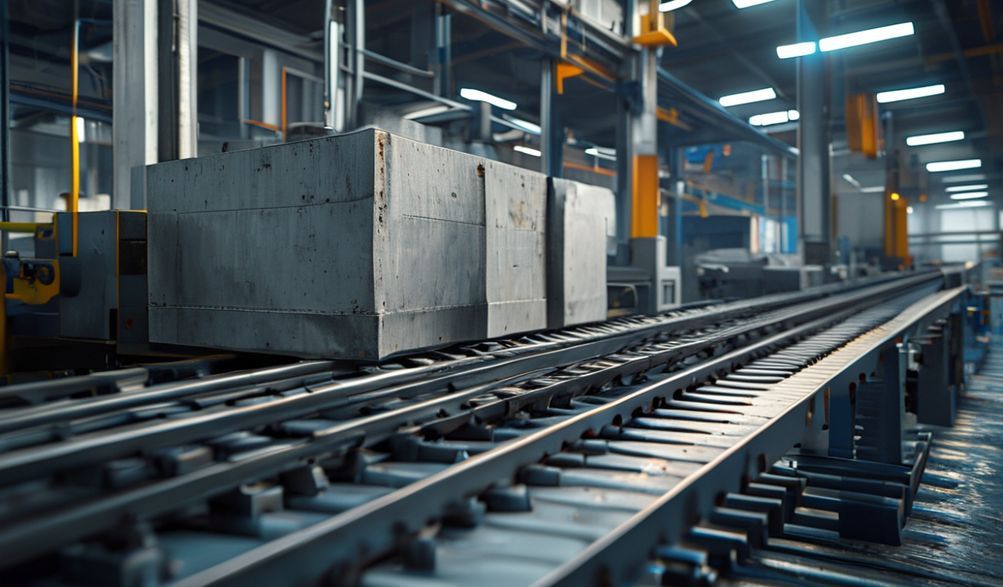
Your Ultimate Guide to China Concrete Block Making Machine Suppliers & Manufacturers
The global construction industry is a relentless engine of growth, demanding ever-more efficient and cost-effective building materials. At the heart of this supply chain lies a critical piece of equipment: the concrete block making machine. For businesses looking to establish or expand their block production, finding a reliable, high-performance machine is the single most important investment. Today, the world’s manufacturing hub for this essential machinery is unequivocally China. However, navigating this vast and complex market can be a daunting task filled with potential pitfalls.
The challenges are real. How do you distinguish a credible manufacturer from a fly-by-night trading company? How can you verify machine quality from thousands of miles away? What about after-sales support, logistics, and customs? The sheer volume of options can paralyze decision-making.
This guide is your definitive solution. Crafted from deep industry analysis and an understanding of international procurement, it serves as an authoritative roadmap. We will demystify the process of sourcing from China, providing you with the tools and knowledge to make an informed, confident decision. We place a particular emphasis on partnering with established, trustworthy manufacturers, using the reputable Faktori pou fè brik FUDA as a benchmark for what to look for. Our goal is not just to inform, but to empower you to build a successful, profitable block production business on a foundation of quality equipment.
Why Source Concrete Block Machines from China?
Choosing to source your block making machinery from China is not merely about finding the lowest price; it’s about accessing a mature, sophisticated, and competitive industrial ecosystem designed for global supply. Here’s why China remains the premier destination for this equipment.
The Competitive Advantage: Cost-Effectiveness & Scale
Chinese manufacturers benefit from unparalleled economies of scale. Concentrated supply chains for raw materials like steel, hydraulics, and electrical components drive down input costs. Furthermore, the highly developed manufacturing infrastructure and skilled labor force allow for efficient production. This combination translates into a significant price-to-performance ratio that is difficult to match elsewhere, enabling you to achieve a faster return on investment.
Technological Prowess and Innovation
Gone are the days of associating Chinese manufacturing solely with basic imitation. Leading suppliers are at the forefront of innovation in block making technology. They actively invest in R&D, integrating:
* Advanced Kontwolè Lojik Pwogramab (PLC) systems for precise, automated operation.
* Energy-efficient hydraulic systems and vibration technologies.
* User-friendly human-machine interface (HMI) touchscreens.
* Robust designs capable of utilizing diverse raw materials, including fly ash and recycled aggregates.
Seri Pwodwi Divès pou Chak Bezwen
Whether you’re a startup or a large-scale construction firm, the Chinese market has a machine for you. The product spectrum is comprehensive:
* Machin Manyèl ak Semi-Otomatik: Ideal for small-scale projects, rural construction, or businesses with lower initial capital.
* Machin Otomatik Konplè: For medium-scale production, requiring minimal manual intervention.
* Liy Otomatik Konplete pou Pwodiksyon: High-output systems with automatic mixing, conveying, curing, and stacking/palletizing for large-scale industrial use.
* Versatile Mold Options: Machines can produce hollow blocks, solid blocks, paving stones, interlocking bricks, curb stones, and more.
Key Factors When Evaluating Chinese Suppliers (The Due Diligence Checklist)
Thorough due diligence is non-negotiable. This checklist will help you separate credible partners from risky ventures.
Verifying Manufacturer Credentials & Factory Audit
Never skip this step. Essential verifications include:
* Business Licenses: Request copies. Look for a registered “Manufacturing” scope, not just “Trading.”
* Sètifikasyon yo: ISO 9001 quality management certification is a strong positive indicator.
* Factory Proof: Insist on a recent video tour of the production workshop, showing active assembly lines, raw material stocks, and quality control areas. Be wary of suppliers who only show stockyard footage.
* Industry Experience: Inquire about their years in operation and export history to your region or similar markets.
Assessing Technical Expertise & Machine Specifications
Move beyond the sales pitch to hard technical data. Key specifications to compare include:
* Kapasite Pwodiksyon: Measured in blocks per shift (e.g., 8 hours). Ensure you compare the same block size and type.
* Pwasyon/Tònaj: The molding pressure (in tons) determines block density and strength.
* Nivo Otomatizasyon: What is the level of manual labor required for feeding, stacking, and palletizing?
* Egzijans Pouvwa: Voltage (e.g., 380V/50Hz) and total installed power (KW).
* Pèsonalizasyon: Can they provide custom mold designs for unique block profiles?
Quality Control Processes & Material Standards
The durability of the machine hinges on the quality of its components and assembly.
* Eleman Debaz: Ask about the brands used for hydraulic pumps, valves, PLCs, and electrical parts. Reputable suppliers use known brands or provide equivalent quality guarantees.
* Entegrite Estriktirèl: Inquire about the steel grade used for the frame and the standards for welding and stress relief.
* Paint & Protection: Quality epoxy or polyurethane paint is essential for corrosion resistance, especially in humid climates.
* QC Protocols: A professional factory will have staged inspection points (pre-assembly, hydraulic testing, trial run) before shipment.
After-Sales Service & Support Structure
Service is where true partnership is tested. Clarify:
* Garanti: Standard terms are 12-18 months for the machine, with shorter periods for wear parts.
* Dokimantasyon Teknik: Availability of detailed electrical and hydraulic diagrams, parts lists, and operation manuals in English.
* Training & Installation: Do they provide installation guides, video tutorials, or on-site technician support (often at an extra cost)?
* Pye De Rechanj: Policy on parts supply, pricing, and typical delivery time. Do they maintain a recommended spare parts inventory list?
Spotlight on a Leading Manufacturer: FUDA Brick Making Factory
To illustrate what a trustworthy supplier looks like, let’s examine Faktori Fè Brik FUDA, a established name in the industry known for its robust machinery and export focus.
Company Profile & Industry Standing
FUDA operates from a dedicated manufacturing base with years of experience in designing and producing block making equipment. They have built a reputation through consistent exports to markets in Africa, Southeast Asia, the Middle East, and South America. Their standing is built on a foundation of in-house production capability, allowing for strict quality control from sourcing to assembly.
Core Product Portfolio & Technological Features
FUDA’s range typically includes popular models that cater to a wide clientele:
* QT Series Semi/Fully Automatic Machines: These are workhorses for producing standard hollow and solid blocks, known for their strong vibration and hydraulic pressure systems.
* Liy pwodiksyon blòk otomatik konplè: Designed for high-volume output, these integrate block making, curing, and stacking systems.
* Key Features commonly highlighted include energy-saving designs, heavy-duty structural frames, imported core hydraulic components for reliability, and PLC control systems for stable, easy operation.
What Sets FUDA Apart? (Case for Trustworthiness)
While many suppliers exist, FUDA exemplifies the traits of a reliable partner:
* Manufacturing Focus: As a factory, they control the production process, ensuring consistency.
* Emphasis on Durability: Machines are often noted for their heavy-duty construction, suitable for demanding operating environments.
* Comprehensive Support: They typically provide a full suite of after-sales services, including technical documentation, remote guidance, and a structured spare parts supply system.
* Rekò Pwouve: A portfolio of international projects and client testimonials (which serious buyers should always request to see) provides tangible evidence of performance.
The Procurement Process: From Inquiry to Delivery
A smooth procurement process hinges on clear communication and understanding each step.
Effective Communication & Detailed Quotation Analysis
- Provide Clear Requirements: Share your desired block type, size, daily output, raw material details (cement, aggregate type), and site conditions.
- Decipher the Quote: A professional quotation should detail:
- Machine model and precise specifications.
- Incoterms (e.g., FOB Shanghai – you own goods and handle shipping once loaded on the vessel; CIF Port – supplier arranges and pays for shipping to your nearest port).
- Itemized costs: machine price, mold cost, spare parts, sea freight (if CIF), and packaging.
- Payment terms (e.g., 30% deposit, 70% before shipment).
- Delivery timeline.
Sample Orders, Prototypes, and Contract Essentials
- Samples: For custom block designs, ordering a single mold to produce sample blocks is a prudent investment to verify quality.
- The Contract: This legal document must include: Detailed machine specifications, Payment schedule, Delivery date, Warranty terms, Penalty clauses for delays, Dispute resolution mechanism (e.g., arbitration). Never proceed without a signed contract.
Navigating Shipping, Logistics, and Customs Clearance
- Freight Forwarder: Engage a reliable forwarder in your country or use the supplier’s agent. They handle bill of lading, customs declaration, and inland transportation.
- Documentation: The supplier must provide a Commercial Invoice, Packing List, Bill of Lading, and Certificate of Origin. These are critical for customs clearance.
- Import Regulations: Research your country’s import duties, taxes, and any specific standards or certifications required for machinery.
Maximizing Your Investment: Installation, Operation, and Maintenance
Your relationship with the supplier continues after delivery. Proper setup and care are crucial.
Foundation Preparation and Machine Installation
- The supplier will provide foundation drawings. Ensure your site has a level, reinforced concrete foundation that can bear the dynamic load of the machine.
- While self-installation is possible with manuals, opting for supervised installation by a supplier technician (for a fee) can prevent costly errors and ensure optimal setup.
Operator Training and Production Optimization
- Comprehensive training for 2-3 key personnel is essential. This should cover safe operation, daily checks, mold changing procedures, basic troubleshooting, and adjusting mix proportions for optimal block quality.
- Start with test runs using your local materials to fine-tune the water-cement ratio and vibration time.
Preventive Maintenance Schedule for Longevity
Adhere to a strict maintenance routine:
* Daily: Check hydraulic oil level, clean the machine, inspect for loose bolts or leaks.
* Weekly: Lubricate all moving parts as per the manual, check electrical connections.
* Monthly: Clean or replace hydraulic and air filters, inspect mold liners and pallets for wear.
* Annually: Consider a full hydraulic oil change and comprehensive inspection by a technician.
Kesyon yo poze souvan (FAQ)
Q1: What is the typical price range for a concrete block making machine from China?
A: Prices vary dramatically based on automation and output. A small manual machine may start around \$5,000, while a semi-automatic model can range from \$15,000 to \$40,000. Fully automatic lines can cost from \$50,000 to over \$200,000. Always compare detailed “like-for-like” specifications, not just the headline price.
Q2: How can I verify if a supplier is a real factory and not just a trading company?
A: Request a real-time video call for a factory tour. Ask to see specific areas: the welding workshop, the assembly line, the raw material (steel plate) storage, and their quality inspection station. Trading companies often cannot facilitate this or will show a generic stockyard.
Q3: What are the most common after-sales challenges and how does a supplier like FUDA address them?
A: The biggest challenges are delayed spare parts delivery and difficulty in remote troubleshooting. Reputable suppliers mitigate this by maintaining a stock of common spare parts, providing clear parts manuals with codes, and offering prompt online support (via WhatsApp, Skype, or email) with technical engineers.
Q4: What is the lead time for machine production and delivery?
A: Standard machine production typically takes 20-30 days after deposit receipt. Customizations add time. Sea freight can then take 25-45 days depending on the destination port. Always factor in this total timeline for your project planning.
Q5: Can machines be customized for specific block designs or raw materials?
A: Yes, leading manufacturers like FUDA specialize in customization. You can provide drawings for custom molds for unique block shapes. They can also adjust machine parameters like vibration frequency and pressure to optimally work with your local raw material mix, including those using fly ash or lightweight aggregates.
Konklizyon
Sourcing a concrete block making machine from China is a strategic decision that offers immense value, provided you navigate the process with diligence and expertise. This journey involves understanding the market’s advantages, conducting rigorous supplier evaluations using the checklist provided, meticulously managing the procurement and logistics chain, and committing to proper installation and maintenance.
Success ultimately hinges on choosing a partner whose credibility is demonstrated through manufacturing capability, technical transparency, and a robust after-sales framework—qualities embodied by established manufacturers like the FUDA brick making factory. Use this guide as your framework. Move forward by requesting detailed catalogs and technical specifications from your shortlisted suppliers. Ask precise, in-depth questions. Your informed scrutiny is the best guarantee of a partnership that will build the foundation of your business for years to come.
<