
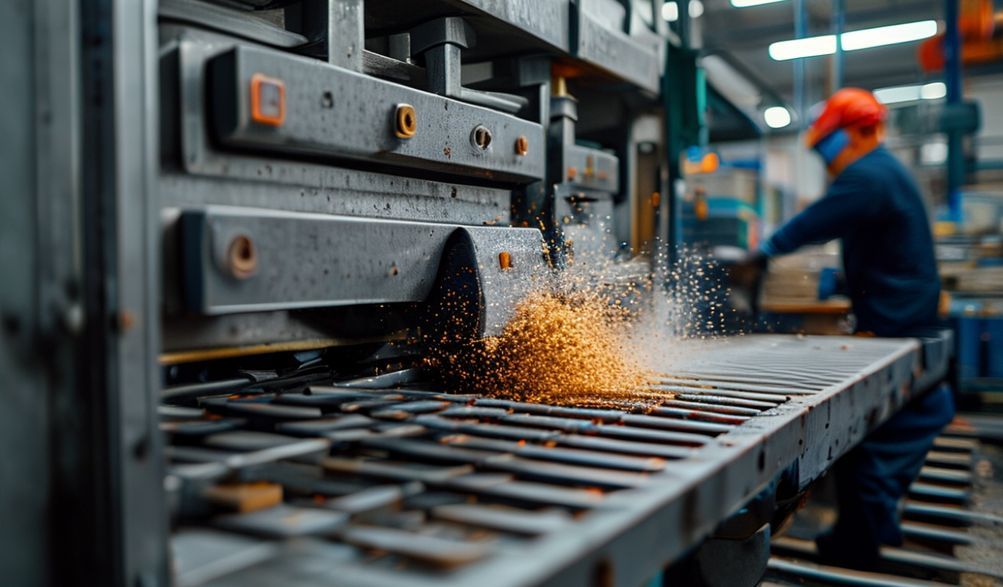
Gid Definitif pou Machin Blòk Idwolik nan Pakistan (2026)
Entwodiksyon
Sektè konstriksyon Pakistan an ap viv yon chanjman enpòtan. Ak yon to kwasans anyèl ki toujou ant 5-6% ak gwo pwojè enfrastrikti tankou baraj, otowout, ak pwogram lojman k ap fèt, demann pou materyèl konstriksyon pa janm te pi wo. Rapò endistri yo sijere ke demann pou blòk beton ap grandi ak yon to kwasans anyèl konpoze de plis pase 8%. Men, gen yon gwo diferans ki egziste ant gwo demann sa a ak ofèt pou blòk konstriksyon ki gen bon jan kalite, ki konsistan, ak ki abòdab.
Pou plizyè deseni, mache a te konte sou metòd tradisyonèl manyèl oswa primitif pou fabrike blòk. Metòd sa yo gen pwoblèm ak pwodiksyon ki ba, kalite blòk ki pa konstan, gwo depandans sou main-d'ouvè, ak gwo gaspiye materyèl. Nan yon epòk kote estanda konstriksyon yo ap monte ak delè pwojè yo sere, limit sa yo pa sèlman inefikas—yo se baryè pou pwofitab ak kwasans pou manifaktirè yo.
Se la teknoloji modèn bay solisyon definitif la:Machin Blòk IdwolikPou antreprenè ak manifaktirè etabli nan Pakistan, machin sa a reprezante plis pase yon amelyorasyon ekipman; se yon envestisman estratejik nan efikasite, kalite, ak dirabilite biznis alontèm.
Dapre tandans endistri yo, espesifikasyon teknik yo, ak apèsi sou mache a, gid sa a fèt pou sèvi kòm resous konplè ou. Nou pral demistifye machin pou fè blòk idwolik, eksplore benefis konkè yo pou kontèks Pakistan an, dekonpoze kalite ki disponib yo, epi ofri yon kad detaye pou fè yon acha entèlijan ak enfòme. Kit ou ap chèche kòmanse yon nouvo antrepriz oswa ogmante yon sèl ki deja egziste, gid sa a pral ekipe ou ak konesans pou navige nan mache a avèk konfyans.
Understanding Hydraulic Block Making Machines
How Do Hydraulic Block Making Machines Work?
At its core, a hydraulic block making machine operates on a simple but powerful principle: using incompressible fluid (oil) under pressure to generate immense, precisely controlled force. This force is what transforms a loose mixture of cement, sand, and aggregate into a dense, high-strength concrete block.
The process typically follows a controlled cycle:
- Manje: The prepared concrete mix is fed into the machine’s mold box, which is placed on a vibrating table.
- Konpaksyon ak Vibrasyon: The mold is subjected to simultaneous high-frequency vibration and pre-compaction. This removes air pockets and begins to consolidate the mix.
- Presyon Idwolik: The main hydraulic ram then applies extreme pressure—often measured in tons—to the mix within the mold. This is the defining step, creating the block’s high density and interlocking particle structure.
- Ejeksyon: After pressing, the hydraulic system lifts the mold, and the freshly formed, solid block is ejected onto a pallet or conveyor.
- Retoun Palèt ak Repete Sik. The pallet is moved away (manually or automatically) for curing, and the cycle resets, ready for the next block.
This method stands in stark contrast to the gravity-dependent “slump” method of manual machines, resulting in a fundamentally superior product.
Key Advantages for the Pakistani Market
Investing in a hydraulic block machine offers compelling advantages tailored to Pakistan’s construction and manufacturing landscape:
- High Production Output & Efficiency: A single semi-automatic hydraulic machine can produce 1,500 to 4,000+ blocks in an 8-hour shift, depending on model and block size. This output dwarfs manual production, allowing you to meet large orders and scale your business.
- Superior Block Quality & Consistency: Hydraulic pressure ensures every block has uniform density, sharp edges, and smooth surfaces. This consistency translates directly to higher compressive strength (often exceeding 1000 psi), which is critical for safe, durable, and code-compliant construction—a major selling point.
- Exceptional Strength & Durability: The high-pressure process creates blocks with excellent load-bearing capacity and low water absorption. Buildings and pavements made from these blocks are more resilient to Pakistan’s diverse weather conditions, from monsoon rains to extreme heat.
- Vèsatilite nan Seri Pwodwi: By simply changing the mold, one machine can produce a diverse product catalog:
- Hollow Blocks (6″, 8″, 10″)
- Blòk solid
- Paving Interlocking Blocks
- Wòch bò wout
- Designer Tiles and Landscape Products
- Lower Operational Costs & Labor Dependence: While the initial investment is higher, the long-term ROI is strong. You achieve more output with 2-3 operators compared to 10-15 for manual production. Reduced waste, lower repair costs, and faster production cycles further enhance profitability.
Types of Hydraulic Block Making Machines Available in Pakistan
The market offers different levels of automation to suit various business scales and investment capacities.
Fully Automatic Hydraulic Block Making Plants
- Deskripsyon: These are complete production lines. They feature automated raw material batching, mixing, conveyor-fed hoppers, robotic pallet handling, and automatic block stacking/curing systems. The entire process is controlled by a Programmable Logic Controller (PLC).
- Pi Bon Pou: Large-scale commercial plants, industrial manufacturers supplying major construction projects or distributors. They require significant space and a three-phase power connection.
- Avantaj: Maximum output (5,000-20,000+ blocks/day), minimal manual labor, unparalleled consistency.
- Desavantaj: Very high initial investment, complex setup, requires skilled maintenance.
Semi-Automatic Hydraulic Block Making Machines
- Deskripsyon: This is the most popular category for growing businesses. The core pressing cycle (feed, vibrate, press, eject) is fully automated via hydraulics and a control panel. However, tasks like loading the mixer, feeding the hopper, and moving pallets to the curing area are done manually.
- Pi Bon Pou: Medium-scale businesses, entrepreneurs with some industry experience, and those looking for an optimal balance between automation, cost, and output.
- Avantaj: Excellent efficiency and quality at a moderate price point, easier to operate and maintain than fully automatic systems, highly versatile.
- Desavantaj: More labor-intensive than full automation, output limited by manual feeding/pallet handling.
Mobile/Hydraulic Press Machines (Stationary Presses)
- Deskripsyon: These are smaller, often single-block machines where the hydraulic press is mounted on a sturdy frame. The mold is filled and emptied manually, and the machine may be stationary or have basic mobility.
- Pi Bon Pou: Small workshops, on-site production for a specific project, start-up entrepreneurs with limited capital and space.
- Avantaj: Most affordable entry point, low power consumption, simple operation and maintenance, flexible for small batches.
- Desavantaj: Lowest output, highly labor-intensive, less consistent than automated cycles.
Critical Features to Consider Before Buying
Looking beyond the basic type, scrutinizing these features will determine your machine’s performance, durability, and total cost of ownership.
Technical Specifications
- Kapasite Pweson (Tònaj): Ranges from ~40 tons for small presses to 200+ tons for large automatics. Higher tonnage generally produces denser, stronger blocks and allows for larger block sizes.
- Tan Sikli ak Kapasite Pwodiksyon: Don’t just look at “blocks per hour” in a brochure. Ask for the cycle time in seconds for a specific block (e.g., a standard 8″ hollow block). A faster cycle with consistent quality is key.
- Mold Size & Customization: Ensure the machine can accommodate standard Pakistani block sizes. Check the cost, lead time, and availability of additional molds for product diversification.
- Pouvwa Motè & Sistèm Idwolik: A robust motor (e.g., 15-40 HP) and high-quality hydraulic components (pumps, valves, cylinders from reputed brands like Rexroth, Yuken, or Parker) are critical for reliability. Avoid machines with unknown or substandard hydraulic parts.
- Degre Otomatizasyon: Even in semi-automatic models, features like an automatic feeder or a hydraulic pallet return can significantly boost output. PLC controls offer precision and easier troubleshooting.
Build Quality & Durability Factors
The machine must withstand the rigors of daily production in Pakistan’s environment.
- Steel Frame & Fabrication: The main frame should be made from heavy-duty, reinforced steel plates and profiles, not light-gauge metal. Welds should be clean and robust. A flimsy frame will vibrate excessively and fail prematurely.
- Kalite Konpozan As mentioned, the brand of hydraulic and electrical components is a major indicator of longevity. Seals and hoses should be industrial-grade.
- Environmental Resistance: Consider dust protection for cylinders and bearings, and adequate cooling for the hydraulic oil system to handle high ambient temperatures.
After-Sales Support & Service: The Non-Negotiable Criterion
This is where many buyers face their biggest challenge. A machine is a long-term investment, and support is its lifeline.
- Sipò Teknik Lokal: Does the supplier have a dedicated service team based in Karachi, Lahore, or Islamabad/Rawalpindi? How quickly can they respond to a breakdown?
- Availability of Spare Parts: Are common wear-and-tear parts (seals, hoses, vibration motors) kept in local stock? If not, what is the typical procurement time from abroad?
- Warranty Terms: Read the warranty document carefully. What is covered (parts, labor)? For how long? What are the conditions?
- Fòmasyon: Reputable suppliers must provide comprehensive hands-on training for your operators on machine use, daily checks, and basic maintenance.
Top Brands & Suppliers of Hydraulic Block Machines in Pakistan
International Brands
Brands like Zenith (Germany), Hess (Germany), and Prensoland (Spain) are globally recognized for their engineering excellence, automation technology, and durability. They represent the premium tier.
- Konsiderasyon: Machines are typically imported, leading to a higher price. Ensure the local agent or distributor has a strong technical team and maintains an inventory of critical spare parts. Service contracts can be essential.
Reputable Pakistani Manufacturers & Importers
Several established local companies assemble machines using imported components or act as direct importers for Chinese or Turkish manufacturers. They often provide a better value proposition and more accessible support.
- Critical Due Diligence: It is imperative to verify the company’s track record. Do not rely solely on glossy brochures or websites.
- Visit their factory or showroom to see the build quality firsthand.
- Ask for a list of existing clients and, if possible, contact them to inquire about machine performance and after-sales service.
- Check their business history and presence in industry directories or trade associations.
Market Price Range & Investment Guide (2026 Estimates)
Prices vary dramatically based on type, capacity, and brand. Use this as a general guide:
- Mobile/Hydraulic Press Machines: PKR 800,000 to PKR 1,800,000
- Machin Semi-Otomatik: PKR 2,000,000 to PKR 6,500,000
- Plant Konplètman Otomatik: PKR 7,000,000 to PKR 25,000,000+
Factors affecting price: Brand origin, level of automation, production capacity, and quality of components. Some suppliers or financial institutions may offer leasing or financing options—explore these to ease the capital burden.
Setting Up & Operating Your Machine for Success
Raw Material Requirements
The best machine cannot compensate for poor-quality raw materials. Consistency is key.
- Use a well-graded mix of clean, sharp sandakcrush (aggregate). The typical size for blocks is 1/4″ down to dust.
- Siman should be fresh and stored properly. The grade and proportion will directly affect final block strength.
- The moisture content in the mix must be precise—too dry causes weak blocks, too wet causes deformation. A consistent mix from a pan or planetary mixer is highly recommended.
Basic Maintenance Checklist
Preventive maintenance prevents costly downtime.
- Daily: Check hydraulic oil level and for leaks, clean the machine of concrete buildup, inspect mold and wear parts.
- Weekly: Tighten all bolts and nuts, check electrical connections, clean hydraulic oil filters.
- Monthly: Test hydraulic oil quality, grease all bearings and pivot points, perform a thorough inspection of cylinders and hoses.
Maximizing Profitability & ROI
- Calculate Your Cost Per Block: Account for cement, sand, crush, electricity, labor, depreciation, and maintenance. Knowing your exact cost is vital for pricing.
- Market on Quality: Don’t just compete on price. Educate your customers (builders, contractors) on the higher compressive strength, better finish, and consistency of your hydraulically pressed blocks. This justifies a premium.
- Explore Niche Products: Use mold versatility to produce higher-margin items like colored interlocking pavers, decorative wall blocks, or specialty kerbstones for landscaping projects.
Kesyon yo poze souvan (FAQ)
Q1: What is the average price of a hydraulic block making machine in Pakistan?
A: There’s no single “average” price. As outlined above, it depends entirely on the type and automation level. Small mobile presses start around PKR 800,000, while semi-automatic machines—the most popular choice—range from PKR 2-6.5 million. Fully automatic plants are a significant investment starting from PKR 7 million upwards.
Q2: Can I produce different block sizes with one machine?
A: Absolutely. This is a major advantage. By changing the mold in the machine, you can produce various sizes of hollow blocks, solid blocks, or pavers. However, factor in the cost of additional molds (PKR 80,000 to PKR 300,000 each) and the time required for changeover (30 minutes to a few hours).
Q3: What is the expected lifespan of a good quality hydraulic block machine?
A: With proper operation, regular maintenance, and a quality build, a hydraulic block making machine can have a productive lifespan of 10 to 15 years or more. The longevity is directly tied to the quality of its core components (hydraulic system, frame steel) and how well it is cared for.
Q4: Is technical training difficult for operators?
A: Reputable suppliers provide comprehensive training. For semi-automatic machines, operators can typically become proficient within a few weeks. The focus is on safe operation, routine checks, and basic troubleshooting. Fully automatic systems require more advanced technical knowledge.
Q5: Where can I find reliable suppliers or get spare parts?
A: Conduct thorough research. Attend construction and industry trade shows in Lahore or Karachi. Check verified B2B platforms but always follow up with physical verification. The most reliable method is to get referrals from existing block manufacturers in your area. Before purchase, insist on a clear, written agreement regarding spare parts availability and support response times.
Konklizyon
The shift from traditional block making to hydraulic technology is not merely a trend; it’s a necessary evolution for anyone serious about competing in Pakistan’s dynamic construction sector. These machines offer a clear path to producing the high-quality, consistent building materials that modern projects demand, all while improving efficiency and profitability.
Your final decision should prioritize total value—a combination of machine quality, supplier reliability, and after-sales support—over the allure of the lowest initial price. This is a long-term capital investment that will form the backbone of your business for years to come.
Therefore, diligent verification is paramount. Seek out suppliers with proven track records, transparent client testimonials you can check, and a robust, accessible service network. Visit facilities, ask the hard questions about support, and ensure you have a clear understanding of the total cost of ownership.
Call to Action: Begin by clearly defining your production goals, target market, and budget. Use this guide as a checklist. Then, start contacting shortlisted suppliers for detailed quotations, factory visits, and conversations with their existing customers. Take the first step today to build a stronger, more profitable tomorrow.
<