
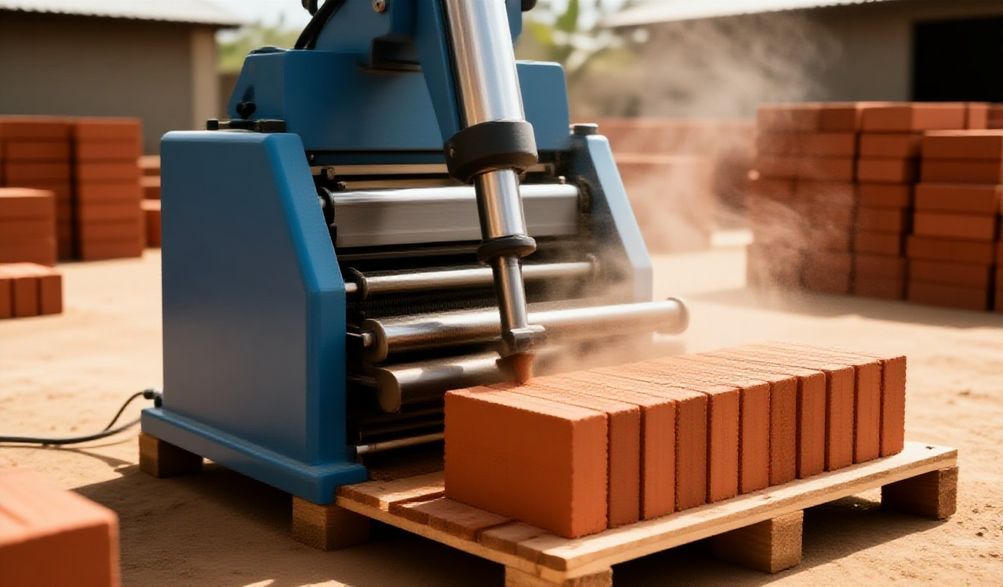
Gid Ultim pou Machin Fè Brik Tè Kwit nan Kenya (2026)
Entwodiksyon
Orè Kenya a se yon prèv sou yon eksplozyon nan konstriksyon ki pa montre okenn siy ralanti. Soti nan pwojè lojman abòdab rive nan konplèks komèsyal yo, demann pou materyèl konstriksyon, espesyalman brik, se pi wo pase tout tan. Pandan plizyè deseni, gwo poto nan ekipman sa a se te travay manyèl—difisil, dousman, epi ki gen tandans pa konsistan. Metòd tradisyonèl pou fè brik yo ap lite pou kenbe vitès la, sa ki kreye yon goulòt pou tou de ti antrepren ak gwo devlopè.
Defi prensipal yo klè: pwodiksyon manyèl mande anpil travay, bay kalite inegal ki ka konpwomèt entegrite estriktirèl la, epi li gen yon pwodiksyon ki twò ba ki limite pwofi yo. Se la teknoloji antre nan jwèt la kòm yon faktè chanjan. Machin pou fè brik nan ajil la parèt kòm solisyon definitif la, li transfòme labou an brik inifòm ak gwo rezistans ak yon efikasite remakab. Pou antrepren kenyan an ki gen bon konprann oswa biznis konstriksyon an, sa a se pa sèlman yon zouti; se yon envestisman estratejik nan ekalabilite, kalite, ak kontwòl depans alontèm.
Gid konplè sa a baze sou apèsi endistri, analiz teknik, ak yon konpreyansyon pwofon sou dinamik inik mache Kenyan an. Nou pral koupe bwi a pou ba w yon wout klè. Nan fen l, w ap konprann diferan kalite machin ki disponib lokalman, vre pri yo, kijan pou jwenn founisè serye, ak faktè kle ki detèmine pwofitabilite. Objektif nou se pou nou ekipe w ak konesans pou fè yon envestisman konfyan ak enfòme ki pral bati fondasyon biznis ou pou ane kap vini yo.
Konprann Machin pou Fè Brik Tè
Anvan nou plonje nan modèl ak pri, li enpòtan pou nou konprann ki jan machin sa yo fonksyone e poukisa yo reprezante yon gwo sòt soti nan metòd tradisyonèl yo.
Kijan Machin Brik Tè Travay?
Nan nwayo li, yon machin pou fè brik otomatize ak amelyore yon pwosesis senp, ki gen laj. Men yon eksplikasyon senplifye:
- Melanj:Tè kri a antre nan machin nan, souvan ak yon kantite dlo kontwole pou jwenn plastisite pafè a.
- Moulaj:Melanj tè a answit fòse nan yon kavite moul an asye anba gwo presyon. Se etap kritik sa a kote fòm ak dansite detèmine.
- Konpakte:Lè yo itilize fòs mekanik (souvan idwolik oswa vibrasyon), yo konprese ajil la pou retire bul lè epi kreye yon blòk brik solid ak dans.
- Ejeksyon:Brik ki fèk fòme, ki poko kwit (ke yo rele "brik vèt") yo voye soti nan mòl la byen pwòp, pare pou yo seche ak vin pi solid.
Majik la kache nanpresyon ak konsistansPandan yon travayè manyèl ka chanje fòs ak kantite chak mwazi, yon machin aplike menm presyon egzak la chak fwa. Sa rezilte nan brik ki gen menm gwosè, menm pwa, ak—pi enpòtan—menm fòs estriktirèl, ki mennen nan bilding ki pi an sekirite ak pi fyab.
Avantaj Kle pou Biznis Kenyen yo
Envesti nan yon machin pou fè brik debloke plizyè avantaj transfòmatè:
- Ogmantasyon Dramatik nan Pwodiksyon:Kontras la se yon bagay ki fè ou sezi. Yon ekip manyèl ki gen ladrès ka pwodwi ant 500 ak 1,000 brik pa jou. Yon machin manyèl debaz ka triple kantite sa a. Yon sistèm semi-otomatik ka pwodwi2,000 a 5,000 brik pou chak jounen travay 8 èdtan, while fully automatic lines can exceed 10,000. This capacity allows you to take on larger contracts and grow your business.
- Superior & Uniform Brick Quality: Machine-made bricks have consistent dimensions and superior compressive strength. This uniformity simplifies bricklaying, reduces mortar use, and results in stronger, more aesthetically pleasing walls. High-quality bricks command better prices and foster customer trust.
- Rediksyon Signifikatif nan Depans alontèm: While the initial investment is notable, the long-term savings are substantial. You reduce dependency on large manual crews, cutting recurrent labour costs. Precise molding also minimizes clay waste. Over time, the machine pays for itself through higher efficiency and lower per-unit production costs.
- Inherent Business Scalability: A machine-based operation is inherently scalable. You can predict your output reliably, making it easier to plan for projects, manage inventory, and confidently bid for larger tenders. Growth becomes a matter of strategy, not just manpower.
Types of Clay Brick Making Machines Available in Kenya
The Kenyan market offers a range of machines to suit every budget and business scale. Understanding these categories is your first major decision point.
Machin pou Fè Brik Manyèl
- Deskripsyon: These are human-powered machines, typically using a lever or screw mechanism to compress clay into a mold. Examples include the popular “M7MI” manual press.
- Ideal Pou: Micro-enterprises, individual entrepreneurs, community projects, or as a very low-cost entry into the business.
- Avantaj:
- Lowest upfront cost (typically KES 30,000 – 150,000).
- Pa bezwen elektrisite oswa gaz.
- Fasil pou opere ak antretyen.
- Desavantaj:
- Still labor-intensive; output is limited by operator stamina.
- Lowest production rate compared to mechanized options.
- Brick quality, while better than hand-molding, can vary with operator consistency.
Machin Semi-Otomatik pou Fè Bri
- Deskripsyon: These machines use an electric motor or diesel engine to power the mixing and compaction process. An operator feeds the clay and removes the finished bricks, but the core compression work is done by the machine. They often produce hollow blocks, interlocking bricks, and standard solid bricks.
- Ideal Pou: Small to Medium Enterprises (SMEs) looking for a balance between investment and high output. This is the most popular category for serious startups.
- Avantaj:
- Excellent balance of cost and production capacity.
- Significantly reduces physical labour compared to manual machines.
- Offers good consistency and quality.
- Available in various outputs to match growing demand.
- Desavantaj:
- Requires a power source (grid electricity or generator).
- Higher initial investment than manual machines (typically KES 300,000 – 1.5M+).
Machin Konplètman Otonomatik pou Fè Brik
- Deskripsyon: These are industrial-grade production lines. They feature automated feeding, mixing, molding, and stacking systems, often with conveyor belts. Human intervention is primarily for monitoring and maintenance.
- Ideal Pou: Large-scale commercial brick yards, companies supplying major construction projects, or investors targeting the high-volume market.
- Avantaj:
- Extremely high, consistent output (tens of thousands of bricks per day).
- Minimal labour requirements.
- Maximum product uniformity and quality control.
- Desavantaj:
- Very high initial capital investment (KES 2.5M and far beyond).
- Significant space and stable, high-capacity power supply required.
- Antretyen konplèks ki mande teknisyen espesyalize.
Mobil kont Machin Brik Estasyonè
This is a crucial consideration related to your raw material source.
- Machin Estasyonè: Set up in a fixed yard. Clay must be transported to the machine. This is standard for most operations.
- Machin Brik Mobil: Mounted on a trailer, these can be driven directly to the clay source or construction site. This eliminates the cost and logistics of transporting heavy, bulky clay, which can be a major expense. They are perfect for rural areas or large plots where the clay pit is distant from the intended yard.
Key Considerations Before Buying in Kenya
A successful purchase goes beyond just picking a type. You must factor in the realities of doing business in Kenya.
Assessing Your Production Needs & Scale
Pose tèt ou kesyon sa yo:
* What is my realistic target for bricks per day in Year 1? Year 3?
* Who are my target customers? Individual homeowners, local contractors, or large developers?
* What is my available startup capital, including setup costs?
* Do I have a business growth plan? Buying a machine at the upper limit of your current needs can be smarter than outgrowing a cheap one too fast.
Power Source & Availability
This is a critical, often overlooked, factor. Kenya’s grid power can be unreliable in some regions.
* Modèl Elektrik: Cleaner and cheaper to run, but vulnerable to outages.
* Modèl Dizèl: Higher fuel cost but offer complete independence from the grid. Essential for areas with frequent blackouts.
* Modèl Ibrid: Some machines offer dual power options. Practical Insight: Always factor in the cost of a high-quality diesel generator into your budget, even if you buy an electric model, as a necessary backup.
Machine Durability & After-Sales Support
The machine will operate in dusty, demanding conditions.
* Kalite Konstriksyon: Look for machines with robust steel frames, high-quality hydraulic systems, and hardened steel mold parts. Avoid flimsy, lightweight constructions.
* Local Support is Non-Negotiable: This cannot be overstated. Ensure your supplier has a physical workshop or office in Kenya, stocks common spare parts (like moulds, seals, and wear plates), and has technicians available for servicing and repairs. A cheap machine with no support becomes a very expensive paperweight.
Raw Material (Clay) Quality Analysis
Not all clay is equal. The quality of your raw material directly affects brick strength and the machine’s performance.
* Test Your Soil: Before buying any machine, have your clay tested. Simple tests can determine its composition (sand, silt, clay ratio) and suitability.
* Impact on Machine: Very sandy clay may require a machine with higher pressure. Clay with stones or debris will damage molds faster. Understanding your material helps you choose the right machine and configure it properly.
Cost Analysis & Investment Guide
Let’s demystify the financials with realistic Kenyan estimates. (Note: Prices are indicative ranges for 2026 and can fluctuate based on brand, capacity, and forex rates.)
Price Range of Machines in Kenya (2026)
- Machin pou Fè Brik Manyèl: KES 30,000 – KES 150,000
- Machin Semi-Otomatik pou Fè Brik: KES 300,000 – KES 1,800,000
- (A standard 4-5 block per cycle model starts around KES 450,000 – KES 750,000).
- Plante Brikèt Otomatik Konplè: KES 2,500,000 and above, potentially exceeding KES 10,000,000 for large lines.
Factors affecting price: Brand reputation (European, Chinese, Indian, local assembly), production capacity (bricks per hour), level of automation, and included features (like mixers or pallet feeders).
Beyond the Machine: Total Setup Costs
Your investment is more than the machine invoice. Budget for:
* Land Preparation & Security: Leveling the site, constructing a simple shed for operations and curing, and a secure perimeter fence.
* Power Infrastructure: Connection to the grid or purchase of a diesel generator.
* Raw Material Stock: Initial purchase of clay and possibly other additives.
* Curing Area: Space for bricks to dry properly, which may require plastic sheeting or shelters.
* Labour & Training: Wages for operators and helpers.
* Business Licenses & Transport: Vehicle for delivering bricks.
Understanding ROI and Profitability
A simplified model illustrates the potential:
1. Calculate Cost Per Brick: Add up the cost of clay, labour, power/fuel, machine depreciation (spread over its lifespan), and overheads. For a semi-automatic operation, this could be KES 5 – KES 10 per standard brick.
2. Determine Selling Price: Market prices vary by region and quality, but machine-made bricks can sell for KES 12 – KES 25+ each.
3. Marge benefisye: The difference is your gross profit. A margin of KES 5-10 per brick is realistic.
4. Break-Even Analysis: If your total setup cost is KES 1,000,000 and you make a net profit of KES 500,000 per year, your simple break-even point is roughly two years. Higher production volumes accelerate this significantly.
Finding Reliable Suppliers in Kenya
Navigating the supplier landscape is where due diligence pays off.
Local Kenyan Distributors and Dealers
- Avantaj: They understand local conditions, can facilitate easier delivery and installation, and—if reputable—provide crucial after-sales service and spare parts. You can visit their showroom or existing client sites.
Direct Import from Manufacturers (China, India, etc.)
- Avantaj: Unit price may appear lower.
- Significant Risks: You must manage international shipping, customs clearance (and its costs and delays), and pay import duty and VAT. The biggest risk is zero local support. If a critical part breaks, you may wait weeks for a shipment. Warranties are difficult to enforce from abroad.
Red Flags and Vetting Tips
- Drapo Wouj: Suppliers with only a P.O. Box address, no past client references in Kenya, refusal to offer a live demonstration, prices that seem too good to be true, and pressure to pay full upfront.
- Vetting Tips:
- Visit Physically: Go to their yard. See the machines.
- Demand References: Get contacts of 2-3 past clients and call them. Ask about machine performance and after-sales service.
- Check Registration: Verify the company is registered with the Kenya Business Registration Service (BRS).
- Get a Detailed Contract: Ensure warranty terms (e.g., 1 year on parts), service response time, and spare parts availability are in writing.
FAQ: Clay Brick Making Machines in Kenya
Q1: What is the cheapest brick making machine available in Kenya?
The most affordable options are small manual presses, which can be found from around KES 30,000. However, carefully consider if its low output meets your business goals.
Q2: Can I get a loan or financing for a brick machine in Kenya?
Yes. Many financial institutions offer asset financing for machinery. Explore options with banks like KCB, Equity, Cooperative Bank, or ABSA under their SME lending products. The supplier may also offer installment payment plans.
Q3: How much space do I need to set up a brick making yard?
For a small semi-automatic operation, a minimum of 1/8 to 1/4 acre is advisable. This allows space for the machine shed, raw material storage, drying and curing areas, and finished product storage. Larger operations require an acre or more.
Q4: What maintenance does a brick machine require?
Daily: Cleaning of clay residue. Weekly: Checking and tightening bolts, checking hydraulic oil levels. Periodic: Replacing wear parts like mold liners, seals, and mixer blades. Follow the manufacturer’s manual closely.
Q5: Are there training opportunities for operating these machines?
Reputable local suppliers should provide basic operational training upon installation. For more advanced technical training on specific brands, inquire with your supplier if they host sessions or can connect you with the manufacturer’s regional trainer.
Q6: What is the market demand for bricks in my region in Kenya?
Demand is generally high nationwide due to construction growth. However, conduct local research. Visit active construction sites, talk to contractors, and check with your county government about upcoming housing or infrastructure projects. The Kenya National Bureau of Statistics (KNBS) also publishes construction sector data that can indicate trends.
Konklizyon
Investing in a clay brick making machine is more than a purchase; it’s a strategic decision to modernize, scale, and secure a competitive edge in Kenya’s vibrant construction sector. The journey from manual to mechanized production is the path to greater profitability, consistent quality, and business resilience.
The core of your success lies in a careful, informed approach. Match the machine meticulously to your specific production scale, budget, and—above all—ensure you have access to reliable local technical support and spare parts. Let this guide serve as your foundational checklist.
We reaffirm the importance of thorough due diligence: visit multiple suppliers, demand live demonstrations, and speak to their existing customers. Use the knowledge you’ve gained here to ask the right questions. Take the next step. Visit a supplier today, see the machines in action, and begin building the future of your brick production business on a solid, automated foundation.
<