Anatomi ak Prensip Operasyonèl yon Machin pou Fè Brik
Eleman Prensipal Yo ak Fonksyon Yo
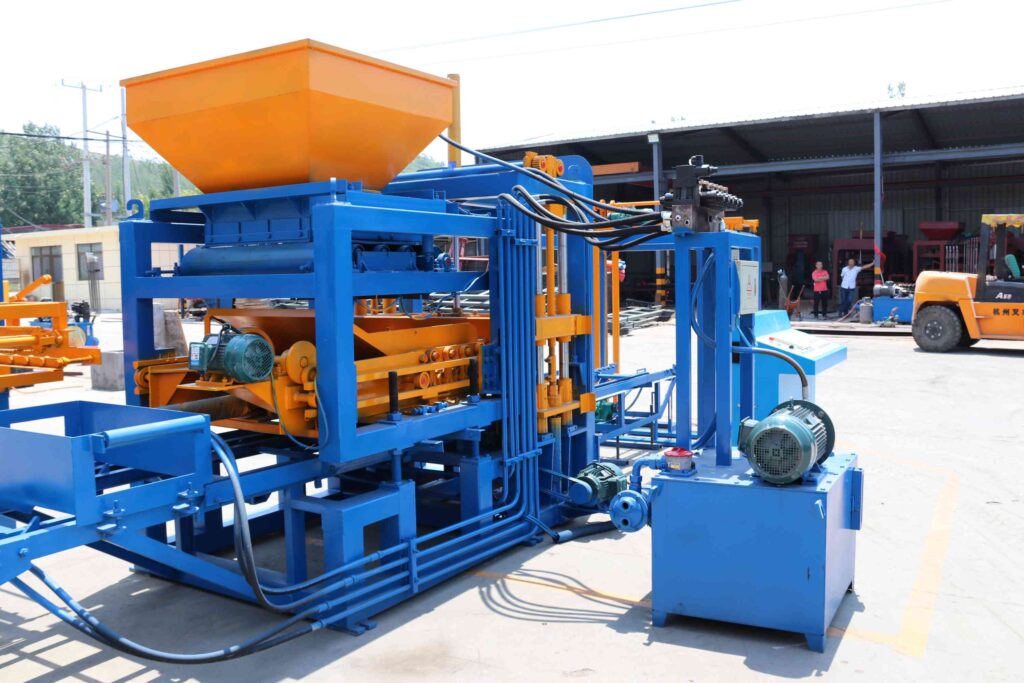
Yon machin modèn pou fè brik se yon senfoni de konpozan entegre. Nan kè li genyen...mòld oswa mouriyon kavite ki fèt ak presizyon ki defini fòm, gwosè, ak tèks sifas brik oswa blòk final la. Dirabilite ak presizyon mòl sa a se paramoun pou konsistans pwodwi a.sistèm idwolikse sous prensipal pouvwa a, ki bay presyon kontwole ak gwo kantite ki nesesè pou konpak. Li konpoze de ponp, silenn, ak valv kontwòl, ki detèmine fòs peze ak vitès sik machin nan.
Lasistèm manjedistribye melanj materyo prensipal yo (beton, tè, sann dife) egalman nan mòl la. Sa ka yon senti transpòtè, yon tremye ak vize, oswa yon distribitè volimètrik ki pi konplèks, enpòtan anpil pou asire yon dansite inifòm nan chak inite.sistèm konpakte ak vibrasyontravay ansanm. Pandan ke idwolik yo aplike presyon vètikal, vibratè wo-frekans, souvan monte sou tab mwazi an, densifye melanj la pa retire pòch lè, ki mennen nan yon fòs pi wo. Finalman,sistèm ejeksyon ak manyenLi pouse delika brik "vèt" ki fèk fòme a sou yon pale oswa yon konvèye pou transpòte nan zòn ki pou trete, sa mande presizyon pou evite domaje pwodwi ki poko kuit la.
Sik Pwodiksyon an: Soti nan Matyè Premyè rive nan Inite Trete
Sik operasyonèl la se yon pwosesis ki byen kwonometre. Li kòmanse akbatchaj ak melanjnan matyè premyè—anjeneral yon melanj de siman, agrega (sab, pousyè wòch), ak dlo, ak posib aditif tankou pigman oswa amelyorasyon fòs. Melanj omojèn sa a Lè sa a, yo mete nan tremye machin nan.molding phase sees the mix deposited into the mold cavity, followed by simultaneous high-pressure compaction and vibration. This stage is critical for achieving the desired dimensional accuracy and compressive strength.
Once compacted, the ejection phase occurs, where the formed brick is gently pushed out onto a transporter. These “green” bricks are then moved to a curing area. Curing, often overlooked but vital, involves maintaining controlled temperature and moisture for a specific period (often several days) to allow the cement to fully hydrate, thereby reaching its advertised strength. Some advanced stationary plants integrate automated curing racks or chambers.
Key Performance Metrics
For a business-to-business audience, evaluating machine performance revolves around several metrics. Tan Sik refers to the time taken to produce one batch of bricks (e.g., one pallet). A shorter cycle time means higher output. Kapasite Pwodiksyon is the total number of bricks or square meters of blocks produced per shift or per day, directly tied to the machine’s model and automation level. Product Range indicates the variety of units a single machine can produce by changing molds—common bricks, hollow blocks, pavers, interlocking stones, etc. Finally, Compaction Pressure, measured in tons or mega pascals (MPa), dictates the potential strength of the final product, a key selling point for end-users in structural applications.
Comprehensive Classification of Brick Making Machines
By Operational Mobility: Stationary vs. Mobile Plants
Stationary Brick Making Machines are high-output, fixed-installation systems designed for large-scale, dedicated production facilities. They are often part of an integrated plant with automated material handling, mixing, and curing systems. These machines offer the highest production capacities, superior product consistency, and advanced features like computer-controlled batching. They represent a significant investment and are ideal for suppliers serving major construction projects or establishing a central production hub.
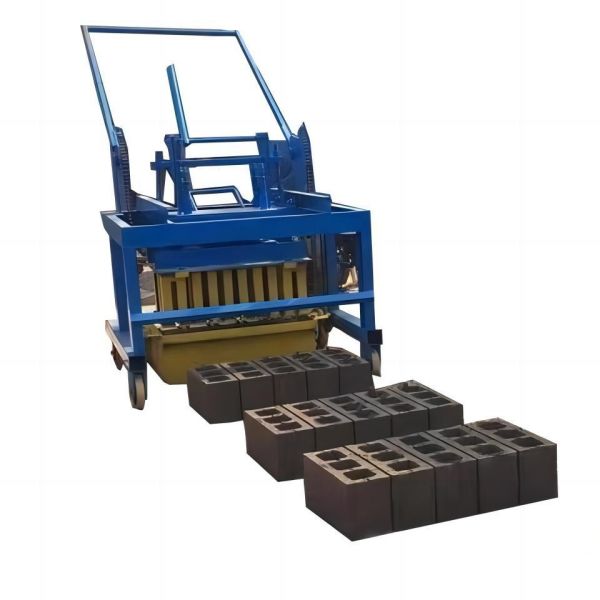
Machin pou Fè Brik Mobil (or egg-laying block machines) offer flexibility. They form bricks directly on a concrete floor or a prepared soil surface, moving forward after each cycle to lay the products in rows. These units are highly popular in markets requiring on-site production, reducing transportation costs of finished goods. They are generally simpler to operate, have lower initial costs, and are excellent for medium-scale projects, rural development, or starting a business with limited capital.
By Driving Mechanism: Hydraulic, Mechanical, and Pneumatic
Hydraulic Machines dominate the market for high-strength product manufacturing. They utilize fluid pressure to generate immense, smoothly controlled force, allowing for the production of dense, high-quality concrete blocks and bricks with excellent surface finish. They are versatile, relatively quieter, and provide better control over the pressing process, though they may have higher maintenance requirements for the hydraulic system.
Mechanical Machines typically use a crank and flywheel mechanism to drive the press. They are often faster in cycle time for simpler products and are historically robust with potentially lower maintenance costs. However, they may offer less precise control over pressing force compared to hydraulic systems and can be noisier. They are commonly found in older models or specific clay brick applications.
Pneumatic Machines use compressed air to provide the compaction force. They are less common for heavy-duty brick production but may be used for specialized, lower-pressure applications or for certain parts of the handling process within a larger system.
By Level of Automation: Manual, Semi-Automatic, and Fully Automatic
Machin Manyèl require significant human intervention for feeding, molding, and product removal. They have the lowest output and are labor-intensive but are the most affordable entry point, suitable for artisanal or very small-scale production.
Machin Semi-Otomatik automate the core molding and compaction process, but may require manual feeding of raw material or manual removal and stacking of finished products. They offer a balance between productivity, cost, and flexibility, serving a vast segment of small to medium enterprises (SMEs).
Machin Otomatik Konplè represent the pinnacle of efficiency. They are integrated systems with automated feeding, molding, compaction, product ejection, stacking, and sometimes palletizing. Operated via a Programmable Logic Controller (PLC), they maximize output, minimize labor costs, and ensure unparalleled consistency. They are the preferred choice for large-scale industrial production and are a key product line for distributors targeting high-volume clients.
Strategic Considerations for B2B Procurement and Distribution
Market Analysis and Target Customer Profiling
Successful distribution begins with market intelligence. Distributors must analyze regional construction trends: is the demand leaning towards affordable housing (requiring standard hollow blocks), urban infrastructure (requiring paving stones and kerbs), or high-end architectural projects (requiring colored, textured facades bricks)? Understanding this guides the selection of machine types and mold portfolios. Furthermore, profiling the end-user customer—whether they are a rural entrepreneur, a mid-sized construction company, or a major precast plant—will dictate the appropriate level of automation, pricing tier, and necessary after-sales support structure.
Critical Technical and Commercial Evaluation Factors
When sourcing machines for your inventory or a specific client, a rigorous evaluation is crucial:
- Konpatibilite Matyè Premye: Can the machine effectively process the materials readily available in your market—cement, sand, fly ash, crushed stone, or even stabilized soil? This is a fundamental technical constraint.
- Production Capacity & Scalability: Match the machine’s output with projected market demand. Consider if a client might need to scale up; some systems are designed for easy capacity upgrades.
- Energy Consumption and Power Requirements: Operating costs affect end-user profitability. Machines with efficient hydraulic systems or motors provide a long-term selling advantage. Ensure power requirements (three-phase electricity, etc.) are compatible with the target operational environment.
- Build Quality and Durability: Assess the robustness of the frame, the quality of the hydraulic components, and the wear-resistance of the mold liners. A machine built with durable components reduces warranty claims and builds brand reputation for reliability.
- After-Sales Support and Serviceability: This is arguably the most critical factor for a distributor. Evaluate the manufacturer’s commitment to providing comprehensive training, readily available spare parts, detailed technical manuals, and responsive technical support. The ease of servicing the machine locally will directly impact customer satisfaction and repeat business.
Building a Competitive Advantage as a Distributor
Beyond simply selling hardware, leading distributors become solution providers. This involves offering comprehensive package deals, which might include the machine, a selection of popular molds, a mixer, and even initial raw material sourcing advice. Providing excellent technical training and onboarding for the end-user’s operators minimizes downtime and builds loyalty. Establishing a local spare parts inventory ensures quick turnaround for maintenance, a significant value-added service. Finally, demonstrating a deep product knowledge and the ability to consult clients on optimizing their production for profit establishes your firm as a trusted industry partner, not just a vendor.
Konklizyon
The brick making machine is a dynamic and multifaceted product category at the heart of the global construction supply chain. For distributors, dealers, and procurement professionals, success hinges on moving beyond a transactional sales approach to becoming experts and consultants in this field. A thorough understanding of the technical distinctions between hydraulic and mechanical systems, the practical implications of automation levels, and the specific production needs of different market segments is paramount.
The future of distribution in this sector belongs to those who can strategically match the right machine technology to the right client need, backed by unshakeable after-sales support and a commitment to partnership. By focusing on the total value proposition—encompassing machine durability, operational efficiency for the end-user, and comprehensive service—B2B players can build a resilient business model. This model not only capitalizes on the constant demand for construction materials but also actively contributes to building the infrastructure of communities, leveraging a product that literally forms the building blocks of modern development.
Kesyon yo poze souvan (FAQ)
Q1: What are the main types of bricks or blocks a single machine can produce?
A: With interchangeable molds, a versatile brick making machine can produce a wide array of products including solid concrete bricks, various hollow blocks (differing in wall thickness and void patterns), paving stones, interlocking blocks for retaining walls, grass pavers, and even custom architectural units. The limit is often the mold design and the machine’s platen size and pressure capability.
Q2: How important is the curing process, and what are the best practices?
A: Curing is absolutely critical. It is the process where the brick gains its structural strength. Inadequate curing results in weak, brittle products prone to failure. Best practices involve keeping the freshly molded bricks damp and at a stable temperature for a minimum period, typically 7 to 14 days. This can be done through water spraying, covering with plastic sheets, or in advanced systems, steam curing chambers for accelerated strength gain.
Q3: What is the typical lifespan of a well-maintained brick making machine, and what are the key maintenance tasks?
A: A high-quality, properly maintained machine can have an operational lifespan of 10 to 20 years or more. Key maintenance tasks include daily cleaning to prevent material buildup, regular checking and tightening of bolts and nuts, monitoring hydraulic fluid levels and filters, lubricating all moving parts as per the manual, and inspecting wear parts like mold liners and vibration mounts for timely replacement.
Q4: For a new market entrant, what is a more suitable investment: a mobile or a stationary plant?
A: This depends entirely on the business model. A mobile machine is ideal for on-site production, reducing logistics costs, and is often the choice for starting with lower capital and targeting localized projects. A stationary plant requires a fixed site and higher investment but offers vastly greater output, consistency, and efficiency for supplying a network of clients from a central location. For a newcomer, a semi-automatic mobile or small stationary model is a common, lower-risk starting point.
Q5: What are the common power requirements for these machines?
A: Power requirements vary significantly. Small manual or semi-automatic machines may run on standard single or three-phase electrical connections. Larger hydraulic and fully automatic systems invariably require a robust three-phase power supply. Some models, particularly mobile types designed for remote sites, can be adapted to run on diesel-powered generators. Always verify the specific voltage and power (kW) requirements of the machine with the manufacturer.