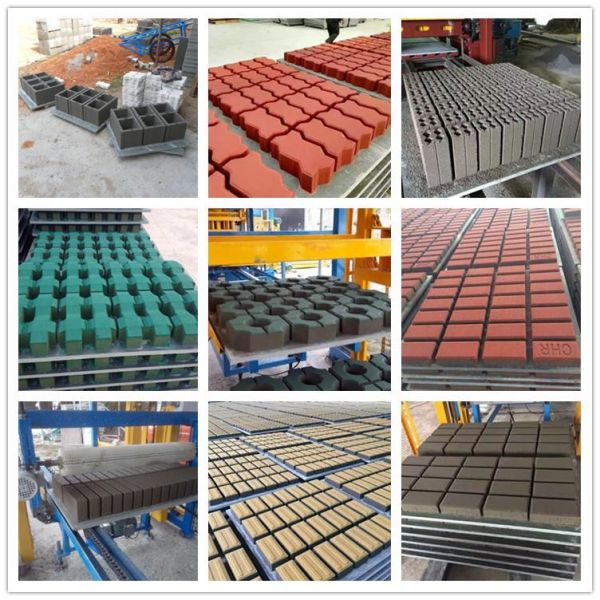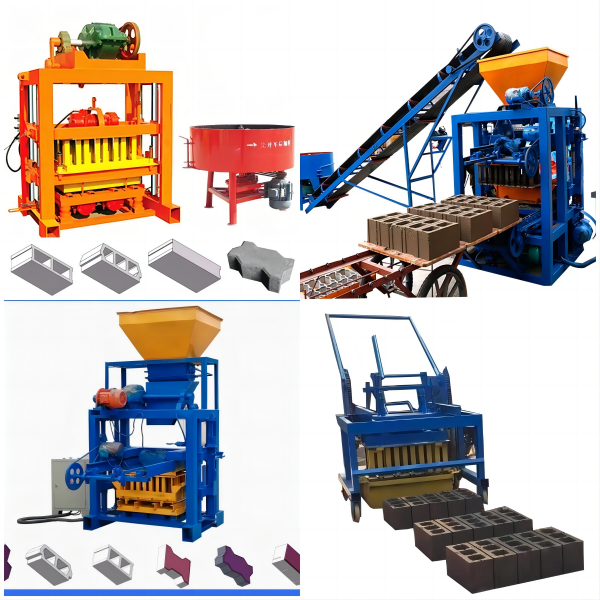
1. Defining the Terms: Material vs. Product
The initial clarification is crucial: “Cement block” is a pervasive but technically inaccurate market term. Cement is a binding ingredient; it is never used alone to form a structural block.
- Siman: A fine powder (primarily Portland cement) that, when mixed with water, undergoes a chemical reaction (hydration) to bind aggregates together. It is the “glue” in the mix.
- Concrete: A composite material consisting of cement, aggregates (sand, gravel), and water. This is the universal feedstock for the vast majority of block machines.
- Sann volkanik: A fine, powdery by-product of coal combustion. It is a supplementary cementitious material (SCM). It is not a standalone binder but can react with water and cement (or other activators) to contribute to the concrete’s strength and durability.
Therefore, the question refines to: Can a block machine produce blocks using different concrete mix designs, some of which may be rich in cement, and others which utilize high volumes of fly ash?
2. The Block Machine as a Versatile Forming Platform
At its core, a standard block machine is a device for densifying a no-slump concrete mix into a specific shape through vibration and pressure. Its primary function is mechanical forming, not chemical formulation. This makes it inherently adaptable to various mix designs, within specific parameters.
2.1. The Universal Constant: Process Compatibility
The machine imposes physical requirements on the mix, regardless of its chemical composition. The mix must:
- Be cohesive enough to hold its shape immediately after ejection (possess “green strength”).
- Have a “no-slump” or “dry-cast” consistency to allow for clean demolding.
- Be capable of being fluidized by vibration to fill the mold completely.
- Contain aggregate of an appropriate size to flow around mold details and core bars (for hollow blocks).
Any mix meeting these rheological criteria can be processed.
3. Analyzing Production Capability by Block Type
3.1. Concrete Blocks (The Standard Output)
This is the default and primary function of any block machine. The machine is expressly engineered for mixes where Portland cement is the primary binder, combined with standard aggregates. Every component of a traditional block plant—from aggregate batchers to mixers to the forming press—is designed around this material system. Answer: Yes, definitively.
3.2. “Cement Blocks” (A Misnomer for High-Cement-Content Mixes)
As established, a block made purely of cement and water would be unsound, prone to massive shrinkage cracks, and economically unviable. However, a client requesting a “cement block” often implies a desire for a high-strength, low-permeability block or may be using colloquial terminology. A standard block machine can easily produce a mix with a higher cement-to-aggregate ratio to meet this performance need, though at a higher material cost. Answer: Yes, it can produce the high-performance concrete block the market often calls a “cement block.”
3.3. Fly Ash Blocks (A Question of Degree and Process)
This is where nuance is critical. There are two levels of fly ash integration:
- Fly Ash as a SCM in Standard Concrete: Virtually all modern concrete block mixes incorporate some percentage of fly ash (e.g., 10-25%) to improve workability, durability, and cost-efficiency. A standard block machine handles these mixes with zero modification. Answer: Yes, for low to moderate percentages.
- High-Volume Fly Ash or Geopolymer Blocks: When fly ash constitutes 50% or more of the cementitious material, or replaces Portland cement entirely via alkali-activation (geopolymer), the process requirements change. The mix chemistry, setting time, and curing needs differ. While a robust standard machine might form the block, the supporting ecosystem may need adaptation:
- Mixer Type: May require high-shear mixing for geopolymer activation.
- Sistèm Pakèt: Needs precise, corrosion-resistant liquid activator dosing.
- Curing Regime: Geopolymer blocks often require controlled low-temperature heat curing rather than standard steam curing.
A plant can be retrofitted or originally designed to handle these mixes. Thus, the forming machine itself is often capable, but it must be part of a system engineered for the purpose. Answer: Yes, but typically requires a specialized or adapted production system, not just a standard machine in isolation.
4. Strategic Implications for the Supply Chain
Understanding this technical versatility translates into tangible business advantages for distributors and buyers.
4.1. Supplier Assessment and Sourcing Flexibility
When evaluating a manufacturer, ask not just “Can you make fly ash blocks?” but “What is the typical fly ash percentage in your standard mix, and what is your maximum proven capability?” and “Do you have a dedicated line or process for high-volume SCM or geopolymer products?” This reveals their technical sophistication and commitment to sustainable product lines.
4.2. Accurate Product Positioning and Marketing
Distributors must educate the market and correct terminology. Market products based on their verified performance attributes and environmental credentials, not vague material names.
- Instead of “Cement Block,” specify “High-Strength Concrete Masonry Unit (CMU), 3000 psi.”
- Instead of “Fly Ash Block,” specify “CMU with 30% Post-Industrial Recycled Content” or “Low-Carbon Geopolymer Block,” supported by an Environmental Product Declaration (EPD).
This positions your firm as a technical expert and allows for premium positioning of advanced products.
4.3. Inventory Management and Client Consultation
Knowing that a single machine source can produce a range of products allows for consolidated sourcing. However, it is crucial to understand that producing a special high-fly-ash mix may require a batch-specific production run, affecting lead times. This knowledge enables accurate client communication and planning.
5. The Convergence of Market Demand and Machine Evolution
The trend toward sustainable construction is driving machine and plant design to become more inherently flexible.
- Sistèm Kontwòl Avanse: Modern PLCs can store countless mix “recipes,” allowing for quick changeovers between products with different cement/fly ash ratios.
- Material Handling Flexibility: Progressive plants are designed with multiple silos for different SCMs (fly ash, slag, silica fume) and automated batching systems that can switch between them seamlessly.
- Adaptable Curing Solutions: Some curing systems are now designed with zones capable of different temperature and humidity profiles to accommodate both traditional and alternative binder systems.
This evolution means the question is shifting from “Can it?” to “How efficiently and consistently can it?”
Konklizyon
The modern block machine is a remarkably adaptable forming press, capable of producing units from a wide spectrum of concrete-based mixes. It can unquestionably produce standard concrete blocks and those with moderate to high levels of supplementary cementitious materials like fly ash. The production of blocks where fly ash is the dominant binder is also within reach, but it depends critically on the integration of the forming machine with a specifically designed material preparation and curing system. For distributors and procurement specialists, the key takeaway is that product differentiation lies not in the machine’s fundamental forming ability, but in the mix design and process engineering behind it. Therefore, your focus should shift from inquiring about the machine to investigating the manufacturer’s material expertise, quality control protocols for alternative mixes, and the supporting data (EPDs, strength reports) that verify the performance of their specialized products. By mastering this understanding, you transform from a passive order-taker into an active specifier and a valued partner in creating more sustainable, high-performance built environments.
FAQ (Frequently Asked Questions)
Q1: If I order “fly ash blocks” from a standard supplier, what should I realistically expect?
A: You should expect a standard concrete block where a portion of the Portland cement (typically 15-30%) has been replaced with fly ash. This is a common, beneficial practice that improves long-term strength and durability while lowering the carbon footprint. You should request documentation of the average recycled content. Do not assume it is a geopolymer or cement-free block unless explicitly specified and technically warranted by the supplier.
Q2: Are blocks with high fly ash content suitable for all applications, like foundations?
A: Yes, when properly designed and produced. High-quality fly ash concrete often exhibits superior long-term durability and lower permeability, which is excellent for foundations. However, it may gain strength slightly more slowly in cold weather. The critical factor is that the block must meet the relevant ASTM standard (e.g., C90 for load-bearing units) regardless of its mix composition. Always require proof of compliance.
Q3: What is the main barrier preventing all manufacturers from producing geopolymer (ultra-high fly ash) blocks?
A: The barriers are knowledge, capital, and supply chain, not merely machine capability. It requires:
- Chemical/Process Expertise: Geopolymer chemistry is less forgiving than OPC and requires precise control.
- Specialized Equipment Investment: In activators dosing and mixing systems.
- Consistent Fly Ash Supply: Not all fly ash is chemically suitable; a reliable, consistent source is needed.
- New Market Channels: It requires educating and convincing a traditionally conservative construction market.
Q4: As a distributor, how can I verify a manufacturer’s claims about fly ash content or low-carbon processes?
A: Demand objective, third-party documentation. The gold standard is an Environmental Product Declaration (EPD), which will detail the precise material composition and global warming potential. Additionally, ask for mill certificates for their fly ash shipments and routine strength test reports that show consistent performance with the alternative mix. Transparency is a hallmark of a serious producer.
Q5: Will using these different mixes affect the block’s color or appearance?
A: Possibly. Fly ash can impart a lighter, more consistent gray color compared to the sometimes greener tint of pure Portland cement. Geopolymer blocks often have a distinct, very uniform light gray or beige hue. This can be an aesthetic advantage, offering a naturally consistent color without pigments. It is advisable to obtain physical samples for approval on architectural projects.