
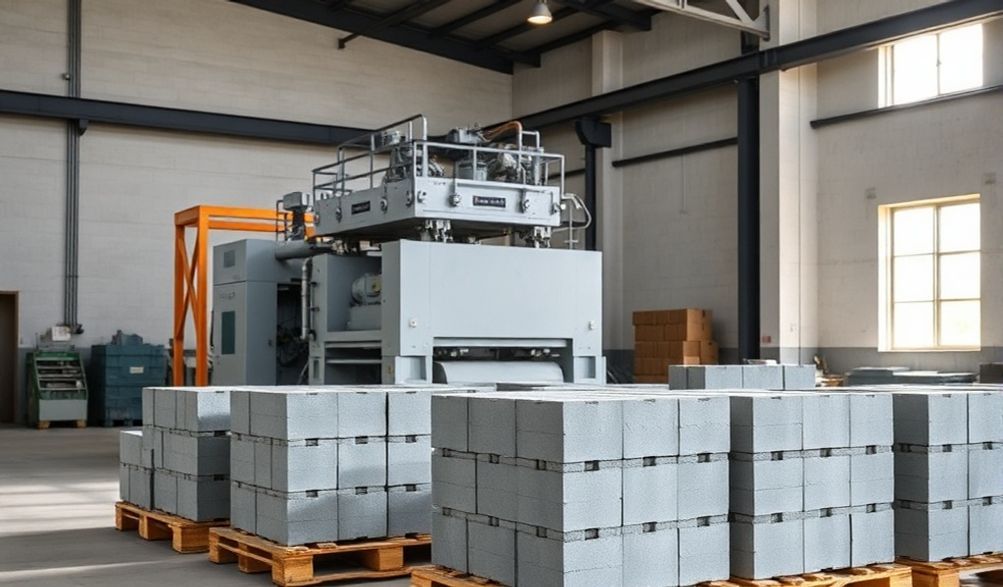
The Ultimate Guide to Buying a Concrete Block Making Machine in Spain (2026)
Entwodiksyon
Investing in a concrete block making machine is a pivotal decision for any Spanish construction business, developer, or entrepreneur. The Spanish machinery market operates under a distinct set of rules, driven by stringent local building codes, regional material supply chains, and specific economic cycles. Whether your operations are based in the industrial hubs of Catalonia, the major projects of Madrid, or the coastal developments of Andalucía, selecting the correct equipment is fundamental to your productivity, regulatory compliance, and long-term profitability.
This guide is designed to cut through the complexity. Drawing on extensive analysis of the Iberian market and years of industry expertise, we provide a detailed roadmap. We will navigate the technical specifications that matter, demystify Spanish regulations, analyze costs with transparency, and identify how to find trustworthy suppliers. Our goal is to empower you to make an informed, strategic investment that builds the foundation for your business growth in the evolving Spanish construction landscape.
Understanding the Spanish Market for Block Making Machines
Success in the block production business starts with a deep understanding of the local market dynamics. Spain is not a monolithic entity; demand, regulations, and material sourcing vary significantly from region to region.
Key Drivers: Construction Trends and Regional Demand in Spain
The Spanish construction sector has shown robust recovery and transformation, creating specific demand pockets for precast concrete products.
- Konstriksyon Rezidansyèl ak Komèsyal A sustained demand for housing, particularly in major cities and tourist areas, fuels need for standard structural blocks. Renovation and energy efficiency retrofits also drive demand for specialized insulated blocks.
- Public Infrastructure Projects: The deployment of EU Next Generation funds is accelerating public works. Projects in renewable energy, railway modernization, and urban regeneration require vast quantities of paving stones, kerbs, and retaining wall blocks.
- Industrial & Logistics: The growth of e-commerce and manufacturing is spurring development of logistics parks and industrial facilities, which utilize large volumes of concrete blocks for construction.
Spanish Building Regulations (CTE) and Machine Compliance
Your machine choice directly impacts your ability to produce compliant, marketable blocks. The Código Técnico de la Edificación (CTE) is non-negotiable.
- Relevant CTE Sections: Key areas include DB SE (Structural Safety) for load-bearing blocks and DB HE (Energy Savings) for blocks contributing to thermal insulation. Your blocks must help the final building meet these standards.
- Standards & Certification: Blocks must conform to UNE-EN standards (e.g., UNE-EN 771-3 for aggregate concrete blocks). The machine must enable consistent production to these tolerances.
- Machine Certification: Ensure any machine you purchase carries the CE marking, proving it meets EU health, safety, and environmental directives. This is a legal requirement for placing machinery on the market in Spain.
Sourcing Raw Materials: Cement, Aggregates, and Additives in Spain
Spain is rich in raw materials, but smart sourcing is key to quality and cost-control.
- Siman: Spain has a strong domestic cement industry with major players like Cementos Portland Valderrivas and Cemex España. Local sourcing minimizes transport costs.
- Aggregates (Áridos): The type of locally available aggregate (limestone, granite, silica) influences block strength, weight, and finish. Coastal regions may have access to marine aggregates.
- The Green Shift: The market for using recycled aggregates from construction and demolition waste is growing, driven by environmental regulations and cost savings. A modern block plant should be capable of incorporating these materials.
Types of Concrete Block Making Machines Available
Machines are broadly categorized by their mobility and level of automation. Your choice hinges on your business model, scale, and project locations.
Machin pou Fè Blòk Estasyonè: Pou Pwodiksyon an Gwo Kantite
These are fixed installations designed for maximum output in a centralized location.
- Ideal Pou: Large block yards, suppliers serving a wide region, or major construction companies with a constant, high demand for blocks.
- Output & Features: High-speed, fully automated systems with production capacities often exceeding 5,000 blocks per 8-hour shift. They feature automatic pallet circulators, cube feeders, and stacking systems.
- Spanish Context: Brands like Rometa (a Spanish manufacturer based in Alicante) are leaders in this segment. These machines require significant space, a strong foundation, and a three-phase power connection.
Mobile Block Making Machines: Flexibility for On-Site Production
These units can be towed to a construction site to produce blocks exactly where they are needed.
- Primary Benefit: Eliminates the cost and carbon footprint of transporting heavy blocks over long distances. Ideal for remote projects, large housing developments, or infrastructure works.
- Trade-offs: While offering excellent flexibility, mobile machines typically have a lower output than large stationary plants. They are perfect for producing blocks for a specific, time-bound project.
- Popular Models: Various European manufacturers offer robust mobile machines suitable for Spanish terrain and site conditions.
Machin Manyèl, Semi-Otomatik, ak Otomatik Nèt
This spectrum defines how much human intervention is required in the production cycle.
- Machin Manyèl: Lowest upfront cost, highest labor cost. Suitable for very small-scale, artisanal production or specific niche products. Becoming less common due to labor costs in Spain.
- Machin Semi-Otomatik: A balanced choice for small to medium enterprises (SMEs). The core block forming is automated, but tasks like feeding raw materials or removing pallets are manual. Offers a good compromise between investment and output.
- Machin Otomatik Konplè: The highest upfront investment but lowest operational labor cost. The entire process from mixing to stacking is automated. Essential for competing on price and volume in the broader market. Energy consumption and maintenance complexity are higher.
Key Features to Evaluate When Buying in Spain
Look beyond the brochure. These practical considerations will determine your daily operational success.
Production Capacity and Output Specifications
Don’t buy excess capacity you can’t use, or underestimate and stifle growth.
- Kalkile Bezwen Reyel yo Base your requirement on a realistic business plan. How many blocks do you need to produce per day to meet your orders and be profitable? Consider seasonal demand fluctuations in Spanish construction.
- Konprann Tan Sik This is the time to produce one pallet of blocks. A faster cycle time means higher hourly output.
- Pallet Size & Compatibility: Ensure the machine’s pallet size is standard in Spain to avoid costly custom pallet purchases.
Block Types and Molds: Meeting Spanish Architectural Needs
Versatility allows you to chase different market opportunities.
- Core Product Lines:
- Hueco: Standard hollow blocks for structural walls.
- Adoquín: Paving stones for urban landscaping and driveways.
- Bloques de aislamiento: Insulated blocks for energy-efficient building envelopes.
- Fòm Espesyal: Garden blocks, sloped blocks for retaining walls, etc.
- Mold Sourcing & Customization: You can purchase standard molds from the machine manufacturer or work with specialized mold-makers in Spain to create custom designs for unique regional architectural styles.
After-Sales Support: Service, Spare Parts, and Training in Spain
This is arguably the most critical factor for your long-term peace of mind.
- Sipò Teknik Lokal: A supplier with technicians based in Spain can drastically reduce downtime. A 48-hour wait for a service call from another country is not acceptable when your plant is idle.
- Spare Parts Inventory: Inquire about the location of the spare parts warehouse. Is there a stock held in Spain, or are all parts shipped from a central European factory?
- Training in Your Language: Operator and maintenance training must be provided in Spanish (or Catalan, if relevant). This ensures your team can operate the machine safely and efficiently from day one.
Financial Considerations and ROI Analysis
A clear financial picture separates a wise investment from a costly mistake.
Upfront Investment: Machine Price Ranges in the Spanish Market
Prices vary dramatically based on technology and output.
- Price Brackets (Guide Only):
- Small Manual/Semi-Automatic: €15,000 – €50,000
- Medium Semi-Automatic / Basic Automatic: €50,000 – €150,000
- High-Output Fully Automatic Stationary Plant: €150,000 – €400,000+
- Hidden Initial Costs: Budget for machine foundation, installation, electrical/water hookup, initial set of molds (€2,000 – €10,000+ per set), and transport.
- Financing: Explore financing options through banks, machinery leasing companies, or investigate if your project qualifies for any industrial modernization grants from regional governments or the EU.
Operational Costs: Energy, Labor, and Maintenance
These recurring costs determine your block’s production cost.
- Energy: Spain’s industrial electricity costs vary by autonomous community and time of day. A fully automatic machine with high-power compressors and vibrators is a significant energy consumer. Factor this into your location decision.
- Travay A fully automatic plant may require only 1-2 operators, while a semi-automatic line may need 3-4. Compare the Spanish minimum wage and associated social security costs against the machine’s automation premium.
- Preventative Maintenance: Adhering to the supplier’s maintenance schedule is cheaper than emergency repairs. Budget for regular spare parts like wear liners, seals, and hydraulic filters.
Kalkile Retou sou Envestisman (ROI) ou
A simplified framework to gauge viability.
- Annual Revenue: Projected blocks sold per year x average selling price in your region.
- Annual Operational Cost: Sum of (Raw Materials + Energy + Labor + Maintenance + Miscellaneous).
- Gross Annual Profit: Revenue – Operational Cost.
- Peryòd Rembousman: (Total Machine Investment Cost) / (Gross Annual Profit).
Hypothetical Case Study: A mid-sized operation in Valencia invests €120,000 in a semi-automatic line. Producing 2,000 blocks/day at a net profit of €0.15 per block, with 220 working days/year, yields ~€66,000 annual profit. Simple payback period: just under 2 years. Your numbers will vary based on local market prices and efficiency.
Finding Reputable Suppliers and Manufacturers
Choosing the right partner is as important as choosing the right machine.
Leading Spanish Manufacturers of Block Making Machinery
- Rometa: A flagship Spanish manufacturer with a long history and a global export business. They offer a wide range from semi-automatic to fully automatic plants and are known for their engineering and local support from their Alicante base.
International Brands with a Strong Presence in Spain
Many top European brands have established networks in Spain.
* Look for companies with a dedicated Spanish subsidiary officeoswaexclusive, long-standing distributor with their own service workshop and parts inventory.
* Evaluate their commitment: Do they have a Spanish-language website? Do they regularly exhibit at Spanish trade fairs like SMOPYC?
Red Flags and Best Practices for Supplier Selection
- Drapo Wouj: No physical address in Spain, unwillingness to provide local client references, prices significantly below market average, vague warranty terms.
- Best Practices:
- Demand References: Get a list of 3-5 Spanish clients who have bought a similar machine in the last 2-3 years. Call them.
- Visit a Live Installation (Funcionamiento Real): Ask the supplier to arrange a visit to see an identical machine operating at a client’s site. This reveals real-world performance and noise levels.
- Scrutinize the Contract: Ensure warranty, delivery time, installation scope, and training details are explicitly stated.
Installation, Operation, and Best Practices
Proper setup and operation are the keys to longevity and quality.
Site Preparation and Machine Installation in Spain
- Foundation: The supplier will provide precise foundation drawings. This is critical, especially in areas with expansive clay soils. Use a qualified local builder.
- Utilities: Confirm requirements for three-phase electrical power, compressed air, and water supply/drainage. Coordinate these installations in advance.
- Installation Team: Clarify if the price includes installation and commissioning by the supplier’s technicians. Never attempt this yourself.
Efficient and Safe Operation
- Safety First: Comply with the Spanish Ley de Prevención de Riesgos Laborales. Ensure all guards are in place, provide proper PPE (hearing protection, gloves, safety glasses), and train operators on lock-out/tag-out procedures.
- Melanj konsepsyon an Work with a local concrete technician to optimize your mix using local cement and aggregates. The right water-cement ratio is crucial for strength and curing time.
- Kontwòl Kalite: Regularly test sample blocks for compressive strength and dimensions at a laboratorio homologado. Keep detailed production records for traceability.
Sustainable Practices and Environmental Compliance
- Water Management: Implement a closed-loop water recycling system to minimize consumption—a wise practice in drought-prone Spain.
- Itilizasyon Materyèl Incorporate recycled aggregates and industrial by-products like fly ash where technically possible.
- Local Compliance: Control dust (with misting systems) and noise (with enclosures) to adhere to municipal ordinances and be a good neighbor.
Kesyon yo poze souvan (FAQ)
Q1: What is the average price of a concrete block making machine in Spain?
A: There is no single “average.” A basic manual machine can start around €15,000, while a high-output, fully automatic stationary plant can easily exceed €250,000. Your final cost depends entirely on required capacity, automation level, and brand.
Q2: Do I need any special permit to operate a block making machine in Spain?
A: Yes. You will need an licencia de actividad from your local ayuntamiento. For larger installations, an environmental impact declaration or assessment may be required. Consulting a local gestoría (administrative consultant) is highly recommended to navigate all permits.
Q3: Can I produce blocks that comply with the CTE for building construction?
A: Yes, but compliance is your responsibility. The machine must produce consistent, high-quality blocks. You must then have samples tested by an accredited laboratory to obtain the mandatory Declaración de Prestaciones (DoP) for your product, proving it meets the relevant UNE-EN standards referenced in the CTE.
Q4: How do I find reliable after-sales service in my region?
A: Prioritize suppliers with their own technical teams based in Spain. Ask any potential supplier for a list of client references in your autonomous community and ask those clients specifically about response times for service calls and spare parts availability.
Q5: Is it profitable to start a concrete block business in Spain today?
A: Profitability is not guaranteed by the market alone; it is created by a sound business plan. The current construction recovery and infrastructure investments present a clear opportunity. Success depends on thorough local market analysis, a competitive cost structure, efficient operation, and a strong sales strategy.
Konklizyon
Purchasing a concrete block making machine in Spain is a strategic investment that demands a blend of technical insight, financial acumen, and local market knowledge. By prioritizing compliance with the CTE, meticulously matching machine specifications to your production goals and regional demand, and forging a partnership with a reputable supplier who offers unwavering local support, you lay a solid foundation for a successful venture.
The Spanish construction sector, with its unique rhythms and opportunities, rewards careful planning and quality execution. Remember, this machine is more than an asset; it’s the core of your production capability for years to come. Take the next step by visiting major industry exhibitions like SMOPYC in Zaragoza to see machinery in action, and consider consulting with an independent industry expert to tailor this knowledge to your specific business vision.
Author Bio & E-E-A-T Statement:
This guide was compiled by our industrial machinery editorial team, which includes certified engineers with over two decades of combined experience in the construction equipment sector across Europe, with a dedicated focus on the Iberian market. Our analysis is based on technical data, supplier reviews, ongoing market research, and interviews with Spanish block producers. We are committed to providing accurate, unbiased, and actionable information to help Spanish businesses make informed decisions.