
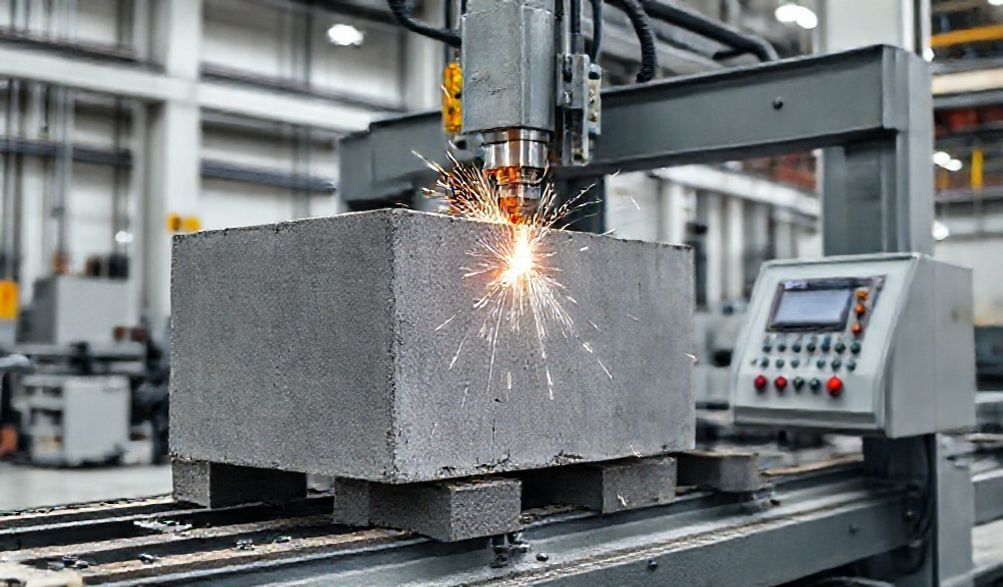
Your Ultimate Guide to Block Cutting Machine Manufacturers & FUDA Factory
Entwodiksyon
The global construction industry runs on precision. From the foundations of skyscrapers to the pavers lining a city square, the demand for uniformly sized, high-quality building blocks is insatiable. Behind this demand lies a critical piece of industrial machinery: the block cutting machine. The choice of manufacturer for this equipment is not merely a purchase; it’s a long-term investment in the productivity and profitability of your operation.
This comprehensive guide is designed to be your strategic resource. We will demystify block cutting technology, outline the crucial factors for selecting a manufacturer, and provide a detailed examination of a prominent industry player: the FUDA block making machine factory. Compiled from industry analysis, technical specifications, and manufacturing insights, this content is crafted to empower business owners, plant managers, and procurement specialists with the knowledge needed to make a confident, informed decision.
Understanding Block Cutting Machines: Types and Applications
Before evaluating manufacturers, a firm grasp of the machinery itself is essential. This foundational knowledge separates a savvy buyer from one swayed by specifications alone.
What is a Block Cutting Machine?
At its core, a block cutting machine is an industrial device designed to cut large, cured blocks of material—most commonly concrete or natural stone—into smaller, precisely dimensioned units. These units become the building blocks (literally) of construction: bricks, pavers, kerbstones, tiles, and landscaping materials.
The basic operational principle involves holding a large parent block securely in place while a cutting element—a wire, blade, or hydraulic wedge—is applied with significant force to achieve a clean separation. The precision of this cut directly impacts product quality, material yield, and overall operational efficiency.
Primary Types of Block Cutting Machines
Different materials and production goals require different cutting technologies. The main types include:
- Wire Saws: Utilizing a diamond-impregnated cable running on a track system, these are the workhorses for cutting massive blocks (like granite or large concrete segments). They offer exceptional precision for large-scale, deep cuts and are known for minimal material waste.
- Hydraulic Splitters: These machines apply immense hydraulic pressure to a series of wedges inserted into pre-drilled holes in a block. They don’t “cut” but rather fracture the material along a controlled plane, creating a popular “natural cleft” or rustic finish often desired for landscaping stones and certain architectural features.
- Bridge Saws: Featuring a stationary table and a moving cutting head (the “bridge”) that carries a large diamond blade, these are ideal for high-precision straight cuts on slab materials. They are common in stone workshops and for producing countertops, but specialized versions are used in block production for accurate sizing and trimming.
- Specialized Block Cutters: Often the heart of an automated production line, these are dedicated machines designed to receive a continuous stream of large, cured concrete blocks from a block making machine. They use arrays of synchronized wires or blades to slice the block into multiple smaller units (e.g., turning one large block into 12 standard bricks) in a single, rapid cycle.
Endistri Kle ak Aplikasyon yo
The reach of this technology is broad:
* Concrete Block Manufacturing Plants: The primary user, for producing standard concrete blocks, hollow blocks, and lightweight blocks.
* Paver and Kerbstone Production: For creating interlocking pavers, edging stones, and road curbs with tight dimensional tolerances.
* Natural Stone Processing: Quarries and stone fabricators use wire saws and bridge saws to cut raw granite, marble, limestone, and sandstone into workable slabs and blocks.
* Brick Production & Refractory Materials: For shaping firebricks and other specialized refractory blocks used in high-temperature industrial applications.
Key Factors When Choosing a Block Cutting Machine Manufacturer
Selecting a manufacturer is a multi-faceted process that extends far beyond the initial price tag. Here are the critical pillars to evaluate.
Espesifikasyon ak Kapasite Prensipal Machin yo
Your production goals must dictate the specs. A mismatch here is a costly error.
* Cutting Precision & Tolerance: Request the guaranteed dimensional accuracy (e.g., ±0.5mm). This is non-negotiable for products like interlocking pavers.
* Kapasite Pwodiksyon: Understand the output (blocks/hour) under realistic conditions. Does it match your current and projected demand?
* Power & Efficiency: Review motor power and overall energy consumption. An efficient machine reduces long-term operational costs.
* Material Compatibility: Explicitly confirm the machine is designed for your specific material (e.g., high-strength concrete, recycled aggregate, soft limestone).
Build Quality and Durability
This determines your total cost of ownership and uptime.
* Konstriksyon Ankadreman Look for heavy-duty, welded steel frames that resist vibration and maintain alignment over years of use. A flimsy frame leads to inaccurate cuts and premature failure.
* Kalite Konpozan The cutting elements are consumables, but the systems that drive them are not. Investigate the quality of the hydraulic pumps, guide rails, bearings, and electrical systems. Renowned component brands (Siemens, Schneider, etc.) are a positive indicator.
* Lifespan & Duty Cycle: Ask about the designed duty cycle (e.g., 20 hours/day). A machine built for light duty will fail quickly in a high-volume plant.
Automation and Ease of Use
Automation impacts labor costs, consistency, and safety.
* Nivo Otomatizasyon: Manual machines are cheaper but slower. Semi-automatic machines require some operator input. Fully automatic systems, often PLC-controlled, can run with minimal intervention for maximum output.
* Sistèm Kontwòl: A user-friendly, intuitive interface (often a touchscreen HMI) reduces training time and operator error. Look for clear diagnostics and easy parameter setting.
* Setup & Changeover: How long does it take to adjust the machine for a different product size? Quick-change systems for blades or wire guides can save hours of downtime per week.
After-Sales Support and Service
This is where manufacturers truly differentiate themselves. The machine will need support.
* Technical Support & Spare Parts: Is there a 24/7 support hotline? What is the average spare parts delivery time? A local warehouse or distributor is a major advantage.
* Garanti: Scrutinize the warranty. What is covered (parts, labor)? How long does it last? What are the terms?
* Enstalasyon ak Fòmasyon: Does the purchase price include professional installation, commissioning, and on-site operator training? This is crucial for a smooth start-up.
Spotlight on FUDA Block Making Machine Factory
As a significant name in the global market for block production equipment, FUDA serves as a relevant case study for buyers evaluating manufacturers, particularly those in the cost-competitive segment.
Company Overview and Industry Standing
FUDA is a China-based industrial machinery manufacturer specializing in equipment for the concrete products industry. They have established a notable presence in the global market, particularly appealing to buyers looking for integrated production line solutions. Their product portfolio typically extends beyond cutting machines to include:
* Concrete block making machines (stationary and mobile)
* Mixers and batching plants
* Palletizers and conveyor systems
* Related auxiliary equipment
This allows them to offer “one-stop-shop” solutions for setting up a complete block production plant.
FUDA’s Block Cutting Machine Portfolio
FUDA generally offers specialized block cutting machines designed to integrate seamlessly with their block making machines. Their cutters are often of the multi-wire type, engineered to slice large cured concrete blocks into arrays of smaller units.
* Typical Features: Their machines may emphasize robust vibration-free frames, synchronized multi-wire cutting systems for high output, and PLC-based automation for consistent operation.
* Aplikasyon yo: They are primarily focused on the concrete products industry—producing bricks, hollow blocks, pavers, and kerbstones from cement-based materials.
Filozofi Manifakti ak Kontwòl Kalite
While specific details of their internal processes are proprietary, manufacturers like FUDA typically focus on:
* Standardized Design: Producing reliable machines based on proven designs to maintain cost-effectiveness.
* Entegrasyon Chèn Ekipman: Sourcing components both locally and internationally to balance cost and performance.
* Functional Testing: Machines are generally assembled and test-run at the factory before shipment to ensure operational readiness.
Evaluating FUDA: Strengths and Considerations
A balanced view is essential for any potential buyer.
Potential Strengths:
* Efikasite Pri: Often a primary advantage, offering a lower initial capital investment.
* Integrated Solutions: The ability to supply a matched set of equipment (mixer, block maker, cutter, palletizer) can simplify procurement and compatibility.
* Market Adaptability: They may offer a range of models catering to different scales of operation, from mid-size to large plants.
Key Considerations for Buyers:
* Direct & Detailed Communication: Clearly articulate your exact technical requirements, desired output, and material specifications. Assume nothing.
* Verify Specifics: Request detailed CAD drawings, full component lists, and performance guarantees for the specific model you are considering.
* Clarify Logistics & Support: Understand all Incoterms. Who handles shipping, insurance, and import customs? Precisely define what after-sales service includes—is there a local agent, or does support come directly from the factory overseas?
* Request Client References: Ask for contact information for previous customers in a similar region or with a similar application. Follow up with them.
The Global Landscape of Manufacturers
FUDA operates within a diverse and competitive global market. Understanding this landscape helps in positioning any single supplier.
Leading Manufacturing Hubs
- China: A major hub for volume production, offering a wide spectrum from basic to advanced machines. Known for competitive pricing and increasingly improving engineering. Suppliers range from large factories like FUDA to smaller specialized workshops.
- Germany & Italy: Traditionally recognized for high-precision engineering, advanced automation, and premium build quality. Machines from these regions often command a higher price but are associated with exceptional durability, precision, and innovation.
- Turkey & India: Strong emerging players that often blend technological adoption with competitive manufacturing costs. They have developed robust regional and international market shares, offering a middle ground in terms of price and performance.
How to Vet and Shortlist Suppliers
Follow a systematic process to mitigate risk:
1. Conduct Deep Research: Go beyond the website. Look for technical white papers, patents, and industry forum discussions about the manufacturer.
2. Request Detailed Quotations (RFQ): Send identical, highly detailed requests for quotation to your shortlist. The response will tell you much about their professionalism and attention to detail.
3. Seek Verifiable Proof: Ask for not just testimonials, but detailed case studies with data (increased output, reduced waste). Request videos of the actual machine model in operation.
4. Consider a Factory Audit: If the investment is substantial, a visit to the manufacturing facility is invaluable. Alternatively, a live video tour can provide insights into their production scale and quality control practices.
Kesyon yo poze souvan (FAQ)
Q1: What is the average price range for an industrial block cutting machine?
A: Prices vary dramatically. A basic manual cutter might start around $15,000, while a high-capacity, fully-automated multi-wire system from a premium European manufacturer can exceed $200,000. The only way to get an accurate price is to provide detailed specifications and request formal quotes.
Q2: Can FUDA or similar manufacturers customize machines for specific needs?
A: Most reputable manufacturers, including FUDA, offer some level of customization. This can include modifications to cutting dimensions, integration with specific automation systems, or special material handling features. Clear, documented communication of your requirements is paramount.
Q3: What are the most important maintenance routines for a block cutting machine?
A: Consistent maintenance is key. Prioritize: 1) Daily visual inspection and cleaning of cutting wires/blades and debris; 2) Regular lubrication of all guide rails, bearings, and moving parts as per the manual; 3) Scheduled checking and maintenance of hydraulic fluid levels and filtration; 4) Periodic calibration checks to ensure cutting accuracy.
Q4: How do I ensure I’m getting genuine spare parts for my machine?
A: Always source spare parts, especially critical wear items like diamond wires, blades, and hydraulic seals, directly from the original equipment manufacturer (OEM) or their authorized distributor. This guarantees compatibility, maintains warranty conditions, and ensures quality.
Q5: What should I prioritize: machine cost or after-sales service?
A: Strive for a balance, but heavily weigh long-term value. A machine with a slightly higher upfront cost but backed by exceptional, readily available local service and spare parts will typically have a lower total lifetime cost and cause far less costly production downtime than a cheaper machine with poor support.
Konklizyon
Choosing the right block cutting machine manufacturer is a strategic decision that hinges on a clear alignment between your operational needs and a supplier’s capabilities. It requires careful analysis of technical specifications, uncompromising build quality, robust after-sales support, and the manufacturer’s proven reputation.
Factories like FUDA represent important options in a globalized market, particularly for buyers seeking integrated, cost-competitive solutions. However, thorough due diligence remains non-negotiable. The optimal choice is not the cheapest or the most famous, but the one that delivers reliable, precise, and efficient performance within the context of your specific production goals and operational reality.
Your Next Steps: Use this guide as a framework. Compile a definitive list of your requirements. Shortlist 3-5 manufacturers that appear to match your profile. Engage with them directly, presenting your detailed RFQ. Finally, base your decision not on promises, but on comprehensive proposals, verifiable client references, and a clear, contractual understanding of all terms from price to support. This disciplined approach is your best investment in a successful partnership.
<