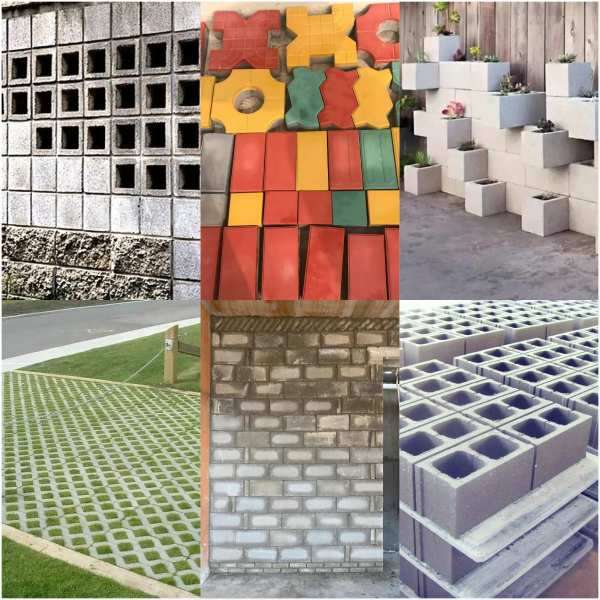
Brik Fè Machin nan Achitekti Kontanporen
Baze Apwopriyete Achitekti a: Konsistans kòm yon Zouti Konsepsyon
Aplikasyon achitekti nenpòt materyèl kòmanse ak prediktibilite. Konsistans natirèl nan brik ki fèt ak machin, souvan mal konprann kòm yon limit, se an reyalite premye avantaj achitekti li.
1.1 Presizyon Dimezyonal ak Estetik nan Gwo Echèl
Tolerans dimansyon rigoureksyen nan inite ki pwodui pa machin se yon fondasyon enpòtan ki pèmèt langaj achitekti kontanporen.
- Ed fasilite desen modernis ak minimalist.Estil achitekti ki mete aksan sou liy pwòp, jwenti ansent, ak aparans monolitik depann sou inifòmite dimansyon absoli. Brik fèt ak machin pèmèt jwenti mòtye trè fèb (3mm oswa mwens) ak ranje parfe aliyen, kreye plan lis ak kontinièl yo prefere nan konsepsyon modèn komèsyal, enstitisyonèl, ak rezidansyèl anlè.
- Pèmèt Jeyometri Konplèks:Presizyon pa sèlman pou mi plat. Gwosè egzak brik yo enpòtan anpil pou konstwi mi koube, vout, ak kòbèl ak presizyon matematik. Lè chak inite idantik, achitèk ak mason kapab fè aranjman radial konplèks ak lyezon konplike (tankou panye twal oswa arankèj) avèk konfyans, konnen chak brik ap anfòm jan yo kalkile nan modèl dijital la.
- Echèl ak Repetisyon:Pou gwo pwojè fasay—tankou kanpis inivèsite, lopital, oswa blòk rezidansyèl ki gen plizyè etaj—kapasite pou jwenn gwo kantite brik san okenn varyasyon aparan nan gwosè oswa fòm esansyèl pou kenbe entegrite konsepsyon an nan gwo echèl. Konsistans sa a pa posib ak metòd atizanal sou volim sa yo.
1.2 Pwopriyete Materyèl Kontwole pou Pèfòmans Previzib
Pi depase jeyometri, jeni kontwole sou sibstans brik la sipòte anbisyon achitekti.
- Konpòtman Estriktirèl PrediktabAchitekt ak enjenyè kapab presize brik ki fèt ak machin ki gen fòs konpresif ak pousantaj absòpsyon imidite sètifye ak fyab. Sa pèmèt pou konsepsyon estriktirèl ki pi dirab, tankou mi ki pi mens, ki pi wo, oswa modèl ki pote chaj konplèks, ak sipò ki baze sou done pèfòmans kalkile.
- Consistent Color and Texture as a Design Specification: The automated integration of pigments and surface treatments ensures that a specified color or texture is replicated identically across the entire project and for future expansions. This turns the brick from a variable natural material into a reliable architectural finish that can be precisely specified like a paint color or panel system.
Technological Enablers: Expanding the Palette of Form and Surface
Modern brick machinery is a platform for creativity, offering architects a expanding toolkit of forms and finishes.
2.1 Beyond the Standard: Special Shapes and Modular Systems
The capability to produce specialized units transforms brick from a simple rectangle into a modular building kit.
- Architectural Specials: Modern molds can produce a vast array of purpose-made shapes: bullnose bricks for soft edges, sills and copings with drip grooves, angled bricks for corners, radial bricks for curved openings, and chimney pots. This allows for elegant, integrated detailing without costly on-site cutting or compromise.
- Modular Cladding and Rain Screen Systems: Machines can produce bricks specifically engineered for mechanical fixing to backup walls, creating ventilated rain screen facades. These units may include integrated channels, hooks, or holes, enabling faster installation and improved thermal performance, aligning with high-performance building standards.
2.2 Engineered Surface Textures and Profiles
The mold is the canvas for surface articulation. Advanced mold-making technologies allow for immense detail.
- High-Fidelity Textures: From the deep, sharp striations of rock-faced finishes to the subtle grain of weathered stone or the smooth, sand-blasted feel of architectural concrete, these textures are imparted with perfect repeatability. This allows architects to specify a precise visual and tactile experience.
- Custom Embossing and Profiling: Molds can be laser-engraved or machined to impart custom logos, patterns, or bas-relief designs onto the brick face, enabling brand integration or unique artistic statements on building facades.
- Through-Body Color and Variegation: While extrusion and wire-cutting create a distinct look, modern machine production for architectural units often employs high-pressure molding that allows for sophisticated color blending. Granulated or liquid pigments can be introduced to create marbled effects, subtle tonal shifts, or consistent through-body color that will not wear off.
Integration with Digital Design and Fabrication
The greatest synergy lies at the intersection of machine production and digital architecture.
3.1 From BIM to Factory: Digital Workflow Integration
Machine-made brick production is inherently compatible with Building Information Modeling (BIM).
- Quantity and Specification Accuracy: BIM models generate exact counts and specifications, which align perfectly with the precise output of a manufacturing plant, minimizing waste and ensuring the delivered product matches the digital design.
- Customization at Scale: Digital designs for custom shapes or profiles can be sent directly to the mold manufacturer (via CAD files), where they are translated into precision tooling. This digital thread makes limited runs of highly customized bricks economically feasible.
3.2 Prefabrication and Panelization
The consistency of machine-made bricks is a prerequisite for off-site construction methods.
- Prefabricated Brick Panels: Bricks can be precisely laid and bonded in a factory-controlled environment onto concrete or steel backing panels. These large-format panels are then shipped and craned into place on site. This method drastically reduces construction time, improves quality control in weathering details, and allows for intricate patterns to be assembled under ideal conditions. The uniformity of each brick is critical for the automated or semi-automated assembly of these panels.
Sustainability and Performance: Aligning with Architectural Values
Contemporary architecture increasingly prioritizes environmental responsibility and building performance, areas where machine-made bricks excel.
4.1 Engineered for Energy Efficiency
Machines can produce bricks designed as part of a high-performance building envelope.
- Thermal Mass Optimization: The consistent density and thermal properties of machine-made bricks allow architects to accurately model and utilize their thermal mass for passive heating and cooling strategies.
- Insulating Masonry Units: Machines can produce bricks with integrated insulation cores or unique void patterns that significantly improve thermal resistance (R-value), contributing directly to energy code compliance and sustainability certifications like LEED or BREEAM.
4.2 Durability and Lifecycle Design
Architecture with longevity is sustainable architecture.
- Long-Term Aesthetic Integrity: The colorfastness and erosion resistance of high-quality, machine-made bricks ensure the building’s facade will age gracefully with minimal maintenance, preserving the architect’s design intent for decades.
- Material Efficiency and Reduced Waste: The precision of manufacturing minimizes off-cuts and breakage on site. The ability to calculate exact quantities from BIM models further reduces material waste, aligning with circular economy principles.
Konklizyon
For the informed distributor or procurement expert, the narrative around machine-made bricks and architecture requires a fundamental shift. These products are no longer mere substitutes for traditional materials; they are engineered components that actively enable and enhance architectural vision. The combination of unwavering consistency, technological flexibility, and performance-driven engineering positions machine-made bricks as a powerful and sophisticated tool for the modern architect. From enabling the precise execution of minimalist facades to facilitating the creation of custom, textured art walls, the scope is vast. By understanding and articulating this potential—moving the conversation from cost and volume to one of design capability, technical performance, and sustainable innovation—industry professionals can successfully position these products at the forefront of architectural material specification, building partnerships with design firms and developers who value precision, reliability, and contemporary expression.
FAQ
Q1: Don’t architects prefer hand-made bricks for the “authentic” and varied character they provide?
A: This is a matter of design intent, not a universal rule. While some projects deliberately seek the rustic, uneven charm of hand-made bricks, many contemporary architects actively seek the control and precision that machine-made products offer. The “character” in machine-made bricks is deliberately designed—through controlled color blending, engineered textures, and precise special shapes—rather than being left to chance. This allows for a consistent, intended aesthetic across the entire building, which is often a key design goal.
Q2: Can machine-made bricks achieve the same range of soft, muted colors as some traditional bricks?
A: Absolutely. Advanced pigment technology and dosing systems allow for a vast spectrum of colors, including the soft whites, greys, buffs, and terracottas popular in contemporary design. The key difference is reproducibility. An architect can select a sample with the confidence that the full order will match, and that the same color can be sourced identically years later for an expansion—a near-impossible guarantee with natural clay products subject to kiln and mineral variations.
Q3: Are there limitations to the complexity of special shapes that can be machine-produced?
A: While there are practical limits dictated by the demolding process, modern mold-making is remarkably advanced. Undercuts (features that would lock the brick in the mold) are generally not possible. However, complex three-dimensional profiles, deep textures, and angled shapes are routinely produced. The most effective approach is for the brick manufacturer to be consulted during the design development phase to advise on the manufacturability of custom shapes, ensuring the architect’s vision is achievable without excessive cost.
Q4: How does the cost of architectural-grade machine-made bricks compare to traditional hand-made or kiln-fired facing bricks?
A: The cost structure is different. While premium machine-made architectural bricks are an investment, they often provide a superior cost-value ratio for the design intent. They typically eliminate the need for costlier on-site cutting and labor for detailing (through special shapes), reduce waste, and provide guaranteed performance. They may not carry the same premium as artisanal hand-made bricks but offer a different, often more predictable and technically robust, value proposition for most large-scale or design-led projects.
Q5: As a distributor, how should I present architectural-grade machine-made bricks to a design firm?
A: Focus on the design enablement and technical narrative:
- Present Curated Samples: Showcase the range of precision textures, through-body colors, and special shapes as a “designer’s palette.”
- Provide Detailed Technical Data: Include test certificates for durability, thermal properties, and dimensional tolerances.
- Highlight Case Studies: Use images and drawings of completed architectural projects that utilized the product to solve design challenges.
- Emphasize Collaborative Support: Position your company and the manufacturer as technical partners who can assist with custom shape design, BIM object provision, and specification writing, moving beyond a transactional supplier relationship to a design support role.