
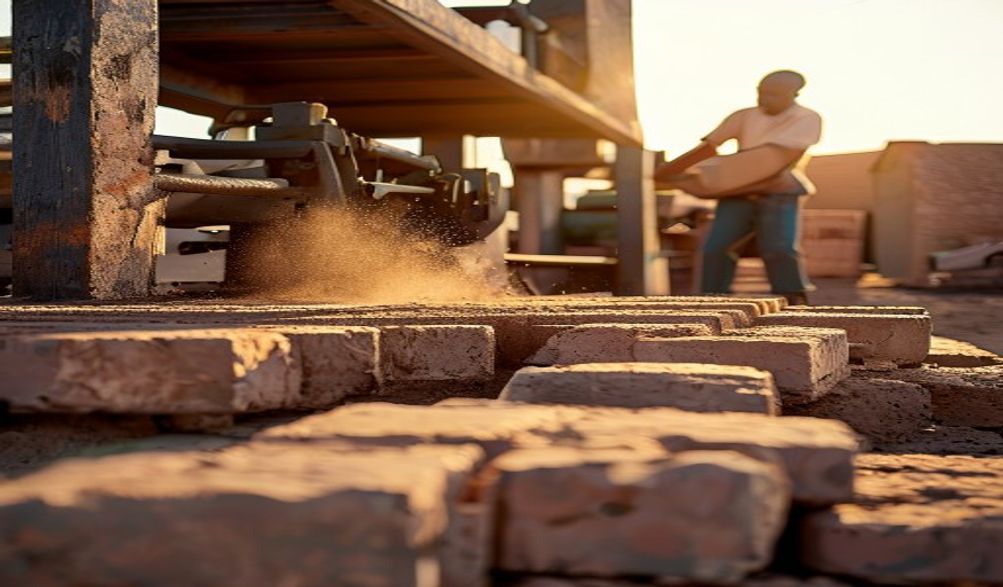
Kouman Pou Chwazi Yon Machin pou Fè Brik: Yon Gid Pri ak Achtè pou Ugand
Entwodiksyon
Si w se yon mason, kontraktè, oswa antreprenè nan Uganda, w te santi presyon an. Demann pou lojman ak enfrastrikti bon jan, abòdab ap ogmante, ak opòtinite a nan sektè konstriksyon an reyèl. Ou konnen ke deplase soti nan travay manyèl oswa apwovizyonman blòk enkonsistan pou posede pwòp pwodiksyon brik ou se yon etap lojik ak pwofitab. Men, lè w kòmanse gade pri machin fè brik nan Uganda, nimewo yo kapab fè tèt vire. Soti nan kèk milyon rive nan plizyè santèn milyon de Shillings Uganda, kijan w ka chwazi?
Men verite a ke pwofesyonèl eksperyans konnen:Konsantre sèlman sou pri acha a se pi vit chemen pou fè yon erè ki ka koute chè.Pi machin ki pi bon mache a ka vin pi chè byen ou posede nan moman li mennen nan tan avèg, blòk move kalite, ak mank de sipò.
Dapre anpil ane nou pase ap konsilte ak konpayi konstriksyon ak pwopriyetè blòk lakou atravè Afrik lès, gid sa a diferan. Nou pa pral jis bay lis pri. Nou pral anseye ouKouman pou chwazi pri yon machin pou fè brik nan Uganda by connecting that upfront cost to long-term value, reliability, and the realities of running a successful business here. We’ll look beyond the sticker price to the total cost of ownership, helping you make an investment that builds your business, not holds it back.
Understanding What Drives Brick Machine Prices in Uganda
The price tag on a brick making machine isn’t arbitrary. It’s a direct reflection of its capabilities, durability, and sophistication. Understanding these factors turns you from a passive buyer into an informed investor.
Kalite Machin & Nivo Otomatik
This is the single biggest price determinant. The spectrum ranges from pure manpower to fully automated plants.
-
Manual Machines (Lowest Cost): These are hand-operated presses, like those for interlocking stabilized soil blocks (ISSBs). You provide all the force.
- Enplikasyon Pri:Envestisman inisyal ki pi ba.
- Uganda Context: Ideal for individual builders, very small startups, community projects, or NGOs focusing on specific building techniques. Output is limited by human stamina.
-
Semi-Automatic Machines (Mid-Range): These machines use a motor (electric or diesel) to compress the block, but operations like feeding raw material and removing finished blocks are manual.
- Enplikasyon Pri: A significant step up in price, but also in consistent output and block quality.
- Uganda Context: The sweet spot for many growing businesses. They offer a great balance between productivity, cost, and simplicity of maintenance. Common types include “egg-laying” mobile machines and stationary block makers.
-
Fully Automatic Machines (Highest Cost): These are complete production lines. They automate mixing, conveying, compaction, curing, and sometimes stacking. Human intervention is minimal.
- Enplikasyon Pri: The highest capital expenditure.
- Uganda Context: Reserved for large-scale commercial block yards supplying major construction projects or multiple retailers. They require significant space, stable power, and skilled oversight.
Kapasite Pwodiksyon (Blòk Pa Lè/Jou)
Price scales directly with output. A machine rated for 1,000 blocks per day will cost less than one rated for 10,000. Crucially, you must assess your reyalistik market demand.
- Ask Yourself: Are you supplying a single project, a local community, or a city-wide market? Overestimating demand leads to an idle, depreciating asset. Underestimating it means leaving money on the table and struggling to meet orders.
Mak ak Peyi Orijin
The market in Uganda is diverse, primarily featuring machines from China, India, and local assemblers.
- Established International Brands: Often come with a price premium. This can reflect better engineering, higher-grade materials, and (sometimes) more robust quality control. The critical factor is whether that brand has a dedicated after-sales network in East Africa.
- Local Assemblers: Can offer competitive prices and the huge advantage of local support. They understand the Ugandan operating environment, soil conditions, and can source or fabricate parts locally.
- Prensipal Pwen The country of origin is less important than the specific supplier’s reputation and commitment to the Ugandan market. A reliable Chinese supplier with a Kampala-based technician is far better than a “branded” machine with no local support.
Karakteristik Kle & Kalite Konstriksyon
This is where cost-cutting happens on cheaper models. Inspect:
* Motor Power & Type: A branded, correctly rated motor costs more but lasts longer.
* Frame & Welding: A robust, heavy-duty steel frame resists the constant vibration of operation.
* Kalite Mwazi: Hardened steel moulds are more expensive but produce consistent blocks and last for years. Cheap mild steel moulds wear out quickly, affecting block dimensions.
* Sistèm Melanj: Is it a simple pan or a more efficient forced-action mixer? Better mixing means stronger, more consistent blocks.
A Realistic Price Range Guide for Uganda (2026)
Note: Prices are indicative and can fluctuate based on forex rates, shipping costs, and supplier specifics. Always get fresh, itemized quotes.
Entry-Level (Manual & Small Semi-Auto)
- Pri: UGX 5,000,000 – UGX 25,000,000.
- Egzanp: Manual interlocking brick presses (e.g., Makiga-style), small mobile single-block semi-automatic machines.
- Pi Bon Pou: Individual builders managing their own projects, micro-enterprises, youth/women’s groups starting out, NGOs in community development.
Mid-Range (Semi-Automatic & Standard Automatic)
- Pri: UGX 30,000,000 – UGX 80,000,000.
- Egzanp: Stationary block makers (like the popular “block master” machines) with conveyor belts, producing multiple blocks per cycle. Higher-output egg-laying machines.
- Pi Bon Pou: The core of a serious block-making business. Suitable for entrepreneurs supplying several construction sites, contractors looking to vertically integrate, and established block yards expanding capacity.
High-Capacity (Fully Automatic Plants)
- Pri: UGX 100,000,000 and far beyond.
- Egzanp: Fully automated lines with automatic batching plants, conveyor systems, robotic pallet handling, and curing racks.
- Pi Bon Pou: Industrial-scale production. Investors targeting large contracts with real estate developers, government projects, or supplying a network of retailers across a region.
The True Cost of Ownership: Beyond the Purchase Price
The smartest buyers budget for the machine’s entire lifecycle cost, not just the invoice.
Import Duties, Taxes & Logistics
If you’re importing directly, the CIF (Cost, Insurance, Freight) price is just the beginning. You must factor in:
* Import duty (rates vary by machine type)
* Value Added Tax (VAT)
* Port handling and clearing agent fees
* Inland transportation from Mombasa or Dar es Salaam to your site in Uganda.
* Konsèy Pwofesyonèl: Always ask suppliers for a detailed breakdown of CIF Mombasa/Dar vs. Delivered to Site costs. A local dealer’s price often includes all this, simplifying the process.
Installation, Commissioning & Operator Training
Does the price include a technician coming to install the machine and train your crew? If not, budget for:
* A local engineer or welder for base preparation and installation.
* Potential costs for the supplier to send a technician (flights, accommodation).
* Lost time if your team struggles with self-installation.
Spare Parts Availability & Cost
This is non-negotiable. A broken machine that sits idle for weeks waiting for a part from overseas is a business killer.
* Ask: “What are the most common wearing parts (e.g., moulds, springs, bolts), and do you stock them in Uganda or Kenya? What is the typical delivery time?”
* Budget for an initial spare parts kit.
Energy Consumption (Fuel vs. Electricity)
Your running costs are dictated by your power source.
* Motè Dizèl: Offer independence from grid power but subject to volatile fuel prices. Calculate your cost per block based on engine efficiency and local diesel prices.
* Motè Elektrik: Generally cheaper to run and cleaner, but require a reliable grid or substantial investment in a generator. Consider the cost of a three-phase connection if needed.
How to Vet Suppliers and Get the Best Value
Your relationship with the supplier is as important as the machine itself.
Local Dealers vs. Direct Import: Pros and Cons
| Local Dealer | Direct Import |
| :— | :— |
| Avantaj: Local after-sales support, easier communication, faster parts supply, may handle customs. | Avantaj: Potentially lower initial machine price, direct contact with manufacturer. |
| Desavantaj: Price may include their markup, choice of brands may be limited. | Desavantaj: Logistical complexity, no local support, language/time zone barriers, huge risk if something goes wrong. |
Essential Questions to Ask Any Supplier
- “What is the warranty period and what does it specifically cover?”
- “Do you have a service technician based in Uganda or East Africa? What is your response time?”
- “Can you provide contact details for 2-3 clients in Uganda or neighboring countries who have bought this same model?”
- “Do you provide full operation and maintenance manuals in English?”
- “What is the lead time for critical spare parts?”
- “Will you provide installation guidance or video support?”
The Importance of Site Visits & Demos
This is the most critical step. If a supplier cannot arrange for you to see a working machine of the model you want, in Uganda, consider it a major red flag. Talk to the current owner. Ask:
* “How reliable has it been?”
* “How responsive is the supplier when you have an issue?”
* “What were the hidden costs?”
* “What would you do differently?”
Step-by-Step Checklist for Your Purchase Decision
Follow this practical roadmap to a confident purchase.
- Assess Your Needs: Define your required block type (interlocking, hollow, solid, paving), realistic daily output, and available power source (diesel/electric).
- Set Your Total Budget: Sum the purchase price + estimated import taxes/duties + logistics + installation + initial spare parts kit (at least 5-10% of machine cost).
- Research & Shortlist: Find 3-5 suppliers (local and international) with machines that match your needs. Use online directories, trade associations, and word-of-mouth.
- Request Detailed Quotes: Demand itemized quotes that separate machine cost, shipping, insurance, and any other fees. Compare apples to apples.
- Due Diligence: Check supplier references rigorously. Visit their past installations. Search for their company name online with keywords like “complaint” or “review.”
- Negotiate & Clarify: Finalize all terms: payment schedule (avoid 100% upfront), warranty certificate, training details, and what documentation is included.
- Plan for Operation: Ensure your site is ready (level ground, shelter), power/fuel is arranged, raw material sources (cement, sand, aggregate) are secured, and you have identified operators.
Kesyon yo poze souvan (FAQ)
Q: What is the cheapest type of brick making machine available in Uganda?
A: Manual presses are the lowest upfront cost, often starting around UGX 5 million. However, they are labor-intensive and have low output. The true “cheapest” option is the one that offers the best balance of affordable purchase price and low operating cost for your specific scale.
Q: Are Chinese brick making machines in Uganda reliable?
A: The market is vast. There are both excellent and poor-quality Chinese manufacturers. Reliability comes from the specific factory’s quality control and, more importantly, the local supplier’s commitment to support. Focus on the supplier’s track record in Uganda, not stereotypes about origin.
Q: Can I get a loan or financing for a brick machine in Uganda?
A: Yes. Several financial institutions, SACCOs, and microfinance organizations offer asset financing for productive equipment like brick machines. You will typically need a solid business plan, some collateral, and possibly a down payment. The Uganda Development Bank (UDB) also has programs for business equipment.
Q: How much profit can I make from a brick making machine in Uganda?
A: Profitability is highly variable. It depends on your location (transport costs), operational efficiency, cost of raw materials (cement, sand), and the selling price of blocks in your area. A basic calculation: (Selling Price per Block – Cost of Materials per Block – Daily Operating Costs) x Daily Output. High-volume, efficient operations with good market access see the best margins.
Q: Where can I find training on operating and maintaining the machine?
A: Your supplier should be the primary source. Reputable ones include comprehensive training. Additionally, you can explore short courses at institutions like the Directorate of Industrial Training (DIT) or vocational colleges like Uganda Technical College – Elgon or Kisubi, which may offer relevant mechanical and production skills.
Konklizyon
Choosing a brick making machine in Uganda is a significant investment in your future. As we’ve outlined, the “right” price is not the lowest number you see on a website. It is the price that represents the best total value—combining a reliable machine, a supportive supplier, and a realistic understanding of your long-term operating costs.
Let your final decision be guided by this expert advice: Prioritize total cost of ownership and supplier trustworthiness above all else. A slightly higher initial investment in a quality machine from a partner who will be there for you in two years is infinitely wiser than a “bargain” that becomes a source of constant frustration and lost revenue.
We hope this guide empowers you to make a confident, profitable choice for your business. Have a specific scenario or need further clarification? Feel free to share your questions or experiences below—building a community of knowledge benefits all of us in Uganda’s vibrant construction sector.
<