
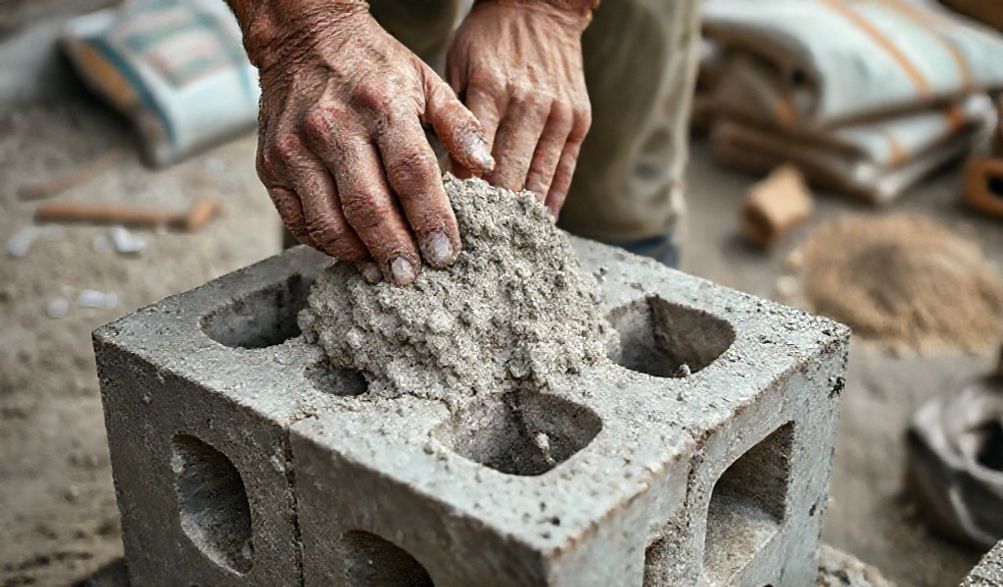
Kòman Pou Fè Blòk Beton: Yon Gid Detaye Pou Moun Ki Renmen Fè Travay Kay Yo ak Moun Ki Nan Konstriksyon
Gade nan nenpòt katye, vil, oswa fèm, epi w ap wè yo. Blòk siman, ke yo rekonèt ofisyèlman kòm Inite Masonry Siman (CMU), se ewo san non nan mond konstriksyon an. Soti nan fondasyon anba kay ou a, rive nan mi ranfò nan jaden ou a ak fasad dekoratif bilding modèn yo, fòs yo, dire yo, ak adaptabilite yo san parèy. Men, sa ki ta rive si ou te kapab kreye blòk fondamantal sa yo pou kont ou?
Avec plis pase 15 an eksperyans pratik nan masonnri ak konstriksyon, mwen te poze ak fabrike dè milye blòk pou pwojè ki soti nan ti kabinèt senp rive nan jaden konplèks, mwen aprann ke siksè a chita nan detay yo. Gid sa a fèt espesyalman pou amatè angaje brikole, ti konstriktè, ak moun ki vle depann sou tèt yo pou kay yo. Kit w ap planifye yon ti mi jaden, yon atelye lakou, oswa tou senpleman vle konprann pwosesis la pou w ka evalye pi byen travay pwofesyonèl yo, ou nan bon kote a.
Nou pwomèt yon eksplikasyon klè, ki mete an premye sekirite, ak anpil detay. Nou pral kouvri tout bagay, soti nan jwenn materyòl yo rive nan pwofite pafè...melanj blòk konkrènan men pratik yopwosesis etap pa etapnan moule ak syans ki pa ka negosye nanpwosesis gerizonNan fen an, ou pral konprann pa sèlmanki jan pou fè blòk beton simanmen, kijan pou fè yobyenAnn bati konesans sa a, depi nan baz la.
Konprann Blòk Beton Siman (CMU yo)
Anvan ou melanje yon sèl grenn sab, li enpòtan pou konprann sa w ap fè ak poukisa w ta ka chwazi fè li pou kont ou.
Kisa se blòk beton?
Yon blòk beton se yon materyèl konstriksyon prefabrike ki fèt ak yon melanj de siman Portland, agrega fin (tankou sab), agrega gwo (tankou gravye), ak dlo.Blòk beton fè tèt ouyo fòme an fòm estanda—pi souvan blòk rektangilè 8″x8″x16″—ak youn oswa plizyè twou vid pou redwi pwa epi amelyore izolasyon. Itilizasyon prensipal yo se nan konstwi mi, fondasyon, patisyon, ak lòt eleman estriktirèl. Yo bay bon jan fòs konpresyon, rezistans dife, ak mas tèmik.
Avantaj pou Fè Blòk Ou Menm
- Ekonomi nan depans:Pou gwo pwojè, pwodui blòk ou menm ka diminye depans materyèl yo anpil, sitou si ou gen aksè a agrega lokal yo.
- Pèsonalizasyon:Ou kontwole melanj la, koulè a (ak pigman), e menm gwosè a si ou bati mòl personnalize. Vle yon ton yon ti kras diferan oswa yon dimansyon inik pou yon pwojè espesyal? Se ou menm ki bòs la.
- Satisfaksyon Pwojè ak OtonomiGen yon fyète imans nan konstwi yon bagay depi nan rasin li. Lè w fè blòk yo tèt ou, sa ap apwofondi koneksyon w ak pwojè a epi bati konpetans ki enestimab.
- Avantaj Logistik:Pou kote ki lwen kote transpòte blòk fini ki lou yo chè oswa difisil, fè yo sou plas la ka sèl solisyon pratik la.
Sekirite An Premye: Ekipman Pwoteksyon Pèsonèl (EPP) Esansyèl ak Prekosyon
Travay nan beton gen satisfaksyon, men li mande respè. Siman an ka boule, pousyè a nwizib, ak materyo yo lou. Mete sekirite an premye se yon bagay ki pa diskutab pou yon mason serye. Toujou mete:
* Lunèt pwoteksyon: Protect your eyes from cement dust and splashes.
* Respirator/Dust Mask: N95 or better to avoid inhaling fine silica dust.
* Heavy-Duty Gloves: Prevent skin irritation from cement and abrasions.
* Sturdy Boots: Steel-toe boots are ideal for protecting feet from heavy drops.
* Long Pants and Sleeves: Minimize skin exposure.
Work in a well-ventilated area, lift with your legs—not your back—and keep a clean workspace to avoid trips and falls.
Essential Materials and Tools You’ll Need
Gathering the right components is 80% of the battle. Here’s your comprehensive checklist.
Core Materials: Cement, Aggregates, and Water
- Siman Pòlandè: This is the binding agent. Type I/II general-purpose cement is perfect for most concrete block mixtures. Buy fresh, bagged cement from a reputable supplier and store it in a dry place.
- Fine Aggregate (Sand): Use sharp, clean concrete sand—not soft masonry sand or beach sand. It should be free of clay, silt, and organic matter. The grains provide density and workability.
- Coarse Aggregate (Gravel): For strong blocks, you need crushed stone or gravel. A 3/8-inch to 1/2-inch size is ideal for block making, allowing for good compaction without being too large for the mold.
- Dlo: Clean, potable water is essential. Never use water from a pond or ditch, as impurities can weaken the final block.
The Right Tools for the Job
Your method defines your toolset.
For the Manual Method:
* Block Molds: Steel molds are durable and give sharp edges; plastic molds are lighter and cheaper. Ensure they are designed for the block size you want.
* Mixing Tub or Mortar Pan: A large, shallow tub for hand mixing.
* Shovel and Hoe: For combining dry materials and mixing in water.
* Trowel: For striking off excess mix from the top of the mold.
* Manipile A heavy, flat-ended tool (often homemade from wood and metal) to compact the mix in the mold.
* Pallets & Plastic Sheeting: Wooden pallets to place fresh blocks on and plastic to cover them for curing.
* Mold Release Agent: Non-stick cooking spray, used motor oil (sparingly), or commercial form oil to prevent sticking.
Semi-Mechanized Option:
For higher output, consider a manual press (like a Cinva-Ram style) or an electric machin pou fè blòk beton. These machines use lever action or vibration to apply significant compaction force, producing denser, more consistent blocks much faster than hand tamping.
Setting Up Your Workspace
Choose a flat, level area that is shaded from direct sun and protected from wind. You’ll need:
* Easy access to a water source.
* Space for material storage, mixing, molding, and curing.
* A solid surface (like a concrete slab or tightly packed earth) for the molding operation.
* Ample space for blocks to cure undisturbed for several weeks.
The Perfect Concrete Mix Design for Blocks
The strength and durability of your block live and die by the mix. It’s a recipe that requires precision.
Standard Mix Ratios for Different Block Strengths
A common mix ratio for general-purpose, non-structural blocks is 1:3:5 (Cement:Sand:Gravel) by volume. For stronger blocks, suitable for garden walls or low structures, a 1:2:4 mix is better. Remember, these are “parts” by volume—not weight.
| Block Use Case | Cement | Sand | Gravel | Notes |
| ———————– | :—-: | :–: | :—-: | ————————————– |
| General Use | 1 | 3 | 5 | Good for planters, non-load bearing |
| Higher Strength | 1 | 2 | 4 | Better for walls, small outbuildings |
| Paver/Decorative | 1 | 2 | 3 | Denser, smoother finish possible |
How to Calculate Materials for Your Project
Let’s say you’re using the 1:3:5 mix for 100 blocks. A standard 8″ block mold requires about 0.6 cubic feet of mixed concrete.
1. Total Volume Needed: 100 blocks x 0.6 ft³ = 60 ft³ of mixed concrete.
2. Sum the Ratio Parts: 1 + 3 + 5 = 9 total parts.
3. Volume per Part: 60 ft³ / 9 = ~6.67 ft³ per part.
4. Material Breakdown:
* Cement: 1 part = 6.67 ft³ (About 13-14 bags, since 1 bag = 0.5 ft³)
* Sand: 3 parts = 20 ft³
* Gravel: 5 parts = 33.3 ft³
Always mix a small test batch first!
Mixing Process: Achieving Consistent Quality
Consistency is king. Follow this order:
1. Dry Mix: On a clean, flat surface or in your tub, thoroughly blend all the sand and gravel until the color is uniform.
2. Add Cement: Spread the cement evenly over the top of the aggregate pile and mix until the entire pile is a consistent gray color, with no streaks of brown aggregate.
3. Form a Crater: Make a large crater or well in the center of your dry mix pile.
4. Add Water Gradually: Pour about 3/4 of your estimated water into the crater. Using your shovel or hoe, slowly pull the dry mix into the water from the edges inward. Add more water as needed, but sparingly.
5. Target Consistency: The perfect mix for blocks is “stiff” or “low-slump.” It should hold its shape when squeezed in a gloved hand (like damp soil for making a snowball), not soupy or crumbly. Too much water is the #1 mistake; it drastically weakens the final block.
Step-by-Step Block Making Process
Now for the main event. Patience and technique here pay off in spades.
Step 1: Preparing and Oiling the Molds
Ensure your mold is clean, dry, and assembled tightly. Apply a thin, even coat of your chosen release agent to every interior surface. This step is crucial to prevent blocks sticking to the mold.
Step 2: Filling and Compacting the Mix
Place your oiled mold on a solid, flat surface (like a pallet).
1. Layer Fill: Shovel your stiff mix into the mold cavities. Don’t just dump it in. Fill them about halfway first.
2. Tamp Thoroughly: Use your tamper to apply firm, even pressure across the entire surface of the mix. The goal is to eliminate all air pockets, which are points of weakness.
3. Second Fill & Tamp: Fill the mold to overflowing and tamp again with even greater force. Proper konpakte is what gives a homemade block its density and strength.
4. Strike Off: Using a straight-edged trowel, scrape the excess mix off the top of the mold to create a smooth, flat surface.
Step 3: Stripping the Molds (De-molding)
This requires a gentle touch. Carefully lift the mold straight up and off the freshly formed “green” block. If the mix was right and the mold was oiled, it should release cleanly. If it resists, tap the sides of the mold gently with a rubber mallet. Never force it.
Step 4: The Critical Curing Process
Curing is not drying. It is the chemical process where cement reacts with water to gain strength. Skipping proper curing results in blocks breaking easily.
* Initial Set: Let the blocks sit undisturbed on their pallets for 24-48 hours, covered with plastic sheeting to retain moisture.
* Water Curing: After initial set, the blocks need to stay moist for at least 7 days. You can:
* Sprinkle them thoroughly 2-3 times a day.
* Pond them by building a small berm around the pallet and flooding it with a shallow layer of water.
* Keep them covered with water-saturated burlap or plastic.
* Duration: For optimal strength, cure for 28 days. A block at 7 days has only about 60-70% of its potential strength. After 28 days, it’s considered to have reached its full design strength.
Troubleshooting Common Block Making Problems
Even experts face issues. Here’s how to diagnose and fix them.
Blocks Breaking Easily (Weakness)
- Cause: Incorrect mix ratio (too little cement), insufficient compaction (air pockets), or poor/inadequate curing.
- Fix: Re-check your ratios, tamp with more deliberate force, and commit to a full, wet curing period.
Surface Cracks or Imperfections
- Cause: Too much water in the mix (causes shrinkage cracks), rapid drying in sun/wind, or de-molding too early when the block is still too soft.
- Fix: Use a stiffer mix, work in the shade, cover blocks immediately after molding, and wait longer before stripping the mold.
Blocks Sticking to the Mold
- Cause: Inadequate or uneven application of mold release agent.
- Fix: Be generous and thorough with oiling before every pour. Ensure the mold is completely clean.
Frequently Asked Questions (FAQ) About Making Concrete Blocks
Q: What is the difference between cement, concrete, and a concrete block?
A: This is a fundamental distinction. Siman (specifically Portland cement) is the fine gray powder that acts as the “glue.” Konkrè is the composite material made by mixing cement, sand, gravel, and water. A concrete block is a pre-formed, hardened shape made from concrete, designed as a building unit.
Q: How long do homemade concrete blocks need to cure before use?
A: While they can be handled after 2-3 days, they should not be subjected to any load. A minimum of 7 days of proper wet curing is essential. For full structural strength, allow them to cure for 28 days before building with them.
Q: Can I use homemade blocks for load-bearing walls or foundations?
A: This is a critical point for safety and fyabiltite. For non-critical projects like garden walls, planters, or decorative features, well-made homemade blocks are excellent. However, for primary load-bearing walls, foundations, or any structural element of a habitable building, we strongly advise against it. These applications require blocks that meet strict ASTM or CSA standards for compressive strength, absorption, and dimensional tolerance, which are consistently achieved in controlled factory environments. Always consult a structural engineer for load-bearing projects.
Q: How many blocks can I make in a day by hand?
A: Manage your expectations. A solo worker with a single mold, mastering the workflow, can realistically produce 30-50 blocks in a full day. The limiting factors are mixing time, compaction effort, and space for curing.
Q: Do I need to use a block-making machine?
A: It depends on scale and goals. For a small project (<100 blocks), hand molding is cost-effective. For larger projects (100+ blocks), a manual press or electric machin pou fè blòk beton saves immense time and labor, produces more consistent and denser blocks, and is a worthwhile investment if you plan future projects.
Konklizyon
Making your own cement concrete blocks is a deeply satisfying fusion of craft and science. We’ve walked through the key phases: selecting quality materials, designing a precise mix, mastering the techniques of filling and compaction, and honoring the patient, critical pwosesis gerizon. This guide is built on a foundation of practical field experience, aiming to equip you with best practices, not just theory.
The best way to learn is by doing. Start with a small test batch—make ten blocks. Practice your mix, your tamp, and your curing routine. See how they turn out. The knowledge you gain will be solid as, well, concrete.
We’d love to hear about your projects! Share your experiences or questions in the comments below. For your next step, consider reading our guide on “How to Lay Concrete Blocks” to complete your skillset. For the most authoritative information on material specifications, we recommend visiting the Portland Cement Association website.
<