
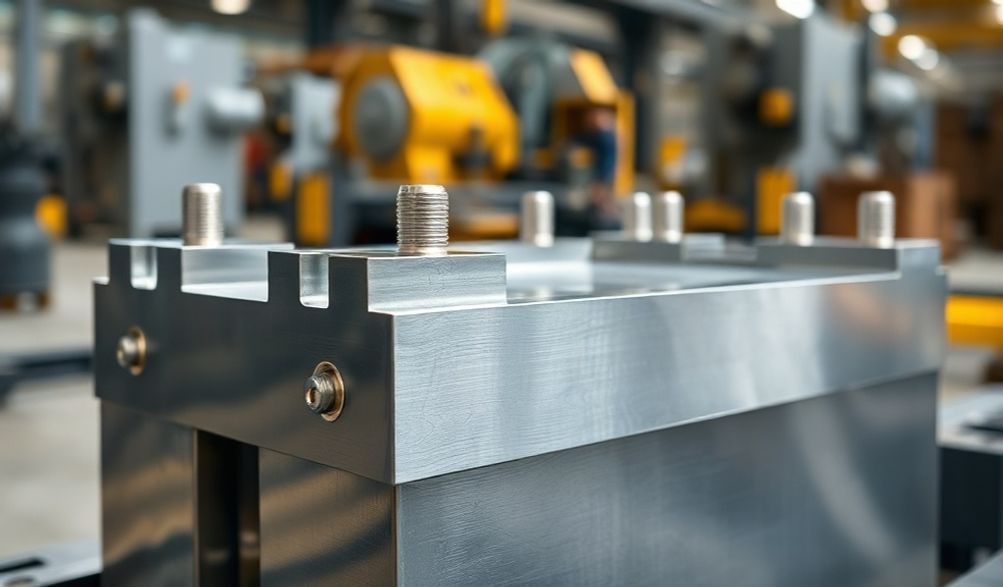
Your Ultimate Guide to Cement Block Machine Molds from FUDA Factory, China
Entwodiksyon
You’ve calibrated the mixer, sourced premium cement, and optimized your labor schedule. Yet, on the production floor, you’re facing the same frustrating bottlenecks: inconsistent block dimensions, rough surface finishes that slow bricklaying, and the constant, costly interruption of replacing worn-out molds. If this sounds familiar, you’re not alone. The root of these pervasive issues in block manufacturing often lies not in the machine itself, but in the very heart of its operation—the mold.
This comprehensive guide zeroes in on professional-grade cement block machine molds, with a specific focus on sourcing from one of the industry’s notable hubs: the FUDA brick making machine factory in China. With over a decade of experience analyzing construction machinery supply chains and component performance, this post is built on a foundation of technical evaluation and market understanding. Our commitment is to deliver factual, vendor-neutral information, empowering you to make confident, informed procurement decisions.
By the end of this guide, you will possess a clear framework for identifying high-quality molds, deciphering key technical specifications, and expertly navigating the sourcing process from a reputable Chinese manufacturer. Let’s transform your mold from a recurring cost center into a pillar of production efficiency.
Why Cement Block Machine Molds Are the Heart of Your Production
Think of your block making machine as a sophisticated system. While the hydraulic power and vibration are its muscles, the mold is its precision-engineered heart. It is the critical interface where raw material becomes a standardized building product. Compromising on mold quality inevitably compromises your entire output.
The Critical Role of Molds in Block Quality & Consistency
The mold’s interior cavity is the literal blueprint for every block you produce. Its precision dictates everything:
- Presizyon Dimansyonèl: Even a millimeter of deviation in the mold cavity translates to blocks that don’t fit together properly. This affects interlocking systems, complicates mortar application, and can lead to structural weaknesses in a wall.
- Fini Sifas: A smooth, precisely machined mold surface produces blocks with clean edges and faces. Rough surfaces cause poor demolding, increase waste, and result in blocks that are harder and more expensive to lay.
- Entegrite Estriktirèl: Consistent wall thickness and sharp corner definition—both controlled by the mold—are non-negotiable for the compressive strength and durability of the final block. A poor mold creates weak points.
How a Superior Mold Impacts Operational Efficiency & Cost
The financial argument for investing in a superior mold is compelling. It’s a shift from viewing molds as consumables to treating them as capital assets.
- Redwi Tan Mouri: High-quality molds, built from advanced alloys and proper heat treatment, resist abrasion far longer. This dramatically extends the interval between replacements, minimizing costly production halts.
- Higher Productivity: Optimized mold design and surface finish facilitate faster, cleaner demolding. This allows for quicker cycle times, directly boosting your output per shift without needing a faster machine.
- Lower Total Cost of Ownership: While the initial price tag of a premium mold may be higher, its extended service life and reduced maintenance needs lead to a significantly lower cost per block produced over time.
Deep Dive: FUDA Brick Making Machine Factory – An Expert Overview
When sourcing critical components like molds from China, the manufacturer’s expertise is paramount. Factories like FUDA have built their reputation on specializing in block production technology. When evaluating such a supplier, here is what you should look for to ensure they meet professional standards.
Company Profile & Manufacturing Expertise
A credible factory should be transparent about its operations. Key indicators of a serious manufacturer include:
- Established History: Look for a track record of 10+ years in the machinery industry, indicating stability and accumulated experience.
- Espesyalizasyon: Factories focused on brick and block making machinery (as opposed to general machining) typically possess deeper application knowledge.
- Sètifikasyon yo: International standards like ISO 9001 for quality management systems and CE marking (for machinery sold in certain markets) are strong signals of a commitment to standardized processes.
- Scale & Capacity: The ability to handle both standard and custom orders, with in-house heat treatment and machining facilities, suggests vertical integration and quality control.
Core Technologies and Material Innovation in Their Molds
The distinction between an average and an exceptional mold lies in the details of material science and manufacturing precision. Leading factories invest heavily here.
Advanced Steel Alloys and Heat Treatment Processes
The base material is the first line of defense.
- High-Chromium Alloy Steel (e.g., Cr15, Cr20): This is the industry benchmark for abrasion resistance. The chromium content forms hard carbides that withstand the constant grinding of sand and cement.
- Quenching & Tempering: This two-step heat treatment process is crucial. Quenching increases hardness, while tempering reduces brittleness, resulting in a mold that is both hard-wearing and tough enough to resist cracking under cyclic stress.
Precision Engineering & CNC Machining
Consistency across every cavity of every mold is impossible without computer-controlled machining.
- Sant Machining CNC: These ensure that every dimension of the cavity—depth, width, taper—is identical to the digital design file, guaranteeing block-to-block uniformity.
- Tolerances: Professional factories work to tight tolerances (often within ±0.05mm), which is essential for producing blocks that meet strict ASTM or EN standards.
Specialized Coatings for Enhanced Performance
For extreme environments or specific applications, advanced surface treatments add another layer of performance.
- Hard Chrome Plating: Electroplated chrome provides an extremely hard, low-friction surface that further resists wear and corrosion, and significantly eases demolding.
- Nitriding: A thermal-chemical process that diffuses nitrogen into the steel surface, increasing hardness and wear resistance without the risk of flaking like some platings.
Key Specifications When Sourcing Molds from FUDA or Similar Factories
Navigating a technical specification sheet is key to a successful purchase. Here’s how to translate specs into real-world performance expectations.
Compatibility: Matching the Mold to Your Machine Model
This is the most critical step. An incompatible mold is useless.
- Absolute Must-Haves: You must provide the supplier with:
- Machine Make and Exact Model (e.g., Zenith 940, QGM Quangong 1200).
- Gwosè Palèt (length x width x thickness).
- Clear photos or drawings of the mold mounting system on your machine.
- Konsèy Pwofesyonèl: If possible, share the original mold part number or technical drawing. Never assume compatibility based on machine type alone.
Design & Configuration: Block Types and Cavity Details
What are you producing? The mold must be configured for your specific product mix.
- Kalite Blòk Komen:
- Blòk vid: For structural walls, offering strength with reduced weight and material use.
- Blòk Solid: For foundations, paving, and high-load applications.
- Pavyon ak Blòk Entèbloke: For landscaping and paving; require precise dimensions for proper fit.
- Cavity Count: This defines your output per cycle (e.g., a 4-cavity mold for standard blocks produces 4 blocks per cycle). Balance higher output with the required vibration force and machine capacity.
Durability Metrics: Understanding Wear Life and Maintenance
Suppliers may quote a “production cycle life.” Understanding this requires context.
- Cycle Life Expectation: A mold from a quality factory using high-chromium steel should be capable of 500,000 to over 1 million cycles under normal operating conditions with proper maintenance.
- Maximizing Lifespan: Your maintenance routine is a force multiplier for mold life.
- Daily: Thorough cleaning to prevent cement buildup, which can cause corrosion and dimensional issues.
- Weekly: Inspection for wear or damage, especially on edges and corners.
- Lubrikasyon Apply a recommended release agent or thin oil film to reduce friction and wear.
Navigating the Procurement Process with a Chinese Manufacturer
A smooth procurement process hinges on clear communication, structured quality checks, and understanding the logistics chain.
Effective Communication: From Inquiry to Technical Clarification
Your initial inquiry sets the tone. Clarity prevents costly misunderstandings.
- Prepare a Detailed RFQ (Request for Quotation): Include all compatibility data, block design drawings, required quantity, and target price.
- Essential Questions to Ask:
- “Can you provide the Mill Test Certificate for the steel used?”
- “What is the exact hardness (HRC) after heat treatment?”
- Kisa 80-20 la?warranty policy and what does it cover?”
- “Can you share a production timeline with milestones?”
Quality Assurance: Inspection Protocols and Sample Requests
Trust, but verify. Proactive quality checks protect your investment.
- Material Certification: Insist on the MTC (Mill Test Certificate). This is your proof of steel grade.
- Pre-Production Sample: For custom designs, request a single-cavity sample mold for testing on your machine before full production begins.
- Pre-Shipment Inspection (PSI): For large orders, consider hiring a third-party inspector to verify dimensions, hardness, finish, and packaging at the factory before shipment.
Logistics, Shipping, and After-Sales Support
The final mile is as important as the first.
- Understanding Incoterms:
- FOB (Free On Board): You pay for the mold loaded on the ship. You control and pay for the main shipping freight and insurance. Offers more control and often lower cost.
- CIF (Cost, Insurance, Freight): The supplier arranges and pays for shipping to your port. Simpler but often more expensive, with less control over the shipping process.
- Sipò Apre Vann Confirm before ordering:
- Availability of technical drawings for future reference.
- Spare parts policy for wear plates or other components.
- Access to technical support for troubleshooting.
Kesyon yo poze souvan (FAQ)
Q1: What is the typical lead time for a custom cement block mold from a Chinese factory like FUDA?
A: For a custom design, expect a lead time of 30 to 60 days from order confirmation to shipment. This depends on design complexity, current factory workload, and order quantity. Standard molds may be available quicker.
Q2: Can I order molds compatible with my non-FUDA block making machine?
A: Yes, absolutely. Reputable manufacturers are mold specialists, not just machine sellers. They can produce molds for any major brand (Zenith, QGM, Hess, etc.) provided you supply precise specifications, drawings, or a sample. Accuracy in this information is critical.
Q3: How do I ensure I’m getting genuine high-chromium alloy steel and not an inferior material?
A: The only reliable method is to demand the Mill Test Certificate (MTC) or Material Test Report from the steel mill, provided by your supplier. This document verifies the chemical composition and mechanical properties of the steel batch used for your mold.
Q4: What are the payment terms usually expected?
A: Standard terms for industrial orders are 30% deposit with order, 70% balance before shipment. For larger orders, a Lèt Kredi (L/C) is common and provides security for both parties. Be wary of suppliers demanding full payment upfront.
Q5: What warranty is typically offered on these industrial molds?
A: A confident manufacturer will offer a 6 to 12-month warranty against manufacturing defects. Ensure you understand the terms: it typically covers issues like material flaws or workmanship errors but excludes normal wear and tear or damage from misuse.
Konklizyon
The cement block machine mold is far more than a replaceable part; it is a fundamental investment in the quality, efficiency, and profitability of your production line. Choosing a supplier is not merely a purchasing decision, but a strategic partnership. Factories like FUDA, which emphasize material science, precision engineering, and process control, represent the caliber of partner needed for long-term success.
As you move forward, let this guide serve as your checklist. Conduct thorough due diligence, ask the detailed technical questions outlined here, and prioritize verifiable performance metrics and reliable after-sales support over the allure of the lowest initial price. The true cost of a mold is measured over its entire service life, not on the day of purchase.
Your Next Step: Audit your current mold performance. Note down wear patterns, downtime frequency, and block quality issues. Then, prepare a comprehensive specification sheet detailing your machine data and block requirements. Use this document as the foundation for informed conversations with potential suppliers, ensuring you source the true heart of a reliable production system.
<