
The Complete Guide to Earth Brick Making Machines: Build Sustainably
Entwodiksyon
The global construction industry is at a crossroads. As the demand for housing and infrastructure grows, so does the scrutiny on the environmental and economic costs of conventional building materials. Fired clay bricks, a staple for millennia, are now recognized for their heavy toll: immense energy consumption, significant CO2 emissions, and rising costs that strain budgets worldwide.
But what if the most sustainable, durable, and affordable building material was right beneath our feet? Enter the earth brick making machine—a transformative piece of engineering that turns ordinary soil into high-strength building blocks. This technology isn’t about a return to primitive mud huts; it’s about leveraging modern compression mechanics to create standardized, robust compressed earth blocks (CEBs) and stabilized earth bricks.
This guide is designed to be your definitive resource. Drawing on principles of mechanical engineering, soil science, and real-world construction experience, we provide expert, practical, and trustworthy information. Whether you’re a builder, a contractor, an eco-entrepreneur, or a dedicated DIY enthusiast, you’ll gain a clear understanding of how these machines work, how to choose the right one, and how to harness their potential for your projects. Let’s explore how to build a more sustainable future, one compressed block at a time.
What is an Earth Brick Making Machine? Core Principles and Benefits
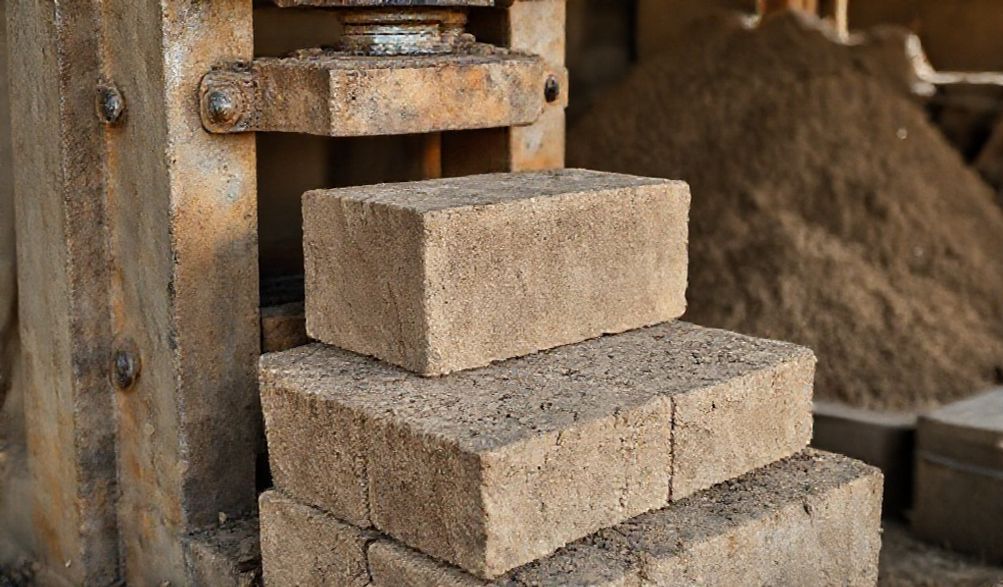
At its core, an earth brick making machine is a mechanical or hydraulic press designed to compact prepared soil into dense, regular-shaped blocks. It bypasses the energy-intensive firing process, using sheer pressure to create structural integrity.
Defining Compressed Earth Blocks (CEBs) & Stabilized Earth
The magic lies in the material. CEBs are made from subsoil—a mixture of clay, silt, and sand—often stabilized with a small percentage (typically 3-10%) of cement or lime.
- Adobe vs. CEBs: Traditional adobe bricks are sun-dried mud, which is less dense and more susceptible to erosion. CEBs are mechanically compressed at high force, resulting in a far stronger and more durable product.
- Fired vs. Unfired: Unlike fired clay bricks, CEBs are not baked in a kiln. This eliminates the fossil fuel consumption and associated emissions, making them a carbon-smart alternative.
- The Role of Stabilizer: Stabilizers like Portland cement or hydrated lime chemically bind with the soil particles, dramatically increasing the block’s compressive strength and resistance to water penetration.
How the Machine Works: The Mechanics of Compression
The process is elegantly simple but powerful.
- Chajman: A precise amount of damp, prepared soil mix is placed into a mold box.
- Konpresyon: A hydraulic ram or mechanical lever applies intense pressure—anywhere from 500 to over 2,000 PSI—compacting the soil particles and removing air voids.
- Ejeksyon: The newly formed, solid block is ejected from the mold, holding its shape perfectly.
This high-pressure compaction is what gives CEBs their remarkable strength, eliminating the need for firing.
Key Advantages of Using a Brick Press Machine
The benefits of this method span environmental, economic, and structural domains.
- Champion Anviwònman:
- Ultra-Low Carbon Footprint: No firing means up to 90% less embodied energy compared to fired bricks.
- Local & Abundant Material: Uses on-site or locally sourced soil, drastically reducing transport emissions.
- Minimal Waste: Any broken blocks or spoils can be crushed and reused in the mix.
- Economic Powerhouse:
- Rediksyon Drastik Pri Materyo: Soil is often free; only stabilizer and machine operation are primary costs.
- Pwodiksyon Sou Sit Cuts out middlemen, logistics, and storage costs for purchased bricks.
- Kreasyon Travay: Enables small-scale, local brick production enterprises.
- Sipèyorite Estriktirèl:
- Fòs Konpresif Segondè: Properly made CEBs easily meet building code requirements for load-bearing walls (2-10 MPa).
- Excellent Thermal Mass: Earth bricks absorb heat during the day and release it at night, naturally regulating indoor temperatures and slashing energy bills.
- Fire & Pest Resistance: They are non-combustible and inorganic, offering inherent safety and durability.
- Aesthetic Flexibility: The natural, earthy color and texture provide a warm, timeless aesthetic. Pigments can be added to the mix, and surfaces can be sculpted or finished in various ways.
Types of Earth Brick Making Machines: Choosing the Right Press
Selecting the correct machine is critical to your project’s success. The market offers options for every scale, from backyard hobbyists to industrial producers.
Manual Press Machines: For Small-Scale and DIY Projects
These lever-operated or hand-screw presses are the entry point into CEB production.
- Ideal Pou: Homesteaders, DIY builders, community projects, schools, and small artistic installations.
- Avantaj:
- Envestisman inisyal trè ba.
- Completely portable; no power required.
- Fasil pou opere ak antretyen.
- Desavantaj:
- Low output (40-100 blocks per day).
- Labor-intensive; physical effort affects consistency.
- Generally lower compression pressure.
Electric/Hydraulic Press Machines: For Semi-Automated Production
These are the workhorses for serious small-to-medium operations. They use an electric motor to power a hydraulic pump that drives the compression ram.
- Ideal Pou: Small-to-medium businesses, sustainable housing developments, contractor-led projects, and social housing initiatives.
- Avantaj:
- High, consistent output (200-800 blocks per day).
- Excellent, repeatable block quality and density.
- Significantly less operator fatigue.
- Desavantaj:
- Higher upfront cost.
- Requires a reliable power source (single or three-phase).
- Mantenans pi konplèks.
Fully Automatic Brick Making Plants: For Large-Scale Commercial Use
These are integrated systems with automated material feeding, mixing, pressing, and stacking.
- Ideal Pou: Commercial brick yards, large-scale development projects, and government infrastructure programs.
- Avantaj:
- Very high-volume production (thousands of blocks per day).
- Maximum consistency and labor efficiency.
- Often include integrated mixers and conveyor systems.
- Desavantaj:
- Substantial capital investment required.
- Needs significant space and industrial power supply.
- Requires skilled operators and maintenance crews.
Mobile vs. Stationary Machines: Assessing Your Site Needs
- Machin Mobil: Mounted on a trailer, these are perfect for producing bricks directly at a remote build site or for a business serving multiple locations. They eliminate soil and block transportation.
- Machin Estasyonè: Set up in a dedicated workshop or yard, these are optimal for fixed-location, high-volume production where soil is brought to the machine. They often allow for more robust, higher-output setups.
The Step-by-Step Process: From Soil to Finished Brick
Success with an earth brick making machine hinges on a meticulous process. Skipping steps compromises quality.
Phase 1: Soil Sourcing and Testing (The Most Critical Step)
Not all soil is created equal. The ideal mix is roughly 70% sand and gravel, 15-30% silt, and 5-15% clay.
- Simple Field Tests:
- Jar Test: Fill a clear jar 1/3 with soil, 2/3 with water, shake, and let settle. Layers will reveal approximate proportions.
- Ribbon Test: Moisten soil and try to roll it into a thin ribbon. If it forms a long ribbon, it’s clay-heavy; if it crumbles, it’s sandy.
- Professional Lab Testing: For any serious project, send a sample to a soils lab. They will provide a precise particle size analysis and recommend exact stabilizer percentages. This small cost prevents massive project failures.
Phase 2: Material Preparation: Sieving, Mixing, and Stabilizing
Preparation is 80% of the work.
1. Sieving: Remove all stones, roots, and organic matter using a screen (typically 10mm or 1/4″ mesh).
2. Melanj: Combine sieved soil with the correct percentage of stabilizer (e.g., cement). Use a mechanical pan mixer or rotary drum mixer for consistency. Dry-mix the soil and stabilizer thoroughly first.
3. Moistening: Add water gradually to achieve “optimum moisture content”—the soil should hold its shape when squeezed without dripping water. This is critical for achieving maximum density during compression.
Phase 3: Compression and Ejection: Operating the Machine
Follow the manufacturer’s instructions precisely.
* Wear appropriate safety gear (gloves, safety glasses).
* Load the mold box with a consistent, measured amount of mix.
* Initiate the press cycle. Ensure the machine reaches its full pressure.
* Eject the block smoothly onto a pallet or curing rack.
Phase 4: Curing and Quality Control
Curing is what gives stabilized blocks their strength.
* Gerizon: Keep the blocks under a plastic sheet or in a shaded, covered area for 7-14 days. For cement-stabilized blocks, lightly mist them with water for the first few days to aid hydration.
* Kontwòl Kalite: After curing, perform simple tests. A good block should have a sharp edge that doesn’t crumble, a consistent color, and a clear “ring” when tapped. For formal validation, samples can be sent for compressive strength testing.
Key Features to Consider When Buying a Machine
Making an informed purchase decision protects your investment and ensures project success.
Kapasite Pwodiksyon (Blòk Pa Lè/Jou)
Be realistic about your needs. A DIY builder might need 500 blocks total, while a business needs daily output. Match the machine’s rated capacity to your project timeline and labor availability.
Block Size and Mold Versatility
Standard sizes (e.g., 300mm x 150mm x 100mm) are common, but check if the manufacturer offers interchangeable molds for different block types (solid, interlocking, pavers). This adds tremendous long-term value.
Pressure Rating and Resulting Brick Strength
Higher pressure (measured in PSI or MPa at the ram) typically produces stronger, denser blocks. Ask the supplier for data on the compressive strength (MPa) of blocks produced from a standard soil mix. This is a key performance indicator.
Build Quality, Durability, and After-Sales Support
Sa se koteE-E-A-T (Experience, Expertise, Authoritativeness, Trustworthiness) in your supplier is non-negotiable.
* Konstriksyon: Look for heavy-duty steel frames, reputable hydraulic components (e.g., Bosch, Parker), and robust welding.
* Supplier Reputation: Choose a company with a proven track record. Read reviews, ask for client references, and see if they have been in business for several years.
* Support: Confirm the availability of spare parts, detailed manuals, and technical support. A reliable warranty and the supplier’s willingness to provide basic operational training are strong trust signals. Never buy a machine based on price alone if it comes with zero support.
Economic and Project Planning Insights
Cost-Benefit Analysis: Machine Investment vs. Long-Term Savings
Scenario: Building a Small Home (10,000 blocks)
* Cost of Conventional Bricks: $0.50 – $1.00 per brick = $5,000 – $10,000 (material only).
* Cost with CEB Machine:
* Manual Machine: ~$1,500 + Soil (free) + Cement (~$300) + Labor = ~$2,500.
* Hydraulic Machine: ~$8,000 + same variable costs = ~$8,800 (but faster, less labor).
The manual press pays for itself in one small house. The hydraulic machine’s ROI might be one house for a self-builder, or 2-3 projects for an entrepreneur selling blocks.
Integrating Earth Bricks into Your Building Project
- Mortar: Use a stabilized earth mortar (same mix as blocks) or a cement-lime mortar for compatibility.
- Pozisyon: Standard bricklaying techniques apply. Keep courses level and plumb.
- Protection: All earth walls require a good roof overhang (at least 600mm) and a raised foundation (plinth) to protect from rain splash. In wet climates, a permeable plaster or render (lime-based) is essential.
- Codes & Standards: Consult your local building authority. Many regions now have standards for earthen construction (e.g., ASTM, NZS). Having your block strength professionally tested is the best way to gain approval.
Frequently Asked Questions (FAQ) About Earth Brick Machines
What is the typical lifespan of a compressed earth block made with these machines?
Properly made and protected CEBs are exceptionally durable. There are countless examples of rammed earth and adobe structures around the world that are centuries old. The key factors are adequate stabilization, high compaction, and, crucially, protection from direct, sustained rainwater with proper roof overhangs and plasters.
Can I use any soil from my property?
Not necessarily. While you might get lucky, soil composition is vital. Very sandy soil won’t bind, and very clayey soil will shrink and crack. The jar testakribbon test are essential first steps. Unsuitable soil can often be modified by blending—adding sand to clay-heavy soil or clay to sandy soil.
Are earth bricks resistant to rain and erosion?
Stabilized, well-compressed bricks have high erosion resistance. However, they are not waterproof like fired brick or concrete. Think of them like dense sandstone. For long-term performance, especially in climates with heavy driving rain, they must be protected with a breathable finish (like lime plaster) and have proper architectural details (wide eaves, good drainage).
How does the strength compare to fired clay bricks or concrete blocks?
It’s a balanced picture:
* vs. Fired Clay Bricks: Quality CEBs (2-10 MPa) can meet or exceed the compressive strength of many common fired bricks used in load-bearing walls.
* vs. Concrete Blocks: High-strength concrete blocks (15-20 MPa+) are generally stronger. However, CEBs provide far superior thermal performance and a fraction of the embodied energy. For 1-3 story residential construction, CEB strength is more than adequate.
Is specialized training needed to operate the machine?
For manual presses, the learning curve is very short. For hydraulic machines, while the basic operation is straightforward, formal training on safety procedures, routine maintenance (like checking hydraulic fluid), and troubleshooting is highly recommended. A reputable supplier should provide this training as part of the purchase.
Konklizyon
Aearth brick making machine is more than just a tool; it’s a gateway to a more resilient and responsible construction paradigm. It empowers individuals and communities to build high-quality, affordable, and beautiful structures using the most local material imaginable.
This technology masterfully aligns environmental stewardship with economic senseakstructural integrity. It reduces our carbon footprint, keeps costs low, and creates healthy, energy-efficient living spaces.
Your journey starts with understanding your soil. We encourage you to take that first practical step—perform a simple jar test on your site. Then, connect with reputable experts, suppliers with proven E-E-A-T, and the global community of earth builders. The knowledge and technology are here. The sustainable future of building is ready to be pressed into shape.
What type of soil do you have on your project site? Share your questions or project ideas in the comments below, or explore our further resources on advanced soil stabilization and detailed project case studies.
<