
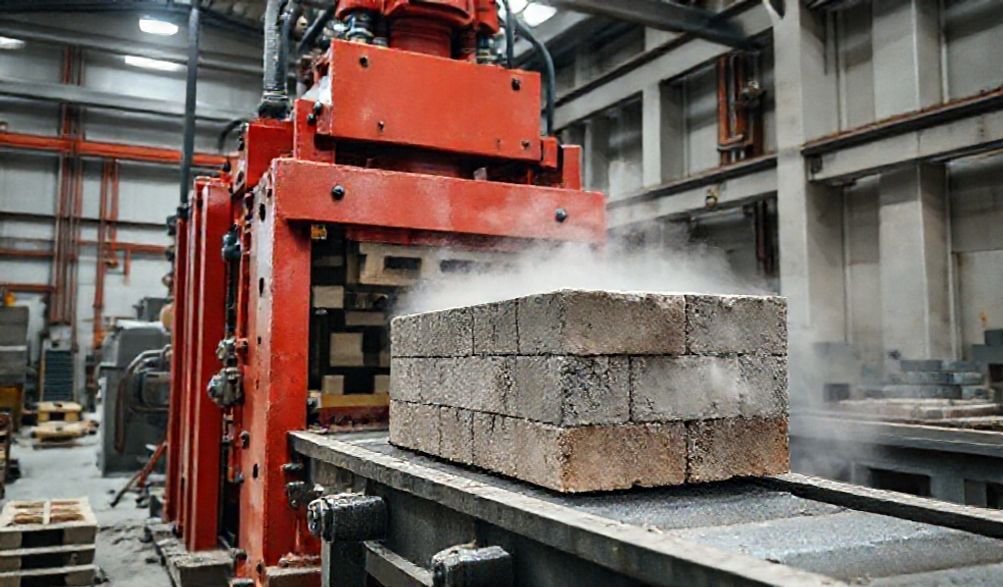
The QT4-15 Full Automatik and Hydraulik Brick Machine: Your Guide to Automated Brick Production
For construction businesses and large-scale projects, the bottleneck is often the same: securing a consistent, high-quality, and affordable supply of bricks. Manual production is labor-intensive and inconsistent, while purchasing from third parties eats into margins and creates supply chain dependencies. The modern solution lies in on-site, automated production. Enter the QT4-15 Full Automatik and Hydraulik Brick Machine—a workhorse of industrial design that brings accessible, automated brick manufacturing within reach.
This machine represents a significant leap forward, transforming raw materials into precise, durable construction blocks with minimal human intervention. This comprehensive guide is built on a foundation of technical specifications, operational principles, and practical industry insights. Our goal is to provide business owners, project managers, and investors with trustworthy, actionable information to make a confident and informed decision about this transformative piece of equipment.
Understanding the QT4-15: Core Specifications and Capabilities
To appreciate the value of the QT4-15, one must first understand its technical DNA. This isn’t just a machine; it’s a synchronized system engineered for relentless, precise output.
Espesifikasyon Teknik Kle nan yon Koud je
The QT4-15 is defined by a set of robust specifications that dictate its performance and requirements:
- Sous Pouvwa: Operates on a standard industrial three-phase electrical supply.
- Konsomasyon Pouvwa: Typically ranges between 18-22 kW, depending on the specific model and operational load.
- Pwodiksyon Pwodiksyon:Kapab pwodwi apeprè1,920 to 2,880 standard hollow blocks (400x200x200mm) per 8-hour shift. Hourly output can reach 360-450 blocks.
- Tan Sik An efficient cycle time of roughly 15-20 segonn per mold, thanks to its fully automatic system.
- Presyon Idwolik: The core of its strength, operating at high pressure (system pressure often around 31.5 MPa) to ensure brick density and durability.
- Dimansyon ak Pwa: A substantial machine, often measuring around 6.5m (L) x 1.8m (W) x 2.3m (H) and weighing in the range of 5-6 tons, indicating a solid, vibration-resistant build.
What “Full Automatik and Hydraulik” Really Means
These terms are the heart of the QT4-15’s value proposition. They are not just marketing buzzwords but descriptions of its integrated operational philosophy.
Full Automatik refers to the complete, programmable cycle that requires only monitoring and raw material feeding from an operator. Once initiated, the machine automatically performs:
1. Manje: Material is conveyed into the mold box.
2. Konpakte: Pre-compaction distributes the mix.
3. Moulaj: The hydraulic press exerts immense force.
4. Ejeksyon: The freshly formed block is pushed onto a pallet or conveyor.
5. Retoun Palèt & Reyajistreman Sik The system resets, ready for the next block.
Hydraulik is the muscle behind the precision. Unlike mechanical lever systems, a hydraulic system provides:
* Immense, Consistent Force: Essential for creating high-compression bricks that meet structural standards.
* Presyon Kontwole: Allows for adjustable density and ensures every brick is identical.
* Smoother Operation: Reduces jarring impacts on the machine frame, leading to lower wear and tear and quieter operation.
Contrast this with semi-automatic machines that require manual mold filling or block removal, or manual machines entirely dependent on operator strength and consistency. The QT4-15 eliminates those bottlenecks and variables.
Operational Advantages: Why Choose the QT4-15?
Investing in the QT4-15 is a strategic business decision. Its advantages translate directly into competitive edges on the ground.
Efikasite ak Pwodiktivite San Parèy
The automation advantage is quantifiable.
* Dramatic Labor Savings: What might require 6-8 workers for manual production can be managed by 1-2 operators with the QT4-15. Their role shifts from labor-intensive molding to supervisory monitoring, feeding, and managing output.
* Reliable, High-Speed Output: With a cycle time under 20 seconds, the machine provides a predictable, continuous flow of bricks. This enables accurate project scheduling and the ability to take on larger contracts with confidence.
Superior Product Quality and Versatility
Consistency is king in construction, and the QT4-15 delivers it mechanically.
* Fòs Konpresif Segondè: The hydraulic system applies uniform, high pressure, resulting in densely compacted bricks with superior structural integrity, lower water absorption, and better longevity.
* Yon Machin, Plizyè Pwodwi: By simply changing the mold, the QT4-15 can produce a wide array of concrete products:
* Hollow blocks (various sizes)
* Blòk solid
* Wòch pave / brik antrebloke
* Curb stones
* Garden and landscaping blocks
This versatility allows a single business to serve multiple market segments.
Long-Term Cost-Effectiveness and ROI
While the initial investment is higher than a manual machine, the total cost of ownership tells a different story.
* Rediksyon Depans Operasyonèl: Savings on labor, coupled with higher output, drastically lower the cost per brick produced.
* Durability & Lower Maintenance: The robust hydraulic and steel-frame construction is designed for longevity. Compared to purely mechanical systems, well-maintained hydraulic systems have fewer sudden failures.
* Retou Pi Rapid sou Envestisman (ROI): By significantly increasing production capacity and reducing per-unit costs, businesses can often recoup their investment in the QT4-15 within a surprisingly short timeframe, depending on local market demand and pricing.
Key Considerations Before Investing
A successful installation depends on thorough preparation. Here’s what you need to plan for.
Site and Infrastructure Requirements
The QT4-15 needs a proper home to perform.
* Espas: You need a clear, level, covered area (a workshop or shed) for the machine itself, plus ample space for:
* Raw material storage (cement, aggregates).
* A curing area for freshly produced blocks.
* Storage for finished products.
* Pouvwa Ensure a stable, three-phase electrical connection that meets the machine’s kW rating is available.
* Ekipman Oksilyè: The QT4-15 typically requires a concrete mixer (like a pan or planetary mixer) to feed it and a pallet feeder/conveyor system for optimal automated output. Factor these into your budget and layout.
Raw Material Preparation and Mix Design
The machine is only as good as the mix you feed it.
* Ideal Mix Design: A standard, effective mix ratio is approximately 1 part cement : 3 parts sand : 4 parts gravel (aggregate), with water added to achieve a semi-dry, moldable consistency. The exact ratio should be tested for local materials.
* Konsistans materyèl la: The size and moisture content of sand and gravel must be consistent. Variations lead to issues like poor compaction or block damage during ejection. Sieving aggregates is highly recommended.
Operator Training and Safety Protocols
Automation doesn’t mean “set and forget.”
* Skilled Oversight: Operators must understand the machine’s cycle, basic troubleshooting, and, crucially, how to identify a poor-quality mix.
* Safety First: Ensure all safety guards are in place. Training must cover lock-out/tag-out procedures, safe mold changing, and awareness of the high-pressure hydraulic system. Never bypass safety features.
Optimizing Your QT4-15 for Maximum Output
To protect your investment and ensure peak performance, proactive care is essential.
Routine Maintenance Checklist
- Daily: Check hydraulic oil levels, clean the mold and press head, inspect for loose bolts or nuts, and clear debris from the machine.
- Weekly: Lubricate all moving parts (guide rods, bearings), inspect hydraulic hoses for wear or leaks, and check electrical connections.
- Monthly: Change or thoroughly filter hydraulic oil as per the manufacturer’s schedule, inspect the entire frame for stress or cracks, and calibrate pressure settings if needed.
Troubleshooting Common Operational Issues
- Inconsistent Brick Density: Usually caused by an inconsistent raw material mix (varying water or aggregate content) or a malfunctioning hydraulic pressure valve.
- Sticking Molds: Often due to a worn mold, insufficient vibration during compaction, or a mix that is too wet. Regular mold cleaning and applying a recommended release agent is key.
- Hydraulic Leaks or Loss of Pressure: Check hose fittings and seals. Contaminated oil can also damage seals and internal components.
Best Practices for Mold Care and Changeover
Molds are high-precision, high-wear components.
* Netwayaj: Clean thoroughly with a wire brush and appropriate cleaner after every production run. Never let concrete harden inside.
* Storage: Coat with oil or anti-rust agent and store in a dry place, off the ground.
* Changeover: Develop a standardized procedure. Have all tools and the new mold ready before shutdown to minimize downtime.
Kesyon yo poze souvan (FAQ)
Q: What is the approximate production capacity of the QT4-15 per 8-hour shift?
A: For standard 400x200x200mm hollow blocks, you can realistically expect between 1,900 to 2,900 blocks per 8-hour shift, depending on operational efficiency, mold changeovers, and mix preparation speed.
Q: Can it use fly ash or other alternative materials?
A: Yes, the QT4-15 is compatible with materials like fly ash, slag, or even certain crushed construction waste. However, this requires careful mix design and testing to ensure the final product meets strength and durability standards. Always start with small batches.
Q: How many operators are required to run this machine effectively?
A: Typically, 1-2 operators can manage the entire process: one overseeing the machine and managing output, and another preparing and feeding the concrete mix. This highlights its core labor-saving efficiency.
Q: What is the lead time for receiving and installing the machine?
A: This varies significantly by supplier, location, and customs procedures. It can range from a few weeks to several months. Always confirm detailed timelines, shipping terms (FOB, CIF, etc.), and on-site installation support directly with your chosen manufacturer.
Q: Where can I find reliable suppliers and ensure I get genuine parts?
A: For trustworthiness and reliability, prioritize purchasing directly from reputable manufacturers or their authorized dealers. Check for business certifications, request customer references, and ask for video proof of the machine in operation. Always ensure a clear warranty and after-sales service agreement, including the availability of genuine spare parts.
Konklizyon
The QT4-15 Full Automatik and Hydraulik Brick Machine stands as a transformative piece of technology for any construction business ready to scale. It masterfully balances high-level automation with operational simplicity, turning the critical challenge of brick supply into a controlled, profitable, in-house process. Its core value proposition is undeniable: producing a consistent stream of high-quality bricks with remarkable efficiency, directly boosting your profitability and competitive edge.
Use the detailed information in this guide as a foundational blueprint for your research. We strongly advise taking the next step: consult directly with multiple certified manufacturers, request detailed quotations and live demonstrations (or high-quality video proofs), and meticulously analyze your specific production needs, site conditions, and local market demand. An informed investment is the first block in building a stronger, more resilient business.
<