
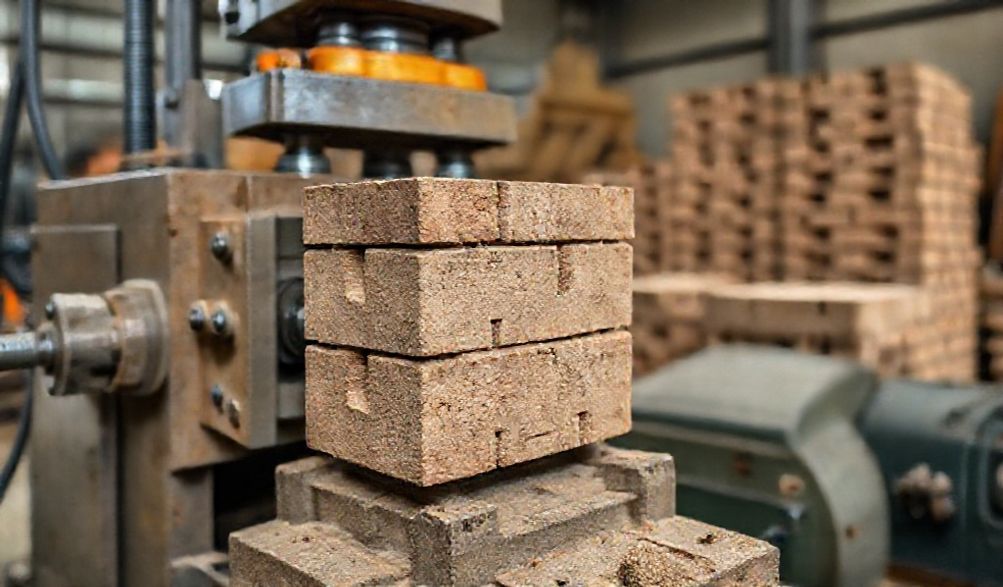
The Ultimate Guide to Automatic Soil Brick Machines: Finding Quality at a Low Price
Entwodiksyon
The global construction industry stands at a crossroads. With rising material costs and growing environmental concerns, the quest for sustainable, affordable building solutions has never been more urgent. Enter the humble earth brick—a building material used for millennia, now poised for a modern revolution. Compressed Stabilized Earth Bricks (CSEBs) offer remarkable thermal efficiency, low embodied energy, and significant cost savings. However, scaling their production has been a persistent challenge.
The problem is clear: traditional manual brick molding is painfully slow, labor-intensive, and yields inconsistent results. On the other end of the spectrum, fully industrial brick-making plants come with a staggering price tag, placing them out of reach for most small to medium enterprises, builders, and development projects. This gap leaves many innovators stuck, unable to harness the benefits of earth construction at a viable scale.
This is where the automatic soil brick machine enters the scene as the critical solution. It represents the sweet spot between manual effort and industrial expense, offering a transformative leap in productivity while remaining a financially accessible investment. This guide is designed to cut through the market noise and provide a clear, trustworthy path to sourcing the right equipment.
Built on extensive industry research, technical comparisons, and practical procurement advice, this guide follows the principles of E-E-A-T (Experience, Expertise, Authoritativeness, and Trustworthiness). Our goal is not just to inform but to empower you to make a confident, smart investment. We will demystify the process of finding a reliable soil brick machine making automatic low price, ensuring you secure a machine that boosts your output without breaking your budget.
What is an Automatic Soil Brick Machine?
An automatic soil brick machine is a mechanized system designed to compress damp, stabilized soil into high-density, uniform bricks with minimal direct human intervention during the core production cycle. Unlike manual methods that rely on sheer physical force or semi-automatic machines that require an operator to initiate each cycle, an automatic system controls the sequencing of feeding, compression, and ejection, often via a programmable logic controller (PLC).
At its heart, the process is elegantly simple yet highly effective. A typical machine consists of:
* Tiyo pou Manje:Kote melanj tè a prepare chaje.
* Sistèm Konpresyon: The core of the machine, utilizing a powerful hydraulic ram or mechanical press to apply immense pressure (often 15-30 MPa) into a mold.
* Moule/Matris: Interchangeable steel molds that define the brick’s shape and size (e.g., interlocking, rectangular, hexagonal).
* Ejection & Conveyance System: Automatically pushes the finished brick onto a pallet or conveyor belt for curing.
Key Advantages Over Manual & Semi-Automatic Methods
The shift to automation brings transformative benefits:
* Ogmantasyon Dramatik nan Pwodiksyon: While a manual worker might produce 200-300 bricks per day, an automatic machine can produce 1,500 to 3,000+ bricks in an 8-hour shift, depending on model and cycle time.
* Konsistans San Parèy: Every brick is pressed with identical force and volume, resulting in uniform dimensions, density, and compressive strength. This is critical for structural integrity and efficient construction.
* Eparg nan Travay Enpòtan: One or two operators can manage the entire production process, freeing up manpower for material preparation, curing, and construction. It also eliminates the physical strain and injury risk associated with manual labor.
* Superior Long-Term ROI: The higher initial investment is quickly offset by reduced labor costs, faster project completion, and the ability to take on larger contracts. The bricks produced are also of a quality that can command a better market price.
Critical Factors to Analyze Before Buying (Beyond Just Price)
Focusing solely on the purchase price is the fastest way to a poor investment. True value is measured in performance, durability, and total cost of ownership. Here are the non-negotiable factors to scrutinize.
Kapasite Pwodiksyon ak Pwodiksyon
Your project scope dictates your machine needs.
* Assess Your Needs: Calculate the total bricks required for your project and your desired timeline. For a steady business, estimate based on projected orders.
* Decode the Specs: Look beyond “fully automatic.” Key metrics are Cycles Per HourakBricks Per Cycle. A machine with a 10-second cycle time producing 2 bricks per cycle can theoretically output 720 bricks per hour. Consider real-world factors like loading pauses.
Brick Specifications and Versatility
Your machine should align with your architectural and market requirements.
* Gwosè ak Fòm: Most machines offer standard rectangular or interlocking bricks (which reduce mortar use). Crucially, check if the supplier provides options for custom molds for unique designs.
* Material Compatibility: Not all soil is equal. Discuss your local soil type with the supplier. Machines are designed for soil stabilized typically with 5-10% cement or lime. The machine should be able to handle this mix effectively.
Automation Level and Ease of Operation
“Automatic” can mean different things. Clarify the scope.
* Levels of Automation: Does “automatic” cover just the press cycle, or does it include auto-feeding of material, automatic pallet shifting, and brick stacking? More automation increases output but also cost and complexity.
* Skill Requirements: Even automatic machines need skilled oversight. Inquire about the training provided—is it just a manual, or do they offer on-site or video training? A user-friendly control panel is a major plus.
Machine Durability and Build Quality
This is where cheap machines reveal their true cost.
* Construction Matters: Inspect the quality of the main frame (heavy-duty steel is best), the hydraulic cylinders (reputable brand names last longer), and the mold/die steel (high-chromium steel resists wear).
* The Quality-Price Link: A machine built with inferior components will have higher downtime, more frequent part replacements, and a shorter lifespan. The “low price” evaporates when facing constant repair bills and lost production.
How to Find a Reliable “Low Price” Automatic Soil Brick Machine
Finding a genuine low-price deal requires strategy, not just luck. It’s about sourcing intelligently and understanding value.
Defining “Low Price” in Context
First, reframe your thinking.
* From “Cheapest” to “Best Value”: The cheapest machine is often the most expensive over five years. Seek the best combination of reliability, performance, and support for your budget.
* Pri Total de Posesyon (TCO): Calculate TCO by adding:
* Purchase Price & Shipping
* Installation & Training
* Estimated Maintenance & Energy Costs
* Cost and availability of Spare Parts
A slightly more expensive machine with a robust design and local support usually has a lower TCO.
Trusted Sourcing Channels
Each sourcing path has its trade-offs.
* Direct from Manufacturers:
* Avantaj: Lowest possible price, potential for customization, direct technical communication.
* Desavantaj: Higher minimum order quantities (MOQs), logistical complexity, potential language barriers, and after-sales support can be distant.
* Local/Regional Distributors:
* Avantaj: Local language support, faster access to spare parts and technicians, may handle import logistics.
* Desavantaj: Price includes their markup, may have limited model options.
* Verified B2B Marketplaces (Alibaba, Made-in-China):
* Avantaj: Vast selection, ability to compare prices and specs easily, trade assurance programs.
* Desavantaj: Requires intense vetting. Vetting Tips: Look for “Gold Suppliers” or verified members with 3+ years of history. Read transaction reviews thoroughly. Use the platform’s messaging system for all communications. Always request a video of the machine in operation and a soil sample test report.
Essential Due Diligence Checklist
Before any payment, complete this expert-backed checklist to build trust with your supplier:
1. Request Certifications: Ask for ISO, CE, or other relevant machinery safety certificates.
2. Get Customer References: Ask for contact information for 2-3 previous buyers, preferably in a similar climate or region. Follow up with them.
3. Request a Site Visit (or Virtual Tour): If possible, visit an existing installation. If not, ask for a live video call to see a working machine at their factory.
4. Scrutinize Warranty & Support: A 1-year warranty on the main frame and hydraulic system is standard. Clarify what “after-sales service” includes: Is it just an email manual? Or does it include installation drawings, video guides, and remote troubleshooting via WhatsApp/WeChat?
5. Get a Detailed Proforma Invoice: Ensure it itemizes the machine, spare parts kit, mold costs, packaging, and shipping terms (FOB, CIF, etc.) clearly.
Maximizing Your Investment: Operation and Maintenance Tips
Your machine’s performance depends as much on your operation as its build quality.
Soil Preparation for Optimal Results
The machine can only press what you feed it.
* Konpozisyon tè a: Ideal soil has a mix of sand, silt, and clay. Pure clay or pure sand will not work. Simple field tests can determine suitability.
* Sieving: Soil must be sieved (to under 5mm) to remove stones, roots, and debris that can damage the mold or cause brick defects.
* Kontni Imidite This is critical. The soil should be damp (typically 8-12% moisture), holding together in a ball without crumbling or dripping water. Konsèy Pwofesyonèl: Conduct small batch tests to find the perfect moisture level for your soil mix.
* Estabilizasyon: Mix cement or lime thoroughly and evenly with the damp soil. Let the mix “cure” for an hour before pressing to allow the stabilizer to begin hydrating.
Routine Maintenance Schedule
Preventative care prevents catastrophic downtime.
* Daily: Clean the machine thoroughly, especially the mold area. Check hydraulic oil levels and look for leaks. Lubricate all moving parts as per the manual.
* Weekly: Inspect the mold for wear or damage. Tighten any loose bolts and nuts on the frame and vibration system.
* Monthly: Check hydraulic hoses for cracks. Change hydraulic oil and filters as recommended by the manufacturer. Inspect electrical connections.
Troubleshooting Common Issues
- Low Brick Density/Weak Bricks: Caused by insufficient pressure, incorrect moisture (too dry or too wet), or inadequate stabilization. Check hydraulic pressure and re-test your soil mix.
- Bricks Cracking During Ejection or Curing: Usually due to excessive moisture, insufficient compaction, or improper curing (bricks should be kept damp under cover for 7-14 days).
- Machine Jamming: Often caused by oversized material in the soil or overfilling the feed hopper. Stop the machine, clear the obstruction, and re-sieve your soil.
Kesyon yo poze souvan (FAQ)
Q1: What is the realistic price range for an automatic soil brick machine?
A: Prices vary widely based on capacity and features. A small-scale automatic machine can start around $5,000 – $8,000. Mid-range models with higher output and more automation typically fall between $12,000 – $20,000. Large, fully automated production lines can exceed $25,000. Always correlate price with the production specs and build quality.
Q2: Can I really get a good quality automatic machine at a low price?
A: Yes, absolutely. The key is strategic sourcing—often directly from a manufacturer with a focus on robust core engineering rather than flashy exterior panels. Prioritize machines that use reputable brand-name hydraulic components and heavy-duty steel frames. These may have a slightly higher upfront cost than the absolute cheapest but represent the true “low price” in terms of longevity and reliability.
Q3: What is the typical lead time from order to delivery?
A: For standard models, expect 30-45 jou for production if not in stock. Shipping (sea freight) can take another 30-60 days depending on your destination port. Factor in time for customs clearance. Always get a detailed timeline from your supplier, including production, pre-shipment inspection, and shipping terms.
Q4: How much cement or stabilizer is needed per brick?
A: A typical range is 5% to 10% cement by volume, but this is highly dependent on your soil’s properties. Sandy soils require more stabilizer than clayey soils. We cannot overstate the importance of conducting proper soil tests or small trial batches to determine the optimal, cost-effective ratio for your specific location.
Q5: What after-sales support should I expect?
A: Comprehensive support is part of a quality purchase. You should expect: detailed installation manuals and electrical diagrams, video operation guides, a standard set of critical spare parts (seals, filters), and access to technical support via phone or messaging apps for troubleshooting. Clarify the response time and the availability of spare parts for future purchase.
Konklizyon
Navigating the market for an automatic soil brick machine at a low price is undoubtedly achievable, but it requires a shift from a bargain-hunting mindset to a value-investing one. By focusing on long-term productivity, durability, and total cost of ownership—rather than just the sticker price—you position yourself for sustainable success.
Use the framework outlined in this guide: thoroughly analyze your production needs, scrutinize machine quality and automation levels, conduct diligent supplier vetting, and commit to proper operation and maintenance. This disciplined approach is your blueprint for making a confident investment.
Our goal, grounded in expertise and a commitment to trustworthy advice, has been to empower you with the knowledge to ask the right questions and make an informed decision. The right machine is more than a purchase; it’s a partner in building a more sustainable and profitable future.
Ready to take the next step? We encourage you to use this guide as your checklist. For more specific guidance or to discuss your unique project requirements for a tailored machine recommendation, feel free to reach out.
<