
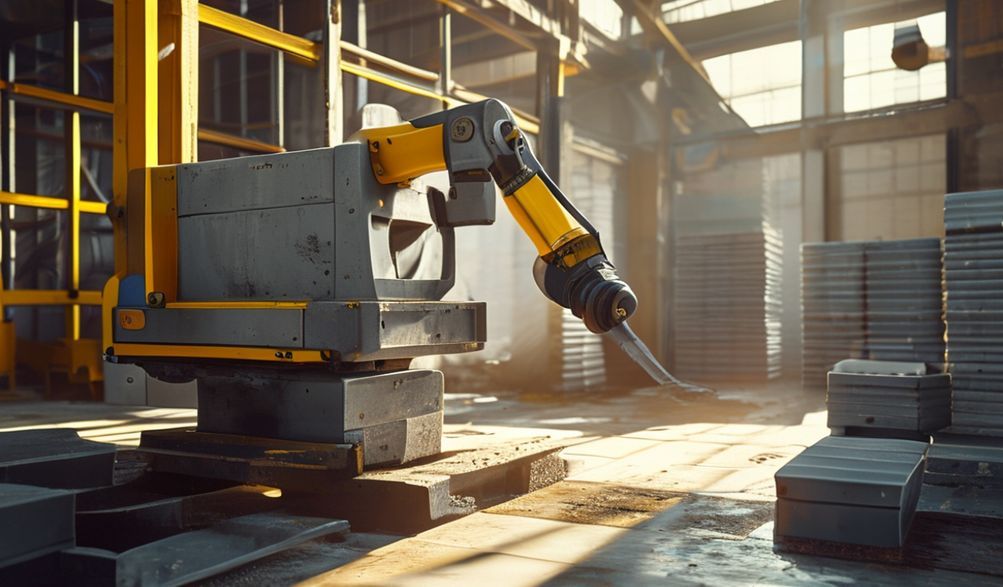
Gid Definitif pou Machin Fè Blòk ak Brik nan peyi Zend (2026)
Entwodiksyon
Peyizaj vil nan peyi Zend ap chanje rapidman. Avèk sektè konstriksyon an ki prevwa rive nan yon valè etonan $1.4 trilyon pa ane 2025, demann pou materyèl konstriksyon an pa ap grandi senpleman—li ap eksploze. Nan nwayo eksplozyon sa a, gen yon inite fondamantal: brik ak blòk. Men, pandan plizyè deseni, endistri a te mare ak metòd tradisyonèl yo: pwosesis ki mande anpil main d'ouvri, ki pa gen yon kalite ki konstan, epi ki fatigan pou anviwònman an, e ki gen difikilte pou kenbe pous modèn yo.
Antre nan modènmachin pou fè brik blòk nan peyi Zendyon gwo pouvwa teknolojik ki ap revolisyone fason bòs mason, kontraktè, ak antreprenè yo abòde konstriksyon an. Gid sa a se pa senpleman yon lis pwodwi. Li se yon manyèl konplè, ki baze sou rechèch, ki fèt pou gide ou atravè peyizaj konplike nanmachin blòk beton, Machin pou brik sann volanpri, ak manifakti. Nou te distile espesifikasyon teknik konplèks, tandans sou mache a, ak apèsi biznis pratik pou ba ou pouvwa pou pran yon desizyon ki pa bati sèlman mi, men yon avni dirab ak pwofitab.
By the end of this guide, you will understand the compelling reasons to invest, the different types of machines available, the key features that matter, how to evaluate top manufacturers, a transparent look at pricing, and a definitive step-by-step buying guide. Let’s build your knowledge, brick by brick.
Why Invest in a Block Brick Making Machine in India?
The decision to move from manual production or purchasing from third-party suppliers to owning a brick making plant is a significant one. The business case, however, has never been stronger.
Surging Demand in Construction & Infrastructure
India’s infrastructure and housing sectors are on a monumental upswing. Flagship government initiatives like Housing for All (Pradhan Mantri Awas Yojana)akSmart Cities Mission are creating unprecedented demand for standardized, high-quality building materials. Concurrently, rapid urbanization and private sector real estate development are further fueling this need.
Crucially, there’s a paradigm shift in material preference. The traditional, environmentally damaging red clay brick is increasingly being replaced by:
* Brik Sann: Utilizing thermal power plant waste (fly ash), these are stronger, more uniform, and eco-friendly.
* Concrete Hollow/Solid Blocks: Offering better insulation, faster construction, and reduced mortar use.
This shift plays directly into the strengths of modern block making machines, which are designed to produce these advanced products with precision and scale.
Avantaj Kle Kont Metòd Manyèl
Investing in a machine isn’t an expense; it’s a strategic upgrade with tangible returns.
- Superior Productivity & Speed: While a skilled artisan might produce 500-800 bricks in a full day, a basic semi-automatic block brick making machine can produce 1,500 to 2,500 blocks in an 8-hour shift. Fully automatic plants can output 10,000+ blocks daily, meeting the demands of large-scale projects effortlessly.
- Konsistans ak Kalite San Parèy: Machines eliminate human error. Every block is identical in dimensions (e.g., 400x200x200 mm for a standard hollow block) and compressive strength (typically 3.5 MPa to 7 MPa for load-bearing walls). This consistency speeds up construction, reduces mortar consumption, and results in structurally superior buildings.
- Eparg siyifikatif nan travay ak depans: Although the initial investment is higher, the long-term economics are compelling. You drastically reduce dependency on large, skilled labor teams. The per-unit production cost of a machine-made block is often 30-50% lower than that of a handmade brick when factoring in labor, waste, and efficiency.
- Eco-Friendly & Sustainable Options: Machines designed for fly ash brickoswaCLC (Cellular Lightweight Concrete) block production actively contribute to a greener ecosystem. They help in recycling industrial waste (fly ash) and create lightweight, energy-efficient building materials, aligning with global and national sustainability goals.
Types of Block Brick Making Machines Available in India
Navigating the types of machines is your first technical step. They can be categorized in three primary ways.
By Operation: Manual, Semi-Automatic, Fully Automatic
- Machin pou Fè Blòk Manyèl: These are lever-operated or simple hydraulic machines requiring significant human effort for mixing, feeding, and block ejection.
- Ideal Pou: Very small-scale entrepreneurs, on-site production for personal construction projects.
- Sòti: Up to 500 blocks per day.
- Pri: ₹ 50,000 to ₹ 2 Lakhs.
- Machin Semi-Otomatik pou Fè Blòk: The most popular category in India. They use an electric motor and hydraulic system for compaction and vibration. Operators feed the raw material mixture and remove finished blocks, but the core forming process is mechanized.
- Ideal Pou: Small to medium-scale businesses (SMEs), startups, and contractors. Offers the best balance of affordability and productivity.
- Sòti: 1,000 to 5,000 blocks per 8-hour shift.
- Pri: ₹ 3 Lakhs to ₹ 15 Lakhs.
- Machin Pou Fè Blòk Otomatik Nèt: These are complete production lines with automated material feeding, mixing, block formation, curing, and stacking. Controlled via PLC (Programmable Logic Controller) panels.
- Ideal Pou: Large-scale manufacturers, industrial plants supplying to cities or major projects.
- Sòti: 8,000 to 20,000+ blocks per day.
- Pri: ₹ 20 Lakhs to over ₹ 1 Crore.
By Output Product
- Concrete Hollow/Solid Block Making Machine: The workhorse of the industry. Produces standard hollow blocks (for load-bearing walls), solid blocks (for paving, foundations), and designer pavers.
- Fly Ash Brick Making Machine: Specifically designed to use a mix of fly ash, cement, and sand. Produces high-strength, smooth-finish bricks and interlocking blocks that don’t require plastering.
- CLC Brick Making Machine: Produces Cellular Lightweight Concrete blocks by mixing a foam agent into the slurry. Output is ultra-lightweight, providing excellent thermal and acoustic insulation. Ideal for high-rise buildings to reduce dead load.
By Mobility: Stationary vs. Mobile Block Machines
- Machin Estasyonè: These are fixed installations in a factory or yard. They are typically more robust, have higher capacities, and form the core of a permanent production plant.
- Machin Blòk Mobil: Mounted on a trailer, these can be towed to different construction sites. They are excellent for large infrastructure projects (like roads, dams) where producing blocks on-site saves massive transportation costs. Usually semi-automatic in operation.
Key Features to Consider Before Buying
Looking beyond the basic type, these technical and support features will determine your long-term satisfaction and profitability.
Espesifikasyon Teknik Debaz
- Kapasite Pwodiksyon: Don’t just look at “blocks per hour.” Understand the “cycle time” (time to produce one batch of blocks) and how many blocks per cycle (e.g., 4 blocks/cycle). A machine with a 30-second cycle time producing 4 blocks/cycle has an hourly output of ~480 blocks.
- Gwosè Blòk ak Vèsatilite Mòl Can the machine produce multiple sizes (e.g., 4”, 6”, 8” hollow blocks) and types (pavers, kerbstones) by simply changing molds? Investing in a machine with a flexible mold system future-proofs your business.
- Motor Power (HP) and Hydraulic Pressure: A more powerful motor (e.g., 10 HP vs. 5 HP) and a higher hydraulic pressure (measured in PSI/Bar) ensure better compaction, leading to denser, stronger blocks and the ability to handle stiffer concrete mixes.
- Degre Otomatizasyon: In semi-auto and automatic models, examine the control panel. Features like adjustable vibration time, pressure settings, and automated lubrication points enhance consistency and ease of operation.
Build Quality & Durability Factors
The machine must withstand years of intense vibration and pressure.
* Kad ak Estrikti: Look for machines fabricated from heavy-duty steel plates and profiles, not light-gauge metal. The vibration table should be reinforced.
* Sistèm Vibration: A dual-vibration system (with motors under the mold and on the table) ensures even compaction throughout the block, crucial for achieving uniform strength.
* Sistèm Idwolik: Reputable brands use reliable, branded hydraulic pumps, valves, and cylinders. Ask about the brand of the hydraulic components.
* Kalite Mwazi: Molds are wear parts but should last. They should be made from hardened steel with a precise internal finish to ensure smooth block release and dimensional accuracy.
After-Sales Support: A Critical Decider
This is often the most overlooked yet decisive factor. A machine is a long-term asset.
* Enstalasyon ak Komisyon: Will the supplier send an engineer to set up the machine and train your operators?
* Garanti: What is covered (parts, labor) and for how long (typically 1 year)? Get it in writing.
* Disponiblite Pyès Depo: Ensure the manufacturer has a readily available inventory of common wear parts (molds, liners, hydraulic seals) and a network to deliver them across India. Downtime is lost revenue.
Top Block Brick Machine Manufacturers & Suppliers in India
Based on market presence, technical reputation, and service network, here is an overview of the landscape. This is a well-researched overview to guide your initial search.
Established Indian Manufacturers
Industry leaders and reputed manufacturers known for their robust engineering and pan-India service include:
- Everon Impex: Known for a wide range from manual to fully automatic machines, particularly strong in semi-automatic models popular with SMEs.
- Chirag Concrete Machine Manufacturer: Specializes in concrete block and paver making machines, with a focus on durable construction and good after-sales.
- Shri Engineering Enterprises: A prominent name, especially in South India, offering various models including fly ash brick making machines.
- Apollo Inffratech: Part of a larger construction equipment group, known for more industrial-grade, high-capacity stationary and mobile block making machines.
- Bess Concrete Machines: An emerging brand gaining recognition for cost-effective semi-automatic machines suitable for startups.
(Note: This list is illustrative. Thorough due diligence on any supplier is essential.)
Factors for Evaluating a Supplier
- Years in Business & Reputation: A company with a 15+ year track record has likely refined its product and support.
- Client Portfolio & Testimonials: Ask for contact details of past clients, preferably in your region, and speak to them directly about machine performance and service.
- Factory Visit: If geographically feasible, visit the manufacturing unit. It reveals their production capabilities, quality control, and scale of operations.
- Konfòmite ak Estanda yo: Inquire if their machines are designed to produce blocks that meet relevant Indian Standards (IS codes), such as IS 2185 for concrete blocks.
Understanding the Cost: Block Brick Making Machine Price in India
Price is a spectrum, not a number. Setting correct expectations is key to planning your investment.
Price Range Breakdown by Type
- Machin Manyèl: ₹ 50,000 – ₹ 2,00,000
- Machin Semi-Otomatik: ₹ 3,00,000 – ₹ 15,00,000
- Plant Konplètman Otomatik: ₹ 20,00,000 – ₹ 1,00,00,000+
What Influences the Final Price?
- Nivo Otomatizasyon: This is the single biggest cost driver.
- Kapasite Pwodiksyon: A 3,000 blocks/day machine costs significantly less than a 10,000 blocks/day machine.
- Mak & Bon jan Kalite: Premium brands with superior components command a higher price.
- Customizations: Additional molds, paint coating, or specific motor brands add cost.
- Hidden Costs Alert: Never budget for just the machine ex-factory. Factor in:
- Freight & Installation: Can be 5-10% of machine cost.
- Foundation & Shed: A proper concrete foundation and a working shed are mandatory.
- Raw Material & Utility Setup: Cost for initial material stockpile, water connection, and enhanced electrical connection (for higher HP motors).
Kalkile Retou sou Envestisman (ROI) ou
A simplified framework:
1. Total Investment: Machine Cost + Setup Costs (foundation, shed, installation).
2. Monthly Operational Cost: Raw Materials + Electricity + Labor + Maintenance.
3. Monthly Revenue: (Number of Blocks Produced per Month) x (Selling Price per Block).
4. Monthly Profit: Monthly Revenue – Monthly Operational Cost.
5. Payback Period (Months): Total Investment / Monthly Profit.
With efficient operation and good market demand, a well-chosen semi-automatic machine can often see a payback period of 18 to 30 months.
Your Step-by-Step Buying Guide
Follow this actionable roadmap to make a confident purchase.
Step 1: Assess Your Business Needs
Define your daily production targetatypes of blocks/bricks in demand in your local market, and your total available budget (including hidden costs). Are you supplying a local housing project or establishing a branded plant?
Step 2: Research & Shortlist Suppliers
Use online directories, industry portals, and trade associations to create a long list. Check Google Business reviews and industry forums. Shortlist 3-5 suppliers who offer machines matching your needs from Step 1.
Step 3: Request Quotes & Compare Techno-Commercially
Contact shortlisted suppliers with a clear specification sheet. Request a detailed quotation that includes itemized machine price, freight, installation charges, warranty terms, and list of spare parts. Compare not just price, but the technical specs and commercial terms side-by-side.
Step 4: Factory Visit & Machine Demo
This is non-negotiable. Visit the factories of your top 2-3 choices. See the machine in operation—ask them to produce blocks using a mix similar to what you’ll use. Assess the build quality firsthand and interact with their technical team.
Step 5: Finalize Order & After-Sales Agreement
Before making any payment, ensure all agreed-upon terms—warranty duration, installation timeline, training scope, and spare parts support—are clearly documented in the purchase order or a separate service level agreement (SLA). Typically, a 70-80% advance is paid with the order, and the balance is paid after successful installation and commissioning.
Kesyon yo poze souvan (FAQ)
Q1: What is the average price of a brick making machine in India?
A: The term “average” can be misleading due to the vast range. A basic manual fly ash brick machine can start around ₹ 70,000, while a standard semi-automatic concrete block machine suitable for a startup may range from ₹ 4-8 lakhs. Large fully automatic plants run into crores. Your specific needs dictate the price.
Q2: Which is the best block making machine for a new startup?
A: For most new entrepreneurs, a machin semi-otomatik pou fè blòk beton with a production capacity of 1,500-3,000 blocks per shift is the recommended starting point. It offers the optimal balance between affordable investment, manageable operational complexity, and sufficient output to build a market. Crucially, pair this with a solid business plan for raw material sourcing and product marketing.
Q3: What raw materials are needed for these machines?
A: Raw materials vary by product:
* Concrete Blocks: Cement, sand (or crushed stone dust), coarse aggregates (6mm-12mm), and water.
* Brik Sann: Fly ash (50-60%), cement, sand/lime, and water.
* CLC Blocks: Cement, fly ash, water, and a stable foam agent.
Local availability and cost of these materials are critical to your profitability.
Q4: Are there government subsidies for brick making machines?
A: Yes, potential subsidies or soft loans are often available under MSME (Micro, Small & Medium Enterprises) schemes or state-specific industrial promotion policies. The PMEGP (Prime Minister’s Employment Generation Programme) is one such central scheme. You must check with your local District Industries Centre (DIC) or MSME Development Institute for the most current and applicable schemes.
Q5: What is the typical payback period for this investment?
A: For a well-utilized semi-automatic plant, the payback period typically ranges from 1.5 to 3 years. This depends heavily on factors like your machine’s utilization rate, local market price for blocks, operational efficiency, and cost control on raw materials. A fully automatic plant, with its higher output, can also achieve a similar payback period if it operates near full capacity.
Konklizyon
The journey from considering a machin pou fè brik blòk nan peyi Zend to becoming a successful manufacturer is one of strategic transformation. This technology is more than a piece of equipment; it’s a gateway to participating in India’s infrastructure story with greater efficiency, quality, and sustainability.
As we’ve outlined, success hinges on meticulous planning—from accurately assessing your needs and understanding technical nuances to the critical task of selecting a reputable manufacturer. Remember, the cheapest machine can become the most expensive asset if it leads to frequent downtime and poor-quality output. Prioritize total value: a combination of robust engineering, proven performance, and unwavering after-sales support.
Ready to move forward with confidence? [Download our free detailed checklist for comparing block making machine suppliers in India] to ensure you don’t miss any critical questions during your evaluation.
Have specific technical or business model questions? [Consult with our industry experts today] for personalized guidance tailored to your project.
The future of construction in India is precise, efficient, and green. By embracing the right technology today, you position yourself not just to meet that future, but to build it.
<