
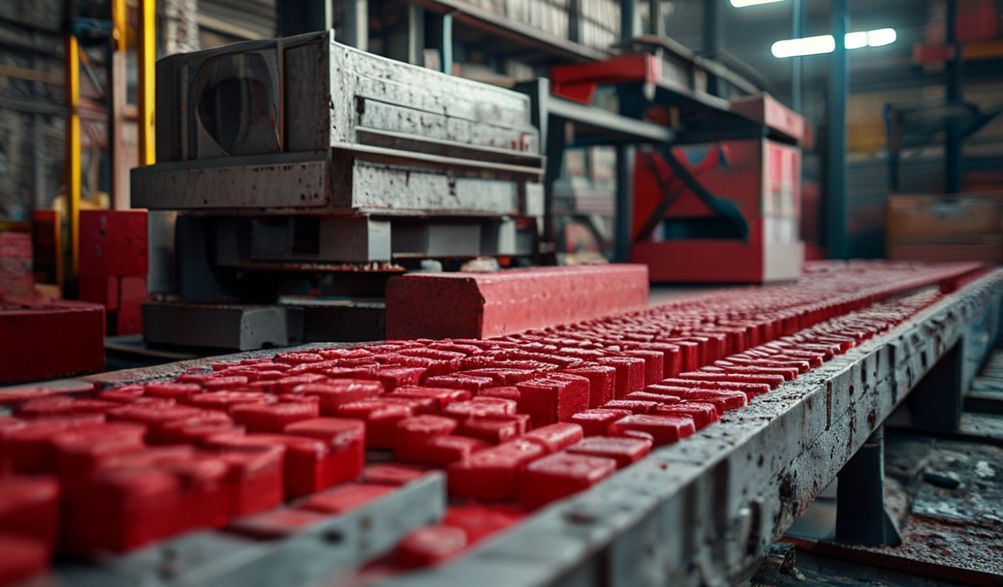
The Ultimate Guide to Block Machines in Pakistan: Types, Prices & Top Manufacturers (2026)
Entwodiksyon
Pakistan’s construction sector is experiencing unprecedented growth, with the government’s focus on housing schemes and infrastructure development fueling a demand for over 50 billion bricks and blocks annually. In this booming landscape, the humble concrete block has become a fundamental building block of progress. However, for builders, contractors, and entrepreneurs, selecting the right machinery to produce these blocks is a critical decision fraught with challenges—from navigating upfront costs and assessing quality to ensuring reliable after-sales support in a diverse market.
This comprehensive guide is designed to cut through the noise. Drawing on over a decade of experience in Pakistan’s construction machinery and materials sector, we provide an unbiased, expert-driven resource. Our goal is to equip you with the knowledge needed to make a confident investment that aligns with your project scale, budget, and business ambitions.
Nan fen gid sa a, w ap gen yon klè konpreyansyon sou:
* The different types of block machines available in Pakistan.
* Key technical specifications and operational factors to consider.
* Realistic price ranges for 2026.
* How to identify and vet reputable manufacturers and suppliers.
* Essential tips for operation and maintenance to protect your investment.
Understanding Block Machines and Their Importance in Pakistan’s Construction
At its core, a block machine is a device that compresses a mixture of cement, sand, and aggregate into dense, uniform shapes. It is the engine of modern, efficient construction, replacing slow, inconsistent manual labor with mechanized precision.
What is a Block Machine? Core Function and Outputs
A block machine uses hydraulic or mechanical pressure to form and compact concrete within a mold (or “mould”). The primary outputs include:
* Blòk Beton Solid:Itilize pou mi pote chaj nan gwo konstriksyon yo.
* Blòk Beton Kavo: Lighter, offering better insulation and reduced material cost; ideal for partition walls.
* Paving Blocks (Interlocking): Used for driveways, walkways, and parking areas.
* Kerbstones and Decorative Blocks: For landscaping and architectural finishes.
The machine’s versatility in producing these elements on-demand makes it a cornerstone asset for any serious construction-related business.
Why the Right Block Machine is a Game-Changer
Investing in the appropriate block machine is not just a purchase; it’s a strategic decision that impacts your entire operation.
* Efficiency & Speed: A single automatic machine can produce more blocks in an hour than a team of laborers can in a day, drastically accelerating project timelines.
* Cost-Effectiveness & ROI: While an initial investment is required, the per-unit cost of machine-made blocks is significantly lower than manually produced or purchased blocks, leading to a strong return on investment.
* Consistency and Quality: Machines deliver uniform size, shape, and compressive strength. This consistency is crucial for structural integrity, reduces material waste, and ensures compliance with building codes like those from the Pakistan Engineering Council (PEC).
* Contribution to Development: By enabling faster, cheaper, and higher-quality construction, block machines directly contribute to addressing Pakistan’s housing shortage and infrastructure needs.
Types of Block Machines Available in Pakistan
The Pakistani market offers a spectrum of machines, from basic manual units to fully automated plants. Your choice should be dictated by your production volume, budget, and labor availability.
Machin Blòk Manyèl
- Operasyon: Entirely hand-operated. Workers manually mix concrete, fill the mold, apply pressure via a lever, and remove the freshly formed block for curing.
- Avantaj: Very low initial cost, simple mechanics with minimal maintenance, no power requirement.
- Desavantaj: Extremely labor-intensive, low output (200-500 blocks per day), inconsistent quality dependent on worker skill.
- Ideal Pou: Small-scale personal projects, rural startups with very limited capital, or producing specialty blocks in low volume.
Semi-Automatic Block Machines
- Operasyon: The compression is mechanized (hydraulic or vibratory), but blocks are moved and stacked manually. Often feature a simple control panel.
- Avantaj: Excellent balance between cost and productivity. Higher output (1,000 – 4,000 blocks per 8-hour shift) with consistent quality. Lower skill requirement than manual machines.
- Desavantaj:Toujou bezwen yon ekip pou okipe materyèl yo ak retire blòk yo.
- Ideal Pou: Medium-scale construction firms, growing block manufacturing businesses, and housing scheme contractors. This is the most popular category for small-to-medium enterprises (SMEs) in Pakistan.
Fully Automatic Block Machines
- Operasyon: Computer-controlled systems handle the entire process: batching, mixing, molding, compression, curing, and stacking via conveyor belts and robotic stackers.
- Avantaj: Very high output (8,000 – 20,000+ blocks per shift), exceptional consistency, minimal manual labor required.
- Desavantaj: High capital investment, complex maintenance requiring specialized technicians, significant space and power needs.
- Ideal Pou: Large commercial block manufacturing plants, major infrastructure projects, and industrial-scale construction companies.
Machin Blòk Mobil
- Operasyon: Mounted on a trailer for easy transport. Typically semi-automatic in function.
- Unique Advantage: Enables on-site production, eliminating transport costs for finished blocks—a significant saving for remote sites.
- Ideal Pou: Large, remote housing schemes (like those under the Naya Pakistan Housing Programme), dam or road construction projects, and businesses serving multiple dispersed sites.
Key Factors to Consider Before Buying a Block Machine in Pakistan
Based on industry observations and feedback from successful operators, here are the critical factors to evaluate.
Evalye Bezwen Pwodiksyon Ou
Start with a clear business plan:
* Echèl Pwojè Are you supplying blocks for your own construction projects or starting a commercial supply business?
* Kalite Blòk: What products will you sell? (Solid, hollow, pavers?)
* Daily Output Target: Calculate based on current and projected demand. Be realistic.
Plonje Pwofond nan Espesifikasyon Machin yo
Don’t just look at the price tag; understand what it represents:
* Pressure (Tonnes): Determines block density and strength. For standard blocks, machines from 10 to 40 tonnes are common. Higher pressure is needed for paver blocks.
* Tan Sik How many seconds to produce one block cycle? Faster cycles mean higher output.
* Kalite Mwazi: Molds made from hardened, high-chrome steel last significantly longer than mild steel molds, reducing long-term replacement costs.
Egzijans Pouvwa
- Elektrik Cleaner, quieter, and lower operational cost in areas with reliable supply. Requires a stable 3-phase connection.
- Dizèl: Essential for sites with no grid power. Higher fuel and maintenance costs but offers complete independence.
- Hybrid (Electric/Diesel): Offers flexibility but at a higher purchase price.
After-Sales Support: The Most Critical Factor
In Pakistan’s context, service is often more important than the brand. A cheap machine with no support is a liability.
* Availability of Spare Parts: Ensure the supplier stocks critical parts (hydraulic seals, valves, mold liners) locally to avoid months of downtime waiting for imports.
* Technical Service & Training: Does the supplier offer comprehensive installation, on-site training for your operators, and prompt repair services?
* Warranty Terms: Read the fine print. A 1-year warranty on the hydraulic system and main frame is standard. Longer warranties signal manufacturer confidence.
Price Range of Block Machines in Pakistan (2026 Market Overview)
Prices are approximate for the Pakistani market in 2026 and can vary based on configuration, brand, and currency fluctuations. Always get a detailed, current quotation.
- Manual Block Machine Price Range: PKR 80,000 to PKR 250,000. The price varies with build quality and the number of molds.
- Semi-Automatic Block Machine Price Range: PKR 600,000 to PKR 2,500,000. This wide range accounts for differences in production capacity (blocks per hour), level of automation, and brand origin.
- Fully Automatic Block Machine Price Range: PKR 4,000,000 to PKR 15,000,000+. These are significant industrial investments where specifications and brand reputation heavily influence price.
What Influences the Price?
* Brand: Established international brands (e.g., Zenith, Hess) command a premium over local assemblers.
* Nivo Otomatizasyon: Each step of automation adds cost.
* Kapasite Pwodiksyon: A machine rated for 2,000 blocks/hour costs less than one rated for 5,000 blocks/hour.
* Origin: Imported machines have higher duties and logistics costs but may offer advanced technology. Locally manufactured or assembled machines can provide better value and easier service access.
Top Block Machine Manufacturers and Suppliers in Pakistan
When researching suppliers, look for entities with a proven track record.
- Renowned Local Manufacturers/Assemblers: Several Pakistani engineering firms have developed strong reputations for building robust, cost-effective machines tailored to local conditions and material mixes. They often provide the most accessible after-sales service.
- Trusted International Brands: Global leaders like Germany’s ZenithakHess have representation or distributors in Pakistan. They offer cutting-edge technology and high durability but at a higher investment and potentially longer wait times for specialized parts.
- How to Vet a Supplier: A Due Diligence Checklist
- Visit the Factory/Showroom: Assess their manufacturing capability and inventory. A professional operation is a good sign.
- Ask for Client Testimonials & Site References: Speak directly to past customers, especially those who have owned the machine for 2+ years. Ask about reliability and service response.
- Verify Service Network: Do they have service engineers or workshops in major industrial hubs like Lahore, Karachi, Faisalabad, or Islamabad? Local support is invaluable.
Operational Tips and Maintenance for Longevity
Proper care is the key to a 10-15 year machine lifespan.
Best Practices for Daily Operation
- Use a consistent, well-proportioned concrete mix (a typical ratio is 1 part cement, 3 parts sand, 3 parts crush).
- Ensure the mixture is not too wet or too dry.
- Keep the mold, pallets, and vibration table clean after every production run.
Essential Routine Maintenance Schedule
- Daily: Check hydraulic oil levels, clean the machine thoroughly.
- Weekly: Grease all moving parts (bearings, guide rods), inspect hoses for wear.
- Monthly: Check and tighten all bolts and electrical connections. Inspect mold for wear.
- Annually: Change hydraulic oil and filters, perform a comprehensive machine inspection.
Common Troubleshooting Issues
- Blocks Sticking in Mold: Usually caused by a worn mold, insufficient release agent, or an overly wet mix.
- Low Block Density/Strength: Check hydraulic pressure, vibration motor efficiency, and concrete mix design.
- Machine Vibration Issues: Could indicate loose bolts, unbalanced vibration motors, or a worn-out shock absorption system.
Frequently Asked Questions (FAQs) About Block Machines in Pakistan
Q1: What is the average production capacity of a standard block machine in Pakistan?
For the popular semi-automatic category, capacities range from 1,000 to 4,000 standard blocks (e.g., 9″x4″x4″) per 8-hour shift, depending on the model and crew efficiency.
Q2: Can I get a block machine on lease or installment in Pakistan?
Yes. Many reputable suppliers offer installment plans (typically 6-12 months). Some financial institutions also provide machinery loans or leasing options for SMEs.
Q3: What raw materials are needed, and what is the ideal mix ratio?
You need cement, sand (sifted), and crush (stone aggregate). A common starting mix ratio is 1 (Cement) : 3 (Sand) : 3 (Crush), with just enough water for proper compaction. The ideal ratio should be tested based on your local material quality.
Q4: How do I calculate the potential Return on Investment (ROI) for a block machine?
Calculate: (Revenue from blocks sold per month) – (Cost of raw materials + labor + electricity/diesel + maintenance). Compare this monthly profit to your total investment (machine cost + setup). A well-run semi-automatic plant often sees an ROI within 12-24 months.
Q5: Are there any government schemes or subsidies for purchasing construction machinery?
Schemes can change. It is advisable to check with the State Bank of Pakistan (SBP)akSMEDA for any active financing or subsidy programs for small businesses in the construction sector.
Q6: What is the typical lead time for receiving a machine after placing an order?
For common semi-automatic models from local suppliers, lead time can be 2-6 weeks. For fully automatic or imported machines, it can extend to 3-6 months, including shipping and customs clearance.
Konklizyon
Choosing the right block machine in Pakistan hinges on a careful balance of your production needs, budget constraints, and the unwavering priority of after-sales support. From the affordability of a manual press for a small beginning to the transformative power of a fully automatic plant, the “best” machine is the one that aligns perfectly with your specific goals.
Our final recommendation is to invest time in the research phase. Visit multiple suppliers, inspect their machines in operation, and speak to their existing clients. This due diligence is the most reliable predictor of a successful investment.
Call to Action: To help in your evaluation process, we have created a free, downloadable “Block Machine Supplier Vettting Checklist.” Use it during your factory visits to ensure you don’t miss any critical questions.
As the industry evolves, keep an eye on sustainable trends like the use of sann volan in block production, which can reduce cement consumption and create an eco-friendly product—a potential future competitive advantage in Pakistan’s growing green construction movement.
<