
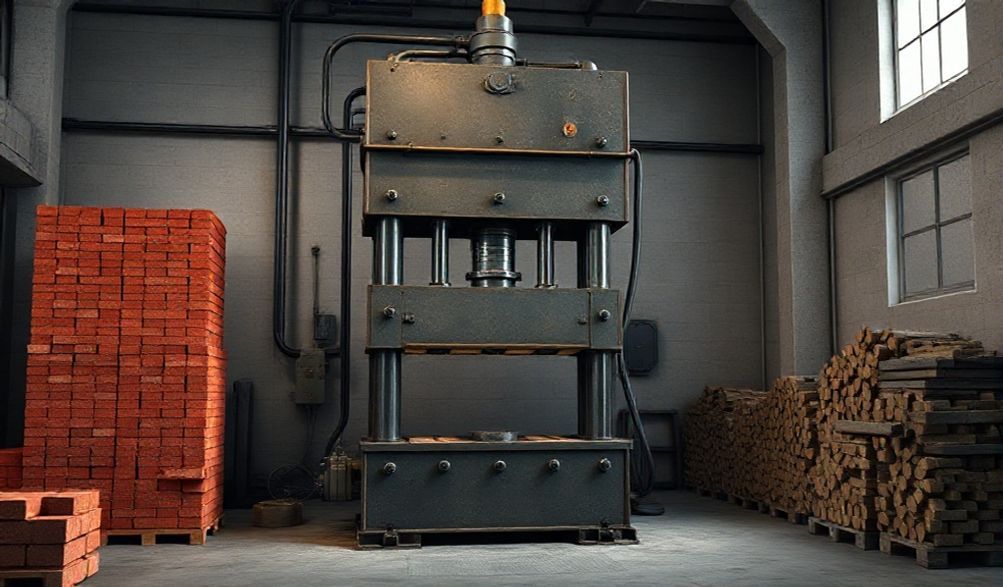
The Ultimate Guide to Brick & Briquette Machines: Types, Uses, and How to Choose
Entwodiksyon
The global construction sector is projected to reach a staggering $15.2 trillion by 2030, while the demand for sustainable biomass energy continues to surge. At the intersection of these two massive industries lies a critical piece of technology: the compaction machine. Yet, for centuries, the production of building materials and the management of waste have been plagued by inefficiency—labor-intensive processes, inconsistent quality, and environmental strain.
This guide is your definitive resource for understanding the powerful machines that solve these problems: brick machines and briquette machines. While they share a core principle of compression, they serve vastly different worlds—construction and energy/recycling. Whether you’re a contractor evaluating equipment, an entrepreneur exploring a waste-to-profit venture, or an environmental manager seeking sustainable solutions, navigating the specifications and options can be daunting.
Synthesizing industry engineering standards, operational best practices, and economic analysis, this guide provides authoritative, trustworthy, and actionable advice. We will demystify the “brick machine briquette” landscape, helping you understand not just the “how,” but the crucial “why” and “which one.” You will learn the distinct types of machines, their wide-ranging applications, and a detailed, expert-backed framework for selecting the right equipment to ensure safety, profitability, and longevity.
Understanding Brick and Briquette Machines: Core Concepts and Differences
At first glance, brick machines and briquette machines might seem similar. Both apply immense pressure to form a solid, consistent shape from a loose material. However, their purpose, design, and end products are engineered for completely different markets and material sciences.
Kisa yon Machin Fè Brik?
A brick making machine is a device designed to compact raw materials—most commonly clay, concrete, or fly ash—into dense, standardized blocks used for construction.
- Fonksyon Prensipal: To produce durable, dimensionally accurate building units like solid bricks, hollow blocks, paving stones, and interlocking bricks.
- Kontèks Istorik: From ancient hand-molding to the Industrial Revolution’s steam-powered presses, the quest for efficiency culminated in today’s highly automated, hydraulic, and vibration-based systems that ensure structural integrity and mass production.
What is a Briquette Machine?
A briquette machine (or briquetting press) compresses loose, often waste, materials into compact, uniform solid fuels or recyclable units.
- Fonksyon Prensipal: To transform low-bulk-density biomass (like sawdust, agricultural residue) or metal waste (like chips and turnings) into high-density, easy-to-handle briquettes or logs.
- Core Value Proposition: It is a cornerstone of the waste-to-value and circular economy, turning problematic waste streams into profitable commodities or efficient fuel sources.
Key Differences Between Brick and Briquette Machines
The confusion is understandable, but the distinction is critical for investment and operation. The table below clarifies the key divergences:
| Aspect | Brick Making Machine | Briquette Machine |
| :— | :— | :— |
| End Product | Construction blocks (bricks, hollow blocks, pavers). | Solid fuel briquettes or recyclable metal logs. |
| Primary Raw Materials | Clay, concrete (cement, sand, aggregate), fly ash, soil. | Biomass (sawdust, rice husk, charcoal dust), metal shavings, sometimes paper. |
| Industry Application | Construction, civil engineering, landscaping. | Biomass energy, recycling, industrial waste management. |
| Typical Pressure | High pressure, often combined with vibration for compaction. | Extremely high pressure (often higher than brick machines) to lignin-bind biomass or cold-weld metal. |
| Binding Agent | Cement (in concrete), natural plasticity (clay), or lime. | Often relies on the natural lignin in biomass (activated under heat/pressure) or mechanical interlocking (metal). |
Linyon anba a: While both are presses, you cannot use a brick machine to make quality fuel briquettes, nor a briquette machine to make structural building blocks. They are specialized tools for specialized jobs.
Types of Brick Making Machines and Their Applications
Choosing the right brick machine depends on your production scale, budget, and the specific products you aim to manufacture.
By Operation Method: Manual, Semi-Automatic, and Fully Automatic
-
Machin Manyèl: Operated by hand lever or flywheel.
- Avantaj: Very low cost, simple operation, no power required.
- Desavantaj: Very low output (100-500 blocks/day), labor-intensive, product consistency varies.
- Ideal Pou: Small DIY projects, very small-scale rural enterprises, or producing specialty bricks in low volume.
-
Machin Semi-Otomatik: Use a mechanical or hydraulic press powered by an engine or motor, but material feeding and block removal are manual.
- Avantaj: Good balance of cost and output (1,000-5,000 blocks/day), improved product consistency, versatile.
- Desavantaj: Requires a small team for operation, output limited by manual handling steps.
- Ideal Pou: Small to medium-sized block yards, startups, and businesses with moderate demand.
-
Machin Otomatik Konplè: Computer-controlled systems that automate material feeding, compaction, curing, and palletizing.
- Avantaj: Very high, consistent output (10,000+ blocks/day), minimal labor, superior quality control.
- Desavantaj: High capital investment, requires significant space and stable power, needs skilled maintenance.
- Ideal Pou: Large-scale industrial plants, major construction projects, and high-volume commercial block manufacturing.
By Production Process: Static Press, Hydraulic Press, and Extrusion
- Machin Presyon Estatik: Use a large, steady mechanical force to compact material in a fixed mold. Often used with vibration for concrete blocks.
- Machin Pres Idwolik Utilize hydraulic cylinders to apply immense, controllable pressure. Excellent for high-density, precision products like interlocking bricks and pavers.
- Machin Ekstrèz: Force a continuous column of wet clay or concrete through a shaped die, which is then wire-cut to size. Primarily used for solid clay bricks and some concrete products.
By Raw Material: Concrete, Clay, and Fly Ash Machines
- Machin Blòk Konkrè: The most common type. Designed to handle the abrasive mix of cement, sand, and aggregate. They produce a vast range of products, from standard hollow blocks to decorative landscaping units.
- Machin pou fè brik an tè kwit: Engineered for the plasticity of natural clay. Often involve extrusion and high-temperature kiln firing, though some produce sun-dried bricks.
- Machin pou fè brik soti nan sann dife: A sustainable alternative, using fly ash (a coal combustion by-product), lime, and gypsum. These machines often use high-pressure compaction without firing, creating strong, eco-friendly bricks.
Types of Briquette Machines and Their Applications
The choice of briquette machine is predominantly dictated by the physical characteristics of your raw material.
Mechanical Punch Press Briquette Machines
Also known as piston press or stamping briquette machines.
* Kòman li Fonksyone: A piston rams biomass into a cylindrical die under tremendous pressure and heat, causing the natural lignin to bind the material.
* Pi Bon Pou: Producing very dense, high-quality biomass briquettes from sawdust, rice husk, and other fine, dry agro-forestry waste. The briquettes have a shiny, carbonized outer layer.
Hydraulic Briquette Machines
Apply pressure via a hydraulic cylinder, which can be sustained for a longer duration.
* Kòman li Fonksyone: Material is fed into a chamber, and a hydraulic ram slowly compresses it into a rectangular or cylindrical log.
* Pi Bon Pou: Materials that require high, sustained pressure but not necessarily extreme heat, such as charcoal powder, coke dust, and most notably, metal chips (for recycling). They are versatile and can handle variable material sizes.
Screw Extrusion Briquette Machines
Use a continuously rotating screw to compress and extrude biomass.
* Kòman li Fonksyone: Biomass is fed into a screw conveyor. As it moves forward, it is compressed by the reducing pitch of the screw and heated by friction, then extruded through a die.
* Pi Bon Pou: Producing the familiar “center-hole” biomass briquettes. The hole allows for more efficient combustion. Ideal for consistent, medium-scale production of fuel briquettes.
Choosing Based on Material: Biomass vs. Metal Briquetting
- Biomass Briquetting: Success hinges on moisture content (typically 8-12%) and particle size. Most systems require a binder if the material lacks sufficient natural lignin. Preparation involves drying and milling.
- Metal Briquetting: Focuses on chip size and type. Hydraulic presses cold-weld the chips together under extreme pressure, creating dense “logs” that reduce oxidation loss, simplify handling, and fetch a better price from recyclers. No binder is needed.
How to Choose the Right Machine: A Buyer’s Checklist
This is where expert guidance separates a wise investment from a costly mistake. Use this checklist to guide your evaluation.
Assessing Your Needs and Scale
Answer these questions honestly:
* Ki sa se pwodiksyon mwen chak jou / chak semèn? (Be realistic about current demand and near-term growth).
* What raw materials do I have consistent access to, and in what quantity?
* What is my available space (for the machine, raw material storage, and product curing/drying)?
* What power supply (voltage, phase) is available on site?
* What is my available budget, including installation, training, and working capital?
Critical Technical Specifications to Scrutinize
Never buy based on price alone. Demand clear specs:
* Presyon (Tòn): The core of compaction. Higher pressure generally means denser, stronger products.
* Production Capacity (Units/Hour): Ensure the rated capacity matches your assessed needs under real-world conditions.
* Power Rating (kW/HP): Verifies compatibility with your electrical infrastructure and impacts operating costs.
* Machine Weight & Dimensions: Critical for logistics, foundation requirements, and floor space planning.
Quality, Durability, and Supplier Evaluation
This step is paramount for protecting your investment.
* Manufacturer Reputation: Research their history, number of installations, and client testimonials. Look for companies with a proven track record, not just resellers.
* Kalite Konstriksyon: Key components like the frame, hydraulic cylinder, dies/molds, and electrical panels should be from reputable brands. Request material certifications for critical parts.
* Warranty & After-Sales Service: A comprehensive warranty (at least 1 year on major parts) is a must. Crucially, inquire about the availability of spare parts and the presence of local or responsive technical support.
* The Ultimate Test: If possible, visit a working installation of the machine you are considering. Speak to the owner about performance and support.
* Drapo Wouj: Vague specifications, refusal to provide a detailed parts list, lack of operational manuals, and no clear after-sales service plan.
Cost Analysis: Initial Investment vs. Long-Term ROI
Consider the Pri Total Posesyon:
1. Pri Inisyal: Machine price, shipping, installation, and commissioning.
2. Operational Cost: Power, labor, raw materials, binders, and routine maintenance.
3. Potential Revenue/Savings: Value of bricks/briquettes produced, labor savings vs. manual methods, value from waste utilization.
A slightly more expensive, robust machine from a reputable supplier will often have a shorter payback period due to higher uptime, better product quality (commanding higher prices), and lower lifetime maintenance costs than a cheap, unreliable alternative.
Operational Best Practices, Safety, and Maintenance
Proper operation is non-negotiable for safety, product quality, and machine lifespan.
Safe Setup and Standard Operating Procedures (SOPs)
- Foundation: Install the machine on a perfectly level, reinforced concrete foundation as per the manufacturer’s specifications to prevent vibration and misalignment.
- Electrical Safety: Ensure proper grounding and circuit protection. All connections must be made by a qualified electrician.
- SOPs: Develop and enforce clear procedures for starting up, operation, shutdown, and clearing jams. Lockout-Tagout (LOTO) procedures are essential during maintenance.
Routine Maintenance Schedules for Longevity
Adhere strictly to the manufacturer’s manual. A generic schedule includes:
* Daily: Clean the machine thoroughly, check hydraulic oil levels, inspect for loose bolts, and lubricate all moving points as indicated.
* Weekly: Check hydraulic lines for leaks, inspect wear parts (molds, pistons, screws) for damage, and clean filters.
* Monthly: Perform a more thorough inspection of all systems, test safety devices, and change hydraulic oil/filters as recommended.
Troubleshooting Common Issues
- Problem: Weak or Crumbling Product.
- Likely Causes: Insufficient pressure, incorrect raw material mix (wrong moisture, particle size, or binder ratio).
- Problem: Machine Jamming or Stalling.
- Likely Causes: Foreign object in the chamber, over-feeding, material too wet or coarse, or a mechanical fault.
- Critical Advice: For any major or persistent issue, stop the machine and consult the official manual first. Contact your supplier’s technical support. Attempting unqualified repairs can void warranties and create safety hazards.
The Economic and Environmental Impact
Building a Business Case: Profitability and Market Opportunities
These machines are not just tools; they are business platforms.
* Brick Machines: Profitability stems from supplying the constant demand in construction and infrastructure development. Locally produced blocks can undercut imported materials and ensure supply chain control.
* Briquette Machines: Profitability comes from two angles: revenue from selling clean-burning fuel briquettes and cost savings from eliminating industrial waste disposal fees (especially potent in metal recycling).
Sustainability Benefits: Waste Reduction and Resource Efficiency
- Briquette Machines: Are a poster child for the circular economy. They convert agricultural, forestry, and industrial waste into valuable energy, reducing landfill use, methane emissions, and reliance on fossil fuels.
- Brick Machines: Modern variants, especially fly ash brick machines, turn a problematic industrial by-product (fly ash) into a primary construction material, conserving topsoil and reducing the carbon footprint of traditional fired clay bricks.
Kesyon yo poze souvan (FAQ)
Q1: What is the typical lifespan of a quality brick or briquette machine?
A: With diligent maintenance and operation within its design limits, a high-quality machine from a reputable manufacturer can have a productive lifespan of 10 to 20 years. The longevity of wear parts (like molds and pistons) will vary based on usage and material abrasiveness.
Q2: Can one machine produce both bricks and briquettes?
A: No. They are engineered for fundamentally different purposes. The pressure profiles, die designs, and material handling systems are optimized for specific raw materials (e.g., concrete vs. sawdust). Using a machine for an unintended application will result in poor product quality and likely damage the equipment.
Q3: Do I need special training to operate these machines?
A: Absolutely. Basic operational and safety training is mandatory. Reputable suppliers include this with purchase. For semi- and fully-automatic systems, more comprehensive training on control systems, basic troubleshooting, and maintenance is required for long-term success.
Q4: How important is raw material preparation?
A: It is arguably the most critical factor for success, second only to the machine itself. Incorrect moisture content, particle size, or mix proportions will lead to constant jams, poor product quality, and accelerated machine wear. Always follow the material specifications provided by your machine manufacturer.
Q5: What are the key safety features to look for?
A: Prioritize machines with:
* Emergency stop buttons at multiple points.
* Physical guards covering all moving parts (gears, pistons, conveyors).
* Electrical overload and phase-failure protection.
* Safety interlock systems that prevent operation when guards are open.
* Clear, multilingual safety warning labels.
Konklizyon
Navigating the world of brick and briquette machines requires a clear understanding of their distinct roles—one building our physical infrastructure, the other fueling a more sustainable future. The journey from selection to operation hinges on a methodical approach: honestly assessing your scale, scrutinizing technical specs and supplier credibility, and committing to rigorous safety and maintenance protocols.
Remember, this is a significant capital investment that impacts your productivity, safety, and bottom line for years to come. The most cost-effective decision is rarely the cheapest sticker price. Prioritize quality engineering, proven durability, and, above all, reliable after-sales support from an authoritative manufacturer.
Ready to discuss your specific project needs? Contact our team of experts for a personalized consultation and quote tailored to your raw materials, output goals, and budget.
Download our free comprehensive checklist for evaluating brick and briquette machine suppliers to ensure you ask all the right questions.
As industries worldwide move towards greater automation, IoT-enabled machine monitoring, and circular economic models, investing in the right compaction technology today positions you at the forefront of efficient, sustainable, and profitable material production.
<