
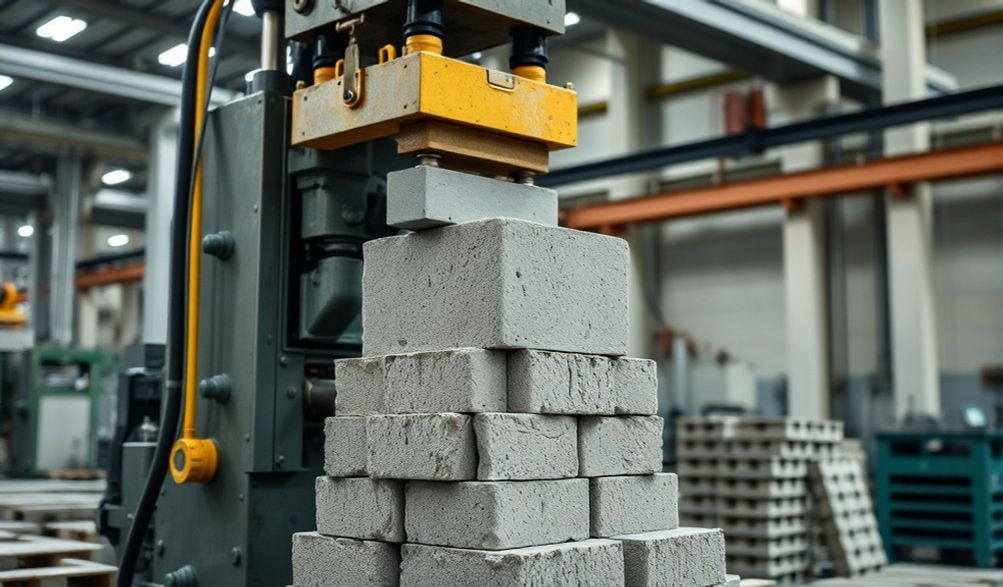
Gid Definitif pou Machin Fabrikasyon Brik: Kalite, Pri, ak Ki Jan Pou Chwazi
Soti nan mi ansyen Babilòn yo rive nan gwo bilding modèn yo jodi a, brik yo te blòk fondamantal pou konstriksyon sivilizasyon an. Popilarite dirab yo soti nan fòs, dire, ak adaptabilite yo. Men, metòd tradisyonèl pou fòme brik ak men se yon istwa ki rakonte travay ki kraze do, kalite ki pa konstan, ak pwodiksyon ki twò dousman. Nan yon epòk ki defini pa yon eksplozyon konstriksyon mondyal ak bezwen ijan pou lojman ak enfrastrikti ki abòdab, apwòch manyèl sa a tou senpleman pa ka kenbe pous.
Antre nan machin fabrikasyon brik la: motè transfòmatif masonn modèn lan. Pou antreprenè yo, konpayi konstriksyon yo, ak pwojè devlopman dirab yo, machin sa yo se pa sèlman zouti; yo se baz fondamantal yon operasyon ki pwofitab, efikas, ak kapab ogmante. Gid sa a koupe bwi a. Konpile ak done endistri yo, espesifikasyon manifaktirè yo, ak apèsi operasyonèl pratik, li sèvi kòm resous otorite ou pou konprann, evalye, epi chwazi pafè amachin pou fè brikpou bezwen ou yo. Nou pral eksplore avantaj fondamantal yo, dekonpoze chak kalite prensipal yo, bay yon analiz reyalis sou pri yo, epi ekipe ou ak konesans pou fè yon envestisman konfyan.
Konprann Machin pou Fè Brik: Konsèp Fondamantal ak Avantaj
Anvan nou plonje nan espesifikasyon yo, li enpòtan pou konprann sa machin sa yo fè ak poukisa yo reprezante yon avançman si enpòtan.
Kisa yon Machin Fè Brik?
Nan nwayo li, yon machin pou fè brik se yon aparèy mekanize ki fèt pou otomatize ak estandadize pwosesis pou transfòme materyo anvan travay—tankou ajil, beton (siman, sab, agrega), oswa pwodwi segondè endistriyèl tankou sann volkanik—an blòk brik solid ak inifòm. Pwosesis la anjeneral entegre plizyè etap kle:
- Melanj:Kombine materyo premyè ak dlo pou jwenn yon melanj omojèn ak fasil pou travay avèk li.
- Moulaj:Voye melanj sa a nan yon mwazi ki defini fòm ak gwosè brik la.
- Konpakte:Aplike presyon entans (idwolik oswa mekanik) ak souvan vibrasyon pou kondanse materyèl la, retire bwat lè, epi asire entegrite estriktirèl la.
- Ejeksyon ak Gerizon:Lage brik vèt (ki poko kuit oswa ki poko sèk) pou li ka seche epi vin solid, sa ki enpòtan anpil pou li ka gen fòs final la.
Avantaj Kle Kont Metòd Manyèl
Chanjyeman soti nan pwodiksyon manyèl ale nan mekanize pa senpleman yon ti pwogrè; li se yon revolisyon. Men kèk benefis konvenkan:
- Ogmantasyon Dramatik nan Pwodiksyon ak Vitès:Yon sèl travayè manyèl ka pwodwi kèk santèn brik pa jou. Yon machin semi-otomatik debaz ka pwodwi ant 1,000 ak 2,000 nan yon jounen travay 8 èdtan, pandan y ap izin otomatik konplètman ka pwodwi plizyè dizèn de milye.
- Konsistans siperyè, Fòm, ak Fòs Konpresif:Machin yo aplike presyon egzak ak repete. Sa rezilte nan brik ki gen dimansyon inifòm, sifas lis, ak fòs konpresif ki toujou wo, sa ki enpòtan anpil pou satisfè kòd bilding yo (tankou estanda ASTM) epi asire sekirite estriktirèl la.
- Diminye Konsiderableman Depans Travay ak Fòs Fizik Mechanization reduces dependency on large, skilled labor crews. One or two operators can manage a machine that does the work of dozens, lowering long-term wage bills and eliminating much of the physically taxing work.
- Material Efficiency and Waste Reduction: Precise mixing and molding minimize spillage and material waste. You get more bricks per ton of raw input, directly improving your profit margins.
- Versatility in Brick Types and Designs: With interchangeable molds, one machine can produce a variety of bricks—solid, hollow, interlocking, or pavers—allowing you to cater to diverse market demands and architectural trends.
Kalite Machin pou Fè Brik: Yon Detay Konplè
The market offers a machine for every scale and purpose. Understanding the categories is your first step toward a smart choice.
By Operation Mechanism
This classification is primarily about the level of human involvement required.
- Machin pou Fè Brik Manyèl: These are human-powered, often using a lever mechanism to compress material in a mold. They are incredibly low-cost and portable, making them ideal for micro-enterprises, community projects, or very low-volume needs. However, output is low, and consistency heavily depends on the operator’s skill.
- Machin Semi-Otomatik: This is the most popular category for small to medium-sized enterprises (SMEs). Key processes like compression and vibration are automated, but tasks like feeding raw material or removing finished bricks may be manual. They offer an excellent balance between affordability, improved output, and quality. In our observations, a well-operated semi-automatic machine provides the best entry point for most new business owners.
- Plante Brikèt Otomatik Konplè: These are industrial-grade systems. They feature computerized controls and automated lines for feeding, mixing, molding, stacking, and palletizing bricks. Requiring minimal human intervention, they are designed for high-volume, continuous production for large construction firms or dedicated brick supply companies. The investment is substantial, but the per-unit production cost is very low.
By Brick Output Type
The end product defines the machine’s design.
- Machin pou Fè Blòk Vid: These produce bricks with cavities (holes). Hollow blocks are lighter, provide better thermal and acoustic insulation, and use less raw material, making them cost-effective for walls and partitions.
- Solid Block Making Machines: Designed for maximum density and strength, these produce solid bricks or heavy-duty paving blocks. They are essential for load-bearing structures, foundations, and high-traffic areas like driveways or industrial floors.
- Machin pou fè brik ki anbloke: A growing trend in sustainable construction. These bricks are designed with grooves and tongues that lock together without mortar (or with minimal mortar). This speeds up construction, reduces material costs, and can create earthquake-resistant structures.
- Machin pou Fè Pave: Specialized for producing decorative, non-porous paving slabs, tiles, and landscaping blocks. They often have high-pressure capabilities and textured mold options to create aesthetically pleasing finishes.
By Raw Material Processed
The raw material dictates the machine’s technology.
- Machin pou fè brik an tè: Traditionally, these use an extrusion process where soft clay is forced through a die to form a continuous column, which is then wire-cut into individual bricks before firing in a kiln.
- Machin Blòk Konkrè: The most common type today. They use a combination of vibration and high hydraulic pressure to compact a semi-dry concrete mix into molds. The bricks are then cured, not fired.
- Machin pou fè brik soti nan sann dife: An eco-friendly alternative that uses fly ash (a waste product from coal plants), lime, and gypsum. These machines use hydraulic compression to form bricks that are cured by steam. They are strong, smooth, and help reduce industrial waste.
Critical Factors for Choosing the Right Machine
Selecting a machine is a strategic decision. Align your choice with these critical factors.
Evalye Bezwen Pwodiksyon Ou
Kòmanse ak yon plan biznis klè.
* Required Daily/Weekly Output: Be realistic. Calculate your current and projected demand. A machine operating at 50% capacity is inefficient, while one at 110% capacity will break down. Match the machine’s “bricks per hour” rating to your needs with room for growth.
* Types of Bricks to be Produced: Refer to section 2.2. Will you focus on standard solid blocks for general construction, or is there a high local demand for decorative pavers or interlocking bricks for housing projects?
* Available Raw Materials Locally: Your most affordable material source defines your machine type. If you have access to good-quality clay, a clay brick machine makes sense. If cement and aggregate are cheap and fly ash is plentiful from a nearby power plant, a concrete or fly ash machine is the logical choice.
Espesifikasyon ak Karakteristik Machin yo
Dig into the technical details.
* Cycle Time and Mold Capacity: This is the heart of output. How many bricks does it produce in one press cycle (e.g., 3, 6, 10)? How long is each cycle? Multiply to get your hourly output.
* Sous Pouvwa: Options include Electric, Diesel, or Hydraulic (which itself can be electric or diesel-powered). Consider your local grid reliability and fuel costs. Electric machines are cleaner and quieter but require stable power.
* Key Components Quality: Don’t just look at the paint. Ask about:
* Mold Steel: High-chromium steel molds last far longer and produce better-finished bricks.
* Sistèm Idwolik: Reputable brand names (e.g., Bosch Rexroth, Parker) indicate reliability.
* Mote Vibrasyon: A powerful, balanced vibration system is crucial for dense, strong concrete blocks.
* Automation Level & Ease of Operation: How many operators are needed? What skill level is required? Consider the availability and cost of skilled labor in your area.
Budget and Investment Analysis
Think in terms of total investment, not just purchase price.
* Pri Acha Inisyal: This is your capital expenditure (CapEx). Get quotes for the machine, essential spare parts, and any special tools.
* Operating Costs: Your ongoing expenses (OpEx). Factor in electricity/fuel, labor, raw materials, and routine maintenance.
* Return on Investment (ROI) Calculation: Use a simple framework:
1. Estimate annual production (bricks/year).
2. Determine your net profit per brick (Sale price – total cost per brick).
3. Calculate annual profit (Step 1 * Step 2).
4. Divide total machine investment by annual profit to get a rough payback period. A typical target for SMEs is 12-24 months.
The Investment: Brick Making Machine Price Guide & Considerations
Let’s demystify the costs. All figures are approximate global ranges and can vary significantly by region, brand, and negotiation.
Price Range Overview
- Machin Manyèl: $1,000 – $4,000. Ideal for testing a market or very small-scale production.
- Machin Semi-Otomatik: $4,500 – $25,000. This wide range covers small single-mold machines to large, multi-mold stationary models. The $10,000-$18,000 range is where most serious small businesses find robust options.
- Plant Konplètman Otomatik: $30,000 – $250,000+. Price scales directly with automation, output capacity, and sophistication. A mid-range plant might cost $70,000-$120,000.
What Influences the Cost?
The price tag is a sum of its parts:
* Brand & After-Sales Service: Established brands with strong local service networks command a premium, which is often worth it for reduced downtime.
* Automation & Capacity: More automation and higher output mean more motors, sensors, conveyors, and complex controls.
* Kalite Konstriksyon: A machine built with commercial-grade components and a robust frame will cost more than one using lighter materials.
* Ancillary Costs: Never forget shipping, import duties (if applicable), installation, and operator training. These can add 15-30% to the landed cost.
Beyond the Sticker Price: Total Cost of Ownership
The cheapest machine can become the most expensive.
* Warranty and Spare Parts: A comprehensive warranty (1+ years on core parts) is vital. Check the availability and lead time for spare parts like molds, hydraulic seals, and vibration motors.
* Cost of Maintenance vs. Downtime: Regular, inexpensive maintenance is non-negotiable. The cost of a day’s downtime—in lost production and missed orders—can far exceed a year’s maintenance budget.
Setting Up for Success: Installation, Operation, and Maintenance
Your machine’s performance depends on its environment and care.
Site Preparation and Installation Requirements
- Espas: You need space for the machine, raw material storage, mixing area, brick drying/curing area, and finished product storage. A clear, level, concrete-floored shed is ideal.
- Foundation: Larger machines require a solid, leveled concrete foundation to absorb vibration and ensure stability.
- Utilities: Ensure access to the required power supply (voltage/phase) and a reliable water source for mixing.
Raw Material Preparation Basics
- Mix Ratios: This is a science. For concrete blocks, a common starting mix is 1 part cement to 6-8 parts aggregate (sand/stone). The water-cement ratio is critical—too wet weakens the brick; too dry causes poor compaction. Always follow manufacturer guidelines and test mixes.
- Gerizon: Proper curing is what gives concrete bricks their strength. This usually involves keeping the green bricks moist and at a stable temperature for 7-14 days. Steam curing chambers are used in high-volume fly ash production.
Essential Maintenance Checklist for Longevity
- Daily: Clean all molds and the feeding hopper thoroughly after use. Check for loose bolts or nuts.
- Weekly: Inspect hydraulic hoses for leaks. Check oil levels. Lubricate all moving parts as per the manual.
- Monthly: Conduct a more thorough inspection of the vibration table bearings, electrical connections, and the compaction head. Replace worn seals.
Kesyon yo poze souvan (FAQ)
Q1: What is the average production capacity of a standard brick making machine?
A: There is no single “standard.” Capacity varies dramatically. A small semi-automatic machine might produce 800-2,000 bricks in an 8-hour shift. A medium-sized stationary semi-auto can produce 3,000-6,000. Large fully automatic plants can easily exceed 10,000-20,000 bricks per day.
Q2: Can one machine produce different types and sizes of bricks?
A: Yes, this is a key advantage. Most machines use interchangeable molds. You can purchase additional molds for hollow blocks, solid blocks, or different sizes. Changing molds typically takes 30 minutes to an hour, allowing great production flexibility.
Q3: How much profit can I make from a brick making business?
A: We cannot guarantee specific income, as it depends entirely on your local brick selling price, operational efficiency, overhead costs, and sales volume. Profitability is driven by the margin between your cost per brick (materials, labor, power, depreciation) and your sale price. A disciplined focus on quality and efficiency is the surest path to profit.
Q4: What are the most common problems with brick making machines and how do I fix them?
A: Common issues include:
* Bricks Breaking: Often caused by incorrect mix (too much water/sand), insufficient compaction pressure, or improper curing. Adjust your mix and ensure the machine is achieving full pressure.
* Poor Surface Finish: Usually indicates worn-out molds or a mix that is too dry. Inspect and replace molds if necessary.
* Machine Jamming: Can be due to foreign objects in the mix, overfeeding, or a mechanical fault. Always shut off power before clearing a jam. For persistent or major issues, always contact your supplier’s technical support.
Q5: Is operating a brick making machine difficult?
A: Manual and semi-automatic machines are designed to be operator-friendly and can be mastered with basic training, which reputable suppliers should provide. Fully automatic plants require more skilled technicians for operation and maintenance. The learning curve is manageable with proper support.
Konklizyon
Choosing a brick making machine is a significant step toward building a more efficient, profitable, and scalable operation. We’ve navigated from the core benefits that justify the investment, through the detailed landscape of machine types, to the practicalities of cost, selection, and maintenance.
Your final decision must prioritize a clear-eyed assessment of your specific production needs, realistic budget, and the availability of local technical support and spare parts. The cheapest option is rarely the most economical in the long run. View this purchase as a long-term capital asset—the heart of your production line.
Investing in quality equipment, backed by thorough knowledge and a solid business plan, is the proven foundation for success in the brick manufacturing industry. The right machine doesn’t just make bricks; it builds your business.
Ready to take the next step? Contact 3-4 reputable suppliers with your specific requirements to get detailed quotes and, if possible, arrange live machine demonstrations. Seeing a machine in action is invaluable.
For more in-depth guides on optimal mix designs, creating a business plan, or maintenance deep-dives, explore our dedicated resource center for construction and manufacturing professionals.
<