
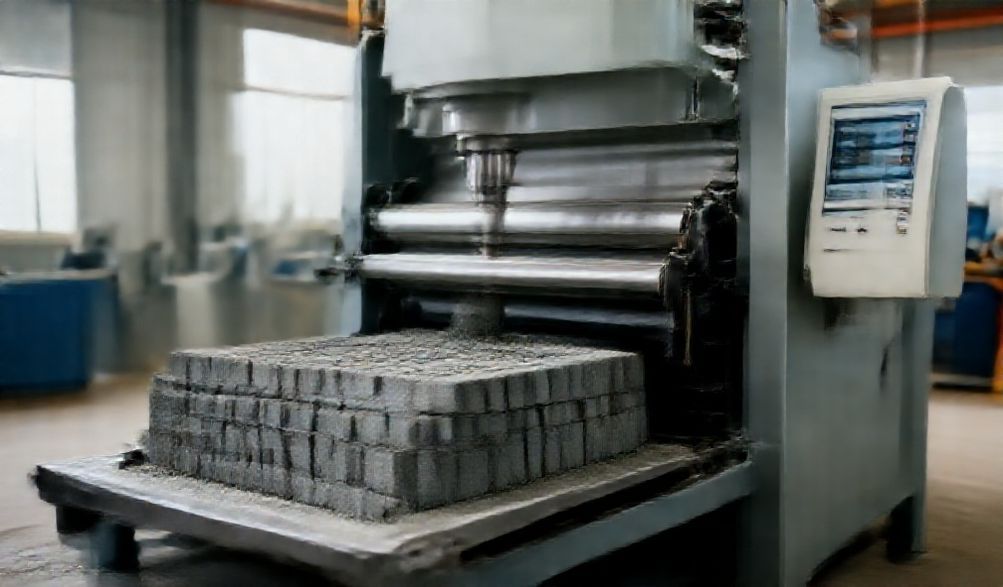
The Ultimate Guide to Cement Paving Brick Making Machines: Types, Process & Selection
Entwodiksyon
The global push for robust, aesthetically pleasing, and cost-effective infrastructure has created a surging demand for high-quality paving solutions. From municipal urban beautification projects to private driveway installations, the need for durable pavers is clear. For contractors, builders, and entrepreneurs, this demand presents a significant opportunity. But capitalizing on it requires moving beyond manual labor or sourcing expensive pre-made bricks. The key lies in understanding the core technology that makes it possible: the cement paving brick making machine.
This guide is designed to be your definitive, expert resource. We’ve synthesized deep industry knowledge, technical specifications, and hard-won operational insights to cut through the marketing noise. Our goal is to build trust by providing you with unbiased, comprehensive information. We’ll focus not just on the machine’s price tag, but on the critical factors that determine your real return on investment: machine durability, output quality, and long-term operational efficiency. By the end of this article, you’ll have a clear roadmap for navigating the world of cement brick making machinery.
We will explore the different types of machines available, demystify the production process from raw material to finished paver, and provide a detailed checklist for selecting the right equipment for your needs. Finally, we’ll share essential best practices to ensure your operation runs smoothly and profitably from day one.
Kisa yon Machin pou Fè Brik pou Pave?
At its core, a cement paving brick making machine is a purpose-built piece of industrial equipment designed to transform a dry concrete mix into dense, uniformly shaped, and high-strength paving units. It automates and mechanizes the critical process of compaction, applying significant force—through vibration, hydraulic pressure, or both—to produce bricks that are far superior to those made by hand or simple manual presses.
Fonksyon Prensipal ak Sòti
The machine’s primary function is to receive a precisely proportioned mixture of cement, aggregates (like sand and stone dust), and water, and then compress it within a mold cavity. This action removes air voids, consolidates the materials, and forms a solid, cohesive block. Once ejected, this “green” brick is then cured to achieve its full structural strength.
The final products are versatile and include:
* Garden path pavers and edging stones.
* Interlocking pavers for driveways and parking lots.
* Heavy-duty blocks for industrial flooring and ports.
* Decorative patio stones in various textures and colors.
Key Advantages of Machine-Made Paving Bricks
Investing in a proper machine isn’t just about speed; it’s about achieving a product that stands the test of time and meets professional standards.
- Fòs ak Dite siperyè: Machine compaction creates high-density bricks with compressive strengths that often exceed 30 MPa (N/mm²), making them resistant to weathering, heavy loads, and freeze-thaw cycles.
- Consistent Quality & Dimensions: Every brick is identical in size, shape, and finish. This consistency is crucial for professional, efficient installation with tight, even joints.
- Efikasite Pwodiksyon Wo: A single machine can produce hundreds or thousands of bricks per day, drastically reducing labor costs and project timelines compared to manual methods.
- Fleksibilite nan Konsepsyon: By simply changing the mold, one machine can produce a wide array of designs, textures, and sizes, allowing you to cater to diverse market demands.
Types of Cement Paving Brick Making Machines
Understanding the different machine categories is the first step in making an informed purchase. The right choice depends entirely on your production goals, budget, and available resources.
Pa Metòd Operasyon
This classification is often the most relevant for business planning, as it directly ties to labor requirements and output capacity.
- Machin Manyèl / Machin ki opere ak men:
- Deskripsyon: These are the most basic and affordable entry points. They require an operator to manually fill the mold, engage a lever mechanism to apply pressure, and then release and remove the brick.
- Pi Bon Pou: Very small startups, community projects, or producing specialty bricks in very low volumes. Output is low, typically 300-800 bricks per day, and is physically demanding.
- Machin Semi-Otomatik:
- Deskripsyon: The ideal balance for most small to medium enterprises (SMEs). Key processes like mixing or feeding the mix into the mold are automated, but the machine requires an operator to initiate the pressing cycle, and sometimes to remove and stack the bricks. They often feature a simple control panel.
- Pi Bon Pou: Businesses with steady demand looking to scale efficiently. They offer a significant productivity boost over manual machines (e.g., 2,000 – 8,000 bricks per shift) with a manageable investment and operational complexity.
- Machin Otomatik Konplè:
- Deskripsyon: These are complete production lines. They integrate automatic material batching, mixing, conveying, pressing, brick ejection, and stacking via palletizers. Operations are controlled by programmable logic controllers (PLCs) with minimal human intervention.
- Pi Bon Pou: Large-scale manufacturers, block yards supplying major projects, or businesses focused on maximum output with minimal labor. Production can exceed 15,000 bricks per shift.
By Pressing Mechanism
The compaction technology defines the brick’s final density and suitable applications.
- Vibration-Press Machines:
- Kòman li Fonksyone: These machines use a combination of high-frequency vibration and mechanical pressure. The vibration fluidizes the concrete mix, allowing it to settle densely into every corner of the mold before pressure is applied to form the brick.
- Output & Use: Excellent for producing a wide range of hollow blocks, solid bricks, and standard interlocking pavers. They are energy-efficient and have a faster cycle time than hydraulic presses.
- Hydraulic-Press Machines:
- Kòman li Fonksyone: They employ immense, precisely controlled hydraulic pressure (measured in tons) to compact the mix. This results in an extremely low void ratio and exceptionally high brick density.
- Output & Use: The go-to choice for producing high-strength paving bricks for severe-duty applications—think airport tarmacs, container ports, and industrial flooring. The bricks have superior abrasion resistance and longevity.
By Production Output & Mobility
- Machin Plant Estasyonè: These are heavy, robust machines designed for fixed installation in a factory or dedicated production yard. They form the heart of a permanent operation and are built for continuous, high-volume output.
- Machin Blòk Mobil: Mounted on a trailer or skid frame, these machines can be transported directly to a large construction site. This eliminates the cost and breakage associated with transporting finished bricks over long distances, making them perfect for large infrastructure projects.
The Brick Production Process: From Raw Material to Finished Paver
Producing quality bricks is a science. A great machine is only one part of the equation; understanding and controlling the entire process is what separates a professional operation from an amateur one.
Raw Material Selection & Proportioning
The recipe is foundational. A poor mix cannot be saved by the best machine.
* Siman: Use a fresh, high-grade Portland cement (e.g., OPC 43 or 53 grade). Stale or compromised cement will drastically reduce final strength.
* Agrèga: Sharp, clean, and well-graded sand and stone dust (≤6mm) are essential. They should be free of clay, silt, or organic matter. The right aggregate gradation improves packing density.
* Water-Cement Ratio: This is critical. Too much water weakens the brick and causes cracking; too little prevents proper hydration and compaction. The ideal ratio is typically between 0.4 and 0.6, but it depends on the mix design.
* Additives: Pigments for colored bricks, plasticizers to improve workability and strength with less water, and hardening accelerators can be used to enhance product properties.
Melanje
A homogeneous mix is non-negotiable. Inconsistent mixing leads to weak spots and color variation.
* Mixer Types: For smaller operations, a pan mixer or a single-shaft mixer is common. Larger plants use twin-shaft mixers for faster, more thorough mixing. The mixer should be sized to feed the brick machine’s cycle time efficiently.
* Mixing Time: Follow the mixer manufacturer’s guidelines. Under-mixing is a common cause of poor brick quality.
Molding and Compaction
This is the machine’s core moment. The prepared mix is fed from a hopper into the mold cavity. The press mechanism—whether vibrating, hydraulic, or a combination—then activates.
* In a vibration-press machine, the mold table vibrates intensely while a press head descends.
* In a hydraulic machine, immense, silent pressure is applied from above.
The goal is to achieve maximum “green strength”—the strength the brick has immediately after ejection, which allows it to be handled and moved to curing.
Curing and Drying
Curing is not merely drying; it’s the controlled process of maintaining moisture and temperature to allow the cement to fully hydrate and gain strength.
* Initial Curing: Freshly ejected bricks are kept on pallets in a humid environment for at least 24-48 hours, often under plastic sheets, to prevent moisture loss.
* Water Curing: For optimal strength, bricks are often spray-cured or immersed in water tanks for 7-14 days.
* Seche: After sufficient curing, bricks are air-dried before sale or installation. The full 28-day strength is achieved over time.
How to Choose the Right Machine: A Buyer’s Checklist
This decision is a significant capital investment. Use this checklist to evaluate your options systematically and avoid costly mistakes.
Assess Your Production Needs
- What is your required daily output (bricks per 8-hour shift)?
- What types and sizes of pavers do you need to produce? (Consider future needs too).
- Kisa echèl of your typical projects or market demand?
- What is your available workshop spaceakpower supply (3-phase or single-phase)?
Evaluate Machine Specifications
Don’t just compare prices; compare these key technical specs:
* Tan Sik How many seconds to produce one brick? This directly dictates maximum output.
* Fòs Pwasyon: Measured in tons. Higher tonnage generally means higher brick density.
* Pouvwa Motè: Indicates energy consumption and machine capability (in HP or kW).
* Nivo Otomatizasyon: Match this to your labor availability and budget.
* Versatilite Mwazi: How easy and costly is it to change molds? Does the supplier offer a good range of mold designs?
Consider Quality and Durability
Look beyond the paint. Inspect:
* Konstriksyon Ankadreman Thick, reinforced steel plates and welded joints resist the constant stress of operation.
* Critical Components: The quality of the hydraulic pump, cylinders, valves, and vibrator motors (if applicable) from reputable brands is paramount for reliability.
* Kalite Mwazi: Molds should be made from hardened, abrasion-resistant steel for a long life and consistent brick finish.
Factor in Total Cost of Ownership
The purchase price is just the beginning. Consider:
* Enstalasyon ak Komisyon: Will you need a foundation? Are costs included?
* Fòmasyon: Does the supplier provide comprehensive training for your operators?
* Konsomasyon Enèji: Calculate the running cost based on motor power and local electricity rates.
* Antretyen ak Pyès Detache: What is the routine maintenance schedule? Are spare parts readily available and affordable?
Supplier Reliability and Support
Your relationship with the supplier is crucial for long-term success.
* Reputation & Experience: How long have they been in business? Can they provide references from existing clients?
* Sèvis Apre Vann: Do they offer a clear warranty? Do they have service technicians available for support?
* Documentation: Ensure they provide detailed operational and maintenance manuals in your language.
Operational Best Practices and Maintenance
A machine is a long-term partner. Treat it well, and it will reward you with years of reliable service.
Daily Operational Procedures for Optimal Output
- Pre-Start Check: Inspect for loose bolts, check hydraulic oil levels, ensure the mold and hopper are clean and clear.
- Startup Sequence: Power on the control system, start the mixer, and let the hydraulic system warm up if applicable.
- Consistent Operation: Maintain a steady workflow. Avoid overloading the hopper and ensure the mix consistency remains uniform.
- Proper Shutdown: At the end of the shift, run the machine until the hopper is empty, clean all components thoroughly (especially the mold), and follow the manufacturer’s shutdown procedure.
Essential Routine Maintenance Schedule
- Daily: Lubricate all moving parts (guide rods, bearings), clean the machine, check for oil or air leaks.
- Weekly: Inspect and tighten all bolts and fasteners. Check the condition of vibration springs or hydraulic hoses.
- Monthly: Change or clean hydraulic oil filters. Inspect the mold for wear and damage. Check electrical connections.
- Annually: A major service, potentially by a technician, to overhaul key systems.
Troubleshooting Common Issues
- Bricks Sticking in Mold: Likely caused by a worn mold, insufficient mold release agent, or an overly wet mix.
- Poor Surface Finish: Can be due to a dirty or damaged mold face, incorrect mix (too dry/too wet), or low compaction pressure.
- Low Brick Strength: The most common culprits are incorrect water-cement ratio, poor-quality cement, inadequate curing, or insufficient compaction pressure.
- Excessive Machine Vibration or Noise: Check for loose parts, worn bearings, or an unbalanced load.
Kesyon yo poze souvan (FAQ)
What is the average production capacity of a medium-sized machine?
For a semi-automatic vibration press machine, a realistic output range is 2,000 to 6,000 standard bricks per 8-hour shift. This varies widely based on brick size, cycle time, and operator efficiency. Always verify capacity based on the specific brick type you intend to produce.
Can one machine produce different shapes and sizes of pavers?
Absolutely. This is a key advantage. By changing the mold (the removable steel box that defines the brick’s shape), you can produce a completely different product. Mold changeover can take from 30 minutes to a few hours, depending on the machine design.
What is the typical power requirement for a semi-automatic machine?
Most semi-automatic machines suitable for SME production require a 3-phase electrical supply. The total connected load typically ranges from 10 HP (7.5 kW) to 20 HP (15 kW), powering the mixer, conveyor, press motor, and vibrators.
How much space is needed to install and operate the machine?
You need space for more than just the machine. Plan for:
* Machine Footprint: ~4m x 3m.
* Raw Material Storage: Covered area for sand, stone dust, and cement.
* Mixing Area: Space for the mixer and material handling.
* Curing Area: A large, sheltered space for stacked bricks to cure for 2-3 weeks. This is often the largest space requirement.
* Finished Goods Storage: Space for dried, ready-to-sell bricks.
A minimum of 200-300 square meters is a good starting point for a small operation.
What is the expected lifespan of a well-maintained machine?
A quality machine from a reputable manufacturer, operated within its specifications and maintained diligently, can have a productive lifespan of 10 to 20 years or more. Critical components like hydraulic systems and motors may require overhaul or replacement during this time.
Are there profitable business opportunities with this machine?
Yes, the demand for paving bricks in construction, landscaping, and municipal projects is strong. Profitability hinges on several factors:
* Local Material Costs: Sourcing affordable, quality aggregates.
* Market Demand & Competition: Understanding your local pricing and competition.
* Efikasite Operasyonèl: Maximizing output and minimizing waste and downtime.
* Business Model: You can manufacture for your own projects, sell wholesale to retailers/contractors, or even set up a block yard for direct retail sales.
Konklizyon
Chwazi boncement paving brick making machine is a pivotal decision that balances technical specifications, financial investment, and strategic business planning. It’s not merely about buying a piece of equipment; it’s about investing in a production system. As we’ve explored, success depends on a holistic approach: choosing the correct machine type for your output goals, mastering the production process from mix design to curing, and committing to rigorous operational and maintenance standards.
The path to a successful venture is built on informed decisions. We encourage you to use this guide as a foundation for your research. Visit suppliers, request live demonstrations using a mix similar to your own, and, most importantly, speak to existing machine owners about their firsthand experiences. As the industry evolves, trends like increased automation and the use of recycled aggregates in mixes are creating new opportunities for efficiency and sustainability. By combining the right equipment with knowledge and diligence, you can build a solid foundation for a profitable and enduring business.
<