
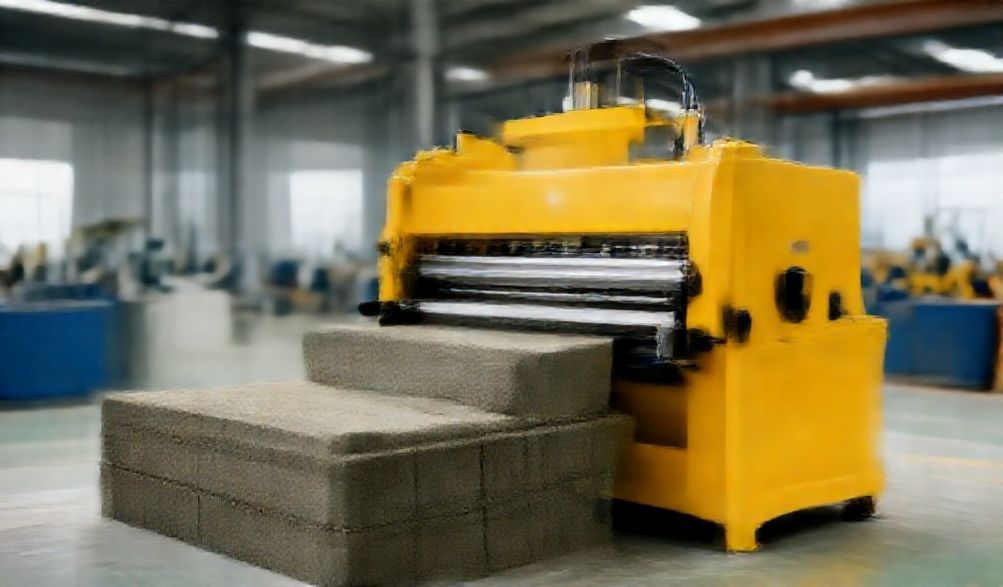
The Ultimate Guide to China’s Small Baking-Free Brick Making Machines (2026 Buyer’s Guide)
Entwodiksyon
For the small-scale builder, contractor, or entrepreneur, the dream of affordable, on-demand construction materials often crashes against the hard reality of traditional brick production. The soaring costs of fired clay bricks, the massive energy consumption of kilns, and the sheer complexity of establishing a small plant can turn a promising project into a non-starter. What if there was a way to produce durable, reliable bricks right on your site, using local materials, with minimal energy and a fraction of the investment?
Antre nanChina small baking-free brick making machine—a revolutionary piece of equipment that is transforming small-scale construction worldwide. These machines offer an eco-friendly, cost-effective, and remarkably simple alternative to traditional methods. By compacting a stabilized mixture of soil, cement, and other materials under immense hydraulic pressure, they produce solid blocks that cure naturally, eliminating the need for fossil-fuel-hungry kilns entirely.
China has emerged as the undisputed global hub for manufacturing these machines. The combination of advanced manufacturing scale, relentless technological innovation, and significant cost competitiveness means that high-quality, accessible machinery is available to businesses everywhere. However, navigating this vast market requires insight.
This guide serves as your expert, unbiased resource. Built on industry research, technical analysis, and practical user feedback, its sole purpose is to equip you with the knowledge to make a confident, informed purchasing decision. You will learn the core technology, compare machine types, identify critical features, discover how to vet suppliers, analyze costs, and grasp operational basics. Let’s build your understanding from the ground up.
What is a Baking-Free Brick Making Machine? Technology Explained
At its heart, a baking-free brick making machine is a hydraulic press designed to form construction blocks without the high-temperature firing process used for traditional clay bricks.
The Science Behind “Baking-Free” Bricks
The “baking-free” or “non-fired” process is a feat of compaction chemistry, not thermal transformation. Here’s how it works:
- Raw Material Mixing: A precise mixture is prepared, typically containing soil (often on-site), a small percentage of cement (usually 5-10%), and sometimes other stabilizers like lime or industrial by-products such as fly ash.
- Hydraulic Compaction: This dry-ish mix is fed into a sturdy steel mold within the machine. A powerful hydraulic ram then applies extreme pressure—often ranging from 20 to 100 tons—compressing the particles together.
- Bond Formation: Under this pressure, the cementitious materials (cement, lime) react with moisture in the mix, initiating a cold-bonding process. The particles are mechanically locked and chemically bonded.
- Gerizon: The freshly ejected, solid block is then stacked and cured naturally. This involves keeping the blocks moist (often by sprinkling water and covering with plastic) for 7-14 days, allowing the cement to fully hydrate and gain strength.
Contrast this with traditional clay brick firing, which requires temperatures exceeding 1000°C for extended periods, consuming vast amounts of coal or gas and releasing significant CO2 and other pollutants.
Core Advantages for Small-Scale Operations
For the small operator, the benefits are compelling:
- Low Investment Cost: Significantly cheaper than establishing a kiln-based brick plant.
- Minimal Energy Consumption: Power is only needed to run the hydraulic pump and controls, not for days of continuous firing.
- Environmental Protection: Utilizes local or waste materials (soil, fly ash), reduces quarrying for clay, and eliminates kiln emissions.
- Senplisite Operasyonèl: Does not require highly skilled kiln operators; training is relatively straightforward.
- Local Material Sourcing: Dramatically reduces transport costs by using on-site or locally available soil as the primary raw material.
Common Applications and Project Suitability
These machines are not for skyscrapers, but they are exceptionally well-suited for a wide range of small to medium projects:
* Rural and low-cost housing units.
* Perimeter walls, compound walls, and boundary fencing.
* Single-story residential buildings, workshops, and farm structures.
* Landscaping projects (garden walls, pathways using interlocking blocks).
* DIY community projects and social housing initiatives.
* Small and medium-sized enterprises (SMEs) looking to start a block production business.
Types of Small Baking-Free Brick Making Machines from China
The Chinese market offers a spectrum of machines to match different budgets, labor situations, and output goals.
Machin Manyèl vs. Machin Semi-Otomatik vs. Machin Otomatik Nèt
- Machin Manyèl: Operated primarily by hand levers for filling, pressing, and ejection. They have the lowest price point and are ideal for very small-scale, intermittent production or community projects. Output is low and physically demanding.
- Machin Semi-Otomatik: The most popular choice for small businesses. They use an electric hydraulic system for pressing, with manual feeding of raw material and block removal. They offer an excellent balance between cost, output (500-1500 blocks per 8-hour shift), and ease of use.
- Machin Otomatik Konplè: Feature automated material feeding, pressing, and block stacking. They require minimal labor and offer the highest consistent output. The investment is higher and they are best for dedicated production facilities with steady demand.
Block Type Specialization: Solid, Hollow, Interlocking, Pavers
The end product is determined by the mold. Most suppliers offer a variety of interchangeable molds.
* Blòk Solid: For maximum strength in load-bearing walls.
* Blòk vid: Lighter, provide better insulation, and use less raw material. Ideal for non-load-bearing partitions.
* Blòk Entèbloke: Designed with grooves and tongues, allowing them to lock together without mortar for faster construction of walls and retaining structures.
* Blòk pave: For driveways, walkways, and patios. Often thicker and designed for compressive strength and weathering.
Mobile vs. Stationary Plant Setups
- Machin Mobil: Mounted on a trailer, these allow for true on-site production, eliminating block transport costs entirely. Perfect for constructing a building in a remote location.
- Stationary Setups: The machine is installed in a small workshop or yard, functioning as a micro-factory supplying blocks to multiple local construction sites.
Key Features to Look for in a Quality Machine
Not all machines are created equal. Focus on these critical aspects to ensure longevity and performance.
Critical Components and Build Quality
- Kad ak Estrikti: Look for thick, high-tensile steel plates welded into a rigid frame. A flimsy frame will flex under pressure, leading to poor block quality and rapid wear.
- Sistèm Idwolik: The heart of the machine. A reliable, brand-name hydraulic pump, valves, and cylinders (from manufacturers like Rexroth, Yuken, or reliable Chinese brands) are essential. Ask for specifications.
- Mold Precision & Material: Molds should be machined from high-chromium alloy steel and heat-treated for hardness. A precise mold ensures consistent block dimensions and smooth ejection.
- Sistèm Kontwòl: For semi- and fully-automatic models, a simple, durable PLC (Programmable Logic Controller) or relay-based system is preferable. It should be protected from dust and moisture.
Performance Specifications Decoded
Understanding the spec sheet is crucial:
* Presyon (Tòn): Determines final block density and strength. For small machines, 20-50 tons is common. More pressure generally means a stronger block.
* Tan Sik The time to produce one block (e.g., 15-30 seconds). Faster cycle times mean higher potential output.
* Kapasite Pwodiksyon: Often given as “blocks per 8-hour shift.” Be wary of theoretical maximums; real-world output is typically 70-80% of this figure.
* Egzijans Pouvwa: Usually 3-phase or single-phase electric motors (e.g., 7.5kW, 11kW). Ensure your worksite can supply the required power.
* Raw Material Ratios: The supplier should provide tested starting formulas for soil-cement mixes.
Safety Features and Ease of Maintenance
- Safety: Look for two-hand operation buttons (on automatic models), physical safety guards around moving parts, and emergency stop switches.
- Maintenance: Design should allow easy access to the hydraulic tank, filters, and wearing parts like mold liners. Ask for a detailed maintenance manual and a list of commonly replaced spare parts.
How to Choose a Reliable Chinese Manufacturer or Supplier
This is the most critical step in your journey. Due diligence separates a successful investment from a costly mistake.
Verifying Manufacturer Credentials
- Factory Audit is Key: Never rely solely on online storefronts. Insist on a live video tour of the factory floor. Look for organized production lines, quality control checks, and welding/assembly practices. Genuine manufacturers will have ISO 9001 certification and business licenses.
- Assess Technical Expertise: Do they have an in-house R&D or engineering team? Can they explain technical modifications? Patents or proprietary technology are strong positive signals.
- Demand a Real Portfolio: Request photos and videos of their machines in operation at client sites, not staged factory shots. Ask for 2-3 contactable references from past clients, preferably in a country or region similar to yours.
Navigating Alibaba, Made-in-China, and Trade Shows
- Online Platforms: Use “Gold Supplier” or “Verified” status as a starting filter, not a guarantee. Focus on suppliers who have been in business for 5+ years. Read transaction reviews carefully. Communicate directly via video call.
- The Power of Trade Shows: If possible, visit the Canton Fair (Spring & Autumn) or specialized building machinery expos in China. Meeting face-to-face, seeing machine operation, and comparing multiple suppliers in person is invaluable.
The Critical Role of After-Sales Service
The machine’s price is only the first cost. Consider the total cost of ownership.
* Garanti: Standard is 12 months for key components. Understand what is covered and what is considered “wear and tear.”
* Pye De Rechanj: Confirm that spare parts (hydraulic seals, mold liners, sensors) are available and can be shipped promptly. Ask for a spare parts list and price list.
* Support: Will they provide electrical diagrams, foundation drawings, and operation manuals in English? Do they offer online troubleshooting support (e.g., via WhatsApp/WeChat)? Is onsite technician dispatch an option, and at what cost?
Cost Analysis: Investment, Operation, and ROI
Machine Price Range and Factors Affecting It
Pou yonChina small baking-free brick making machine, expect a broad range:
* Basic Manual Machine: $1,500 – $4,000
* Semi-Automatic Machine: $5,000 – $15,000
* Fully Automatic Machine: $15,000 – $30,000+
Factors influencing final landed cost:
* Machine Configuration: Automation level, pressure, optional features.
* Anbake ak Lojistik: FOB price vs. CIF price. Sea freight is cheaper but slower. Air freight is costly.
* Import Duties & Taxes: Vary drastically by country. You must research this for your destination.
* Payment Terms: Standard is 30% T/T deposit, 70% before shipment. Letters of Credit (L/C) are safer but more complex.
Calculating Operational Costs per Block
The low operational cost is a major advantage. A simplified breakdown per block:
1. Matyè Premye: Soil (free or low cost) + Cement (5-10% of mix) + Water.
2. Travay 1-3 operators depending on automation.
3. Electricity: Based on motor kW rating and hours of operation.
4. Maintenance: A small reserve for spare parts and lubricants.
Industry practice shows that the production cost per stabilized earth block can be 30-50% lower than an equivalent fired clay brick.
Projecting Your Return on Investment (ROI)
Create a simple model:
1. Calculate Daily Production Cost: (Material + Labor + Power + Maintenance) per day.
2. Determine Daily Output: Use a realistic output number (e.g., 80% of claimed capacity).
3. Find Cost Per Block: Daily Cost / Daily Output.
4. Compare to Local Selling Price: Research the market price for similar cement blocks or low-cost bricks in your area.
5. Calculate Gross Profit Per Block: Selling Price – Production Cost.
6. Estimate Payback Period: (Total Machine Investment + Setup) / (Gross Profit Per Block * Blocks Sold Per Month).
This model will give you a clear, numerical picture of the business potential.
Operating Your Machine: From Setup to Production
Site Preparation and Installation Basics
- Espas: A covered area of about 50-100 sq. meters for the machine, raw material storage, mixing, and block curing.
- Foundation: The machine needs a level, solid concrete foundation to absorb vibration. The supplier should provide foundation drawings.
- Utilities: Ensure a stable power supply matching the machine’s requirements (voltage, phase). A reliable water source for mixing and curing is also needed.
Raw Material Selection and Mixing Formula
- Tès Tè a: Ideally, test your soil for composition. The best soils are sandy or gravelly clays. Pure clay or organic topsoil is not suitable.
- Miks la: A common starting formula is 85-90% soil, 5-10% cement, and 5-8% water by weight. The mix should be uniform and just moist enough to hold its shape when squeezed.
- Consistency is Key: Invest in a simple pan or drum mixer to ensure a homogenous mix, which is critical for uniform block strength.
Production Process, Curing, and Quality Control
- Manje: Fill the mold box evenly with the mixed material.
- Pese: Activate the hydraulic press cycle.
- Ejeksyon: Carefully remove the green (uncured) block and place it on a pallet.
- Gerizon: Stack blocks and cover them with plastic sheeting. Sprinkle with water 2-3 times a day for 7-14 days. Keep them out of direct sun and wind during this period.
- Kontwòl Kalite: After 14-28 days, you can perform simple tests. A well-made block should have a clear, sharp edge, a consistent color, and produce a ringing sound when struck. It should not crumble easily or soak up water too quickly.
FAQ Section
Q1: What is the typical production output of a small baking-free brick machine per day?
Output varies widely. A manual machine may produce 300-800 blocks in an 8-hour shift. A semi-automatic machine can produce 1,000-2,500 blocks, while a fully automatic system can exceed 4,000-6,000 blocks. Always base business plans on conservative estimates.
Q2: How strong are baking-free bricks compared to traditional fired bricks?
A properly produced cement-stabilized earth block can achieve a compressive strength between 5 and 15 MPa (Megapascals). This is sufficient for single and two-story load-bearing construction in many codes. While high-quality fired clay bricks can be stronger (15-40 MPa), the stabilized blocks offer more than adequate strength for their intended applications at a much lower cost and environmental footprint.
Q3: Can I use only soil, or is cement always required?
Cement or another stabilizer (like lime) is almost always required to provide the binding strength and water resistance. Using soil alone will result in blocks that disintegrate. The cement is the crucial ingredient that enables the “baking-free” cold bonding process.
Q4: What are the main challenges or common problems with these machines?
Common issues include inconsistent raw material mix (leading to weak blocks), poor mold maintenance causing sticking, hydraulic oil leaks from low-quality seals, and electrical faults in control systems. Choosing a quality machine and following strict operational procedures mitigates most of these.
Q5: How do I handle customs clearance and shipping from China to my country?
It is highly recommended to use a freight forwarder or shipping agent either in China or in your destination country. They handle the complex documentation, customs brokerage, and logistics. The machine supplier can usually recommend agents they have worked with before. Understand the terms: FOB means you own and are responsible for the goods once they’re on the ship.
Q6: Are there any government regulations or standards for these bricks in my region?
Sa se yon bagay ki enpòtan anpil. Building material standards vary by country. You must consult with a local civil engineer or your municipal building authority to understand if there are specific standards (e.g., for compressive strength, absorption, dimensions) that your blocks must meet for approved construction. Never assume compliance.
Konklizyon
AChina small baking-free brick making machine represents a powerful tool for democratizing construction. It empowers small businesses, reduces building costs, and promotes sustainable practices by leveraging local materials and slashing energy use. Sourcing from China provides access to this technology at a compelling price point, but the key to unlocking its value is rigorous, careful due diligence.
This guide has provided you with the foundational knowledge—from the core technology and machine types to the intricacies of supplier vetting and cost analysis. Your next steps are clear: use this information to create a shortlist of potential suppliers, request detailed quotations with clear specifications, and insist on live video demonstrations of their equipment. Remember, the goal is not to find the cheapest machine, but the one that offers the best total value: robust construction, reliable performance, and—above all—comprehensive after-sales support. With thorough research and the insights from this guide, you are well-equipped to make a decision that will build the foundation for your success, one block at a time.
<