
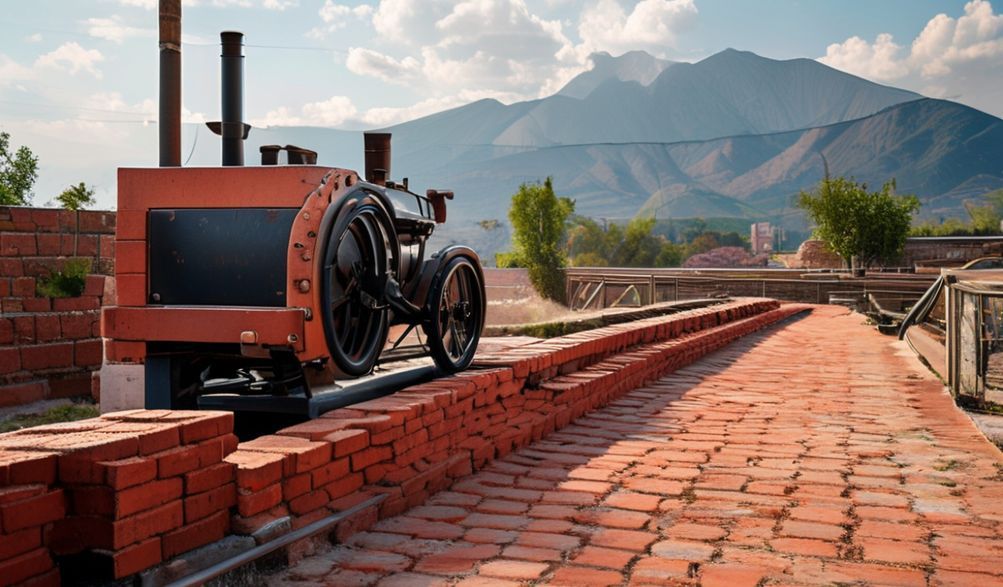
Gid Komplè pou Machin Fè Brik Columbia: Efikasite, Modèl & Envestisman
Entwodiksyon
Ou nan mitan yon pwojè konstriksyon ki gen anpil pwomès nan Medellín, Bogotá, oswa nan zòn kòt yo k'ap grandi rapidman. Plan yo apwouve, ekip la pare, men ou bloke ak reta nan livrezon brik yo, pri materyèl ki monte anpil, oswa kalite ki pa konstan ki menase entegrite estrikti ou ak benefis ou. Si senaryo sa a sonnen abitye, ou pa pou kont ou. Pou konstriktè, devlopè, ak antreprenè atravè Kolonbi, jwenn materyèl konstriksyon ki serye ak abòdab rete yon defi fondamantal.
Gid konplè sa a fèt pou se resous definitif ou. Li rasanble analiz pwofon nan endistri a, espesifikasyon teknik, ak yon konpreyansyon klè sou demann inik sektè konstriksyon Kolonbi an. Objektif nou an se ba ou ekspètiz ak enfòmasyon fyab ki nesesè pou ou pran yon desizyon konfyan ak enfòme.
Nou pral eksplore avantaj estratejik yo ki pa ka refize nan otomatize pwodiksyon brik ou yo, dekonpoze kalite machin egzak ki apwopriye pou mache lokal la. Ou pral jwenn kritè seleksyon kle, apèsi sou modèl dirijan ak apwovizyònman responsab, ansanm ak yon wout klè pou envestisman ak operasyon. Nan fen an, ou pral konnen egzakteman ki jan pou w chwazi yonMachin pou fè brik Columbiaki amelyore pwofitabilite ou, asire bon jan kalite, epi pwoteje biznis ou kont pwoblèm nan chenn apwovizyonman nan lavni.
Poukisa Otomatize Pwodiksyon Brik nan Kolonbi? Avantaj Estratejik yo
Nan yon nasyon k ap bati avni li aktifman—soti nan gwo inisyativ enfrastrikti tankou...Otowout 4G ak 5GPou pwojè lojman ijan—kontwòl sou materyèl prensipal bilding ou a se pa yon liks ankò; se yon enperatif estratejik. Otomatize pwodiksyon brik se yon etap transfòmatif.
Adrese Demann Konstriksyon Lokal yo
Sektè konstriksyon Kolonbi an se yon motè kwasans ki konstan. Sepandan, kwasans sa a mete gwo presyon sou chèn ekipman tradisyonèl yo. Konte sou founisè brik twazyèm pati yo prezante vyolabilite:
* Reta nan Pwojè yo:Goulòt transpò ak orè pwodiksyon founisè yo ka deraye orè ou.
* Depans Lojistik:Transpòte brik lou sou tèren divès Kolonbi yo ajoute depans enpòtan ak varyab.
Pwodwi brik sou sit oswa nan yon lakou dedye ba ou kontwòl dirèk. Ou pwodwi egzakteman sa ou bezwen, lè ou bezwen li, sa a izole pwojè ou kont mank ekstèn epi li alinye pafètman ak objektif devlopman nasyonal yo.
Rediksyon Signifikatif nan Depans ak Minimizasyon Dechè
Byenke envestisman inisyal la mande kapital, ekonomi alontèm yo konvenkan.
* Koupe Depans pou Materyèl:Materyo premyè pou brik yo - ajil, siman, sab - yo souvan jwenn lokalman epi yo pi mwens chè pase brik fini achte yo.
* Redui Dramatikman Dechè:Machin modèn yo itilize konpresyon ak moulaj presi, ki minimize gaspiyaj ak itilizasyon materyèl. Presizyon sa a tradui dirèkteman nan benefis ou, espesyalman lè pri materyèl premyè yo ap fluktuye.
Kalite ak Konsistans San Konpwomi
Pwodiksyon brik manyèl oswa atizanal ka mennen nan varyasyon nan gwosè, dansite, ak fòs. Enkonsistans sa yo konpwomèt entegrite estriktirèl la epi yo ka lakòz pwoblèm ak apwobasyon regilasyon yo.
OtomatikMachin pou fè brik Columbiaasire ke chak inite satisfè espesifikasyon egzak yo. Sa a se enpòtan anpil pou konfòmite ak nòm teknik Kolonbyen yo.Nòm Tèknik Kolonbyen – NTC), patikilyèman:
* NTC 4017Blòk an tè kwit vid
* NTC 4026 (Concrete Blocks)
* NTC 4205 (Paving Units)
Consistent quality means stronger buildings, smoother inspections, and a superior reputation for your work.
Enhanced Productivity for Project Timelines
Compare the outputs:
* Travay Manyèl: A team might produce a few hundred bricks per day.
* Machin Semi-Otomatik: 1,500 to 3,000+ bricks per 8-hour shift.
* Machin Otomatik Konplè: 10,000 to 30,000+ bricks per day.
This exponential increase in productivity allows you to meet aggressive deadlines, take on more projects, and scale your business efficiently.
Types of Brick Making Machines for the Colombian Market
Choosing the right type of machine is the first critical decision. Your choice should align with your business scale, budget, and project requirements.
Manual & Semi-Automatic Presses
- Pi Bon Pou: Startups, small construction firms, artisanal producers, community projects, and those testing the market with lower initial investment.
- Operasyon ak Pòtay These machines require operator involvement to feed material and sometimes remove finished bricks. A semi-automatic system may use a mechanical or hydraulic press but doesn’t automate the entire cycle. Daily output can range from 500 to 3,000 bricks, depending on the model and crew.
- Avantaj ak Dezavantaj:
- Avantaj: Lower upfront cost, simpler mechanics, easier to maintain, lower power consumption.
- Desavantaj: Higher labor intensity, lower overall output, more potential for product variation.
Machin Otomatik Konplèt Estasyonè
- Pi Bon Pou: Established brick yards, medium-to-large construction companies, and entrepreneurs aiming to supply multiple projects or the local market.
- Operasyon ak Pòtay These are complete production lines. They automatically handle proportioning, mixing, molding, pressing, and sometimes even stacking or palletizing. Labor is primarily for supervision, feeding raw materials, and quality control.
- Avantaj ak Dezavantaj:
- Avantaj: Very high, consistent output; excellent product uniformity; optimal labor efficiency.
- Desavantaj: Significant capital investment; requires stable, high-capacity power supply; needs more space and proper foundation.
Machin pou Fè Brik Mobil
- Pi Bon Pou: Large-scale infrastructure projects (road construction, dams), remote housing developments, or businesses that move between large sites.
- Operasyon ak Pòtay Mounted on a trailer or truck bed, these machines can be driven directly to the project site. They produce bricks exactly where they will be used, often using on-site soil or locally sourced materials.
- Avantaj ak Dezavantaj:
- Avantaj: Eliminates 100% of brick transportation costs; ideal for remote locations; reduces material handling.
- Desavantaj: Typically has a lower output than large stationary plants; requires on-site organization for power (often diesel) and raw material handling.
Key Features to Consider When Choosing Your Machine
Look beyond the price tag. These technical and support features determine your long-term success and return on investment.
Kapasite Pwodiksyon ak Espesifikasyon Pwodiksyon
Don’t just look at a “theoretical” maximum speed. You need practical output.
* Kalkile Bezwen Ou Yo: Estimate your average daily or monthly brick requirement based on current and projected projects.
* Konprann Tan Sik A machine’s cycle time is how long it takes to produce one brick or block. A faster cycle time means higher output. Ask suppliers for real-world production data from similar operations in Colombia’s climate.
Brick Type & Size Versatility
The Colombian market uses diverse brick types. Your machine should offer adaptability.
* Kalite komen yo: Solid/hollow concrete blocks, interlocking paving stones, soil-cement blocks, clay bricks.
* The Key: Interchangeable Molds. Ensure the supplier offers or can source molds for the specific products you need to sell. This flexibility allows you to pivot with market demands.
Power Source: Electric, Diesel, or Hybrid?
This decision hinges on your location’s infrastructure.
* Elektrik Cleaner, quieter, and lower operational cost per hour. Ideal for urban/peri-urban areas with stable grid power.
* Dizèl: Fully independent, powerful, and necessary for remote sites or areas with frequent power cuts. Higher fuel cost and maintenance.
* Ibrid: Offers the flexibility to switch between power sources, providing valuable resilience. A strong option for many Colombian regions.
Durability & After-Sales Support
This is the most critical non-technical factor. A machine is a long-term asset.
* Kalite Konstriksyon: Look for robust frames, high-quality hydraulic systems, and hardened steel components. It must withstand constant use.
* After-Sales Support is Non-Negotiable: Prioritize suppliers with a proven service network within Colombia. You need:
* Access to spare parts (wear parts like molds, seals, etc.) without waiting months for international shipping.
* Local technicians who can provide installation, training, and urgent repairs.
* Clear warranty terms from a local entity.
Leading Models & Trusted Suppliers for Colombia
Navigating the global market requires a focus on brands that offer reliability and, crucially, local presence.
Overview of Reputable Brands
Globally recognized brands like Zenith (Germany), BESS (Turkey), and Prensoland (Spain) are known for engineering and durability. However, the brand name is less important than its local footprint. Always verify:
1. Is there an authorized distributor or partner in Colombia?
2. Do they have a parts warehouse in the country?
3. Can they provide references from existing Colombian clients?
Spotlight on Specific Models (Examples)
-
Model Example: Semi-Automatic Hydraulic Press
- Ideal Pou: A small cooperative or family-run construction business.
- Specs: Output of ~2,000 standard concrete blocks per 8-hour shift. Can produce hollow blocks and paving stones with mold changes. Runs on standard 220V single-phase or three-phase power.
- Avantaj: Balances affordability with improved quality and output over manual methods.
-
Model Example: Fully Automatic Stationary Plant
- Ideal Pou: An expanding construction firm launching a commercial brick yard.
- Specs: Integrated mixer and conveyor, automatic palletizing. Output of 15,000+ blocks per day. Produces a wide array of block types and sizes.
- Avantaj: Turns raw materials into palletized, cured blocks with minimal labor, maximizing efficiency for large-scale supply.
Sourcing Responsibly: Local Dealers vs. Direct Import
- Local Dealer: Higher initial price, but includes invaluable support: import handling, warranty service, local spare parts, and often installation/training. This reduces risk significantly.
- Direct Import: May seem cheaper upfront, but you bear all risks: import duties, shipping logistics, technical setup, and sourcing spare parts. Any breakdown can lead to costly, prolonged downtime.
Vetting Checklist: Ask for client references, request to visit an active installation in Colombia, review the service contract in detail, and confirm the inventory status of common spare parts.
The Investment: Costs, Setup, and Operational Insights
A clear-eyed view of the total project prevents surprises and ensures a smooth launch.
Understanding the Total Cost of Ownership
Budget for all these elements:
* Machine Price: The base cost of the equipment.
* Anbake ak Lojistik: International freight and domestic transport to your site.
* Import Duties & Taxes: Consult with a local customs broker for accurate rates for Colombia.
* Site Preparation: Foundation, shelter (warehouse), electrical hookups.
* Enstalasyon ak Fòmasyon: Often provided by the supplier for a fee.
* Initial Raw Material Inventory: Stockpile of cement, aggregate, and/or screened clay.
Site Preparation & Basic Requirements
A proper setup ensures safety and efficiency:
* Espas: Adequate area for the machine, raw material storage, curing area, and finished product storage. Think about forklift access.
* Foundation: A level, reinforced concrete slab is essential for stationary machines to prevent vibration and misalignment.
* Power & Water: Ensure your electrical supply matches the machine’s requirements. A reliable water source for mixing is also critical.
Raw Materials: Sourcing Clay & Cement in Colombia
The quality of your bricks depends on the quality of your inputs.
* Apwovizyone Lokal: Colombia has abundant clay and cement production. Source from reliable local providers.
* Mix Design & Testing: Don’t guess. Work with your machine supplier or a local materials lab to develop the optimal mix ratio (cement:aggregate:sand/soil) for strength and durability. Test your first batches against NTC standards.
Skilled Operation & Basic Maintenance
Your machine is only as good as its operator.
* Fòmasyon: Insist on comprehensive training from your supplier for all operators. This ensures safety, optimal production, and basic troubleshooting.
* Maintenance Checklist:
* Daily: Clean the machine, check hydraulic fluid levels, inspect for loose parts.
* Weekly: Lubricate all moving parts as per manual, check mold wear.
* Monthly: Inspect hydraulic hoses and electrical connections thoroughly.
Kesyon yo poze souvan (FAQ)
Q1: What is the approximate price range for a good quality brick making machine in Colombia?
A: Prices vary dramatically. A basic manual press can start around COP 15-30 million. A robust semi-automatic machine may range from COP 80-200 million. Fully automatic stationary plants can begin around COP 300 million and go upwards of COP 1 billion+. Final cost depends on capacity, automation level, brand, and import factors. Always get detailed, all-inclusive quotes.
Q2: Can these machines produce bricks that meet Colombian technical standards (NTC)?
A: Absolutely. Reputable machines are engineered to produce bricks to precise international standards. The responsibility lies in using the correct mold dimensions and, most importantly, the proper raw material mix and curing process. We strongly recommend having sample bricks tested at a certified Colombian laboratory (e.g., ICONTEC-accredited labs) to verify compliance before full-scale production.
Q3: How do I handle maintenance and find spare parts in Colombia?
A: This should be your primary concern before purchasing. Only consider suppliers who can guarantee spare parts availability within Colombia. Ask to see their parts inventory list and confirm lead times for common wear items like seals, mold liners, and hydraulic components. A local service agreement is worth its weight in gold.
Q4: What is the typical payback period on this investment?
A: It varies based on scale, operational efficiency, and local brick prices. For a small to medium operation actively supplying a local project or market, a well-run business often sees a full return on investment (ROI) within 18 to 36 months. High-output machines serving large contracts can achieve ROI even faster.
Q5: Are there financing options available locally for this equipment?
A: Yes, several avenues exist. Many established equipment distributors offer in-house financing or leasing plans. Additionally, Colombian commercial banks often provide loans for capital equipment to registered businesses. It’s also worth exploring programs from development agencies like Bancóldex that support productivity and industrial investments for SMEs.
Konklizyon
Investing in a Machin pou fè brik Columbia is more than a purchase; it’s a strategic decision to take control of your supply chain, costs, and quality. In the dynamic Colombian construction landscape, this move builds resilience, enhances competitiveness, and unlocks significant growth potential.
As a final, critical recommendation: prioritize total lifetime value over the lowest initial price. The right machine—backed by robust local support, durable engineering, and adaptable to your needs—is a partner that will generate profits for years to come.
Take the next step towards material independence and project security.
Contact reputable local distributors to request detailed specifications and a live demonstration. Analyze your specific output goals and financial model. Take action to boost your profitability and build the future of Colombia, brick by precise brick.